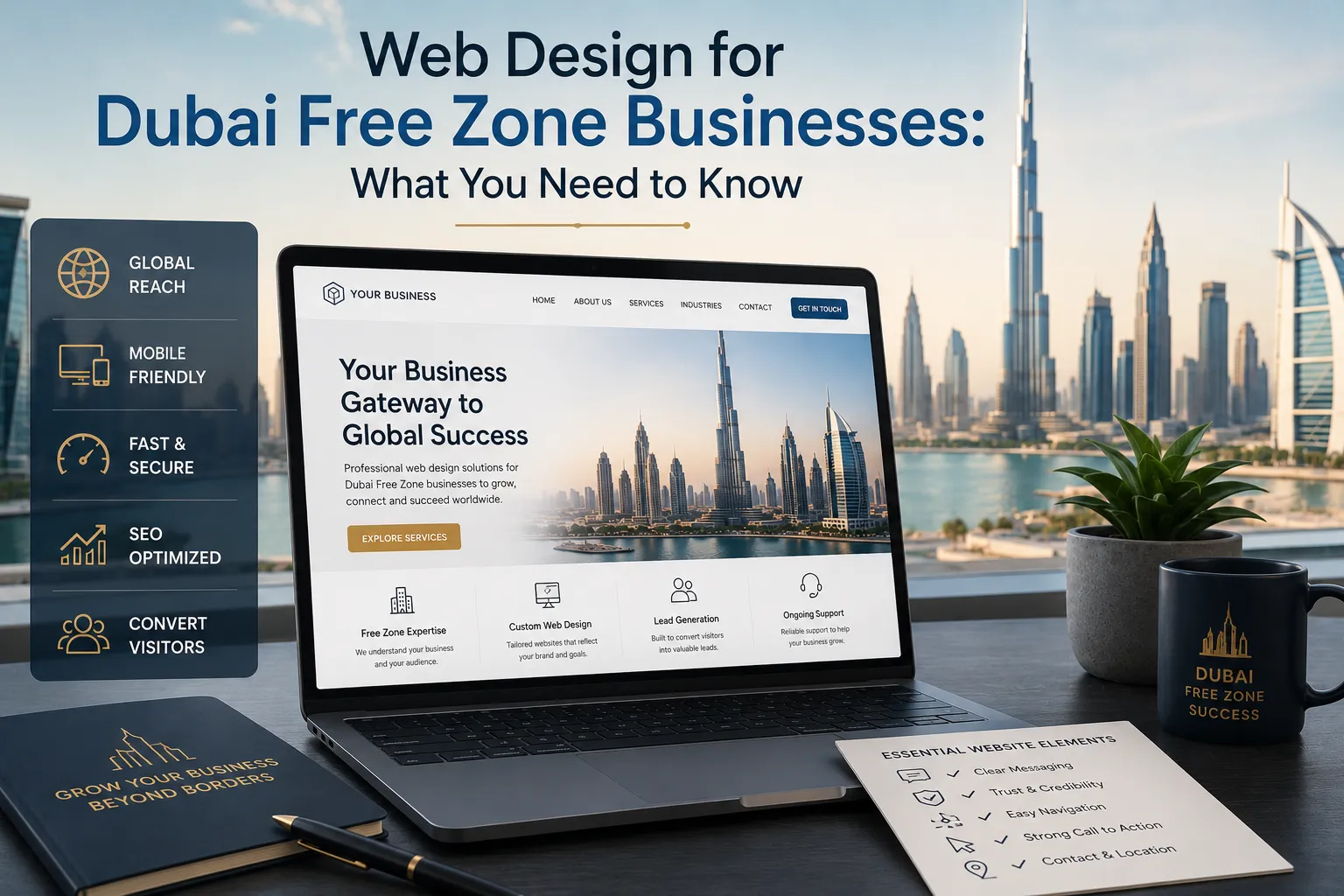

Dubai's free zones are home to some of the most dynamic businesses in the Middle East. DIFC houses the region's leading financial institutions. DMCC is the world's top commodity trading hub. Dubai Internet City and Dubai Media City host global technology and media companies. Dubai Healthcare City serves the region's healthcare sector.
Over 150,000 companies operate across Dubai's 30+ free zones, each with its own regulatory framework, its own business culture, and its own expectations of what a professional online presence looks like.
If your business is based in a Dubai free zone, your website needs to reflect not just your industry, but the specific environment and audience of the free zone you operate in. This guide explains how.
How Free Zone Businesses Differ From Mainland Dubai Businesses
Free zone companies in Dubai have specific characteristics that directly affect how their websites should be built and positioned.
International audience: Free zone businesses are more likely to serve international clients than mainland businesses. DIFC financial firms work with global investors. DMCC commodity traders connect buyers and sellers across continents. Dubai Internet City technology companies serve regional and global markets. A website for a free zone business often needs to communicate credibility to an international audience, not just a local one.
Regulatory environment: Certain free zones have specific regulations around marketing, advertising, and online content. DIFC-based financial services firms, for example, operate under DFSA (Dubai Financial Services Authority) regulations that govern how financial services can be marketed online. Healthcare businesses in Dubai Healthcare City operate under DHCA regulations. Your website must be compliant with your specific free zone authority's requirements, not just mainland UAE rules.
Sophisticated buyer audience: Free zone businesses typically sell to sophisticated professional buyers, fund managers, commodities traders, technology procurement teams, and senior executives. These audiences evaluate suppliers rigorously. A website that impresses a retail consumer may not satisfy the due diligence requirements of a professional institutional buyer.
English-first positioning: While mainland Dubai businesses often prioritise Arabic alongside English, free zone businesses, particularly in DIFC, DMCC, and Dubai Internet City, often communicate primarily in English to serve their international client base. Arabic support is still important, but the emphasis differs.
What Different Free Zones Need From a Website
DIFC - Financial Services
DIFC hosts banks, asset managers, insurance companies, fintech firms, and professional services businesses serving the financial sector. Websites for DIFC businesses need to communicate regulatory compliance, institutional credibility, and professional depth.
What matters most:
- DFSA authorisation status is displayed prominently if applicable
- Regulatory disclosures and terms are presented clearly
- Conservative, professional design that matches institutional expectations
- Deep content on specific products, services, and expertise areas
- Team profiles with full professional credentials and qualifications
- No misleading claims about financial performance or guaranteed returns
What to avoid: Casual design aesthetics, vague service descriptions, or marketing claims that imply guaranteed outcomes, all of which can raise regulatory concerns or damage credibility with sophisticated financial buyers.
DMCC - Commodities and Trading
DMCC is the world's number one free zone by registered companies. Businesses here include commodity trading companies, gold refineries, diamond dealers, and professional services supporting these sectors.
What matters most:
- Clear explanation of trading capabilities and commodity categories
- Market credentials and certifications (LBMA for gold, for example)
- International contact information, time zones, and global offices
- Clean, professional design that communicates trustworthiness for high-value transactions
- Regulatory registrations and licences are displayed clearly
Dubai Internet City - Technology
Dubai Internet City and adjacent zones (Dubai Media City, In5) host technology companies, media businesses, startups, and the regional offices of global tech firms.
What matters most:
- Clear explanation of the specific technology product or service
- Case studies showing real-world results for real clients
- Fast, technically impressive website performance (technology buyers notice slow websites)
- Career pages that attract regional tech talent
- Integration with LinkedIn and GitHub, where appropriate, for developer-facing businesses
Dubai Healthcare City - Healthcare
DHCC hosts hospitals, clinics, pharmaceutical companies, and health technology businesses.
What matters most:
- DHCA authorisation and DHA licensing are clearly displayed
- Patient-facing content that is accurate, helpful, and DHA-compliant
- Doctor and specialist profiles with full qualifications
- Easy appointment booking functionality
- Arabic language support for the UAE national and GCC patient audience
- HIPAA or local equivalent data protection compliance for patient data
Web Design Cost for Dubai Free Zone Businesses
Free zone business websites, particularly for DIFC, DMCC, and regulated sectors, often cost more than equivalent mainland business websites. Here is why:
Compliance requirements: Regulatory disclosures, terms and conditions, and specific content requirements add pages and content that standard business websites do not have.
Institutional design standards: A DIFC financial services firm competing for mandates from sovereign wealth funds and global asset managers needs a website that meets international institutional design standards, not the standards of a local service business.
Deeper content: Free zone businesses in financial services, commodities, and technology typically need more detailed, more technical content than consumer-facing businesses. Product pages, regulatory information, technical specifications, and market intelligence content all add to the content scope.
International SEO: A DMCC commodity trading company needs to rank for searches made globally, not just in Dubai. An International SEO strategy adds complexity and cost compared to purely local SEO.
| Free Zone Business Type | Typical Web Design Cost (AED) |
|---|---|
| Small professional services (DIFC/DMCC) | 15,000 – 30,000 |
| Financial services firm (DIFC) | 25,000 – 60,000 |
| Technology company (DIC/DMC) | 18,000 – 45,000 |
| Healthcare business (DHCC) | 20,000 – 55,000 |
| Large trading or enterprise firm | 50,000 – 150,000+ |
For a full comparison of web design costs across all business types in Dubai, this guide on web design cost in Dubai covers the complete pricing landscape.
Common Mistakes Free Zone Businesses Make With Their Websites
Ignoring compliance requirements: A DIFC-based investment manager whose website makes unsubstantiated performance claims can face DFSA action regardless of how impressive the design is. Always have your website content reviewed by your compliance team or legal adviser before launch.
Building for a local audience instead of an international one: A DMCC commodity trader whose website only mentions Dubai and UAE is missing the opportunity to communicate global reach to international counterparties. If your business operates internationally, your website should look and feel international, with references to global markets, international credentials, and multi-jurisdiction capabilities.
Using generic design templates: A template website that looks identical to thousands of other businesses sends the wrong signal to sophisticated free zone buyers who are evaluating you against global competitors. In free zones where the competition is often international, design quality signals are taken seriously.
Not addressing the specific concerns of your free zone audience: A fintech startup in DIFC needs to address regulatory compliance on its website, not as a legal footnote, but as a prominent trust signal. A healthcare business in DHCC needs to make its licensing immediately visible. Know what your specific audience checks for and make it easy for them to find.
Practical Steps Before Building Your Free Zone Business Website
Check your free zone authority's marketing guidelines: DIFC, DMCC, DHCC, and most other Dubai free zones have specific guidance on marketing communications. Review these before briefing any web design agency.
Identify your primary audience geography: Is your primary audience in Dubai, across the GCC, across the MENA region, or global? This determines your language strategy, your SEO approach, and the cultural references in your content.
Decide on your compliance disclosures: What regulatory information must appear on your website? Where must it appear? Getting this right from the start is far simpler than retrofitting it after launch.
Choose an agency with free zone experience: An agency that has built websites for other DIFC or DMCC businesses understands the compliance considerations, the design expectations, and the audience characteristics that a general-purpose agency may not.
FAQs
Q1. Do free zone businesses have different website requirements from mainland Dubai businesses?
Yes, particularly for regulated sectors like financial services, healthcare, and certain professional services. DIFC-based businesses operate under DFSA oversight, which governs marketing communications. DHCC businesses fall under DHCA regulations. Always verify your specific free zone authority's guidelines before finalising website content.
Q2. Does a DIFC company need to display its DFSA authorisation on its website?
Yes, if the company is authorised by the DFSA to conduct financial services activities, this authorisation status should be displayed on the website along with the relevant disclosures required by DFSA marketing rules. Non-compliance with these requirements can result in regulatory action.
Q3. Should a free zone business website be in English, Arabic, or both?
It depends on your primary audience. DIFC financial services firms serving international institutional clients typically prioritise English. DHCC healthcare businesses serving UAE and GCC patients benefit significantly from Arabic. DMCC trading companies with regional and international counterparties typically lead with English but benefit from Arabic for local relationship management.
Q4. How do I find a web design agency in Dubai with free zone business experience?
Ask specifically whether the agency has built websites for businesses in your specific free zone. Request to see examples. Ask whether they understand the compliance requirements of your sector. An agency that has worked with DIFC financial services businesses will approach your brief very differently from one that has only built websites for mainland retail businesses.
Q5. Do free zone businesses need to display their trade licence on their website?
Requirements vary by free zone and by sector. Some free zones require or recommend displaying your licence number on your website, particularly for businesses in regulated sectors. Check with your free zone authority directly for the specific requirements that apply to your business type.






















Sign in to leave a comment.