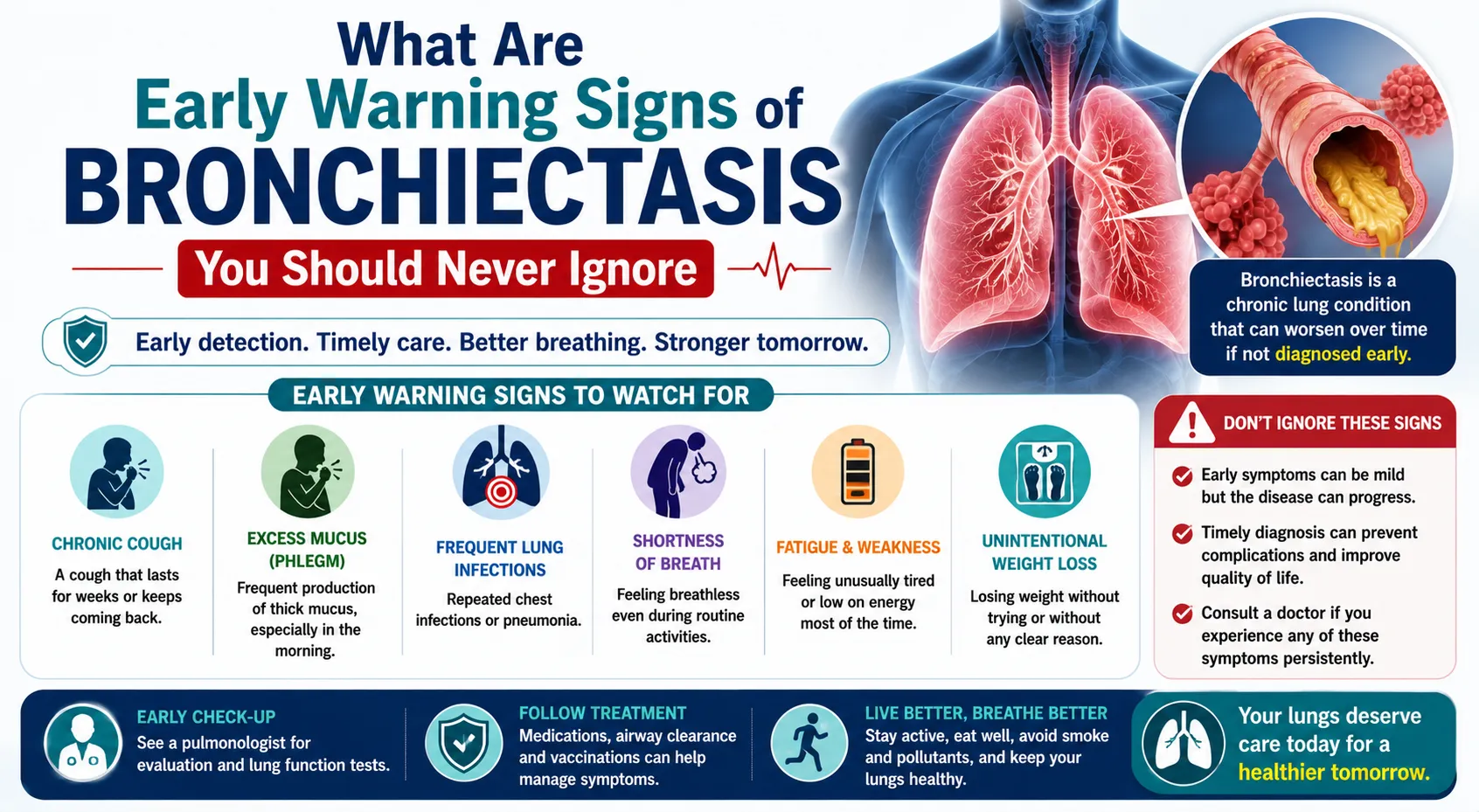

Breathing should never be a struggle. But for people with bronchiectasis, the everyday activities can be hard to manage because of the constant cough, the overproduction of mucus, and the frequent infections of the chest. In general, the disease develops slowly and early warning signs are subtle until lung damage has been done.
Getting medical care early and recognizing symptoms quickly can help slow the progression and improve quality of life. If you or your loved one is facing prolonged respiratory symptoms, then seeking help from the Best Pulmonary Treatment Hospital in Hisar can make a huge difference in diagnosis and treatment outcomes.
What Is Bronchiectasis?
Bronchiectasis is a respiratory condition whereby there is a permanent expansion of the bronchial tubes. When these become damaged, their ability to move out the mucus becomes affected, thus causing the accumulation of bacteria and other organisms. Lung infections and inflammation occur, thus causing destruction of the lungs in the long run.
There is no cure for bronchiectasis; however, when it is detected early and the right treatment administered, it can be managed.
Warning signs you should never ignore
1. A dry cough that won't go away
One of the earliest and most common signs of bronchiectasis is a cough that lasts for weeks or even months. "This is a cough that is part of everyday life, not a passing cough from a cold.
A persistent cough (or recurrent cough that returns after medications) needs to be evaluated by a pulmonologist.
2. Thick Mucus Daily Production
People with bronchiectasis usually cough up a lot of mucus each day.
-Sticky and thick
-Green or Yellow
-Sometimes with blood streaked
The constant mucus production means that the airways are not clearing secretions well and are at risk of infection.
3. Repeated chest infections
Recurrent respiratory infections are another important warning sign. If you have pneumonia or bronchitis several times in a year, get your lungs checked out.
This is because the mucus gets trapped and provides a perfect environment for bacteria to thrive and repeat infections are common.
4. Breathing difficulty
For many, the first sign is a shortness of breath when climbing stairs or exercising. Breathing problems can occur as the disease progresses, sometimes during normal daily activities.
Getting medical care early can help keep your lung function from getting worse.
5. Stridor
It can be caused by narrowing or inflammation of the airways, which makes a whistling sound when you breathe. Wheezing is usually associated with asthma, but it can also be a sign of bronchiectasis, especially when there is a chronic cough and mucus production.
6. Chest pain or discomfort
Chronic infections and inflammation can lead to chest tightness or discomfort. Never ignore chest pain, especially if it lasts or occurs when you cough or have trouble breathing.
7. Tiredness and Low Energy
Your lungs are inflamed for a long time, your body has to work harder.
Many patients have:
-Constant fatigue
-Less endurance
-Difficulty doing everyday activities
If you keep having fatigue without any other obvious reason then you should be seen medically.
8. Spitting Up Blood
Sometimes small streaks of blood in mucus can occur from irritated airways. But coughing up blood should always be evaluated by a health care professional. It may be a sign of worsening injury to the airway or an ongoing infection.
Who’s at Greater Risk?
Bronchiectasis can develop in people of any age, but some factors make the disease more likely to develop.
Risk factors are:
-Recurrent lung infections in childhood
-Sever-e pneumonia
-Tuberculosis
-Chronic obstructive pulmonary disease (COPD)
-Asthma
-Immune system issues
-Conditions such as cystic fibrosis, genetically
-Chronic exposure to air pollution or cigarette smoke
If you have these risk factors and your respiratory symptoms persist, you should be evaluated.
The importance of early diagnosis
Bronchiectasis causes irreversible damage to the airways, but prompt diagnosis can help slow its progression.
There are many benefits to early treatment:
-Reduced lung infections
-Improved mucus clearance
-More control over your breathing
-Lower hospital admissions
-Long term better quality of life
Untreated symptoms allow ongoing lung damage from inflammation and infection, making future treatment more difficult.
How Is Bronchiectasis Diagnosed?
Pulmonary specialists usually perform a number of tests to confirm the diagnosis.
These might include:
-High resolution CT scan
-X-ray of the chest
-Pulmonary function tests
-Culture of sputum
-Blood work
-Oxygen Levels Assessment
These investigations help to find out the underlying cause and to assess the severity of the lung damage.
Treatment
Unfortunately, there are no known methods for completely curing bronchiectasis. However, modern treatment strategies manage to alleviate the symptoms of this illness and slow down its progression.
Airway Clearance Therapy
Certain breathing exercises along with chest physiotherapy may be used for removing excess mucus from the lungs.
Medications
The doctor may prescribe:
-Antibiotics for infections
-Bronchodilators
-Thinning mucus drugs
-Anti-inflammatory drugs when necessary
Pulmonary Rehabilitation
Regular and systematic training improves breathing performance and physical endurance.
Vaccines
Yearly flu and pneumonia shots reduce your risk of respiratory infections that can make your bronchiectasis worse.
Life style change
Patients are advised to:
-Stop smoking
-Keep shaking your body
-Drink lots of fluids
-Eat a healthy, balanced diet
-Keep away from dust and pollutants
When to visit a doctor?
If you experience any of the following, consult a pulmonologist:
-A cough that lasts longer than eight weeks
-Mucus produced per day
-Recurrent chest infections
-Shortness of breath without explanation
-Persistent wheezing
-Your sputum is bloody
-Persistent tiredness with respiratory symptoms
Prompt evaluation helps prevent problems and improves long-term lung health.
Why Choose Sarvesh Health City?
Sarvesh Health City is one of the best pulmonary treatment hospitals in Hisar, which has all the latest equipment and facilities for diagnostics along with skilled pulmonologists who provide complete respiratory treatment. This hospital offers customized treatment plans aimed at improving breathing, reducing infections, and enhancing the quality of life of their patients.
Summary
Bronchiectasis may initially present with symptoms that appear innocent, such as a chronic cough or excessive mucus production. Sadly, if you ignore these early warning signs, they can cause permanent lung damage over a period of time. Early diagnosis, appropriate medical care and consistent treatment can dramatically slow disease progression and help patients lead healthier lives.
If you have persistent respiratory symptoms, don’t wait for them to get worse. You can maintain the health of your lungs and get the expert care you need by seeking early treatment at Sarvesh Health City, the Best Pulmonary Treatment Hospital in Hisar.






























Sign in to leave a comment.