
7 Hidden Stages of Chronic Illness Most People Ignore Until It’s Too Late
Understanding how disease develops over time and how early intervention can prevent long term health problems.
Many people think that symptoms like fatigue, weight gain, hormone imbalance, digestive issues, or inflammation are the first signs of a chronic illness. In actuality, though, chronic illness frequently takes years to manifest symptoms.
As a functional nutritionist, I often see people who have been treating symptoms for years while the underlying cause of their health problems keeps getting worse.
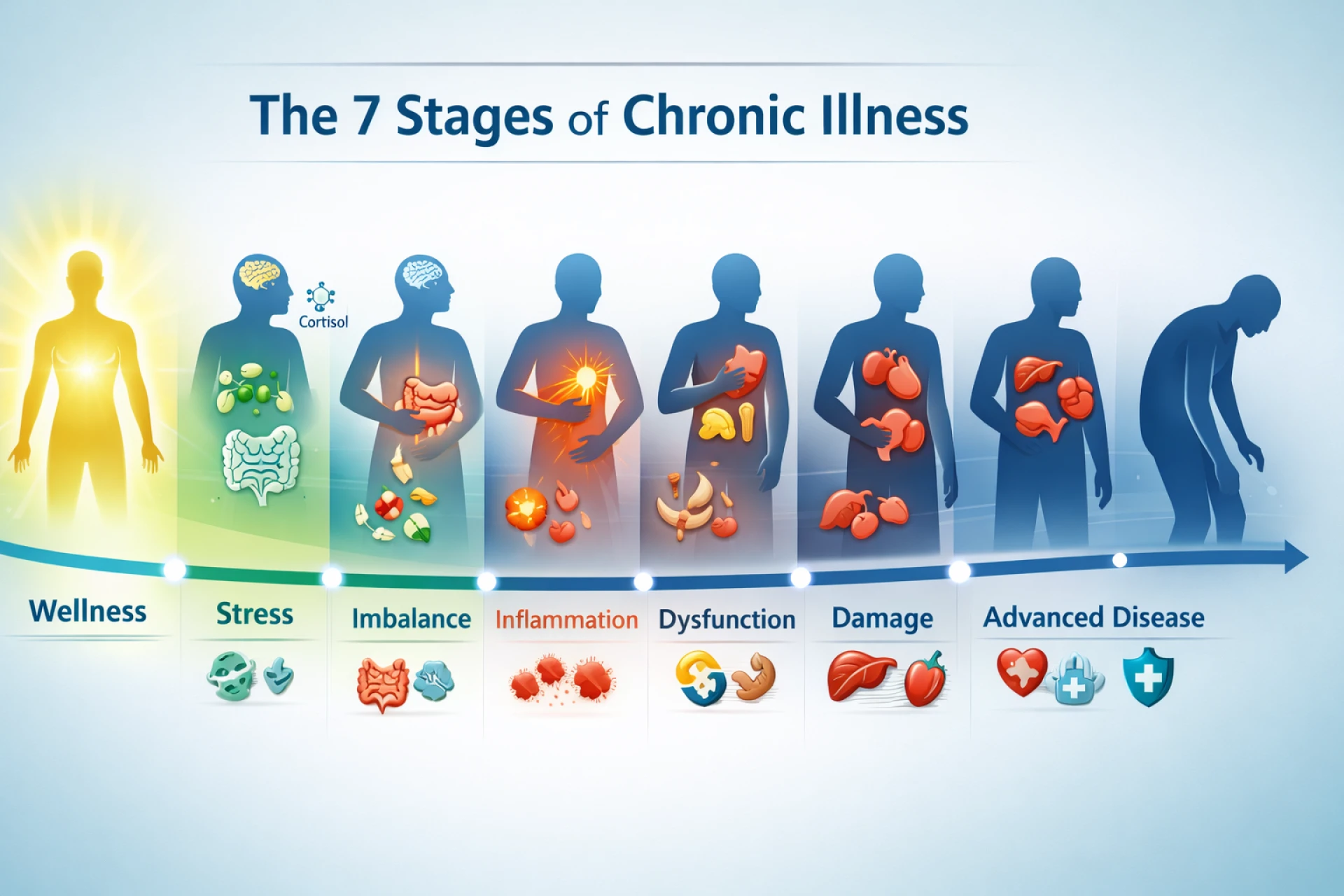
One of the most effective methods for preventing illness is early intervention. Let's examine the 7 stages of chronic illness, a notion well known in integrative and functional medicine, to comprehend how this occurs.
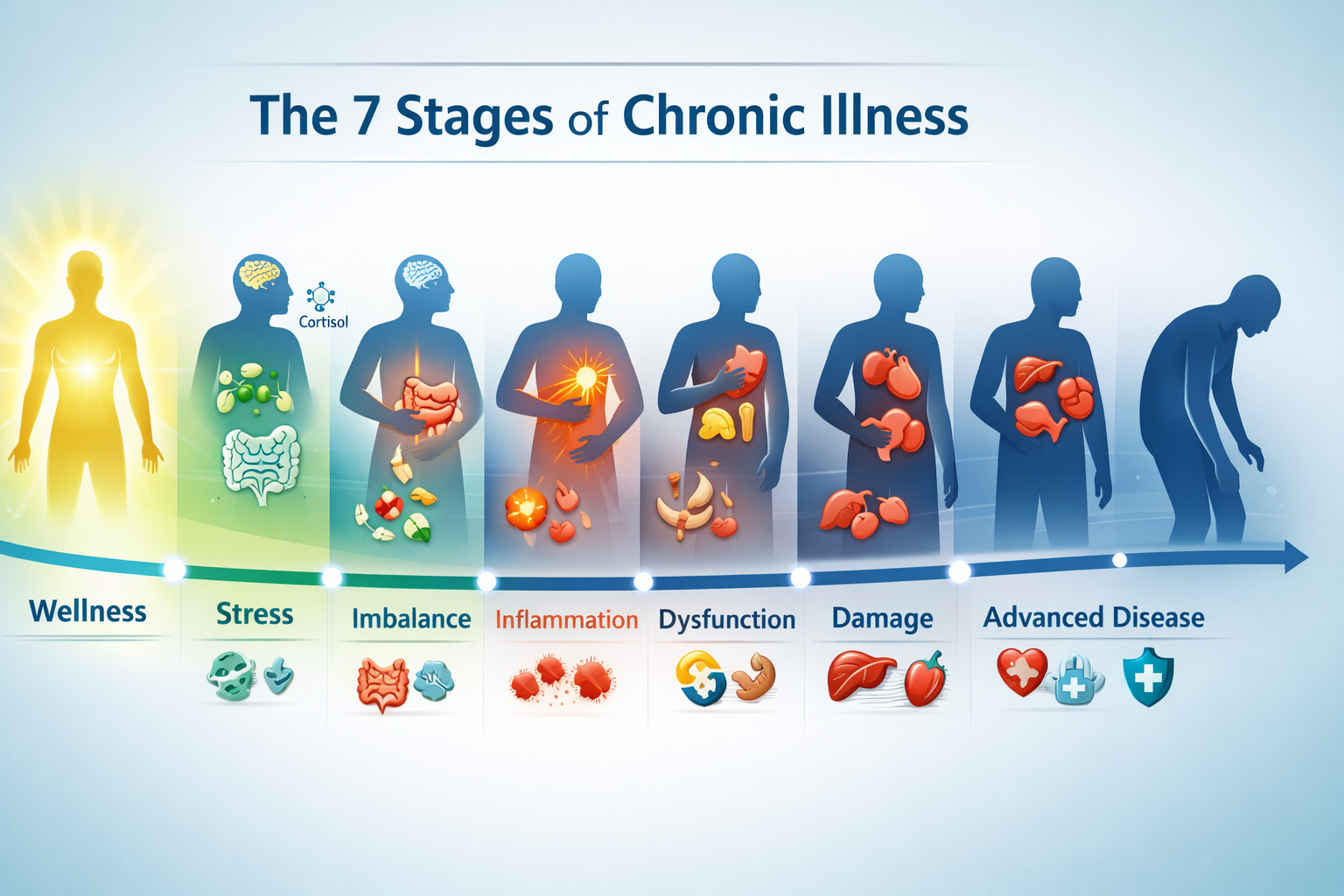
1. What Is a Chronic Illness's Initial Stage?
Wellness, when all systems are in balance and the body is operating at its best, is the initial stage of chronic illness. Digestion, metabolism, hormones, and immune responses all function well during this phase.
Even if a person feels well, they still need to eat healthily, manage their stress, get enough sleep, and consume enough nutrients to stay well
At this point:
- The body can withstand a lot of stress.
- Pathways for detoxification work well.
- Energy production and cellular repair are supported by nutrient absorption.
However, difficulties brought about by contemporary lifestyles frequently upset this equilibrium. The body can gradually move away from optimal health due to poor diet, long-term stress, pollutants in the environment, and sleep deprivation.
Even though a person feels healthy and full of energy, they may still eat a lot of processed foods or be under a lot of stress, both of which have a gradual negative impact on metabolic health.
Key Facts:
Cellular repair and immune resilience are supported by balanced nutrition and micronutrients.
Disease prevention is easiest and most effective during the stage of wellness.
Long-term health outcomes are determined by lifestyle choices made during this phase.
2. What Takes Place in a Chronic Illness's Second Stage?
The body starts reacting to environmental, emotional, or physical stressors during the second stage, known as the stress stage. The body adjusts to preserve equilibrium as hormones like cortisol rise.
The symptoms are still mild or transient at this point.
One of the most frequent causes of chronic illness is ongoing stress. When the duration of stress increases:
- Cortisol levels are still high.
- Variations in blood sugar become more frequent.
- Slowly, inflammation starts.
Individuals may begin to occasionally experience symptoms like:
- weariness
- slight discomfort in the digestive system
- inadequate sleep
- Variations in mood
However, these symptoms are frequently disregarded because they go away with rest.
Elevated cortisol can impact blood sugar, immunity, and inflammation; Chronic stress is a major cause of metabolic and hormonal imbalance; Early lifestyle interventions can stop the progression of disease.
3. What Is a Chronic Illness's Third Stage?
The third stage, known as maladaptation, occurs when the body is unable to adequately compensate for persistent stress and imbalance. The frequency and visibility of symptoms increase.
Functional health disorders start at this point.
When maladaptation occurs:
The prevalence of digestive issues rises.
There could be a hormonal imbalance.
Deficits in nutrients emerge.
For instance:
- A poor diet can lead to a decline in gut health.
- An increase in chronic inflammation is possible.
- There could be a decrease in insulin sensitivity.
Many people start to experience chronic fatigue, weight fluctuations, headaches, or digestive problems at this point.
Key Facts:
Maladaptation signifies the shift from transient symptoms to long-term imbalance.
Nutrient deficiencies and gut health frequently become significant causes of illness.
At this point, many imbalances can still be corrected with functional nutrition.
4. What Takes Place in the Fourth Stage of Chronic Illness?
Organ systems begin to operate inefficiently during the fourth stage, known as functional disturbance, even though medical tests may still show normal results.
Consistent symptoms are frequently unexplained.
During this phase, common symptoms include:
- persistent exhaustion
- digestive issues
- imbalance in hormones
- fog of the brain
- skin issues
The body's systems are obviously having trouble, even though traditional medical testing may not yet be able to identify a clear illness.
Practitioners of functional nutrition frequently evaluate:
- health of the gut microbiome
- status of micronutrients
- markers of inflammation
- metabolic process
The stage of functional disturbance is where many chronic conditions start.
Conventional tests might still seem normal.
Balance can be restored through root cause nutrition techniques.
5. What Is a Chronic Illness's Fifth Stage?
The fifth stage is structural damage, where tissues and organs start to experience long-term dysfunction.
Measurable changes begin to show up in medical tests at this point of the Development of Fatty Liver
During this phase, common symptoms include:
- Resistance to insulin
- Thyroid malfunction
- long-term digestive issues
Nutrient deficiencies and chronic inflammation can harm tissues and interfere with normal cellular function.
Diagnoses like PCOS, metabolic syndrome, and autoimmune disorders are frequently made at this stage. Chronic inflammation can harm tissues and organs.
At this point, metabolic disorders frequently manifest.
Supplements and targeted nutrition can still impede advancement.
6. What Takes Place in the Chronic Illness's Sixth Stage?
The sixth stage, known as advanced disease, is characterized by severe symptoms and well-established medical diagnoses.
Organ systems are severely compromised at this stage.
Examples consist of:
- Diabetes type 2
- Heart-related conditions
- autoimmune diseases
- long-term digestive disorders
The body's capacity to heal itself is severely diminished.
Functional nutrition techniques can still lessen the progression of disease and enhance quality of life, though. Significant organ dysfunction is a feature of advanced disease. Lifestyle modifications are still crucial in addition to medical care. One important factor in managing symptoms is nutrition.
7. What Is a Chronic Illness's Last Stage?
The last stage is terminal illness, which causes serious organ damage and makes recovery challenging.
To avoid getting to this point, prevention and early intervention are essential.
Examples could be:
- advanced cardiac conditions
- severe degeneration of the autoimmune system
- metabolic diseases in their advanced stages
The main goals of treatment at this point are symptom management and preserving quality of life.
The best way to stop advanced disease is to start early. Nutrition and lifestyle choices have a big impact on how the disease progresses. Early on, root cause health strategies are most effective.
Conclusion:
Chronic illness rarely develops suddenly. Instead, it progresses through seven gradual stages that begin long before symptoms appear. Understanding these stages allows individuals to take proactive steps to protect their health. Functional nutrition focuses on identifying root causes such as inflammation, gut imbalance, hormonal disruption, and nutrient deficiencies before disease becomes severe. By addressing these factors early through personalized nutrition, lifestyle changes, and targeted supplementation, it is often possible to restore balance and prevent chronic illness from progressing further.





























Sign in to leave a comment.