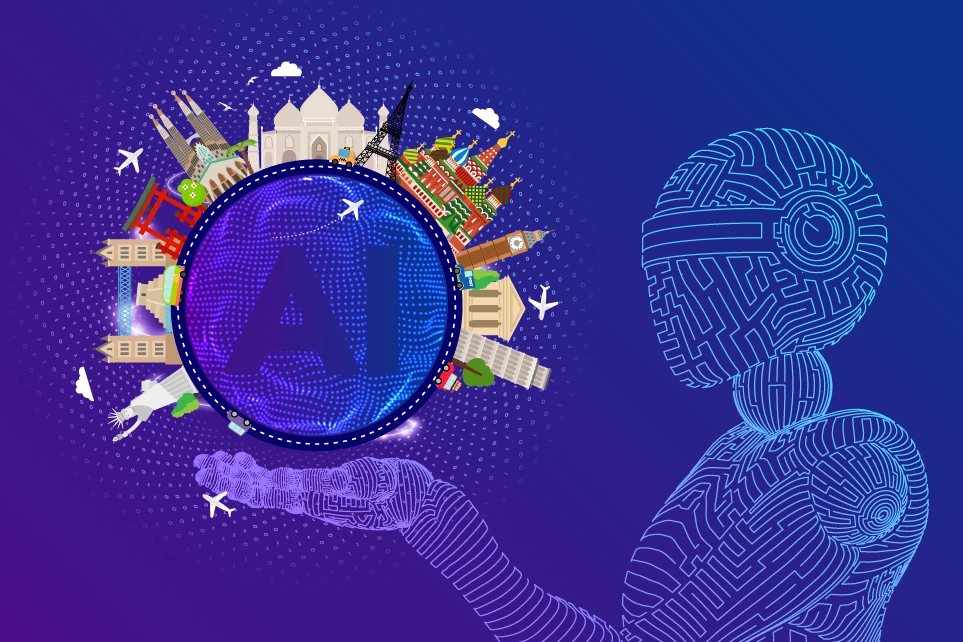

One of the most vibrant and consumer-focused industries in the world economy is travel. Every day, millions of individuals make reservations for hotels, airlines, and vacation packages; therefore, effectiveness, customisation, and client pleasure are essential. In order to meet these needs, artificial intelligence (AI) has become a game-changing technology that is changing how companies communicate with customers, run their operations, and provide services. AI is transforming travel for businesses and consumers alike, from chatbots to predictive analytics.
Below are the major advantages of AI in the travel industry.
1. Personalized Travel Experiences
The capacity of AI to produce individualised experiences is one of its greatest benefits. Travel agencies get a great deal of information from their clients, including search histories, booking trends, and social media activity. AI examines this information to comprehend consumer preferences and provide customised recommendations.
For instance, based on a traveler's spending limit, previous selections, and preferred activities, an AI-powered system can recommend hotels, flights, and destinations. This degree of customisation raises the likelihood of repeat business, fosters client loyalty, and improves customer happiness.
2. Efficient Customer Service with Chatbots
The travel industry's foundation is customer care, and chatbots driven by AI are revolutionising this sector. Chatbots are accessible around-the-clock and provide prompt answers to consumer questions on reservations, cancellations, or travel regulations. They can manage many queries at once, which lessens the requirement for human involvement.
A chatbot on a travel website, for example, can assist users with booking procedures, respond to enquiries regarding visa requirements, or even provide weather updates. This effectiveness guarantees that travellers receive help right away, saves time, and lowers operating expenses.
3. Smarter Booking Systems
Booking procedures are made simpler and more efficient with ai in travel. Real-time comparison of thousands of possibilities allows intelligent booking algorithms to suggest the best airfare, hotel, or vacation package offers. AI also enables dynamic pricing, which modifies prices according on competitor pricing, seasonality, and demand.
This guarantees that consumers receive competitive pricing while businesses optimise profits. Additionally, by comprehending a traveler's tastes and requirements, AI-powered virtual assistants can automatically finish reservations.
4. Fraud Detection and Security
The travel business is particularly vulnerable to fraud because of the large amount of money that is exchanged. Through the detection of unusual transaction patterns, AI enhances security. The system might, for instance, flag sudden, expensive reservations from a strange place in a traveler's account as suspicious and take the necessary action.
Customers' trust is increased by this proactive fraud detection, which also shields businesses and travellers from financial losses. AI enhances speed and safety by enabling safe facial recognition check-ins at hotels and airports.
5. Predictive Analytics for Better Planning
AI forecasts demand, travel patterns, and consumer behaviour using predictive analytics. These insights are used by hotels and airlines to improve inventory control, personnel, and pricing tactics.
AI, for instance, may forecast the busiest travel times or the anticipated number of visitors to a specific location. With this information, travel agencies can create packages and set up resources appropriately. Additionally, predictive analytics assists travellers by suggesting the most cost-effective time to purchase tickets.
6. Enhanced Travel Assistance
AI-powered virtual assistants accompany clients on their travels. These assistants, which are integrated into mobile apps, offer real-time assistance with tasks including local recommendations, translation, and navigation.
An AI-powered translator can facilitate communication or provide restaurant recommendations based on dietary requirements for visitors to a foreign nation. This kind of help eases the tension that comes with seeing new places and makes travel more pleasurable.
7. Improved Operational Efficiency
For travel companies, operational efficiency is critical. Repetitive jobs like data entry, scheduling management, and ticket confirmations are automated by AI. Additionally, it optimises the allocation of resources, such as allocating personnel during airport check-in peak hours or modifying hotel housekeeping schedules according to occupancy.
Businesses save time and money while guaranteeing improved service performance by minimising manual labour. Workers can concentrate on higher-value duties like creating new travel items or addressing intricate client concerns.
8. Voice Recognition Technology
Travellers may utilise natural speech to request recommendations, check flight statuses, and make reservations with voice-enabled AI technologies. In order to increase convenience, the travel sector is implementing similar technology as voice assistants like Google Assistant, Alexa, and Siri become more popular.
Saying, "Book me a flight to Paris next weekend," for instance, would cause the system to rapidly display appropriate possibilities. Users benefit from the simplicity and accessibility of this hands-free engagement.
9. Enhanced Marketing Strategies
By evaluating consumer data and forecasting future preferences, artificial intelligence (AI) helps travel agencies to run more intelligent marketing campaigns. It facilitates efficient ad targeting, consumer segmentation, and personalised promotion mailing.
Travel agents can provide discounts on destinations that a customer has expressed interest in, as an alternative to generic advertising. Campaigns are more economical thanks to this focused marketing strategy's improved conversion rates and increased engagement.
Read Also : ai in human resources


























Sign in to leave a comment.