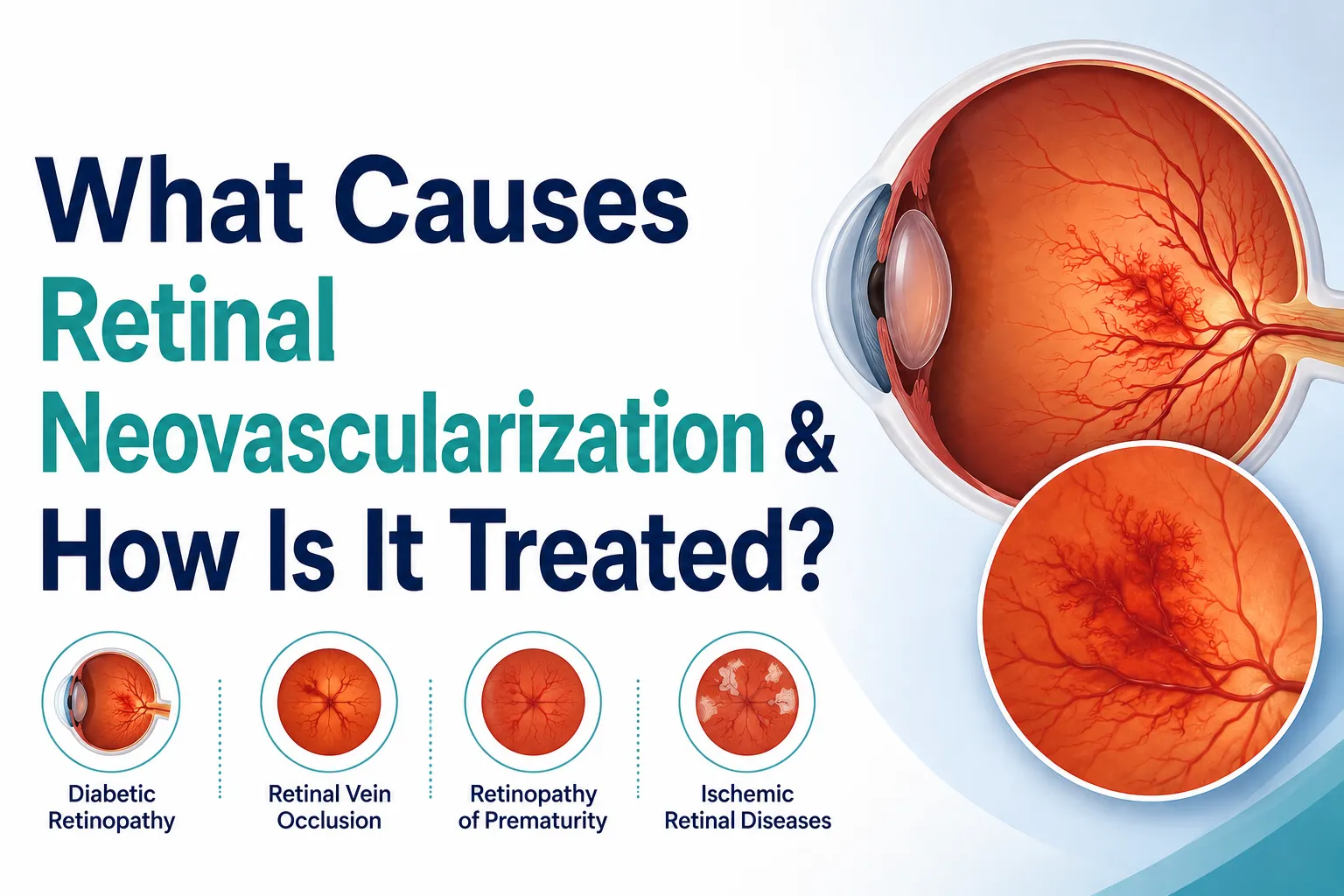

Retinal neovascularization is a serious eye condition involving the abnormal growth of new blood vessels in the retina. These blood vessels develop when parts of the retina do not receive enough oxygen and nutrients. Because the new vessels are fragile and abnormal, they can leak or bleed, potentially causing vision problems.
Understanding what causes retinal neovascularization and how it is treated can help people recognize potential warning signs and seek appropriate eye care.
What Causes Retinal Neovascularization?
Retinal neovascularization usually occurs when the retina experiences inadequate blood flow or oxygen supply. In response, the eye can release vascular endothelial growth factor (VEGF), a protein that stimulates the formation of new blood vessels.
Several eye conditions can contribute to this process.
Diabetic Retinopathy
Diabetic retinopathy is one of the most common causes of retinal neovascularization. High blood sugar can damage the small blood vessels supplying the retina. In advanced cases, the retina may become oxygen-deprived, triggering abnormal blood vessel growth.
Retinal Vein Occlusion
A blocked retinal vein can interfere with normal blood circulation and oxygen delivery to the retina. Severe retinal vein occlusion may result in abnormal blood vessel growth and other vision-threatening complications.
Retinal Ischemia
Retinal ischemia occurs when the retina does not receive adequate blood supply. Significant ischemia can stimulate the release of VEGF and promote abnormal vessel formation.
Other Retinal Conditions
Certain inflammatory, vascular, and retinal disorders can also contribute to retinal neovascularization. The underlying cause needs to be identified so that appropriate treatment can be selected.
What Are the Symptoms?
Early retinal neovascularization may not produce obvious symptoms. However, as abnormal blood vessels develop or begin to bleed, symptoms may include:
- Blurred or reduced vision
- New or increasing floaters
- Dark spots or shadows in vision
- Sudden changes in eyesight
- Vision loss
A sudden increase in floaters or a sudden decrease in vision should be evaluated by an eye-care professional promptly.
How Is Retinal Neovascularization Diagnosed?
An ophthalmologist or retina specialist may perform a comprehensive dilated eye examination to evaluate the retina. Additional imaging can provide more detailed information about blood vessels and retinal changes.
Common diagnostic tests may include optical coherence tomography (OCT), fluorescein angiography, and other retinal imaging techniques. These tests can help determine the extent of abnormal blood vessel growth and identify associated retinal swelling or bleeding.
How Is Retinal Neovascularization Treated?
Treatment depends on the underlying cause, the severity of the condition, and whether complications such as bleeding or retinal swelling are present.
Anti-VEGF Injections
Anti-VEGF medications can help block the signals responsible for abnormal blood vessel growth. These medications are commonly delivered through injections into the eye and may help reduce abnormal vessels and associated leakage.
Laser Treatment
In certain cases, laser photocoagulation may be used to treat areas of damaged or oxygen-deprived retina. The goal is to reduce the stimulus for abnormal blood vessel growth and lower the risk of complications.
Vitrectomy
If abnormal blood vessel growth causes significant bleeding inside the eye or other serious complications, a surgical procedure called vitrectomy may sometimes be recommended. During this procedure, the vitreous gel inside the eye is removed and replaced as needed.
Can Retinal Neovascularization Be Prevented?
Preventing or controlling the conditions that contribute to retinal damage can reduce the risk. For people with diabetes, maintaining appropriate blood sugar levels and attending recommended eye examinations are important steps.
Managing blood pressure and cholesterol and following an eye specialist's recommendations can also support overall retinal health.
Why Early Treatment Matters
Retinal neovascularization can become vision-threatening if abnormal blood vessels leak or bleed. Early detection allows an eye specialist to identify the underlying cause and determine whether treatment is needed.
If you notice sudden floaters, blurred vision, dark areas, or other unexpected changes in your eyesight, schedule an evaluation with an eye-care professional. Timely diagnosis and treatment can play an important role in protecting your vision.























Sign in to leave a comment.