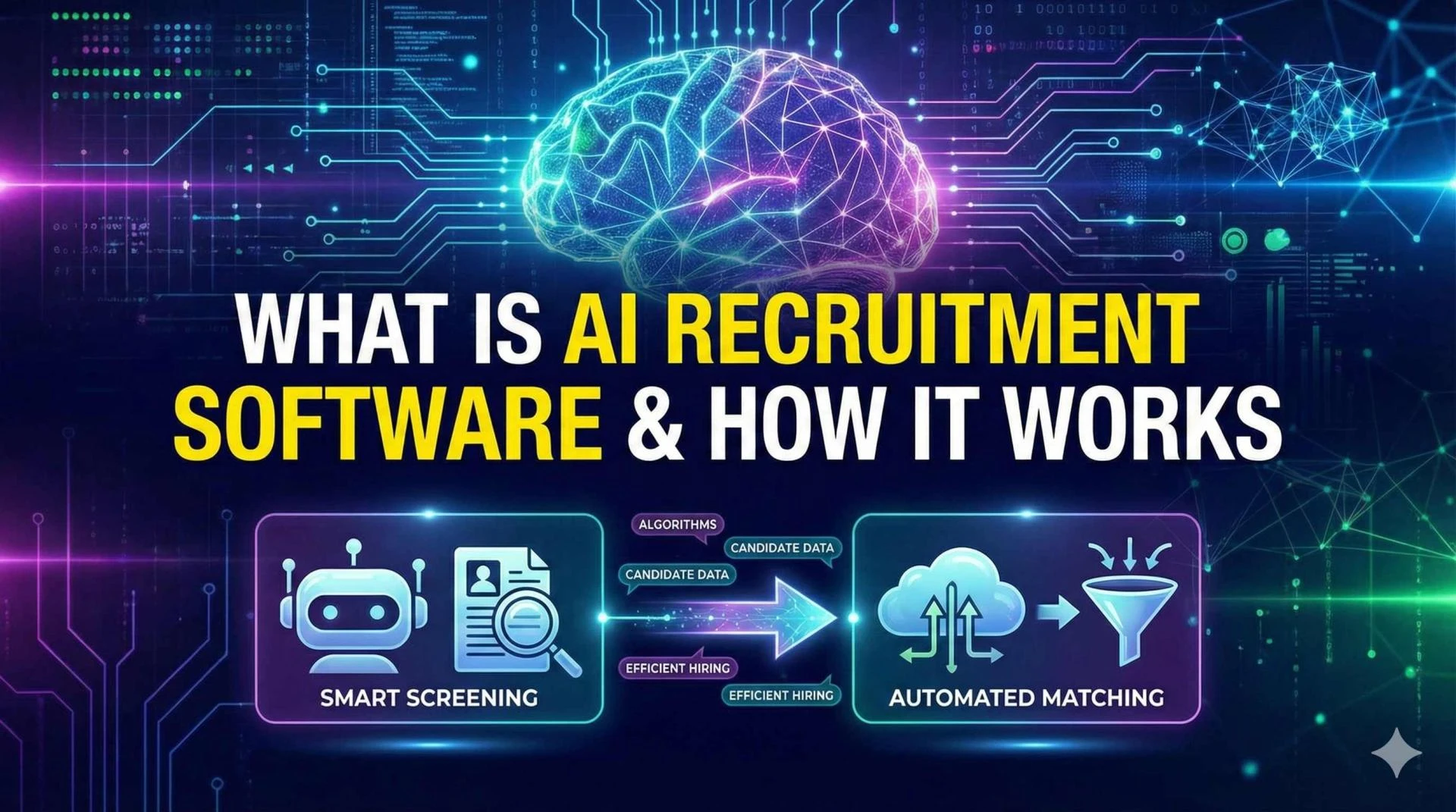

Recruiting has changed dramatically over the last few years. What once relied heavily on manual screening, spreadsheets, and gut instinct is now being reshaped by artificial intelligence. At the center of this shift is AI recruitment software—a new generation of tools designed to help recruiters work faster, smarter, and with more consistency.
But what exactly is AI recruitment software, and how does it work in real recruiting workflows? Let’s break it down in simple terms.
What Is AI Recruitment Software?
AI recruitment software is a type of hiring technology that uses artificial intelligence to support and improve different stages of the recruitment process. Instead of acting as a passive system that simply stores resumes and candidate data, AI-powered tools actively analyze information and assist recruiters in making better decisions.
Unlike traditional ATS tools, AI recruitment software can:
- Understand context, not just keywords
- Learn from past hiring data and recruiter behavior
- Automate repetitive tasks
- Surface relevant candidates from large databases
The goal is not to replace recruiters, but to reduce manual effort and improve accuracy at scale.
How AI Recruitment Software Works
AI recruitment software works by combining data, machine learning models, and automation. Here’s how the process typically functions behind the scenes.
1. Data Collection and Structuring
AI recruitment tools start by collecting data from multiple sources, such as:
- Resumes and candidate profiles
- Interview feedback and notes
- Job descriptions
- Outreach and engagement history
- Hiring outcomes from past searches
This data is structured and standardized so the system can analyze it effectively.
2. Semantic and Contextual Search
Traditional systems rely heavily on keyword matching. AI recruitment software goes a step further by understanding context.
For example, it can:
- Identify candidates with relevant experience even if job titles differ
- Recognize transferable skills across industries
- Match intent and experience, not just exact terms
This allows recruiters to uncover strong candidates who might otherwise be missed.
3. Automation of Repetitive Tasks
One of the biggest advantages of AI in recruitment is automation.
AI recruitment software can automate:
- Candidate tagging and categorization
- Profile summaries
- Resume screening
- Follow-ups and engagement tracking
- Candidate profile updates when job changes occur
This frees recruiters from repetitive admin work and allows them to focus on strategy and relationships.
4. Intelligent Candidate Recommendations
AI systems analyze patterns from successful hires and ongoing searches to suggest candidates that fit current roles. These recommendations are based on:
- Skills and experience alignment
- Past interview feedback
- Client preferences
- Timing and availability
Rather than starting every search from scratch, recruiters get a smarter starting point.
5. Continuous Learning Over Time
AI recruitment software improves as it’s used.
The system learns from:
- Recruiter decisions
- Candidate outcomes
- Client feedback
- Hiring success rates
Over time, this leads to more accurate suggestions, better shortlists, and improved efficiency across searches.
Key Benefits of AI Recruitment Software
When implemented correctly, AI recruitment software offers real, measurable advantages.
Faster Searches
Recruiters can identify qualified candidates in minutes instead of hours.
Better Use of Existing Databases
Past candidates are resurfaced with new context instead of being forgotten.
Reduced Bias
Standardized evaluation helps minimize unconscious bias in screening and shortlisting.
Improved Candidate Experience
Timely outreach and consistent communication improve engagement.
Scalable Recruiting Operations
Firms can handle more searches without increasing headcount.
AI Recruitment Software vs Traditional ATS
Traditional ATS tools focus mainly on tracking. AI recruitment software focuses on execution and intelligence.
| Traditional ATS | AI Recruitment Software |
|---|---|
| Keyword-based search | Context-aware search |
| Manual tagging | Automated tagging |
| Static data | Continuously updated profiles |
| Heavy admin work | Automation-driven workflows |
This is why many firms are now moving toward an AI recruitment platform that combines tracking, search, engagement, and analytics in one system.
Is AI Recruitment Software Only for Large Firms?
Not at all. While enterprise teams were early adopters, small and mid-size recruiting firms are now benefiting the most. AI helps smaller teams:
- Compete with larger firms
- Move faster with fewer resources
- Deliver higher-quality shortlists
With the right setup, AI levels the playing field.
Final Thoughts
AI recruitment software is no longer a future concept—it’s already shaping how modern recruiting firms operate. By combining human expertise with intelligent automation, recruiters can make better decisions, reduce bias, and unlock the full value of their existing candidate data.
The firms that adopt AI thoughtfully won’t lose the human touch—they’ll strengthen it.

























Sign in to leave a comment.