
Fintech app security is the practice of protecting fintech applications including mobile banking, digital wallets, and payment platforms from cyber attacks, frauds and data breaches. It includes best practices, technologies and strategies that protect financial applications.
Cyber attacks are emerging every day, with new technologies and emerging AI, attacks have evolved in an unprecedented way. It is important to modify the strategies and technologies used in Fintech app security. Fintech companies must strengthen the security of their mobile apps, as mobile devices and applications are the main target of attackers. Using such security solutions which are advanced and up to date with current situations is reasonable for actual security.
Why Fintech App security is unavoidable
Fintech apps handle highly sensitive data, including:
- Banking credentials.
- Payment details and transaction history.
- Personal identification information (PII).
Any compromise can lead to severe financial and reputational damage. With increasing adoption of mobile wallets, UPI, and digital banking, attackers are continuously evolving their techniques to exploit vulnerabilities in applications.
Common threats to Fintech application in 2026
In 2026, attack logics have advanced with the advancement of technology and artificial intelligence. Common threats includes:
- Compromised devices (rooted/jailbroken devices)
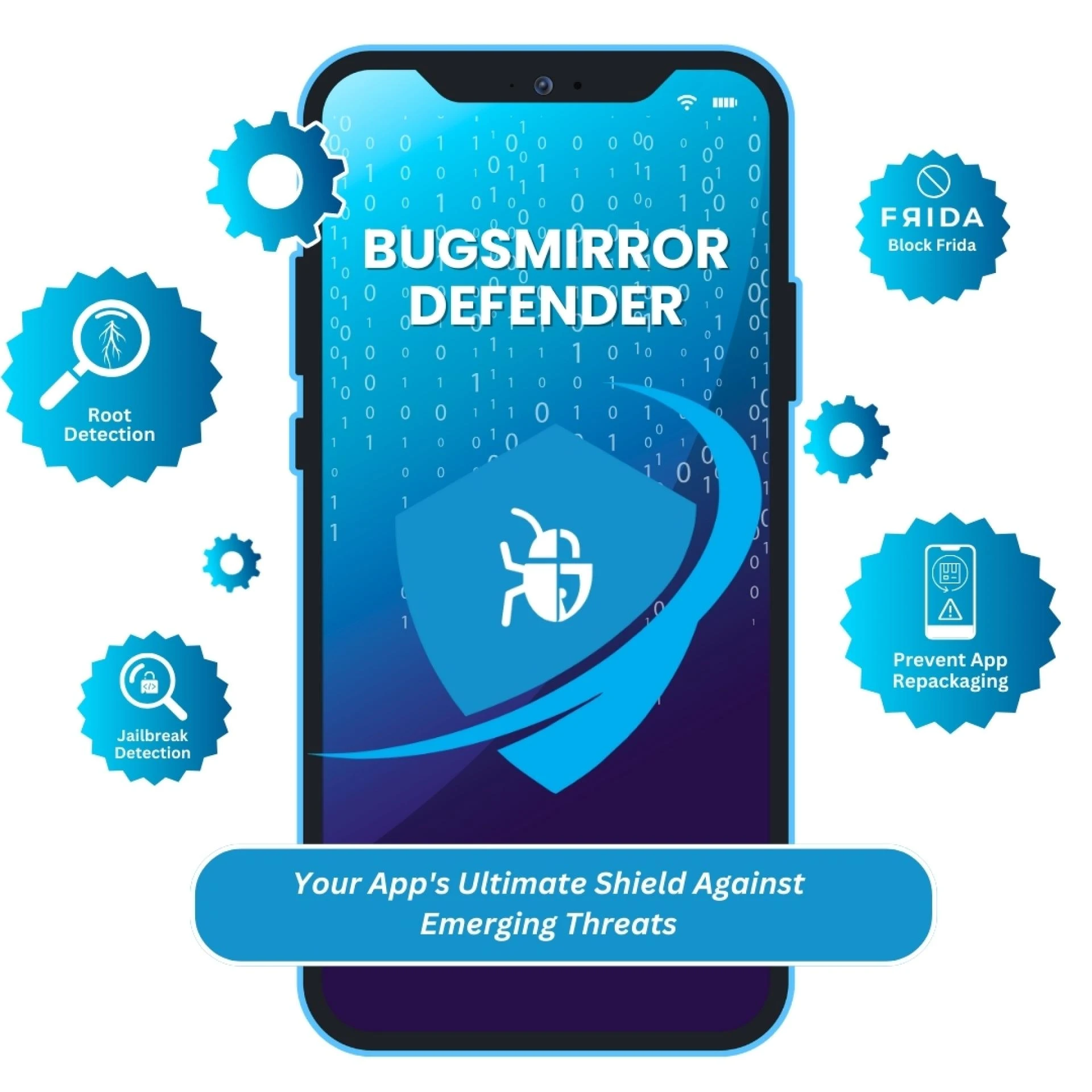
Compromised devices such as rooted or jailbroken create an insecure environment. Apps running on these devices can be attacked, manipulated and may lead to SIM-binding frauds, etc. Your apps must detect and avoid running on such devices.
- Communication channel compromise (i.e. APIs)
The apps must use secured APIs because weak authentication, improper validation or exposed endpoints can be exploited by attackers. Man-in-the-middle attacks are also increasing which bypass server security. Companies should test their APIs security and implement runtime security solutions that enforce SSL pinning.
- Runtime attacks
When the app is running on the device, techniques like debugging, hooking, and memory manipulation allow attackers to bypass security controls while the app is running.
- Reverse engineering
Mobile apps who have not implemented runtime security might be also missing code encryption or obfuscation that prevent reverse engineering. Using solutions like Bugsmirror MASST which provide advanced code obfuscation with runtime security, helps avoid the decryption of app code, prevents app repackaging, reverse engineering and protects apps’ IP.
Key components of Fintech App security
Fintech applications require multilayer security approaches to protect the app functions, logics and transactions. Key components include:
- Secure coding practices: Developers must follow secure coding standards to minimise vulnerabilities.
- Application security testing: Using advanced application security testing tools for SAST, DAST, and IAST, with red teaming assessment.
- Runtime application self-protection (RASP): It is important to use advanced RASP solutions to protect the mobile app during runtime. It detects and blocks runtime threats.
- Strong authentication & encryption: Implementing proper authentication (2FA, MFA) and end-to-end encryption protects user data and transactions.
- Threat monitoring and analysis: Continuous monitoring of threats coming to the application can be analysed and responded quickly to potential threats.
Role of Bugsmirror MASST in Fintech app security
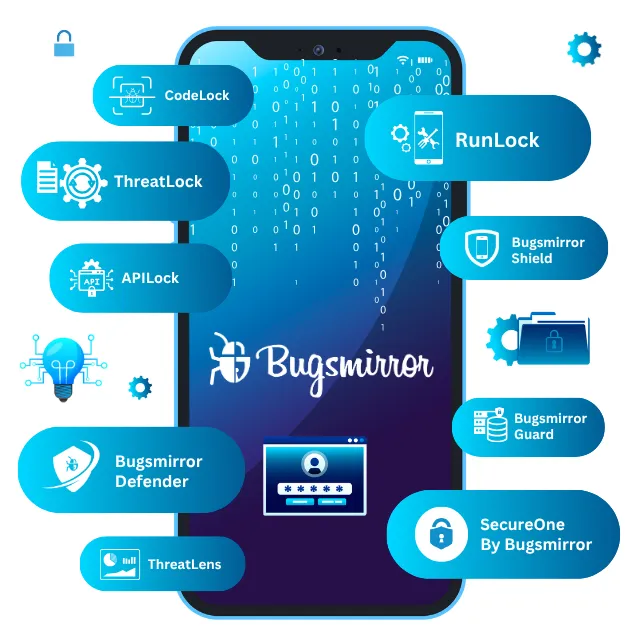
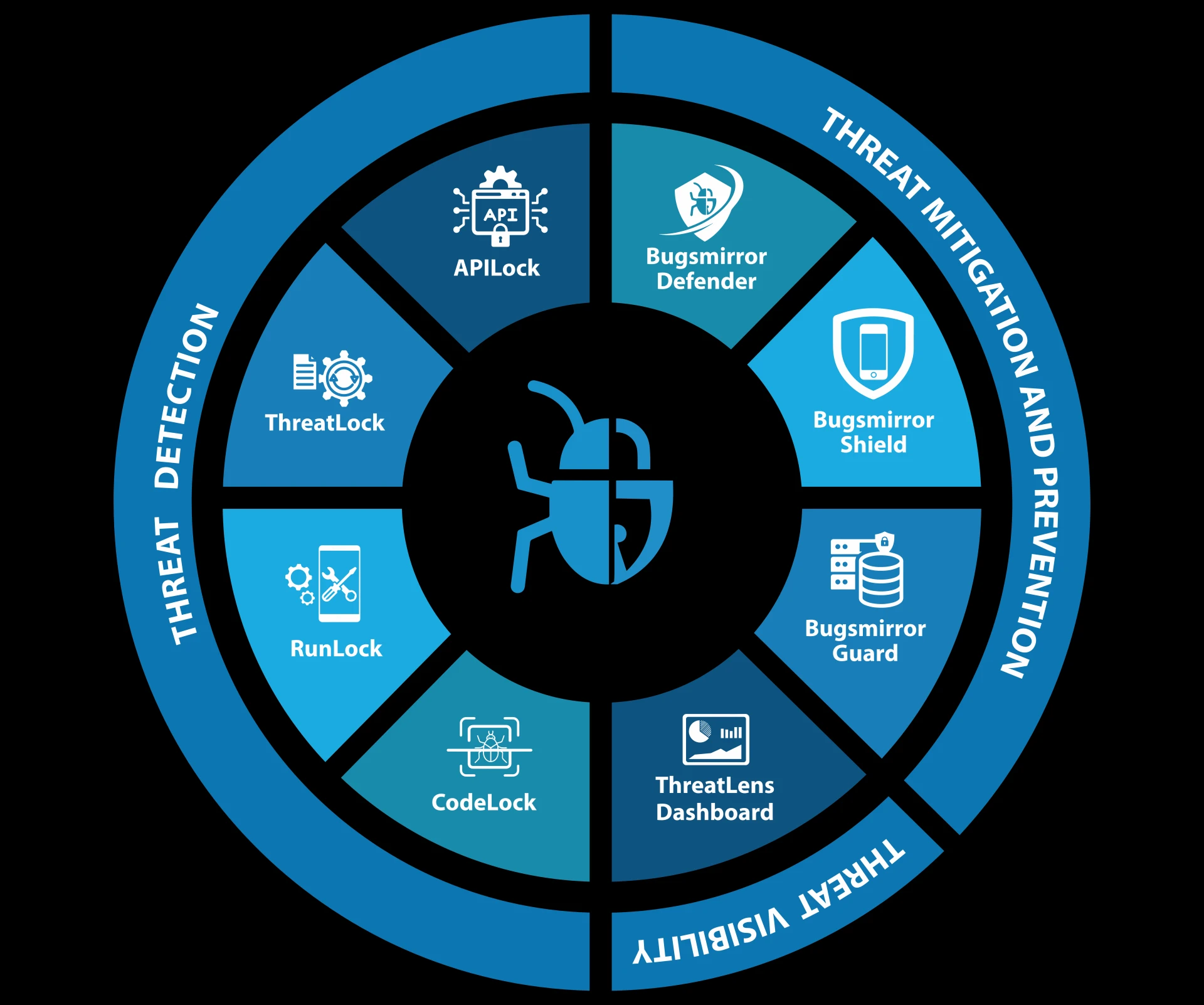
Bugsmirror provides a complete fintech app security with solutions for security testing, runtime threat detection, prevention as well as threat analysis dashboard.
Advanced security testing tools
- CodeLock: It is an automated SAST tool that detects 50+ security vulnerabilities in mobile applications by analysing static code from app binaries.
- RunLock: It is a DAST tool that evaluates your mobile app’s security across 25+ runtime threats. It is aligned with latest security standards like OWASP MASVS, SEBI CSCRF, etc. with zero false positives.
- APILock: It evaluates and analyses APIs security. It uncover hidden vulnerabilities by testing APIs of Android and iOS mobile apps.
- ThreatLock: It is a comprehensive red teaming assessment that tests the app from inner to outer layer. Bugsmirror ThreatLock is the best red teaming solution. Their experts have decoded and exploited major security vulnerabilities like SIM-binding validation failure, business logic weaknesses and runtime risks for their clients.
Comprehensive runtime security solution
- Bugsmirror Defender: Bugsmirror Defender offers comprehensive RASP security for mobile apps. It detects and blocks over 45 different runtime security threats.
- Bugsmirror shield: It is a code encryption, obfuscation and transformation tool that encrypts codes which are hard to decrypt. It prevents reverse engineering, and protects the app's IP.
Threat Analysis
ThreatLens and OTA: ThreatLens is an analytical and operational dashboard where you can monitor real-time threats on your mobile app. You can use this data to protect your application- not just analyse, but you can also whitelist genuine users. With the help of OTA, you can update security configurations without re-submitting the app in the place store / app store.
Thus, Bugsmirror MASST is a complete in-app protection for iOS & Android mobile apps in one place.
Get a complimentary security audit report and identify vulnerabilities present in your mobile application to strengthen its security.
























Sign in to leave a comment.