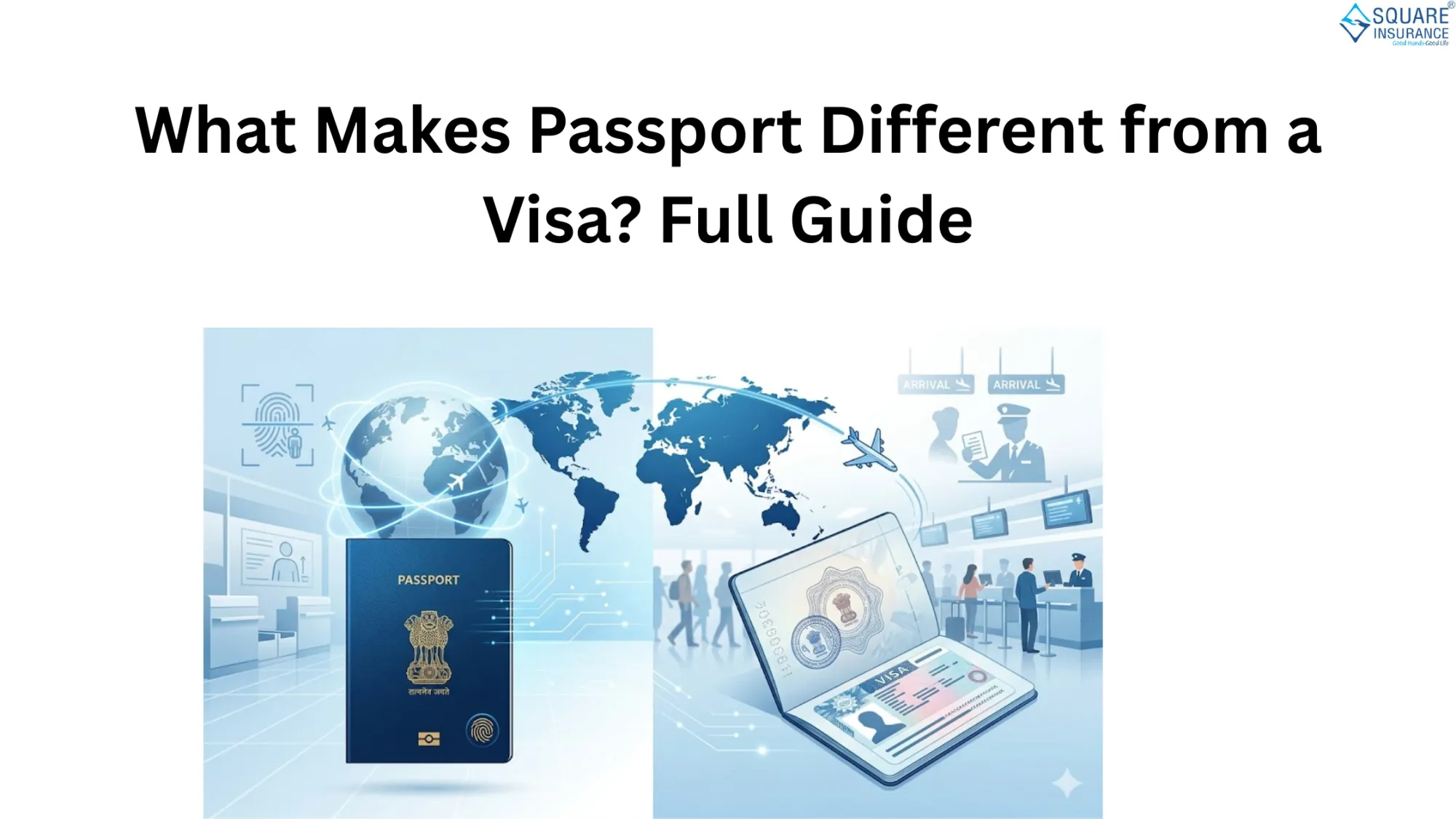

International travel has become increasingly common for tourism, education, work, and business opportunities. However, many first-time travelers often confuse two essential travel documents: passport and visa. While both are required for crossing international borders, they serve entirely different purposes. Understanding the Difference Between Passport and Visa is important not only for smooth travel planning but also for avoiding legal complications during immigration checks. This guide explains both documents in detail, their functions, differences, and why both are essential for international travel.
What Is a Passport?
A passport is an official government-issued identity document that certifies the nationality and identity of a person. It is issued by the applicant’s home country and is required for international travel.
In India, passports are issued by the Ministry of External Affairs through Passport Seva Kendras (PSKs) and Regional Passport Offices (RPOs).
Key Features of a Passport:
- Serves as proof of identity and nationality
- Required for international travel
- Contains personal details like name, date of birth, and photograph
- Includes passport number and validity period
- Allows entry and exit from foreign countries (with visa approval)
A passport is essentially your global identity document when you travel outside your country.
What Is a Visa?
A visa is an official authorization issued by the country you wish to visit. It grants permission to enter, stay, or leave that country for a specific purpose and duration.
Visas are issued by the embassy or consulate of the destination country.
Key Features of a Visa:
- Permission granted by a foreign country
- Required for entry into most countries
- Specifies duration of stay
- May be single-entry or multiple-entry
- Issued for purposes like tourism, study, work, or transit
A visa acts as permission to enter a foreign country, while a passport identifies who you are.
Key Difference Between Passport and Visa
The core difference lies in their purpose and issuing authority.
1. Issuing Authority
- Passport: Issued by your home country
- Visa: Issued by the destination country
2. Purpose
- Passport: Establishes identity and nationality
- Visa: Grants permission to enter another country
3. Requirement
- Passport: Mandatory for international travel
- Visa: Required depending on destination country rules
4. Validity
- Passport: Generally valid for 5 to 10 years
- Visa: Valid for a specific duration depending on travel purpose
5. Usage
- Passport: Used for identification at immigration checkpoints
- Visa: Used for legal entry into a foreign country
6. Control
- Passport: Controlled by your home country
- Visa: Controlled by the visiting country
How Passport and Visa Work Together
A passport and visa are interconnected documents. You cannot typically travel internationally with only one of them (except visa-free countries).
Example:
- Your passport confirms your identity as an Indian citizen
- The visa confirms that the destination country allows you to enter
Both are checked at immigration points before departure and arrival.
Types of Passports in India
India issues different types of passports based on applicant categories:
1. Ordinary Passport
Issued to common citizens for general travel purposes.
2. Diplomatic Passport
Issued to diplomats and government officials.
3. Official Passport
Issued to government employees traveling on official duty.
Each type serves a specific purpose but functions similarly as identity documents.
Types of Visas
Visas vary depending on the purpose of travel:
1. Tourist Visa
For leisure travel and vacations.
2. Student Visa
For pursuing education abroad.
3. Work Visa
For employment in a foreign country.
4. Business Visa
For meetings, conferences, and trade activities.
5. Transit Visa
For short layovers in another country.
Each visa type has specific conditions and validity periods.
Why Passport Is Mandatory for Visa Application
A visa cannot be issued without a valid passport because:
- Passport confirms identity and nationality
- Visa is stamped or electronically linked to passport
- Immigration authorities verify both documents together
Without a passport, visa application is not possible in most cases.
Common Misunderstandings About Passport and Visa
Many travelers confuse or misuse these terms. Some common misconceptions include:
- Thinking visa alone is enough for travel
- Believing passport and visa serve the same purpose
- Assuming visa guarantees entry into a country
- Ignoring passport validity before applying for visa
Understanding these differences prevents travel disruptions.
Importance of Valid Passport and Visa
Having both documents in order ensures:
Smooth Immigration Process
Authorities can verify identity and travel permission easily.
Legal International Travel
Avoids entry denial or deportation risks.
Hassle-Free Travel Experience
Reduces delays at airports and borders.
Better Travel Planning
Ensures compliance with destination country requirements.
Conclusion
Understanding what makes a passport different from a visa is essential for anyone planning international travel. A passport serves as your identity and nationality proof, while a visa acts as permission granted by another country to enter its borders. Both documents work together to ensure safe, legal, and regulated global movement.
Being well-informed about these differences helps travelers avoid confusion, delays, and unnecessary complications during immigration procedures.
Along with preparing travel documents, it is also important to secure your financial well-being before traveling. Square Insurance helps individuals compare insurance plans such as travel, health, and life insurance, ensuring better protection and peace of mind during domestic and international journeys.





















Sign in to leave a comment.