

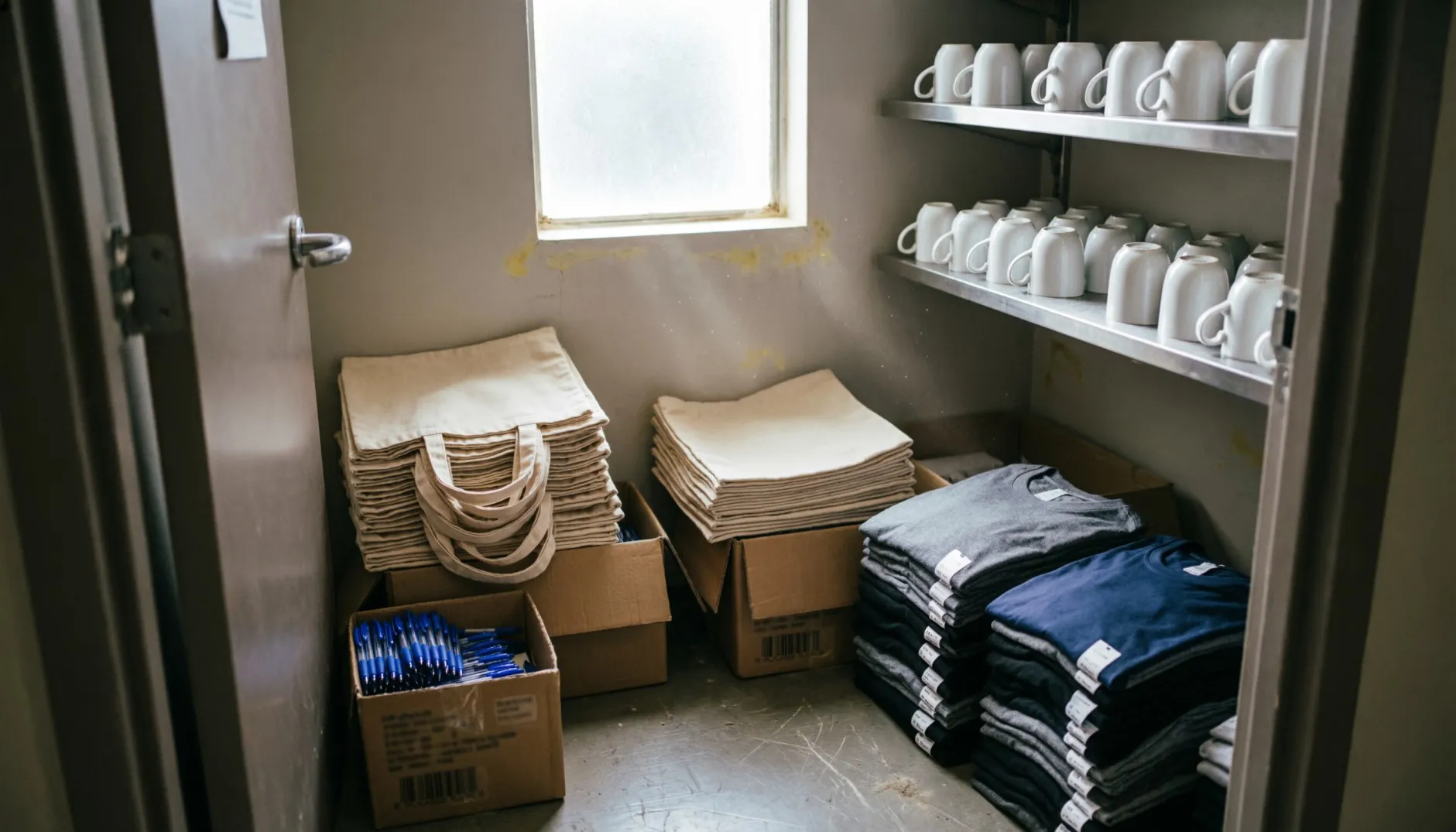
Open a supply closet at almost any office, and you will probably find it. A stack of tote bags from an event three years ago. A box of pens with a logo that got redesigned last spring. Twenty T-shirts in a size nobody wanted. It is such a common sight that most people barely notice it anymore.
But that pile is a real problem. Companies spend real money on branded items, and a lot of that money ends up sitting in storage or, worse, in a landfill. If your business orders swag on a regular basis, it helps to understand why this happens and what you can actually do about it.
Why Do Companies Love Swag (And Why It Piles Up)?
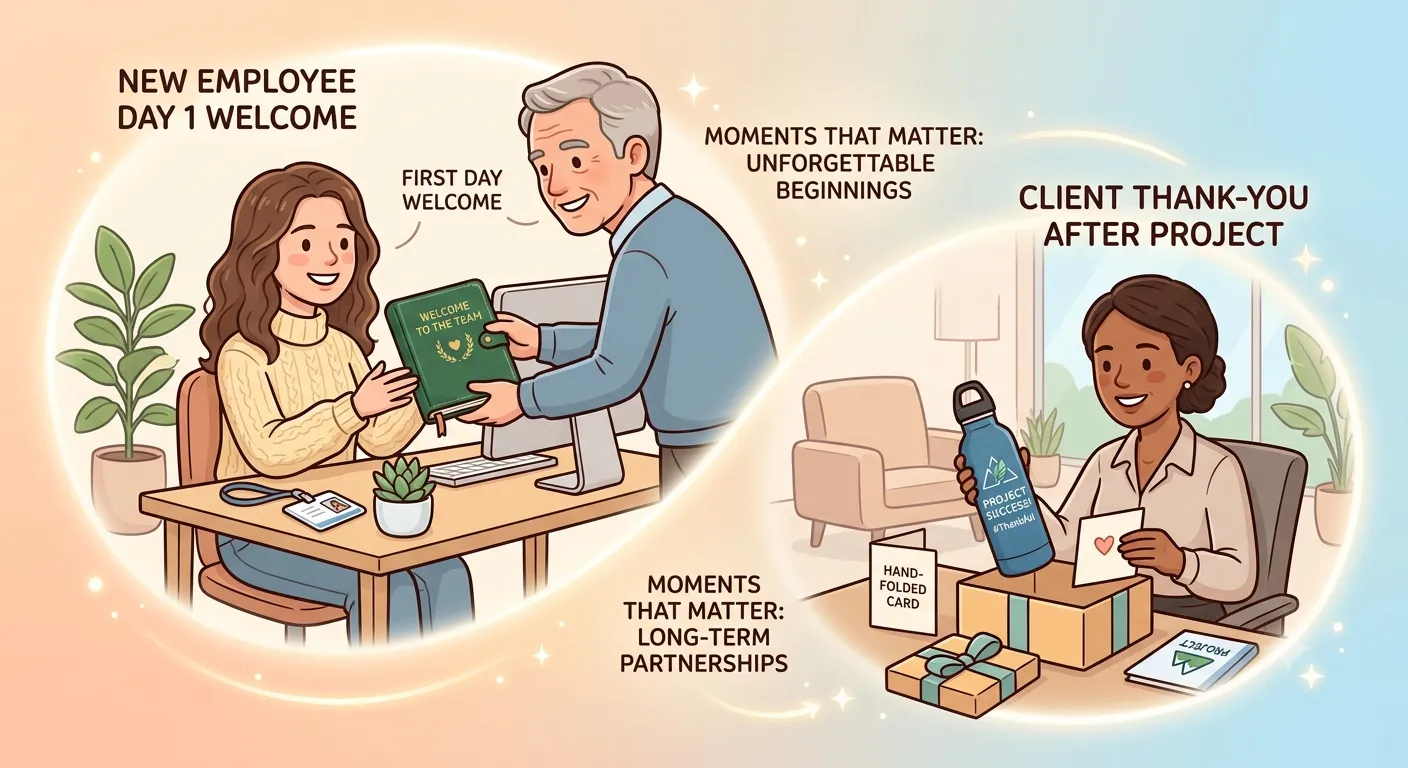
Branded items like shirts, bags, mugs, and pens are a simple way to get a company name in front of people. They show up at trade shows, in new hire kits, as customer thank-you gifts, and at community events. A good item can turn a stranger into someone who remembers your brand every time they grab their coffee mug.
The trouble usually starts with planning. Teams order in bulk to save money, guess at quantities, or reuse a design that gets outdated fast. A logo changes. An event gets pushed back. One size runs short while another sits untouched. Before long, boxes of unused promotional merchandise pile up in a corner, and nobody wants to be the one who finally throws them away.
Simple Ways To Order Smarter
A few small changes can save a company from ending up with boxes of extra stock sitting around for years.
Start with your actual headcount or guest list instead of rounding up "just in case." Overordering feels safe, but it usually just moves the waste from missing an item at the event to storing too many of them afterward.
Pick items people will actually use. A cheap keychain gets tossed in a drawer. A good notebook or a solid water bottle gets carried around for years, which means your logo travels much further for the same money.
Keep your design flexible when you can. A logo without a specific year or event name can often be used again for the next campaign instead of becoming outdated the moment one event ends.
Plan for the leftovers before you even place the order. Decide ahead of time whether extra stock will go to new hires, a donation drive, an internal store, or a future event, so it never turns into a mystery box in the storage room.
Two Real Situations Companies Run Into
Picture a mid-size company that orders five hundred shirts for a big product launch. The launch gets pushed back a year, and by the time it happens, the company has rolled out a new logo. Those shirts are now unusable for their original purpose, and someone on the marketing team has to quietly figure out what to do with them.
Or picture a nonprofit that orders two hundred tote bags for a fundraising walk. The walk draws a smaller crowd than expected, and half the bags never leave the storage closet. The bags are still perfectly good. They simply do not have anywhere to go yet.
Both situations are common, and both are avoidable with a little more planning and the right partner behind the order.
A Better Way To Handle The Whole Lifecycle
This exact problem is what pushed Grossman Marketing Group, a family-run promotional products and print company in business for more than a century, to look past the order itself and think about what happens to branded items after they leave the warehouse. That thinking led to SwagCycle, a project built to give unwanted branded items a second life instead of a spot in a landfill.
The idea behind it is simple. Instead of treating a promotional order as a one-time transaction, a company can plan for the full life of the product from the start. That means picking items people actually want, printing enough stock but not too much, and having a real answer ready for any leftover inventory. When you work with a partner who thinks this way about swag promotional products, you spend less time worrying about boxes stacking up in storage and more time knowing your branded promo products are actually being carried, worn, and seen.

Final Thoughts
Swag is not going away, and honestly, it should not. A well-chosen branded item is still one of the easiest and most affordable ways to keep your company in front of the people who matter most. The real fix is not ordering less swag. It is ordering smarter and planning for what happens after the event ends.
If your storage closet is starting to look like a swag graveyard, it might be time to rethink how your next order gets planned from start to finish. Reach out to Grossman Marketing Group to talk through a smarter, more sustainable approach to your next batch of promotional products.





























Sign in to leave a comment.