
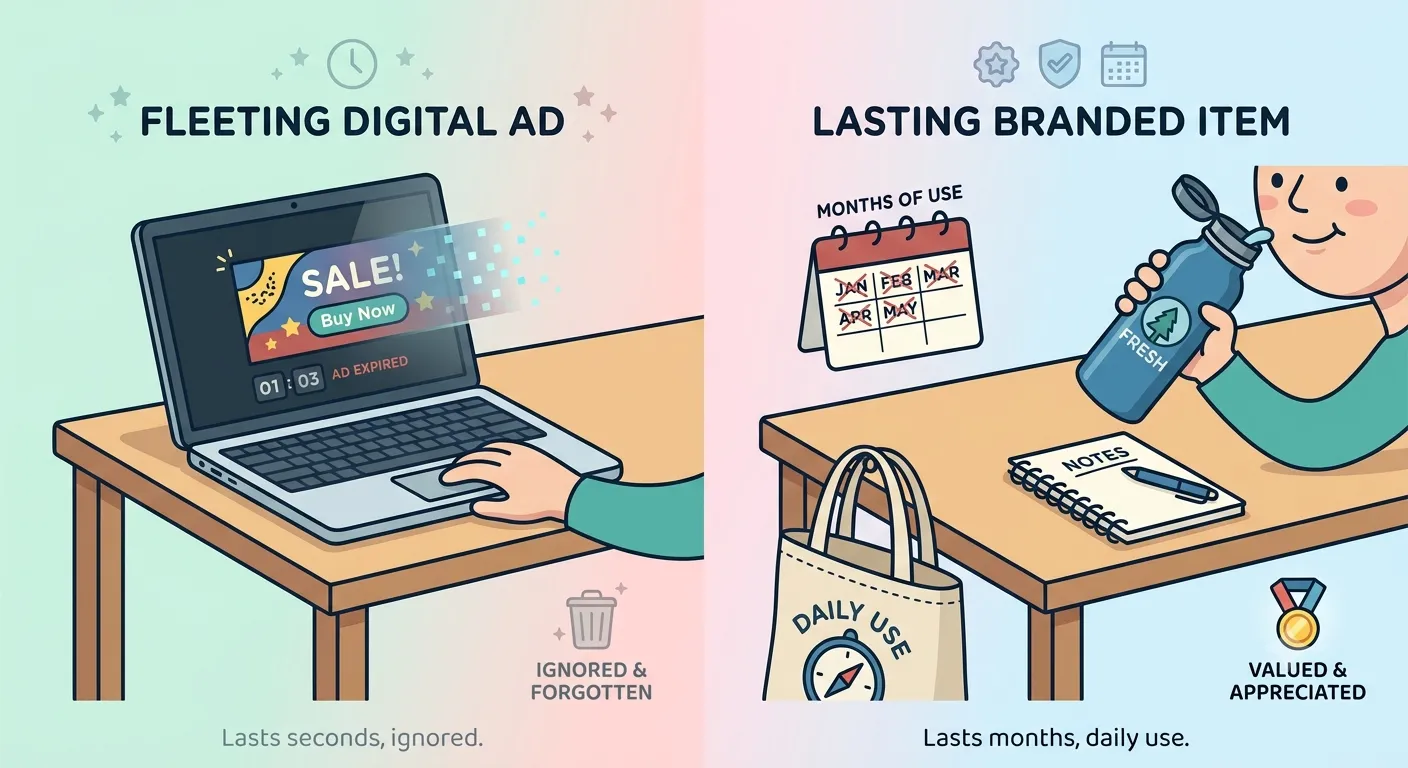
Marketing budgets keep shifting toward ads, email, and social content. Yet one old-school tool keeps earning its place in the plan: branded merchandise. A well-chosen item with a company logo can do something a banner ad cannot. It sits on a desk, rides in a bag, or hangs in a closet for months or years. Every time someone uses it, your brand gets another quiet impression.
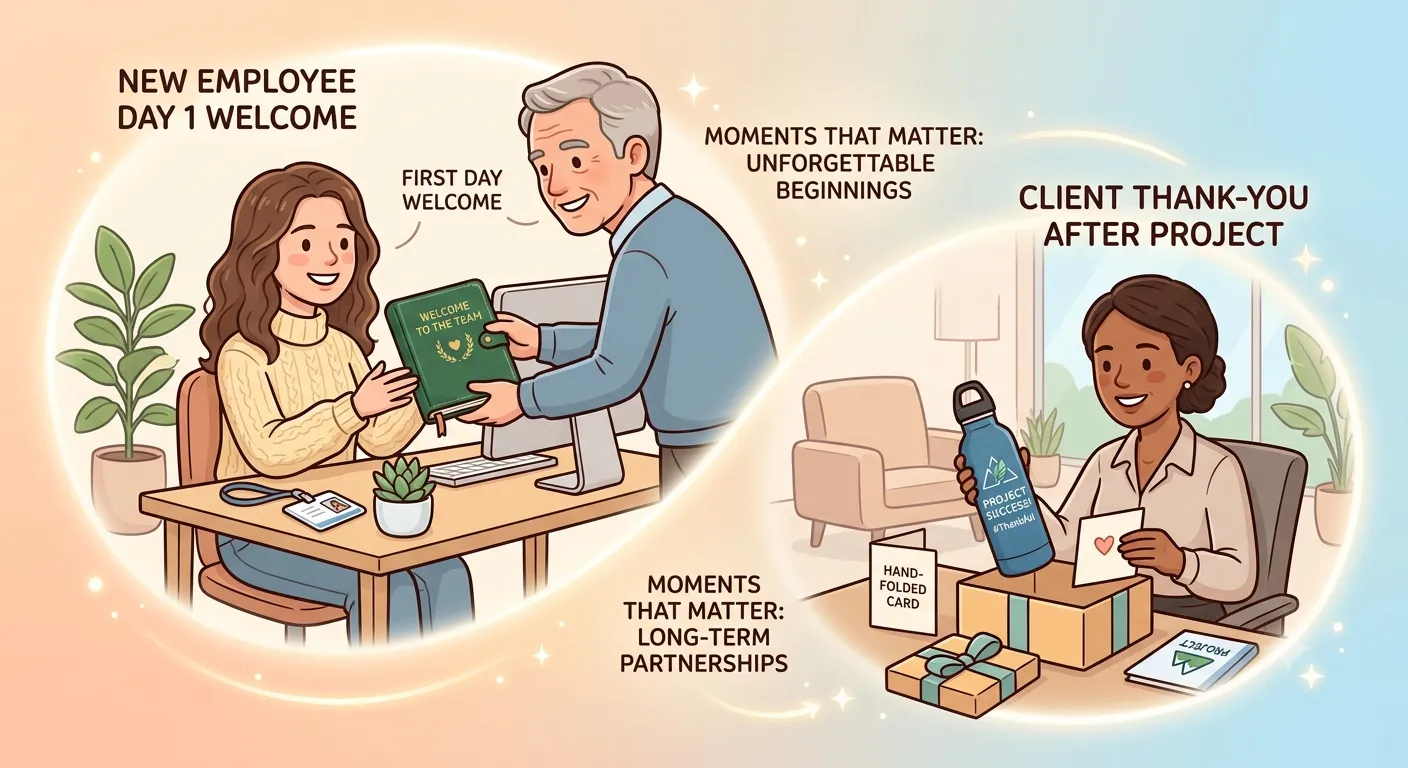
This is not about handing out cheap pens at a trade show. Done right, branded merchandise becomes part of how people experience a company. It shows up at the start of a new job, at a conference booth, in a client's welcome package, or as a thank-you gift after a big sale closes. The goal is simple. Make something useful enough that people keep it and memorable enough that they associate it with your brand.
What Makes Merchandise Actually Work?
Not every branded item earns its keep. A lot of promotional products end up in a junk drawer or the trash within a week. The items that last share a few traits.
First, they solve a small daily problem. A sturdy water bottle, a phone stand, or a notebook gets used because people need those things anyway. Second, the design feels intentional rather than slapped together. A logo printed too large, in the wrong color, or on a low-quality product can hurt a brand more than help it. Third, the item matches the audience. A tech startup handing out branded charging cables makes sense. The same company handing out golf tees to a room of software engineers does not.
Timing matters just as much as the product. Merchandise given at the right moment, like a new hire's first day or a client's renewal anniversary, carries more weight than merchandise handed out at random. It becomes part of a memory instead of just an object.
The Business Case Behind the Swag
Skeptics sometimes ask if physical items still matter when so much marketing has moved online. The answer shows up in a few practical benefits.
Cost per impression tends to be lower than people expect. A reusable tote bag or a mug can be seen dozens of times over its life, at a fraction of the cost of a single paid ad impression. Physical items also build trust in a way digital ads struggle to match. People are more skeptical of banner ads than they are of an item they can hold, use, and judge for its quality.
There is also the internal side of the business. Employees who receive thoughtful branded gifts tend to feel more connected to the company. A well-made jacket or bag with a logo signals that leadership put effort into the detail, not just the paycheck. That kind of small gesture adds up over time and plays a role in retention.
Companies that want to do this well often work with an experienced partner rather than ordering items off a generic catalog site. Firms like Grossman Marketing Group handle the full process, from sourcing and design to fulfillment, so the end product actually reflects the brand instead of looking like an afterthought. Working with a team that understands branded merchandise end to end usually means fewer wasted orders and a better fit between the item and the audience it is meant for.
Common Mistakes to Avoid
A few mistakes show up again and again in this space. The first is ordering in bulk before testing a product with a small group. What looks good in a catalog photo does not always hold up once it is in someone's hands. The second is ignoring quality in favor of a lower price. A shirt that shrinks after one wash or a pen that stops writing within a week reflects poorly on the brand behind it, even if the logo print was perfect.
Another mistake is treating merchandise as an afterthought instead of part of the marketing plan. Items thrown together at the last minute for a conference rarely land well. The best campaigns treat merchandise the same way they treat any other marketing channel, with a goal, a target audience, and a way to measure whether it worked.
Finally, some companies forget to plan for fulfillment and storage. Ordering 5,000 units of a single item sounds efficient until half of it sits in a warehouse for two years because there was no plan for distributing it. Smaller, more frequent orders tied to specific events or milestones usually perform better than one giant order sitting in storage.
Making Merchandise Part of a Bigger Strategy
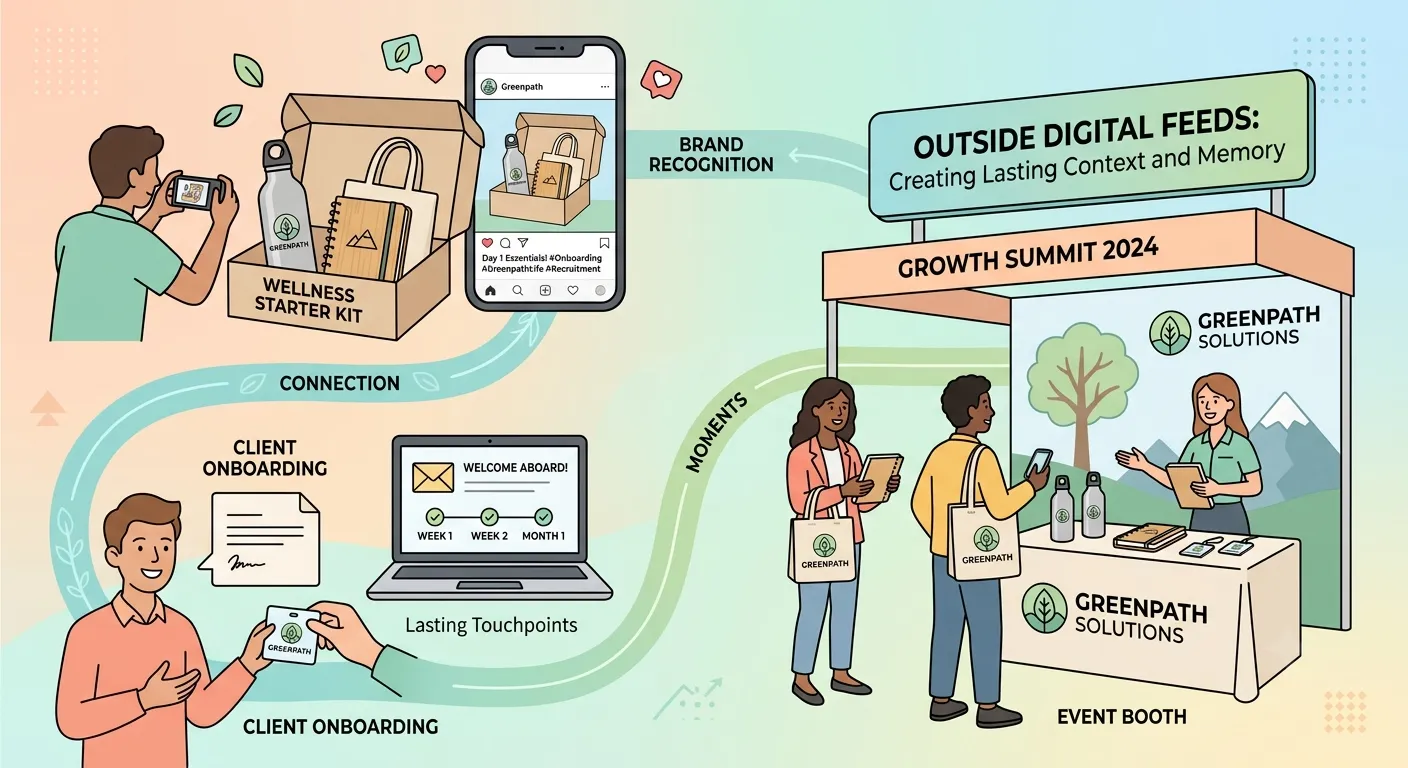
Branded merchandise works best when it supports a larger marketing effort instead of standing alone. Pairing a physical item with a social media campaign, a client onboarding sequence, or an event gives it context and purpose. People remember the story behind an item more than the item itself.
Companies that treat merchandise as a long-term brand touchpoint, not a one-off giveaway, tend to see the best return. It takes some planning and a willingness to spend a bit more on quality, but the payoff is a physical reminder of the brand that lives outside the inbox and outside the feed. In a marketing world crowded with digital noise, that kind of staying power is hard to replace.


























Sign in to leave a comment.