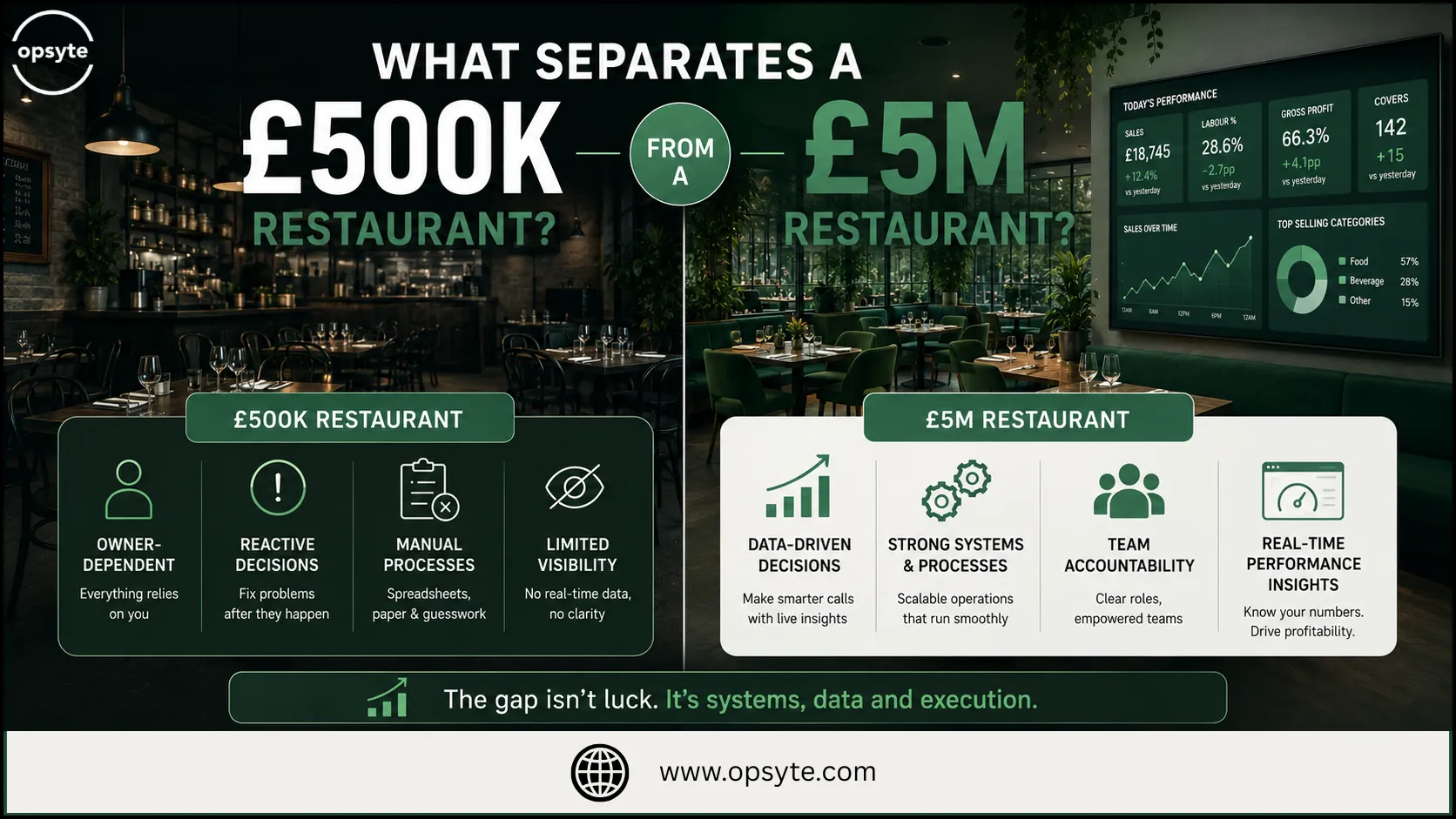

Walk into two busy restaurants on a Friday night and, at first glance, they might look remarkably similar. Both have full tables, talented chefs, and teams rushing between the kitchen and dining room. Yet one business generates around £500,000 annually while the other is on track for £5 million or more.
The difference often isn't found on the menu.
It’s hidden in the systems, decisions, and operational discipline that guests never see.
Many restaurant owners spend years chasing the next food trend, redesigning interiors, or tweaking marketing campaigns. While these efforts have value, the restaurants that successfully scale into multi-million-pound businesses usually master something less glamorous: operational control.
And at the centre of that control is people management.
The £500K Restaurant: Constantly Reacting
In many smaller restaurant operations, management often feels like a daily firefight.
A chef calls in sick. Someone forgets they're unavailable next Tuesday. A manager spends an hour creating rotas in spreadsheets. Shift changes happen in WhatsApp groups. Labour costs creep up unnoticed.
None of these issues seem catastrophic on their own.
But together, they create a pattern of inefficiency that quietly limits growth.
Restaurant owners frequently find themselves trapped in the business instead of leading it. Instead of focusing on expansion, customer experience, or profitability, they're spending valuable time solving scheduling problems.
This reactive way of working creates a ceiling that can be difficult to break through.
The £5M Restaurant: Building Systems That Scale
Multi-million-pound restaurant businesses think differently.
Rather than relying on memory, spreadsheets, or manual processes, they build systems designed to support growth.
One of the first areas they optimise is workforce management.
The reason is simple: labour is often one of the largest costs in hospitality. Even small improvements in scheduling efficiency can have a significant impact on profitability across an entire year.
This is where Hospitality Staff Scheduling Software becomes a competitive advantage rather than just an administrative tool.
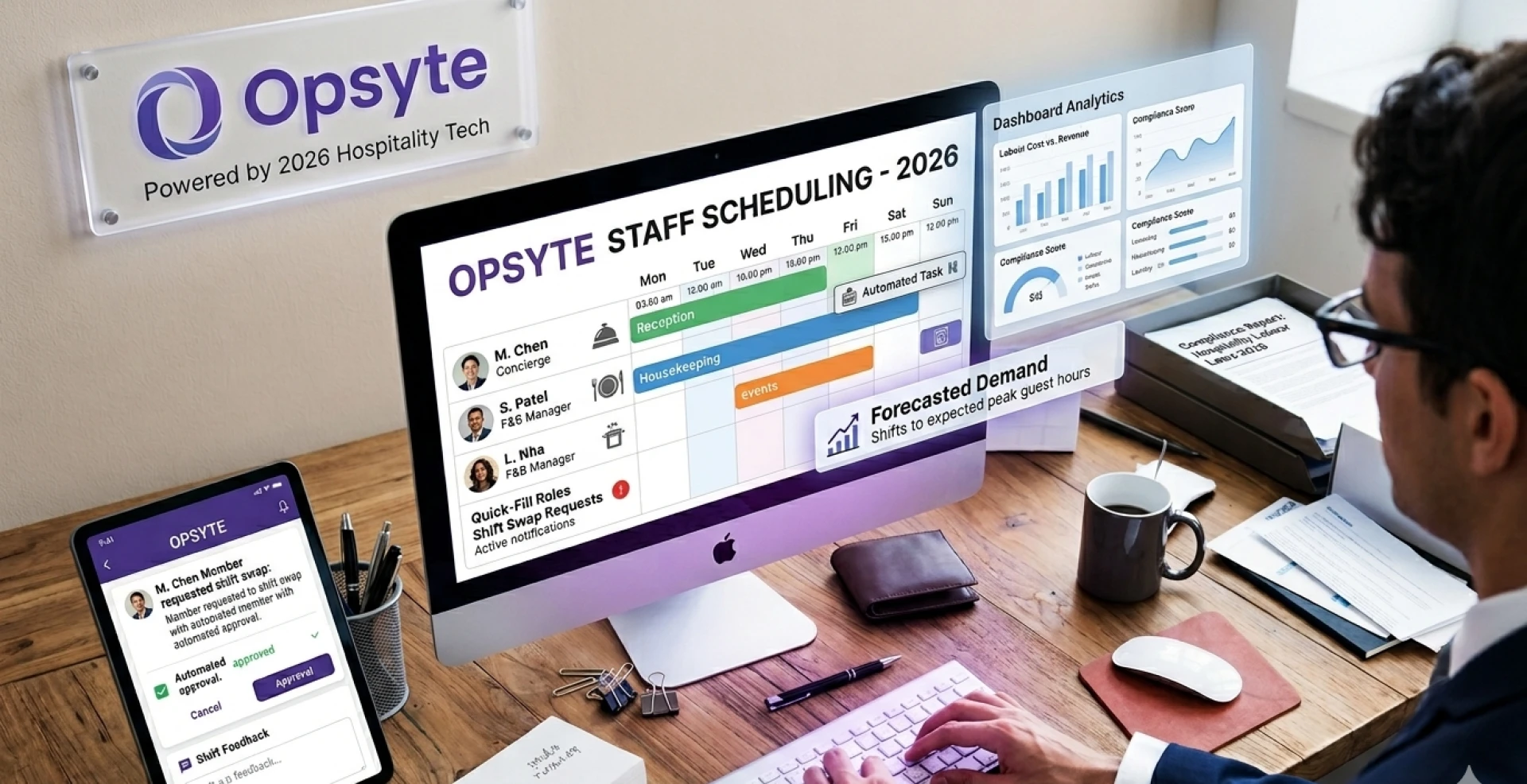
Instead of spending hours creating rotas manually, managers can instantly build schedules, manage availability, track labour costs, and communicate updates with their teams from a single platform.
The result isn't just time saved.
It's consistency.
And consistency is what allows restaurants to scale.
Growth Doesn't Break Restaurants — Complexity Does
Many owners assume growth itself creates problems.
In reality, growth exposes existing weaknesses.
A restaurant operating with 12 employees can often survive on manual scheduling. Add a second location, increase staff numbers to 40 or 50, and suddenly every inefficiency becomes magnified.
Shift conflicts multiply.
Communication becomes fragmented.
Labour costs become harder to monitor.
Management teams spend more time coordinating staff than improving the business.
This is why successful operators increasingly adopt Restaurants Employee Scheduling Software before growth creates operational bottlenecks.
The goal isn't simply to schedule people.
It's to create a framework that allows the business to expand without losing control.
The Hidden Cost of Poor Scheduling
When people think about scheduling, they often focus only on staffing levels.
But poor scheduling creates costs that don't appear immediately on financial reports.
For example:
- Employee dissatisfaction from unfair shift allocation.
- Increased staff turnover.
- Last-minute overtime expenses.
- Reduced customer service quality.
- Manager burnout.
These costs accumulate over time.
A restaurant might believe it has a staffing problem when, in reality, it has a scheduling problem.
High-performing hospitality businesses recognise that every shift affects customer experience, employee morale, and profitability simultaneously.
That's why they invest in smarter scheduling systems rather than treating rota creation as an afterthought.
Why the Humble Staff Rota Matters More Than Most Owners Think
Few restaurant documents receive less attention than the weekly rota.
Yet it can influence almost every aspect of operations.
A well-structured Staff Rota Template creates clarity, accountability, and predictability for both management and employees.
Staff know when they're working.
Managers know where coverage gaps exist.
Teams communicate more effectively.
Service standards remain consistent.
The best restaurant operators understand that great hospitality doesn't happen by accident. It happens when every member of the team knows exactly where they need to be and when.
Modern scheduling platforms have transformed the traditional rota from a static document into a dynamic operational tool that supports real-time business needs.
The Million-Pound Difference Is Often Data
Here's something many restaurant owners don't realise:
The gap between a £500K restaurant and a £5M restaurant is often measured in decisions.
Hundreds of small decisions.
How many staff should be scheduled on Tuesday afternoon?
When should additional kitchen support be added?
Which shifts consistently generate unnecessary overtime?
Where are labour costs increasing?
Without data, these decisions become guesswork.
With the Best Scheduling Software for Restaurants, they become measurable business opportunities.
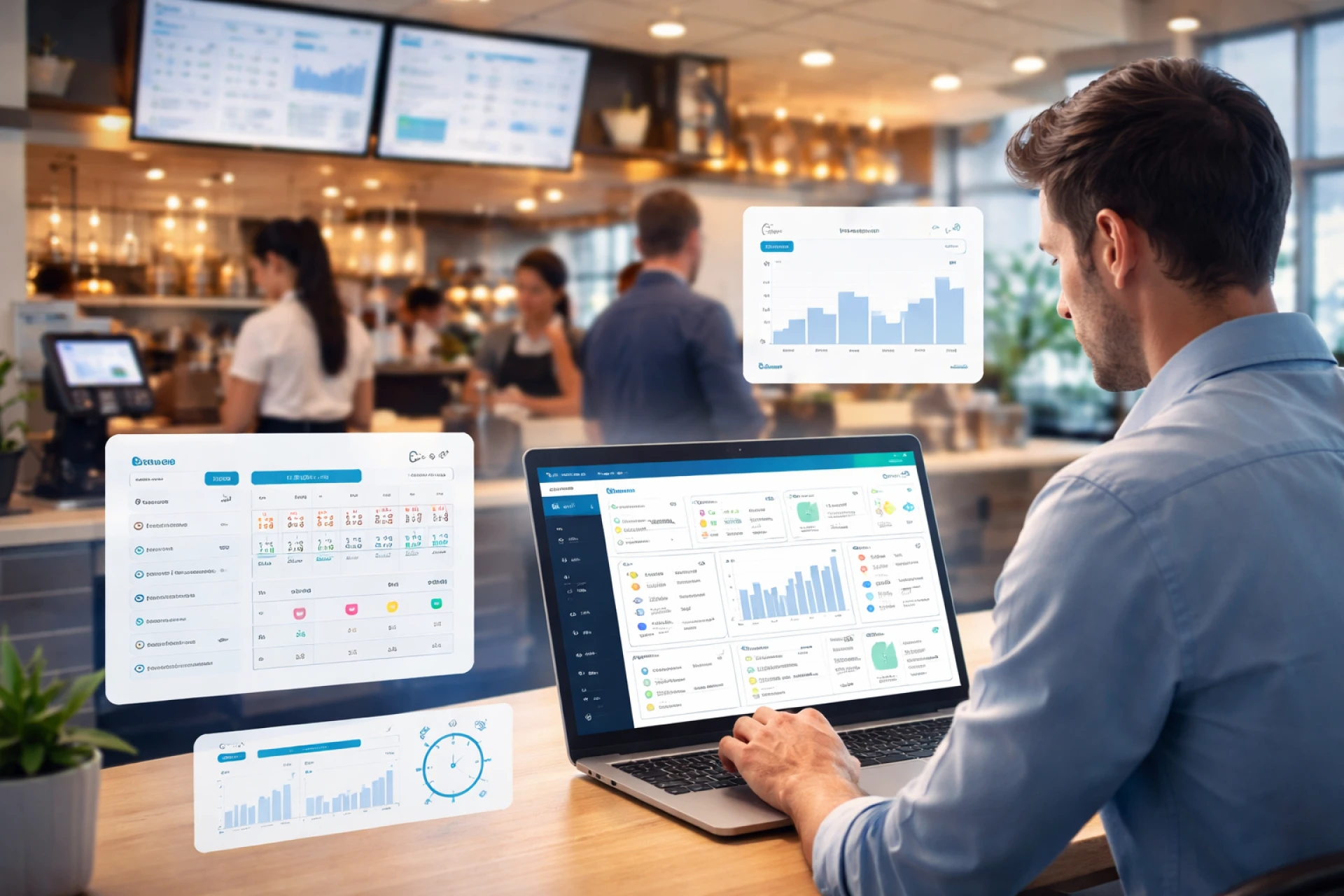
Modern restaurant operators increasingly rely on workforce analytics to understand trends, forecast demand, and optimise staffing levels.
The result is a more agile operation that can respond quickly to changing customer patterns while protecting profitability.
Technology Is No Longer Optional
There was a time when technology provided an advantage.
Today, it provides a necessity.
Consumer expectations have evolved.
Labour challenges have increased.
Margins remain tight.
Restaurants that continue relying on outdated systems often find themselves competing against businesses equipped with better visibility, better communication, and better operational control.
This shift explains why forward-thinking hospitality businesses are investing in comprehensive Hospitality Software solutions that connect scheduling, workforce management, communication, and reporting into a single ecosystem.
Rather than managing multiple disconnected tools, they create one source of operational truth.
And that simplicity creates efficiency.
What Today's Restaurant Leaders Are Doing Differently
The restaurant leaders building multi-million-pound businesses aren't necessarily working harder than everyone else.
They're removing friction.
They're reducing manual processes.
They're empowering managers with better information.
They're creating environments where employees can succeed.
Most importantly, they're building businesses that can operate effectively without requiring constant intervention from the owner.
This is where platforms like Opsyte have gained attention within the hospitality sector.
By focusing specifically on workforce management and scheduling challenges faced by restaurants, Opsyte helps operators simplify one of the most complex aspects of running a hospitality business. From creating rotas to improving communication and controlling labour costs, the platform is designed around the realities of restaurant operations rather than generic workforce management.
The Real Difference Between £500K and £5M
The truth is surprisingly simple.
A £500K restaurant often depends on people remembering things.
A £5M restaurant depends on systems making sure things don’t get forgotten.
The larger business doesn’t necessarily have better chefs, a better location, or even a better menu.
What it often has is greater operational visibility, stronger workforce management, and processes that scale.
In hospitality, growth rarely comes from one breakthrough moment.
It comes from hundreds of small improvements repeated consistently over time.
And for many restaurants, that journey starts with mastering one of the most overlooked areas of the business: scheduling the right people, at the right time, with the right tools.
Because the path from £500K to £5M isn’t just about serving more customers.
It’s about building a business that can handle success when it arrives.
That’s exactly where Opsyte helps hospitality businesses take control of operations, improve visibility, and scale with confidence.
If you’re serious about scaling your restaurant, it starts with getting operations right—explore Opsyte to see how.

























Sign in to leave a comment.