
Entering the United States medical device market requires manufacturers to comply with strict regulatory standards established by the U.S. Food and Drug Administration (FDA). For many medical devices, especially moderate-risk products, the FDA 510(k) submission process is one of the most important pathways for obtaining market clearance.
The 510(k) pathway helps ensure that medical devices are safe, effective, and substantially equivalent to legally marketed devices already available in the U.S. market. However, the process involves detailed technical documentation, regulatory planning, testing activities, and communication with the FDA, which can be challenging for companies unfamiliar with regulatory requirements.
This guide explains the FDA 510(k) submission process using practical insights to help medical device manufacturers understand the key stages, common challenges, and compliance responsibilities associated with FDA clearance.
Understanding the FDA 510(k) Submission Process
An FDA 510(k) submission is a premarket notification filed with the FDA to demonstrate that a medical device is substantially equivalent to an existing legally marketed device known as a predicate device.
Manufacturers must show that their device:
- Has the same intended use as the predicate device
- Meets comparable safety and effectiveness standards
- Does not introduce new safety concerns
Once the FDA determines substantial equivalence, the device receives FDA clearance for commercial distribution in the United States.
The 510(k) pathway commonly applies to:
- Class II medical devices
- Certain Class I devices
- Moderate-risk healthcare products
Examples include:
- Diagnostic systems
- Surgical instruments
- Orthopedic devices
- Patient monitoring equipment
- Dental products
- Disposable medical supplies
The FDA reviews technical documentation, testing data, labeling, and performance information before granting clearance.
Understanding the regulatory expectations early in product development can help manufacturers avoid delays and improve submission readiness.
Who Needs to Submit a 510(k)?
Not every medical device requires a 510(k) submission. Whether a manufacturer needs to file depends on the device classification, intended use, and regulatory status.
Generally, manufacturers must submit a 510(k) if they:
- Introduce a new medical device into the U.S. market
- Modify an existing device significantly
- Change the intended use of a device
- Make design or technology changes affecting safety or effectiveness
Companies that commonly require 510(k) submissions include:
- Medical device manufacturers
- Startups developing healthcare technologies
- Importers and distributors
- Contract manufacturers
- International companies entering the U.S. market
Devices classified as Class III may require a more extensive Premarket Approval (PMA) process instead of a 510(k).
Manufacturers should carefully review FDA product classifications and applicable regulations before determining the correct pathway.
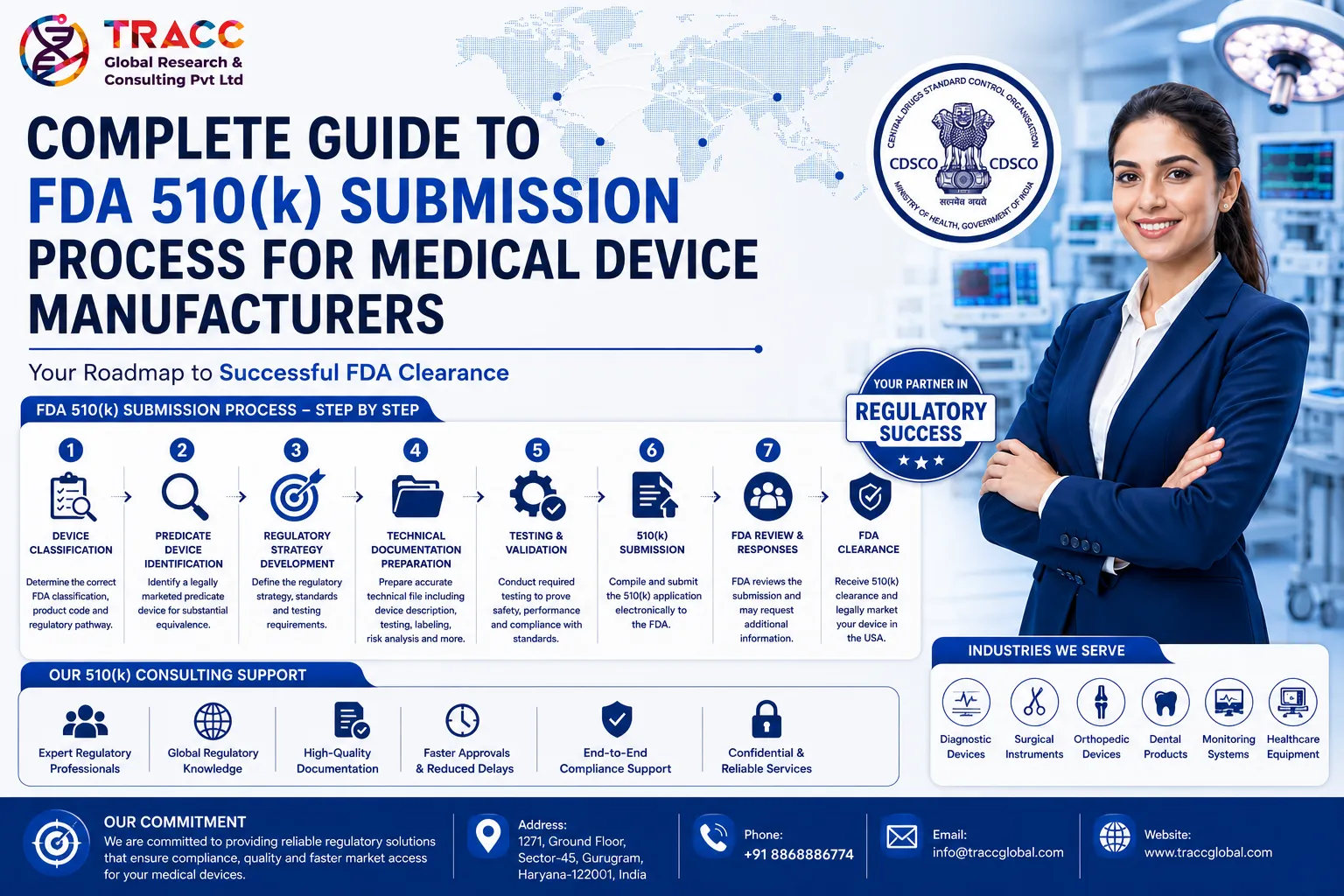
Key Steps in Preparing Your 510(k) Submission
Preparing a successful 510(k) submission involves multiple stages requiring technical accuracy and strong regulatory planning.
Device Classification
The first step is identifying the correct FDA classification, product code, and applicable regulations for the device.
Incorrect classification can result in submission rejection or unnecessary delays.
Predicate Device Identification
Manufacturers must identify a suitable predicate device already cleared by the FDA.
The predicate should have:
- Similar intended use
- Comparable technology
- Similar performance characteristics
Strong predicate selection is critical for demonstrating substantial equivalence.
Technical Documentation Preparation
The FDA requires extensive documentation, including:
- Device descriptions
- Intended use statements
- Design specifications
- Labeling information
- Risk analysis reports
- Software validation
- Sterilization validation
- Biocompatibility evaluations
- Performance testing data
Clear and organized documentation improves review efficiency.
Testing and Validation
Many devices require testing to demonstrate safety and performance.
Testing may include:
- Electrical safety testing
- EMC testing
- Mechanical validation
- Shelf-life studies
- Packaging validation
- Cybersecurity assessments
Following FDA-recognized standards is highly recommended.
Submission Compilation
Once all documentation is complete, the manufacturer compiles the electronic submission package according to FDA formatting requirements.
Careful review before submission helps minimize deficiencies and review delays.
Common Challenges and How to Overcome Them
The FDA 510(k) process can be complex, particularly for companies without internal regulatory expertise.
Incomplete Documentation
Missing or inconsistent technical files are one of the most common reasons for FDA delays.
Maintaining organized documentation throughout product development can help avoid this issue.
Incorrect Predicate Device Selection
Choosing an unsuitable predicate device may weaken the substantial equivalence argument.
Manufacturers should conduct detailed predicate research before submission.
Changing FDA Expectations
FDA guidance documents and regulatory expectations continue to evolve.
Manufacturers should stay updated on:
- FDA guidance updates
- Testing standards
- Cybersecurity requirements
- Labeling expectations
Delayed Testing Activities
Late-stage testing delays often affect submission timelines and product launches.
Planning testing activities early in the development process helps improve project efficiency.
Lack of Regulatory Knowledge
Smaller companies and startups may struggle with complex FDA terminology and requirements.
Seeking regulatory guidance early can help manufacturers better understand compliance responsibilities and avoid costly mistakes.
The Review Process: What to Expect After Submission
After the 510(k) application is submitted, the FDA begins an initial acceptance review to confirm that all required administrative and technical information is included.
Once accepted, the FDA conducts a detailed scientific and regulatory review.
During the review process, the FDA may:
- Evaluate testing data
- Assess substantial equivalence claims
- Review labeling information
- Request additional clarification
- Issue deficiency questions
Manufacturers should respond to FDA requests promptly and accurately to avoid additional delays.
The review timeline varies depending on:
- Device complexity
- Submission quality
- FDA workload
- Additional information requests
If the FDA determines the device is substantially equivalent, the manufacturer receives FDA clearance.
Post-Submission: Maintaining Compliance and Next Steps
FDA compliance does not end after receiving clearance. Manufacturers must continue maintaining quality systems and regulatory responsibilities.
Key post-clearance requirements may include:
- Quality management system maintenance
- Complaint handling procedures
- Corrective and preventive actions (CAPA)
- Post-market surveillance
- Labeling compliance
- Device listing and establishment registration
Manufacturers should also monitor:
- Product modifications
- Software updates
- Design changes
- Regulatory updates
Certain modifications may require a new 510(k) submission depending on their impact on safety or effectiveness.
Strong ongoing compliance practices help reduce regulatory risks and support long-term product success.
Frequently Asked Questions About 510(k) Submissions
How long does the FDA 510(k) process take?
The timeline varies depending on device complexity and submission quality. Delays may occur if the FDA requests additional information.
Does every medical device require a 510(k)?
No. Some devices are exempt, while others may require Premarket Approval (PMA) instead.
What is substantial equivalence?
Substantial equivalence means the new device is similar in intended use and safety to an existing legally marketed device.
Can software-based medical devices require a 510(k)?
Yes. Many software and digital health products require FDA clearance depending on their intended medical use.
What happens if the FDA rejects the submission?
Manufacturers may need to revise documentation, provide additional testing data, or address FDA concerns before resubmitting.
Is clinical data always required?
Not always. The need for clinical data depends on device complexity, risk level, and FDA expectations.
The FDA 510(k) submission process plays a critical role in ensuring medical devices entering the U.S. market meet safety and performance standards. Although the process can be detailed and technically demanding, careful preparation, organized documentation, and strong regulatory understanding can significantly improve submission success rates.
For medical device manufacturers, understanding the FDA review process and maintaining ongoing compliance are essential steps toward achieving successful market entry and long-term regulatory confidence.



























Sign in to leave a comment.