
Dealing with persistent heel pain can significantly impact your daily activities and overall quality of life. If you’re experiencing stabbing pain in your heel, especially during those first morning steps, you might be dealing with plantar fasciitis. Knowing when to seek professional help for Plantar Fasciitis in Ridgecrest, CA is crucial for preventing long-term complications and getting back to your normal routine quickly.
This comprehensive guide will help you understand the warning signs that indicate it’s time to schedule a consultation with a healthcare professional in your area. Additionally, we’ll explore treatment options, risk factors, and practical steps you can take to manage this common foot condition effectively.
Understanding Plantar Fasciitis: What Causes This Painful Condition?
Plantar fasciitis occurs when the thick band of tissue running across the bottom of your foot becomes inflamed. This tissue, called the plantar fascia, connects your heel bone to your toes and supports the arch of your foot. When excessive stress is placed on this ligament, small tears can develop, leading to inflammation and pain.
Several factors contribute to the development of this condition:
- Age-related changes: People between 40 and 60 years old are at higher risk
- Physical activities: Running, dancing, and aerobic exercises that place stress on your feet
- Foot mechanics: Flat feet, high arches, or abnormal walking patterns
- Occupational hazards: Jobs requiring prolonged standing on hard surfaces
- Weight factors: Excess body weight increases stress on the plantar fascia
Understanding these causes helps you recognize whether your symptoms warrant professional attention. Moreover, identifying risk factors early can prevent the condition from worsening over time.
Early Warning Signs: When Should You Be Concerned?
Recognizing the symptoms of plantar fasciitis early makes treatment more effective. However, many people dismiss initial discomfort as temporary soreness. Therefore, it’s important to pay attention to persistent symptoms that don’t improve with rest.
The most common indicators include:
- Sharp, stabbing pain in the bottom of your heel
- Pain that’s typically worse with the first steps after waking
- Discomfort after long periods of standing or when rising from a seated position
- Pain that decreases with activity but returns after rest
- Increased pain after exercise rather than during physical activity
If you’re experiencing any of these symptoms for more than a few weeks, seeking professional help for Plantar Fasciitis in Ridgecrest, CA, should be your next priority. Early intervention often leads to faster recovery and prevents chronic issues from developing.
Learn More About Foot Pain Management →
Timeline for Seeking Professional Help: How Long Is Too Long?
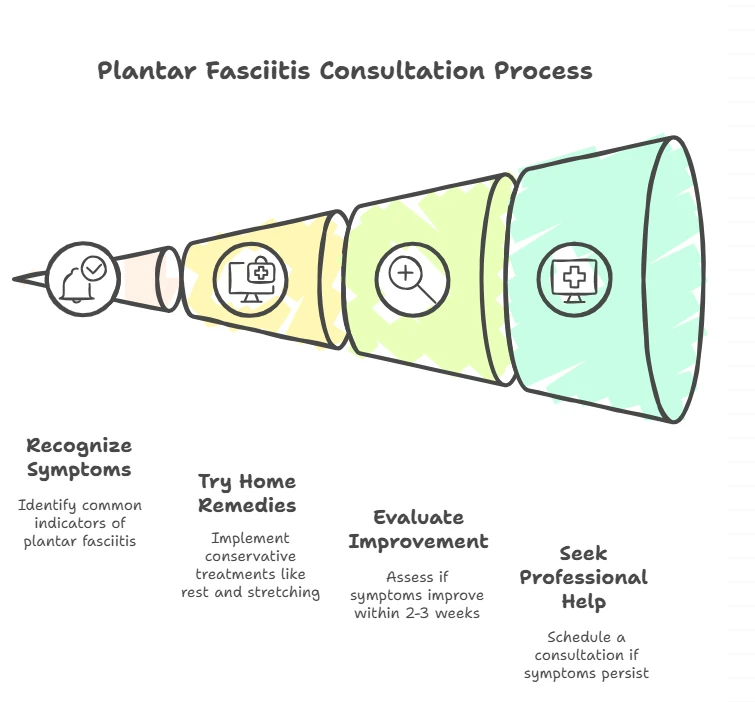
Many individuals wonder how long they should wait before consulting a healthcare provider. Generally, if home remedies and rest haven’t improved your symptoms within two to three weeks, it’s time to schedule an appointment.
Conservative home treatments include:
- Resting your feet and avoiding activities that worsen pain
- Applying ice to the affected area for 15-20 minutes several times daily
- Performing gentle stretching exercises for your calf and foot
- Wearing supportive footwear with proper arch support
- Taking over-the-counter anti-inflammatory medications as directed
Nevertheless, certain situations require immediate medical attention. You should seek care right away if you experience severe pain that prevents walking, significant swelling, numbness or tingling, or a fever with foot pain. These symptoms could indicate a more serious condition that needs prompt evaluation.
Furthermore, if your pain interferes with your work, daily activities, or sleep quality, don’t delay seeking professional guidance. Quality of life matters, and prolonged suffering isn’t necessary when effective treatments are available.
What to Expect During Your Consultation in Ridgecrest?
When you book an appointment for Plantar Fasciitis care in Ridgecrest, CA, understanding what to expect can help ease any anxiety. Your healthcare provider will conduct a thorough examination to confirm the diagnosis and rule out other conditions.
The consultation typically includes:
- Medical history review: Discussion of your symptoms, activity level, and any previous foot problems
- Physical examination: Assessment of your foot structure, range of motion, and pain points
- Gait analysis: Observation of how you walk to identify mechanical issues
- Diagnostic imaging: X-rays or ultrasound may be ordered to rule out stress fractures or other complications
Based on the findings, your provider will develop a personalized treatment plan. This plan might include physical therapy, custom orthotics, night splints, or advanced treatments such as corticosteroid injections or extracorporeal shockwave therapy.
Additionally, your healthcare team will educate you about prevention strategies and lifestyle modifications. They’ll work with you to identify factors contributing to your condition and develop strategies to prevent recurrence.
Treatment Options: From Conservative to Advanced Care
Treatment for plantar fasciitis varies depending on severity and individual circumstances. Most patients respond well to conservative treatments when implemented correctly and consistently.
Conservative treatment approaches include:
- Stretching protocols: Specific exercises targeting the plantar fascia and Achilles tendon
- Orthotic devices: Custom or over-the-counter arch supports to distribute pressure evenly
- Physical therapy: Guided exercises and techniques to strengthen foot muscles
- Night splints: Devices worn during sleep to maintain foot stretching
- Activity modification: Adjusting exercise routines to reduce stress on the feet
For cases that don’t respond to conservative measures within several months, advanced treatments become necessary. These options include platelet-rich plasma (PRP) injections, extracorporeal pulse activation technology (EPAT), and in rare cases, surgical intervention.
Your provider specializing in Plantar Fasciitis will discuss all available options and recommend the most appropriate approach based on your specific situation. Remember that consistent adherence to prescribed treatments significantly improves outcomes.
Schedule Your Consultation Today →
The Cost of Delaying Treatment: Why Timing Matters
Postponing professional care for plantar fasciitis can lead to several complications. Chronic heel pain may cause you to alter your gait, potentially leading to knee, hip, or back problems. Additionally, prolonged inflammation can result in permanent damage to the plantar fascia.
Other consequences of delayed treatment include:
- Development of heel spurs
- Increased pain intensity and frequency
- Extended recovery time when treatment finally begins
- Higher treatment costs due to more advanced interventions needed
- Reduced mobility and decreased quality of life
By contrast, early intervention often resolves symptoms within a few months using simple, cost-effective treatments. Therefore, recognizing when to seek help and acting promptly can save you time, money, and unnecessary suffering.
Furthermore, addressing plantar fasciitis early prevents the condition from becoming a chronic problem. Many patients who delay treatment find themselves dealing with recurring episodes that could have been avoided with timely professional care.
Local Resources and Support for Ridgecrest Residents
Living in Ridgecrest means you have access to quality healthcare providers who understand the community's unique needs. Local specialists familiar with Plantar Fasciitis in Ridgecrest, CA, can provide personalized care tailored to your lifestyle and activity level.
When selecting a healthcare provider, consider these factors:
- Experience treating plantar fasciitis and other foot conditions
- Availability of diagnostic imaging and advanced treatment options
- Convenient location and flexible appointment scheduling
- Positive patient reviews and testimonials.
- Comprehensive treatment approaches addressing both symptoms and underlying causes
Many providers in the area also offer telehealth consultations, making it easier to get initial assessments and follow-up care without leaving home. This convenience proves especially valuable for those with mobility limitations or busy schedules.
Additionally, connecting with local health and wellness communities can provide valuable support and shared experiences from others dealing with similar foot problems. These networks often share recommendations for trusted providers and effective self-care strategies.
Prevention Strategies: Protecting Your Feet Long-Term
While seeking treatment for existing plantar fasciitis is important, implementing preventive measures helps avoid future episodes. Incorporating these strategies into your daily routine reduces stress on your plantar fascia and promotes overall foot health.
Key prevention strategies include:
- Maintaining a healthy weight to reduce pressure on your feet
- Choosing supportive footwear appropriate for your activities
- Gradually increasing exercise intensity rather than sudden changes
- Replacing worn athletic shoes every 300-500 miles
- Performing regular stretching exercises for the feet and calves
- Avoid walking barefoot on hard surfaces.
- Taking breaks during prolonged standing or walking
Moreover, staying proactive about foot health means listening to your body and addressing minor discomfort before it becomes severe pain. Regular self-examinations and awareness of your foot mechanics can help you identify potential problems early.
Professional guidance on proper footwear, exercise techniques, and lifestyle modifications provides invaluable protection against the recurrence of plantar fasciitis. Don’t hesitate to discuss prevention strategies during your consultation, even if your immediate concern is treating current symptoms.
Making the Decision: Your Next Steps Forward
Deciding when to book a consultation for Plantar Fasciitis ultimately depends on your individual circumstances. However, if you’re reading this article because you’re experiencing heel pain, that’s already a strong indicator that professional evaluation could benefit you.
Consider scheduling an appointment if:
- Your heel pain has persisted for more than two to three weeks.
- Home remedies haven’t provided significant relief.
- Pain is interfering with your daily activities or exercise routine.
- You’re experiencing increasing pain intensity or frequency.
- You want to prevent the condition from worsening.
Taking action now can prevent months of unnecessary discomfort and future complications. Modern treatment approaches offer excellent success rates, especially when intervention occurs early in the course of the condition.
Remember that seeking help isn’t a sign of weakness or overreaction. Rather, it demonstrates wise health management and commitment to maintaining your mobility and quality of life. Your feet carry you through life—they deserve proper care and attention when problems arise.
Get Professional Help Now →
































Sign in to leave a comment.