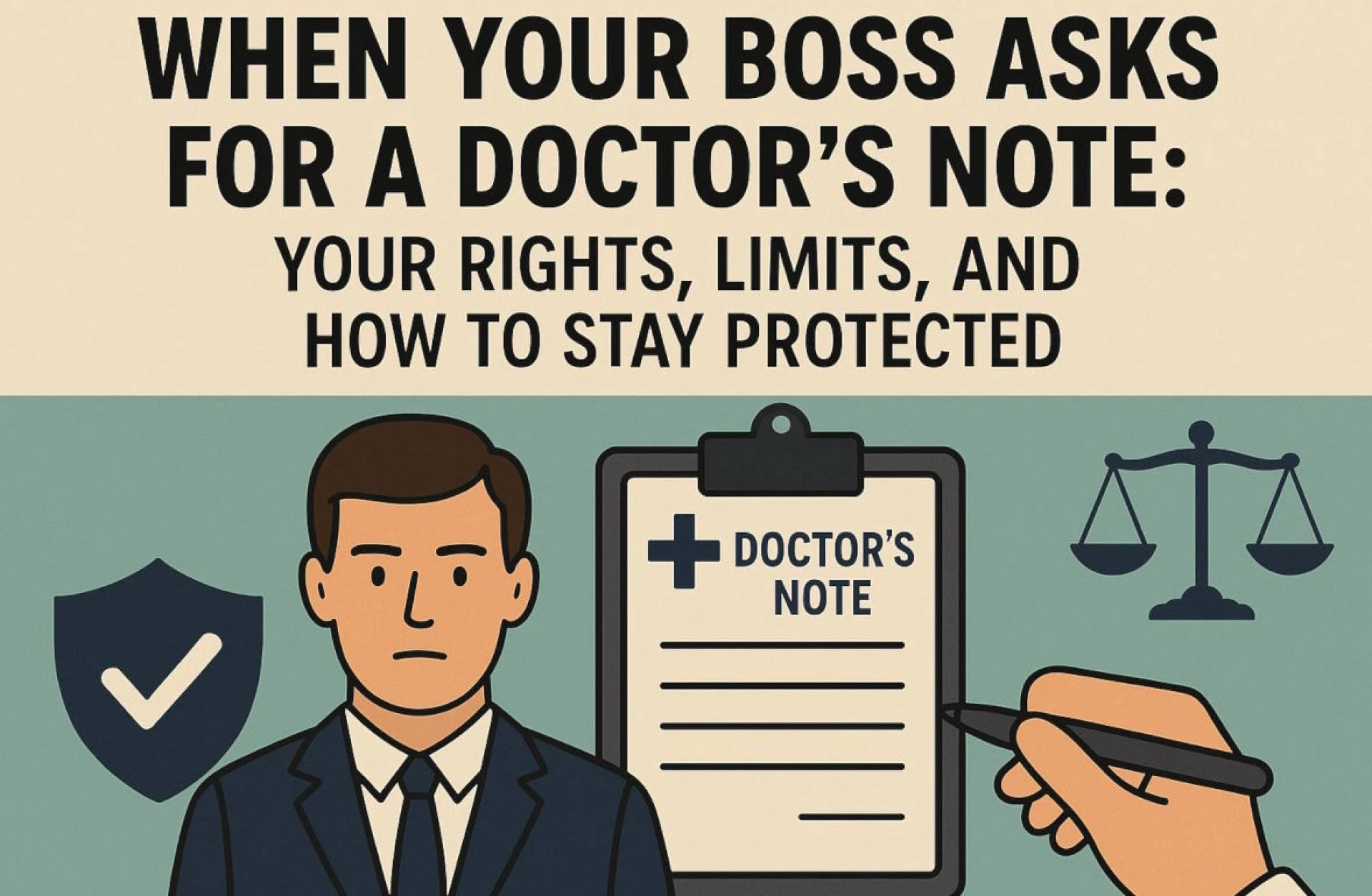
Picture this: you wake up feeling like you’ve been hit by a truck—fever, aches, the works. You call in sick, drag yourself to the doctor, and spend the day recovering. Then, your boss emails you: “Bring a doctor’s note when you’re back.” Suddenly, you’re wondering—is this legit? Can they really ask for that? I’ve been there, and let me tell you, it’s a mix of frustration and confusion.
The employment attorney at California Business Lawyer & Corporate Lawyer, Inc. helps clarify what your employer can and cannot demand when it comes to verifying medical absences. Employer requests for doctor’s notes are common, but they come with a web of legal rights, limits, and protections that every employee should know. Let’s break it down together, so you can feel confident the next time you’re asked to prove you were actually sick.
Why Do Bosses Want That Note Anyway?
I get it—employers aren’t just being nosy (well, most of the time). They’ve got a business to run, and when someone’s out sick, it can throw a wrench in things. A doctor’s note is their way of making sure you’re not faking it to binge-watch your favorite show or sneak in a beach day. In places like hospitals, schools, or factories, where every shift counts, they’re extra strict about absences. I once worked in a call center where one person’s absence meant everyone else was slammed with calls—trust me, the boss noticed.
But it’s not just about keeping the wheels turning. Some companies have rules written in stone, like needing a note after three sick days in a row. Others might need proof to greenlight leave under laws like the Family and Medical Leave Act (FMLA), or to figure out if you need special accommodations because of a health issue. Still, there’s a line between reasonable and over-the-top, and employees have rights to keep things fair.
What the Law Says About Doctor’s Notes
Okay, let’s talk legal stuff—but I promise I won’t bore you with jargon. The rules around doctor’s notes depend on a mix of federal laws, state regulations, and even your company’s handbook. Here’s the scoop on the big ones that matter.
The Family and Medical Leave Act (FMLA)
If you’ve ever needed time off for a serious health issue—like surgery or a chronic condition—the FMLA might’ve been your lifeline. It gives eligible employees up to 12 weeks of unpaid leave without losing their job. Your boss can ask for a medical certification (fancy term for a doctor’s note) to confirm you really need the time off. But here’s the catch: they can only ask for basics, like how long you’ll be out or whether it’s a serious condition. They don’t get to dig into your medical history like it’s a soap opera script.
The Americans with Disabilities Act (ADA)
The ADA is all about making sure people with disabilities aren’t treated unfairly at work. Say you’ve got a condition that requires a standing desk or flexible hours—your employer might ask for a note to verify it. But they can’t go fishing for irrelevant details. The law says they’re only allowed to ask about stuff that affects your job. I had a coworker once who needed breaks for a back issue, and her boss tried to get a full rundown of her treatment plan—uh, no, that’s not okay.
HIPAA and Your Privacy
You’ve probably heard of HIPAA, the law that keeps your medical info under lock and key. It’s a big deal when it comes to doctor’s notes. Your employer can ask for a note, but it should just say something simple, like “Jane was seen on Tuesday and can return to work Friday.” If they start pushing for your diagnosis or test results, they’re stepping into risky territory. I learned this the hard way when a manager once asked me for “more details” about a hospital visit—let’s just say I politely shut that down.
State and Local Rules
Here’s where things get tricky: every state and even some cities have their own spin on sick leave laws. Some places say your boss can’t ask for a note if you’re out for just a day or two, because, honestly, who has time to run to the doctor for a 24-hour bug? Others limit what the note can include to protect your privacy. If you’re curious about your area, a quick Google search or a chat with HR can clear things up.
Where Employers Have to Draw the Line
Employers don’t get a blank check to demand whatever they want. There are guardrails to keep things reasonable, and knowing them can save you a lot of stress.
Keeping It Fair
Your boss can’t just decide to pick on you for a note while letting everyone else slide. If they’re asking for documentation, it better be for a good reason—like a pattern of absences or a longer leave. I once had a manager who demanded a note for a single sick day, but only from me, not my coworker who called out the same week. That kind of inconsistency can spell trouble for them if you call it out.
Not Getting Too Personal
A doctor’s note should stick to the basics: you saw a doctor, you were sick, you’re good to come back (or not). If your employer starts asking for your blood test results or why you’re seeing a specialist, they’re crossing a line. I’ve seen notes that just say, “Employee is under my care,” and that’s plenty.
Timing Matters
Life isn’t perfect, and neither is healthcare access. If you can’t get a doctor’s appointment right away—maybe you’re in a rural area or your clinic’s booked solid—your boss has to cut you some slack. Some states even say employers can’t expect a note for short absences because it’s just not practical.
No Playing Favorites
Policies have to apply to everyone equally. If your boss only asks certain people for notes—say, targeting new hires or folks with accents—that’s a red flag for discrimination. A friend of mine once noticed her manager only bugged women for notes, and a quick chat with HR got that sorted fast.
How You’re Protected
You’re not powerless in this situation. There are ways to stand up for yourself without rocking the boat too much.
Your Privacy Is Sacred
Thanks to HIPAA and other laws, you don’t have to spill your medical secrets. If your boss pushes for more than a simple note, you can say no. I once had to remind a supervisor that my health details weren’t their business—firm but polite works wonders.
No Revenge Allowed
If you push back on an unfair request or take protected leave, your boss can’t punish you for it. That means no write-ups, demotions, or sneaky schedule changes. If you suspect retaliation, jot down what happened and talk to someone you trust, like a union rep or a lawyer.
Sick Leave Rights
Some places have laws guaranteeing paid sick leave, and they often come with rules about notes. For example, you might not need to provide one for a couple of days off. Knowing these laws can give you peace of mind when you’re feeling under the weather.
Union Power
If you’re in a union, your contract might have extra protections. Maybe it says notes are only required after five days, or it limits what your boss can ask. I’ve seen unions step in when employers got too demanding, and it’s a game-changer.
Tips for Handling Doctor’s Note Requests
Navigating this stuff can feel like a minefield, but here’s what’s worked for me and others I know:
- Check the Rules: Dig into your employee handbook to see what’s required. It’s your roadmap.
- Be Honest: If you can’t get a note right away, tell your boss why and ask for a little time.
- Keep It Simple: Make sure your doctor’s note sticks to the essentials—no need to overshare.
- Know Your Rights: Look up your state’s sick leave laws so you’re not caught off guard.
- Get Help if You Need It: If things feel unfair, reach out to HR, a union, or even a lawyer for backup.
Wrapping It Up
Dealing with a boss who wants a doctor’s note can feel like a power trip, but it doesn’t have to be. Employers have a right to check on absences, but they’ve got to play by the rules—laws like the FMLA, ADA, and HIPAA are there to keep things in check. As an employee, you’ve got privacy, fairness, and protections on your side. Next time you’re asked for a note, take a deep breath, know your rights, and handle it like the pro you are. Work’s tough enough without worrying about this stuff, right?























Sign in to leave a comment.