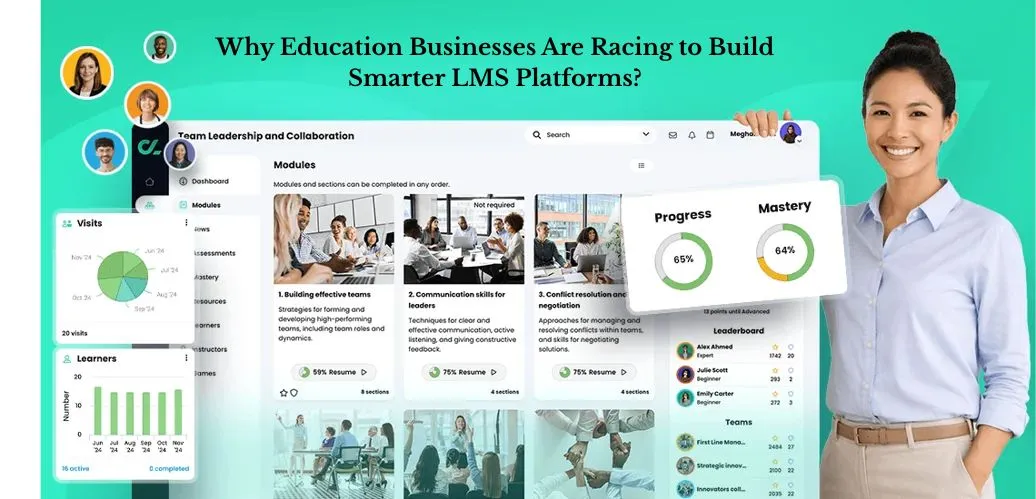

The global education landscape has shifted from "digital-first" to "digital-only." As traditional institutions and private tutoring hubs scramble to meet the demands of a mobile-savvy generation, the opportunity for entrepreneurs has never been greater. If you are looking to capture a slice of the multi-billion dollar education market, the most strategic move you can make is to build a SaaS learning management system that balances scalability with a superior user experience.
However, the market is no longer satisfied with basic video-hosting platforms. In 2026, success belongs to those who understand the intricate layers of SaaS LMS development and can deliver a product that serves as a complete digital ecosystem.
The Evolution of Learning: From Classroom to Cloud
For decades, Learning Management Systems (LMS) were clunky, internal tools used primarily by HR departments or large universities. Fast forward to today, and the "SaaS-ification" of education has democratized high-quality learning.
When you build a SaaS LMS, you are essentially providing "Infrastructure as a Service" (IaaS) for educators. Whether it is a K-12 school in Dubai or a global coding bootcamp, these institutions need a platform that handles the heavy lifting—hosting, security, payments, and analytics—so they can focus on what they do best: teaching.
Why SaaS is the Winning Model for LMS
- Multi-Tenancy: One software instance serving multiple schools, each with its own private data and branding.
- Predictable Revenue: Monthly or annual subscriptions provide the cash flow needed for continuous innovation.
Global Accessibility: Cloud-based architecture ensures a student in London and a tutor in Mumbai can connect with zero latency.
Key Market Drivers for SaaS LMS Development in 2026
The demand for custom LMS development is being driven by three major shifts in the global economy:
1. The Rise of Micro-Credentials
Traditional degrees are being supplemented—and in some cases, replaced—by specific skill certifications. This requires platforms that can issue secure, verifiable digital badges and certificates.
2. Personalized Learning Paths (AI Integration)
Static curricula are a thing of the past. Modern users expect an online learning platform development strategy that includes AI-driven recommendations, adapting the difficulty of content based on a student’s performance in real-time.
3. The Hybrid Schooling Revolution
K-12 schools are no longer using an LMS just for "homework." It has become the primary interface for parent-teacher communication, grade tracking, and hybrid classroom management.
Conclusion
The window of opportunity to build a SaaS learning management system that defines the next decade of education is open right now. However, the complexity of eLearning platform development means you cannot afford to "wing it."
You need a partner who understands the intersection of pedagogy and technology—someone who knows that a button's placement can be the difference between a student finishing a course or dropping out.
The future of education is being written in code. The question is: Will it be your code?

























Sign in to leave a comment.