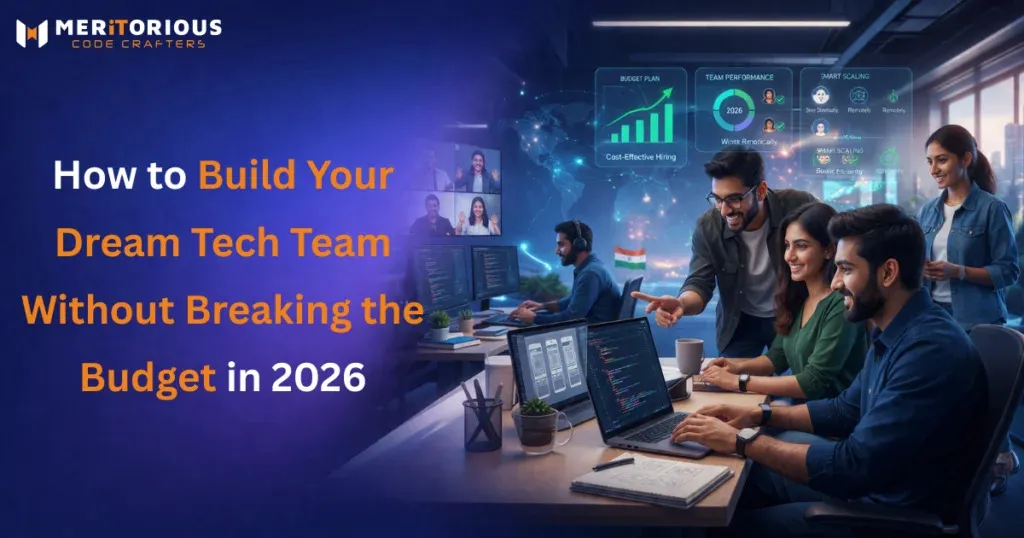

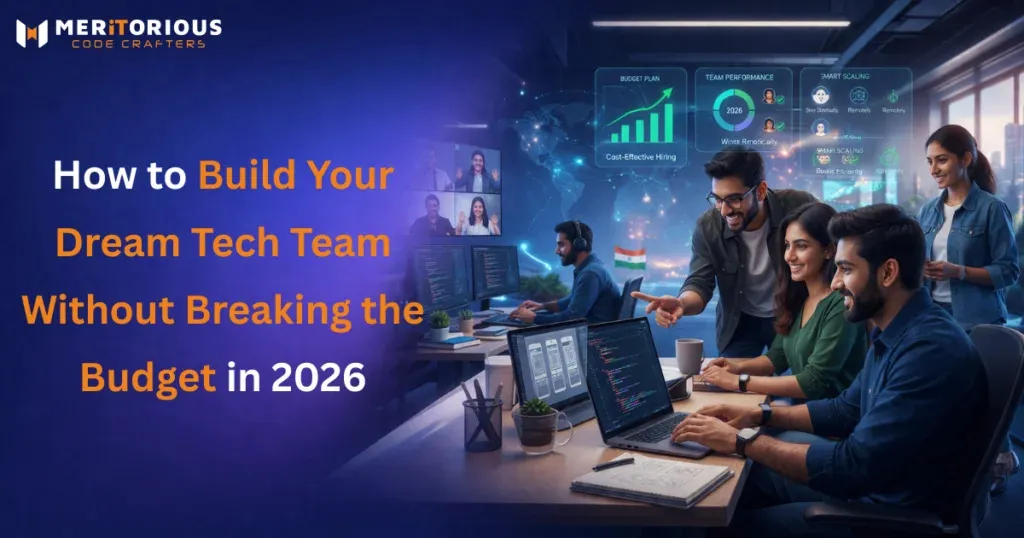
Hiring developers has never been a simple or cheap process — but in 2026, the gap between companies that approach it strategically and those that don't is wider than ever before. Founders who treat engineering recruitment like a standard HR exercise end up overspending, hiring slowly, and building teams that struggle to scale. Those who take a more deliberate approach ship faster, spend smarter, and put together development teams that actually hold together when things get demanding. The good news is that the path to doing this well is more accessible than it's ever been. Global infrastructure, remote collaboration tools, and specialist talent networks have fundamentally changed what's possible — even for startups operating on tight runways. Here's what building a high-performance tech team on a lean budget actually looks like in practice.
Clarity First, Hiring Second
Before you think about sourcing, screening, or salary benchmarks — get completely clear on what you are building and what technical skills that genuinely requires. This sounds obvious, but it's where the majority of costly hiring mistakes originate. Teams write vague job descriptions based on general assumptions, bring on developers who don't quite fit, and then spend months absorbing the cost of misalignment. The fix is straightforward: map your product phases before you open a single role. Identify the core technical requirements for each stage of development. Then decide whether you need a solo specialist, a small focused pod, or a full cross-functional team covering frontend, backend, DevOps, and QA. Getting this groundwork right before you begin sourcing eliminates misaligned hires, saves weeks of wasted interviews, and ensures every person you bring on is directly contributing to something your product actually needs right now. The seniority level and engagement type — part-time, full-time, or project-based — also flow naturally from this clarity. Senior architects cost more but move faster in ambiguous environments. Mid-level engineers are often the best value when the scope is well-defined. Knowing the difference saves real money.
The Global Talent Pool Is Your Biggest Leverage Point
Restricting your developer search to local candidates in 2026 is a self-imposed handicap that most fast-moving companies have already moved past. The reality is that engineering talent is globally distributed, and some of the strongest developer communities in the world are operating out of India, Eastern Europe, Southeast Asia, and Latin America — producing engineers with deep technical foundations, meaningful international client experience, and the communication fluency to work effectively across time zones. The cost differential is significant. Developers in these regions often deliver the same quality of work as their counterparts in major Western tech hubs, but at rates that allow a startup's engineering budget to stretch two to three times further. When you work with the right partner to hire Next.js developers from these markets, you're not compromising on capability — you're simply removing the geographic premium that historically came with technical talent.
The key, as always, is vetting. Not every remote developer is a fit, and not every offshore team operates at the standard you need. But with the right talent partner doing the pre-qualification work, the experience of working with a remote developer becomes indistinguishable from having that person embedded in your team — with the added benefit of your budget going considerably further.
Your Stack Is Also a Talent Strategy
Technology decisions have consequences that extend well beyond the product itself. The framework and language choices you make today will directly shape how quickly you can hire, how large the available talent pool is, and what rates you can expect to pay. This is a dimension of stack selection that often gets overlooked until it becomes a problem.
In 2026, React, Next.js, and Node.js remain the dominant choices across web development for good reason. They are battle-tested, extensively documented, backed by massive open-source communities, and taught in developer programs worldwide. Choosing these technologies doesn't just serve your product — it means you are hiring from the deepest and most competitive talent pools available globally, which translates into faster sourcing cycles, more flexible rate negotiations, and easier team scaling as your product grows.
Opting for a niche or legacy stack might seem like a reasonable technical decision in isolation, but it quietly caps your hiring options and extends time-to-fill for every role. In a fast-moving product environment, that friction compounds quickly. Building around widely adopted technologies is both a product decision and a talent strategy — and in 2026, the best teams treat it as both.
Stop Hiring Generalists When You Need Specialists
The job title "full-stack developer" has become one of the most over-used and under-defined categories in tech recruitment. In practice, it means very different things depending on who's writing the description — and that ambiguity has real consequences for how well the hire performs and how much you end up paying for it.
Vague role definitions lead to expensive mismatches. When a product has a specific technical profile, the hiring brief should reflect that with equivalent specificity. A developer brought in to "own the frontend" is a fundamentally different engagement than one hired to architect your component system, optimize your Core Web Vitals, or rebuild your state management layer. The more precisely you define the role — not just the title, but the actual deliverables and technical environment — the faster you find the right person and the less you overpay for capabilities that simply won't be used. Teams that hire React developers with a clear, scoped brief consistently report faster ramp-up times, higher output quality, and fewer mid-engagement surprises than those who default to generalist titles and hope for the best. Specificity isn't just about matching skills — it sets clearer expectations, reduces onboarding friction, and creates accountability from day one.
Infrastructure and Quality Assurance Cannot Be an Afterthought
It is one of the most consistent patterns in early-stage tech companies: all resources flow toward feature development, and DevOps and QA get quietly deferred to "the next phase." The reasoning feels sound in the moment — move fast, ship features, prove traction. But the consequences of this decision tend to compound in ways that are expensive and disruptive to unwind.
Skipping proper CI/CD pipeline setup, cloud infrastructure planning, and meaningful test coverage in the early stages creates a set of compounding problems: slow and unpredictable deployment cycles, security vulnerabilities that surface at the worst possible moment, post-launch bug sprees that consume sprint capacity for months, and a codebase that becomes progressively harder to maintain as the team grows and the product evolves. Building DevOps and QA practices in from the beginning is far less expensive than retrofitting them after the problems emerge. Automated testing, infrastructure-as-code, and reliable deployment workflows are not bureaucratic overhead — they are the foundation that makes everything else faster and more dependable. Teams that invest here early consistently outperform those that delay, both in shipping velocity and in the quality of what they ship.
The Right Talent Partner Changes the Equation
There is a meaningful and often underestimated difference between posting a role on a job board and working with a technology talent partner who pre-qualifies candidates before you ever enter a conversation with them. Both will produce applicants. Only one gives you a shortlist of developers who have already been assessed for technical proficiency, communication skills, and compatibility with distributed international team environments.
Screening for coding ability is table stakes. The variables that actually determine whether a remote developer integrates successfully — responsiveness, clarity of communication, comfort with asynchronous workflows, and the ability to operate independently without constant oversight — are harder to assess and far more consequential. A trusted partner evaluates all of these factors before the introduction is ever made. For teams exploring comprehensive web and mobile app development services, working with Meritorious CodeCrafters Private Limited provides access to a curated bench of production-ready developers without the months of sourcing, filtering, and interview cycles that typically precede a good hire. The result is a dramatically shorter path from identifying a skills gap to having a productive, integrated team member contributing meaningfully to the product.
Design Your Team for Flexibility, Not Just for Today
One of the clearest structural advantages of the dedicated developer model is the ability to scale in either direction without the friction that accompanies traditional employment arrangements. When the product enters a high-growth phase and the roadmap expands, adding capacity is a matter of increasing engagement — not launching a months-long hiring campaign. When a development phase wraps up or strategic priorities shift, scaling back doesn't involve severance negotiations, restructuring announcements, or the morale consequences that come with layoffs. This elasticity is particularly well-suited to agile development environments where sprint cycles, investor milestones, and market conditions can all change the resourcing picture quickly and significantly. Companies that lock themselves into fixed headcount too early often find themselves either carrying engineering overhead during slower phases or scrambling to hire when momentum suddenly accelerates.
Building your team with flexibility as a first-order design principle — not an afterthought — gives you the ability to respond to reality rather than fight it. In a landscape where product priorities evolve rapidly and the cost of slow decisions is high, that kind of structural agility is a genuine competitive advantage.
The Bottom Line
The companies building the strongest tech teams in 2026 are not necessarily the ones with the largest engineering budgets. They are the ones with the clearest requirements, the most deliberate sourcing strategies, and the right partners supporting them at each stage of growth. Precision in role definition, thoughtful stack selection, global hiring reach, and a commitment to quality infrastructure from day one — these are the variables that separate teams that scale confidently from those that are perpetually playing catch-up. Get these right, and building a high-performance development team without breaking the budget stops being an aspiration and becomes a repeatable outcome.
Originally published on: https://meritorious.global/build-dream-tech-team-budget-2026/


























Sign in to leave a comment.