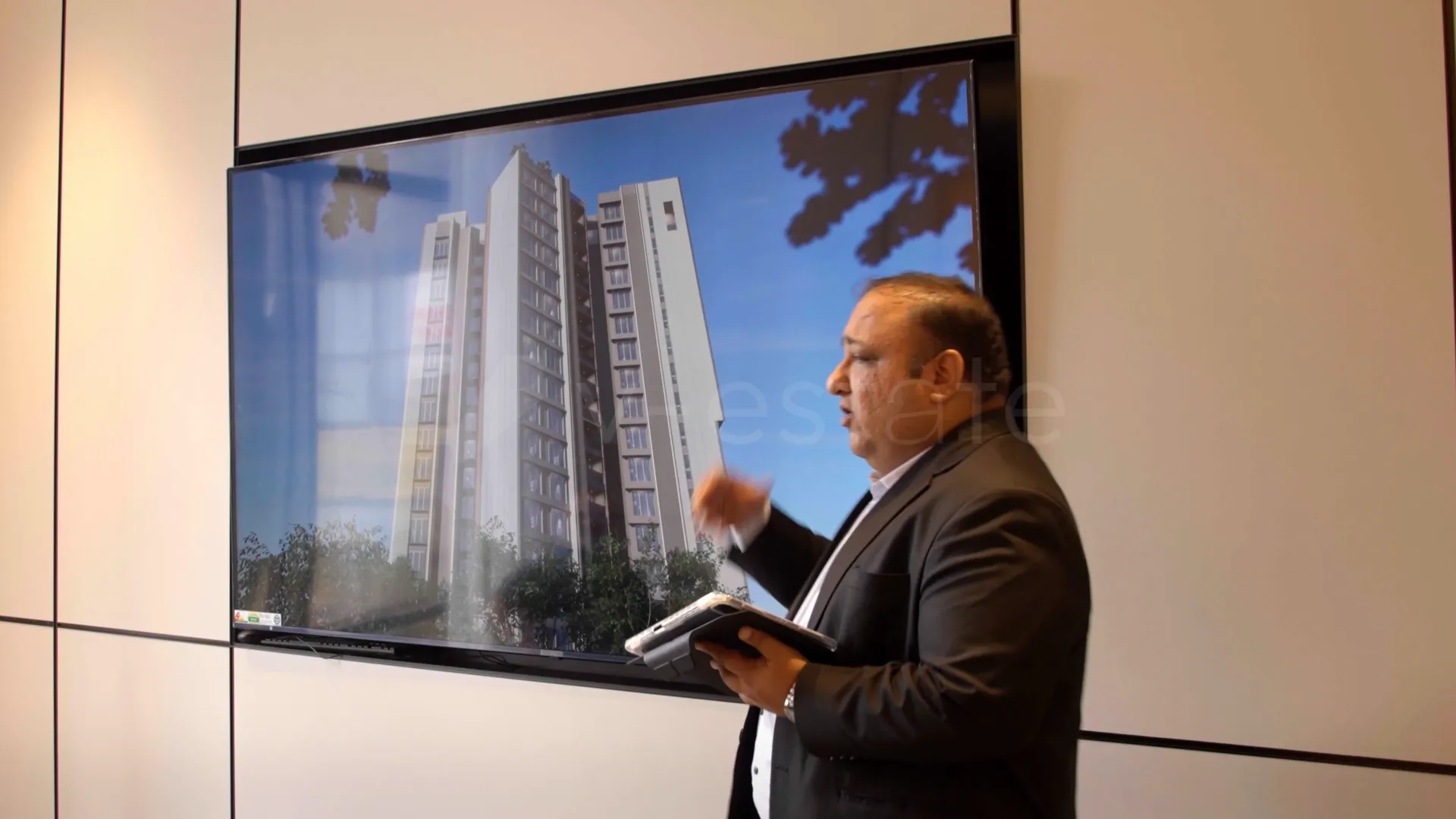

There's a very specific kind of silence that falls in a sales office when a buyer stares at a floor plan and says, "I just can't picture it."
You've seen it. The brochure is polished, the location is prime, the pricing is competitive — and yet, the buyer hesitates. Not because the project isn't good. But because they're being asked to make a decision worth crores of rupees based on lines on paper. That gap — between what a project will be and what a buyer can currently see — is where deals quietly die.
For developers selling under-construction projects, 3D visualization for real estate isn't just a marketing upgrade. It's the bridge between a buyer's doubt and their confidence to sign.
The Real Problem Nobody Talks About
Under-construction sales have always been a leap of faith for buyers. They're not just buying a home. They're buying a promise — that in two or three years, this empty plot will become the lifestyle they've imagined.
The challenge isn't always price. More often, it's this:
- Buyers can't spatially interpret floor plans without architectural training
- Site visits to a construction zone feel chaotic, not reassuring
- Renders in brochures look great but feel static and unconvincing
- Sales teams struggle to communicate scale, light, and feel of a space verbally
And when buyers can't feel confident, they delay. When they delay, your sales cycle stretches. When the cycle stretches, carrying costs go up and momentum slows.
This is the core problem that 3D visualization real estate technology was built to solve.
What Changes When You Let Buyers Walk Through a Project That Doesn't Exist Yet
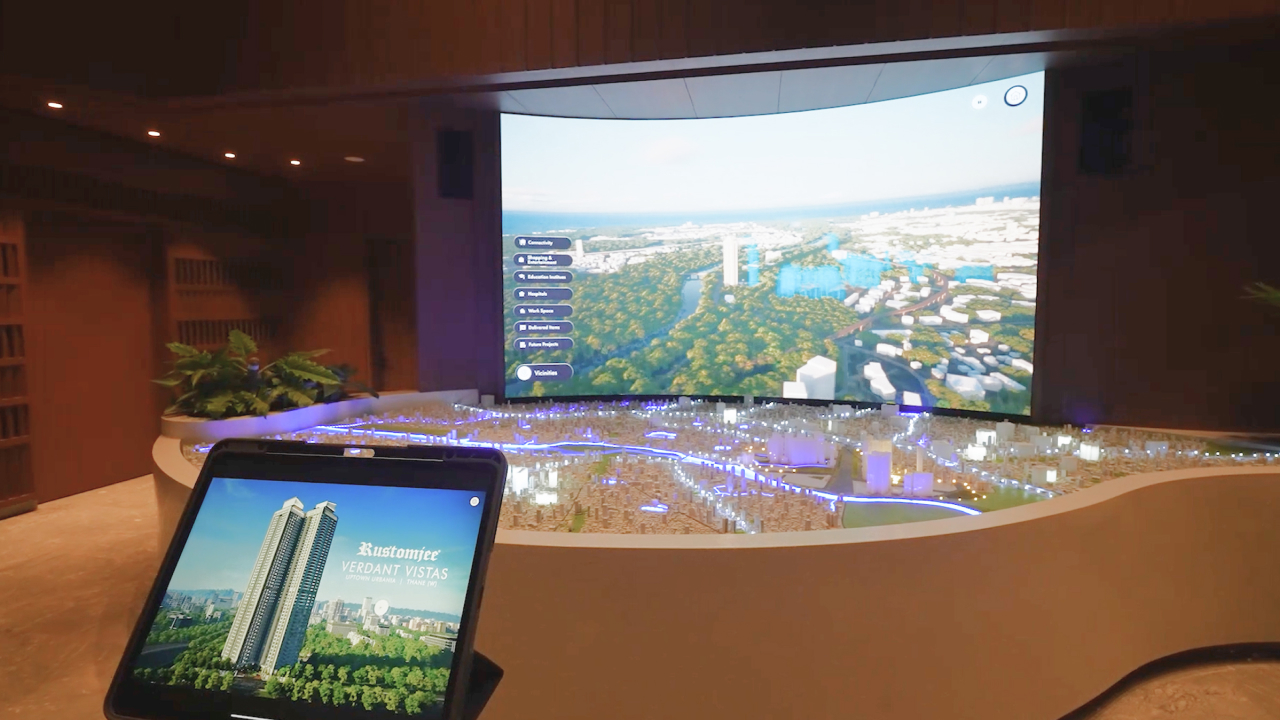
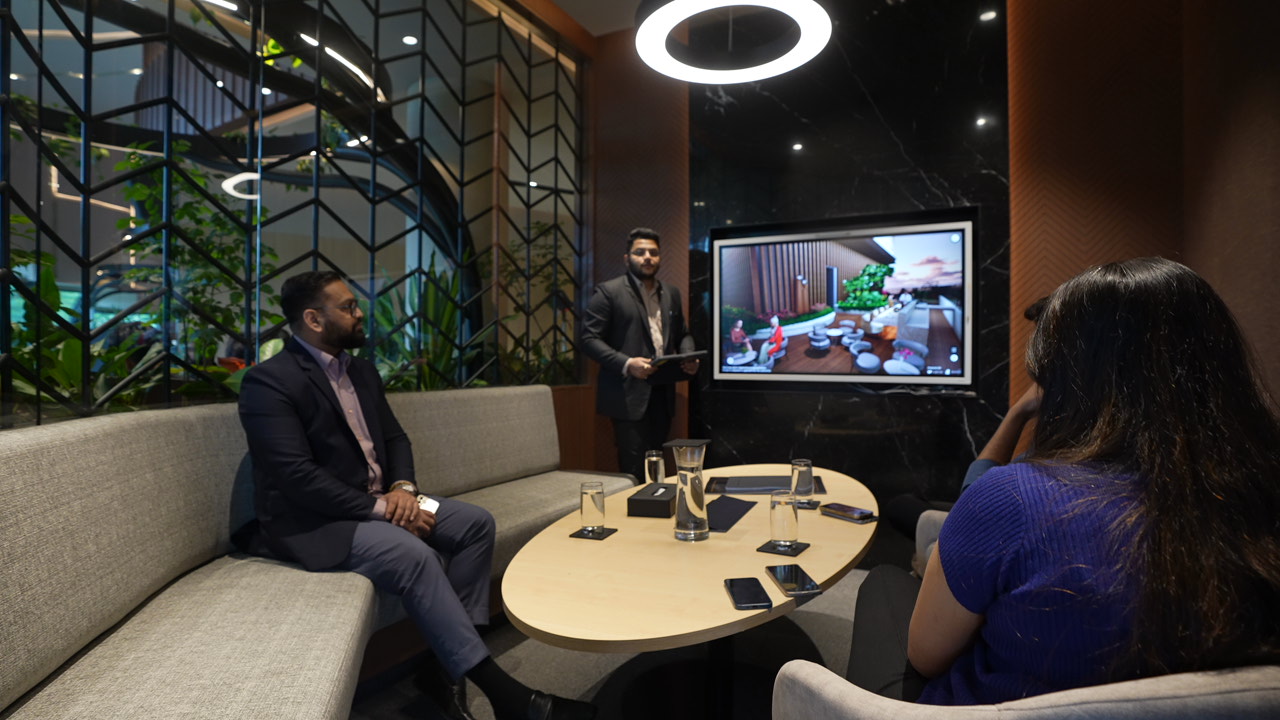
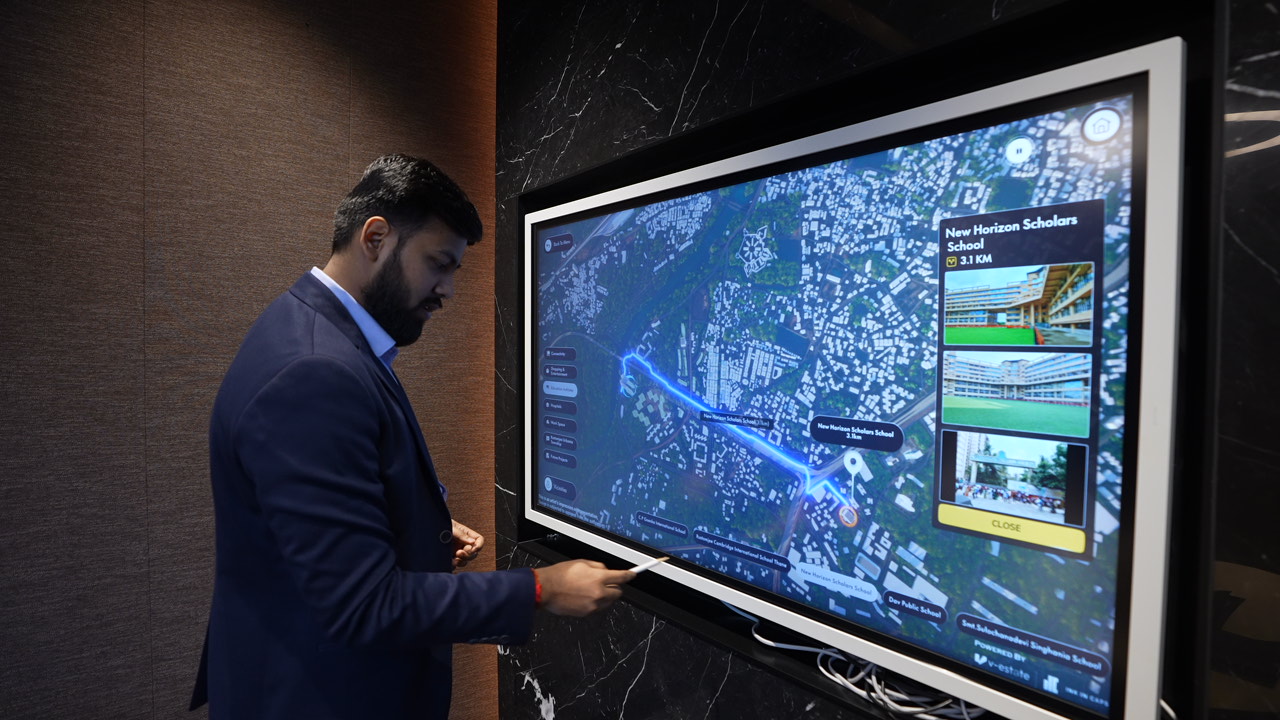
Imagine a buyer sitting in your experience centre. They put on a headset, or walk up to a large interactive screen, and suddenly they're standing in the living room of a 3BHK on the 22nd floor. They can see how morning light enters from the east-facing window. They can step onto the virtual balcony and see the skyline. They can walk into the master bedroom and check if their furniture would fit.
None of this is real. The building isn't built. But the experience is completely convincing.
This is what immersive 3D visualization does. It collapses the gap between "under-construction" and "sold."
Here's what it changes for your sales team:
- Buyers stop asking "can you explain the layout?" and start saying "I want this unit"
- Objections shift from uncertainty to genuine preference — which are far easier to handle
- Sales conversations become more purposeful because the buyer is already emotionally invested
- Site visits feel like a formality rather than a prerequisite
How Rustomjee Crescent Turned Buyer Hesitation into Buyer Conviction
Rustomjee Crescent is a premium residential project — the kind of development where buyers have high expectations and higher scrutiny. Showing renders and floor plans to this audience wouldn't cut it.
Working with V-Estate, the team built an interactive experience centre that gave every walk-in visitor a fully immersive journey through the project. Buyers could explore unit interiors, navigate the landscaped podium, understand the building's orientation, and even see how natural light moved through different rooms at different times of day.
The result? Sales conversations changed fundamentally. Buyers came in uncertain and left with clarity. The experience centre didn't just showcase the project — it made buyers feel they already lived there.
This is what real estate visualization at this level actually does: it removes the hesitation that kills under-construction sales.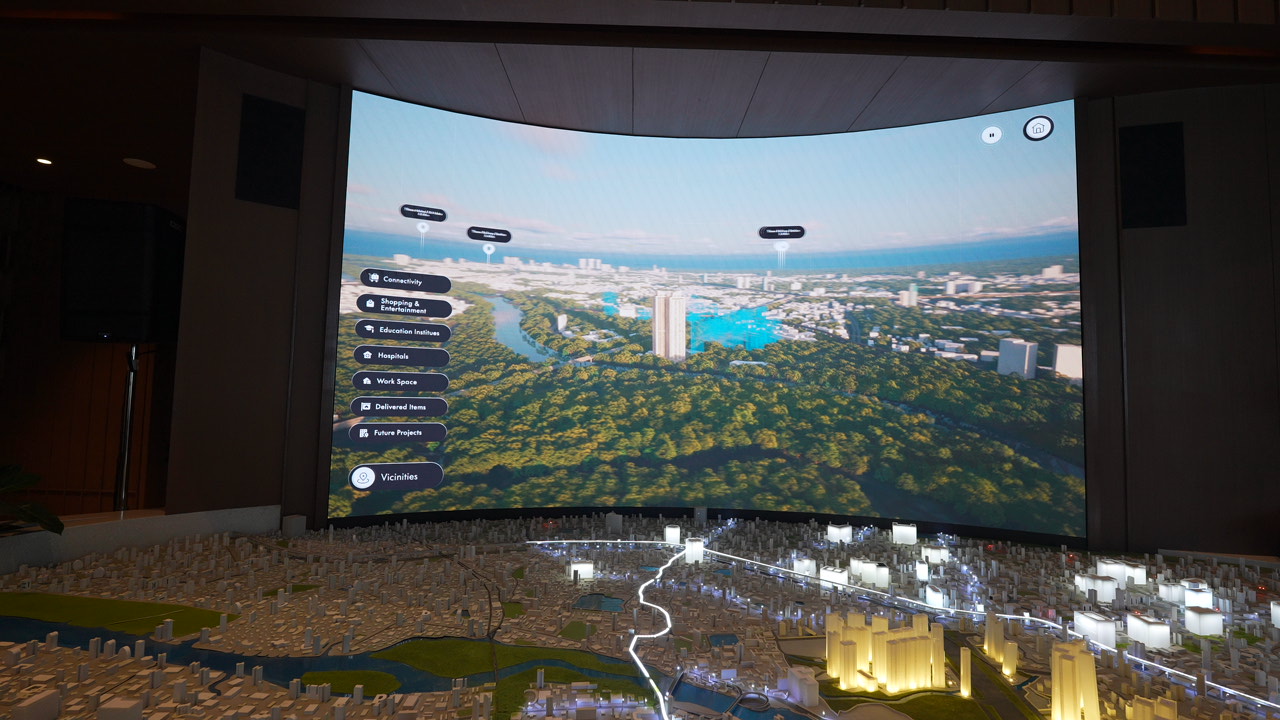
The Advantages of 3D Visualization That Go Beyond Pretty Visuals
Developers sometimes think of visualization as a cost — something that adds polish but doesn't directly drive revenue. That thinking is expensive.
The real advantages of 3D visualization for under-construction projects:
1. Shorter sales cycles When buyers can experience a project in full detail, they need fewer site visits, fewer follow-ups, and less time to decide. Developers using immersive visualization consistently report faster booking-to-decision timelines.
2. Higher per-unit realisation When the experience feels premium, the price justification becomes easier. Buyers are more willing to pay for a well-presented vision than a vague promise.
3. Better unit differentiation Not all units in a project are equal. 3D tools let you walk a buyer through the specific unit they're considering — showing them exactly what makes floor 18 different from floor 12, and why that difference is worth the price gap.
4. Reduced cancellations Buyers who make decisions based on real experiential understanding — not just imagination — are far less likely to cancel later because the reality doesn't match expectations.
5. Offline activation, no internet dependency V-Estate's platform works as an offline activation software, which means your experience centre runs flawlessly whether you're in a prime Mumbai showroom or a site office in an emerging corridor.
What Your Buyers Are Actually Feeling When They Walk Into Your Sales Office
Put yourself in the buyer's shoes for a moment.
They've shortlisted three projects. All three have glossy brochures. All three have polite sales executives. At two of those offices, they looked at floor plans and listened to verbal descriptions. At the third, they walked through a photorealistic 3D environment of the exact unit they're interested in.
Which developer do they trust more? Which project feels more real?
The answer isn't complicated. But the execution requires getting serious about how you present your project — not just what your project offers.
Making Floor Plans Disappear (In a Good Way)
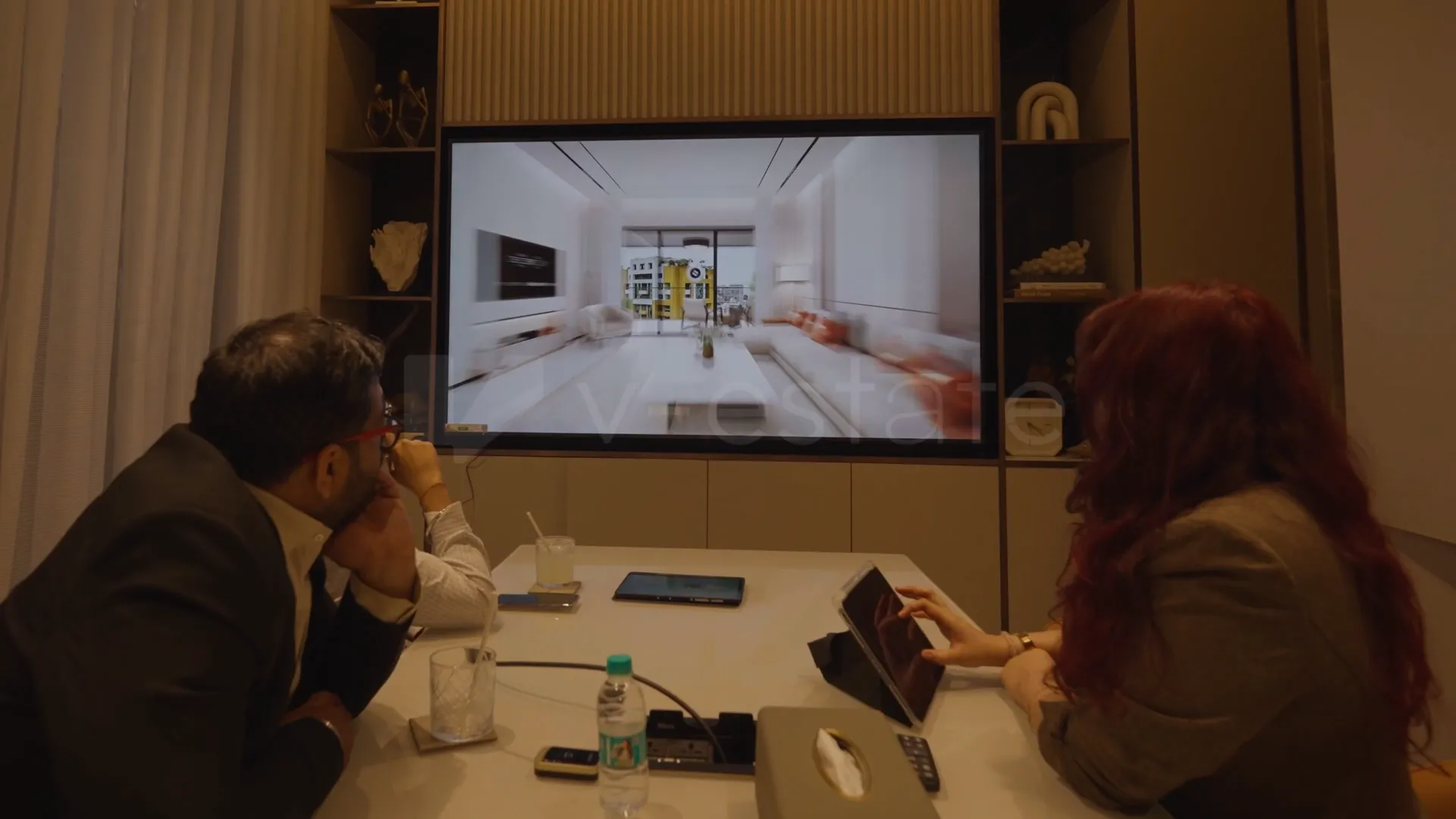
One of the most underestimated benefits of 3D visualization is how it renders floor plans irrelevant for the average buyer. Not because floor plans don't matter — they do — but because most buyers aren't trained to read them.
When you replace a floor plan explanation with a walkthrough, you're not dumbing anything down. You're speaking the right language. You're showing instead of telling. And in sales, showing always wins.
A Note on Sales Team Performance
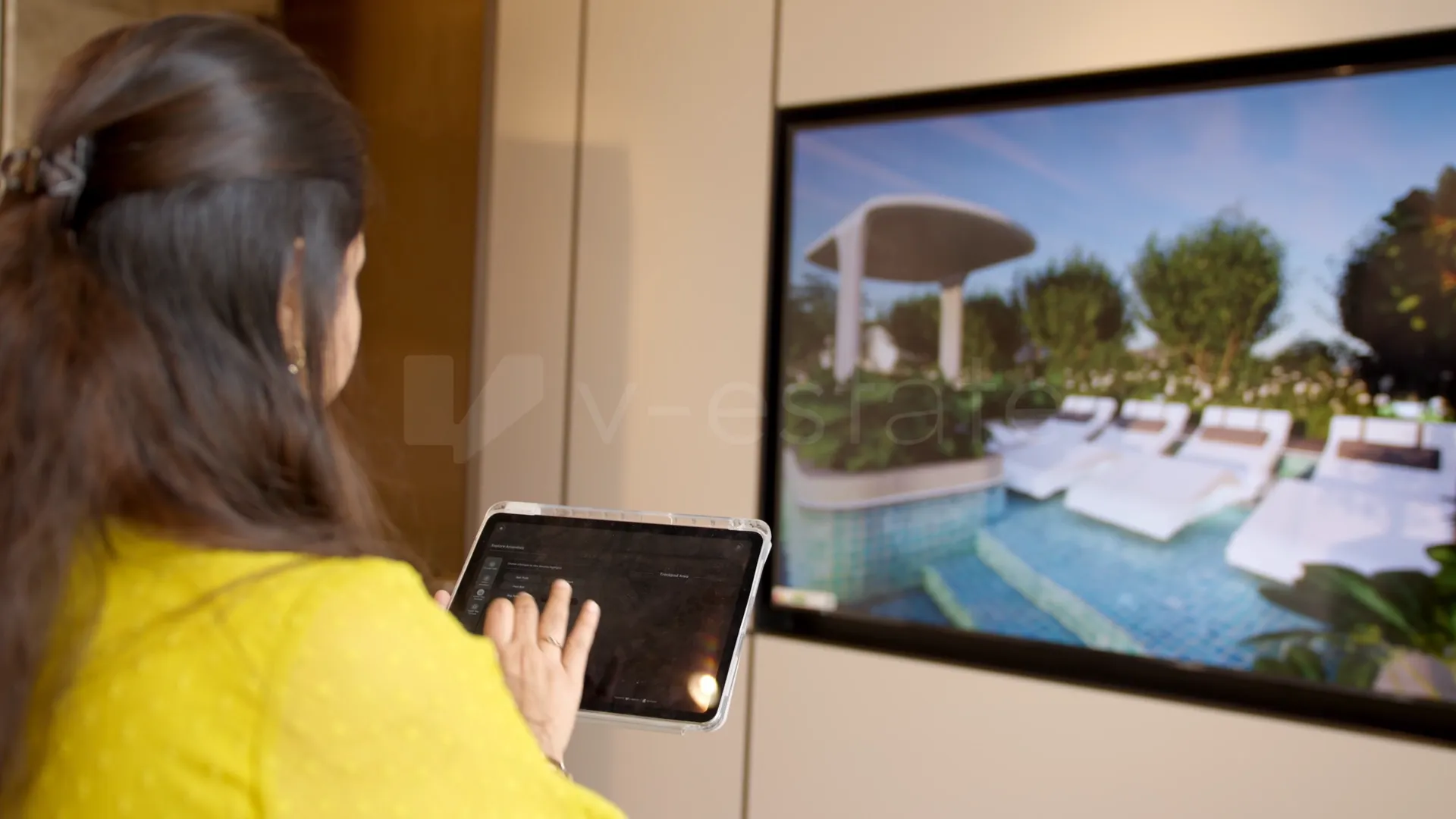
Here's something developers don't always factor in: your sales team's confidence goes up significantly when they have immersive tools to work with.
Explaining a 3BHK layout verbally while pointing at a floor plan is uncomfortable, especially when the buyer is visibly confused. Walking someone through a 3D environment is completely different. It shifts the conversation from "let me explain" to "let me show you." And that shift changes everything about how your team shows up and closes.
Ready to Sell Under-Construction With the Confidence of a Ready Project?
If you're a developer with a strong project that isn't getting the sales velocity it deserves, the gap might not be in your product. It might be in how your product is being experienced.
V-Estate builds immersive 3D visualization experiences — interactive walkthroughs, digital twins, offline experience centre software — designed specifically to help developers sell under-construction projects faster and with greater buyer confidence.
Book a Demo with V-Estate and see exactly what your project looks like when buyers can finally picture it.















Sign in to leave a comment.