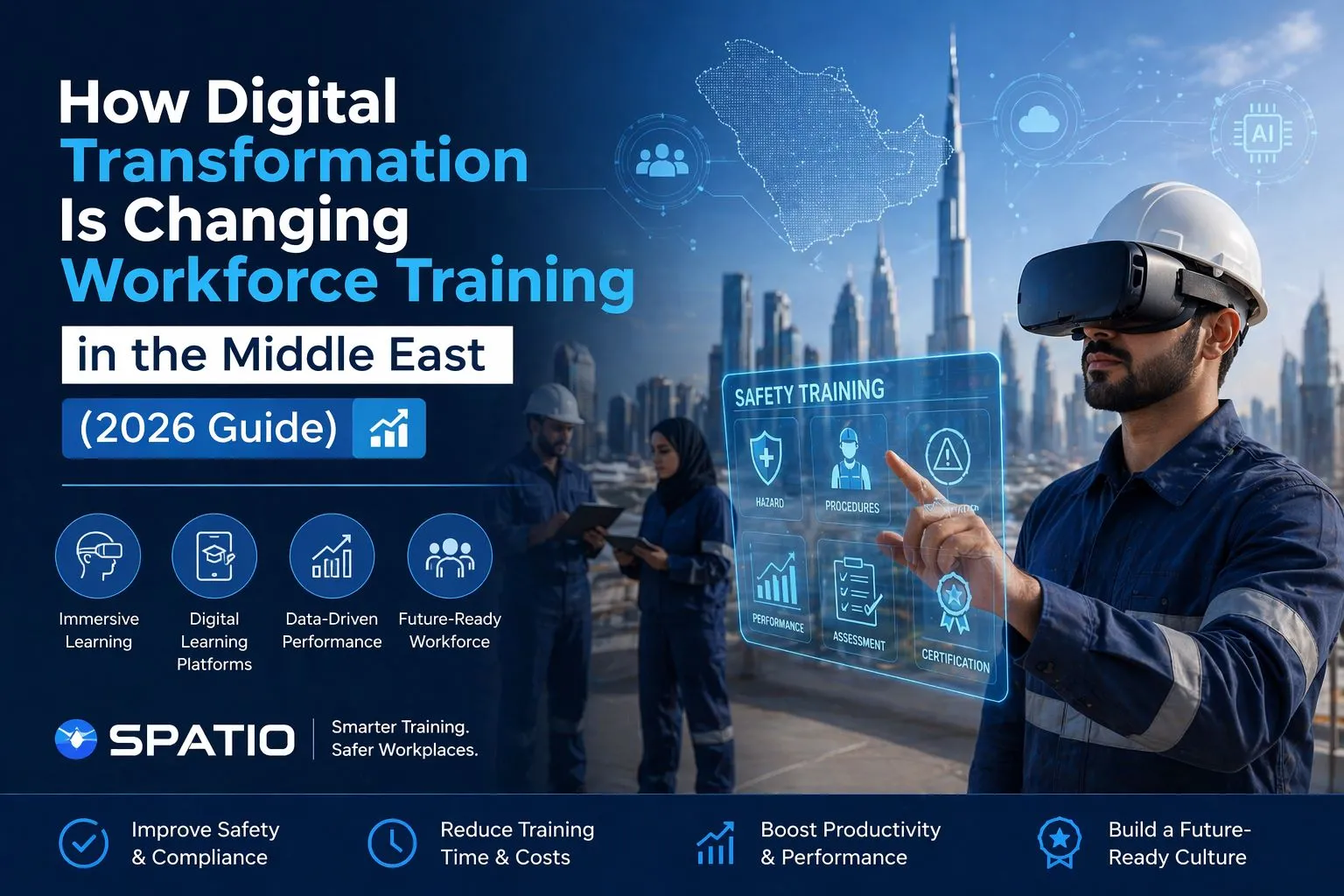

Digital transformation is no longer a future concept in the Middle East—it’s actively reshaping how organizations train, upskill, and manage their workforce. From AI-powered learning platforms to immersive technologies, companies across the region are rethinking traditional training models to stay competitive in a rapidly evolving economy.
Driven by national visions like Saudi Arabia’s Vision 2030 and UAE’s AI Strategy, workforce training is becoming technology-first, skills-driven, and continuous.
What Is Driving Digital Transformation in Workforce Training?
The Middle East is witnessing massive investments in digital infrastructure, AI, and cloud technologies. The regional digital transformation market is projected to grow significantly, fueled by government initiatives and innovation ecosystems.
Key Drivers:
- Government-led digital strategies
- Rapid AI and automation adoption
- Increasing demand for future-ready skills
- Talent shortages in tech domains
According to research, nearly 49% of employees expect technology to significantly impact their jobs within the next three years, highlighting the urgency for continuous training.
Shift from Traditional Training to Digital Learning
From Classroom to E-Learning Platforms
Traditional classroom training is being replaced by:
- Learning Management Systems (LMS)
- Mobile learning apps
- Microlearning modules
Digital platforms enable anytime, anywhere learning, improving accessibility and scalability across organizations.
Personalized Learning Paths
AI-driven platforms now:
- Analyze employee skill gaps
- Recommend customized training modules
- Track progress in real time
This shift ensures more efficient and targeted learning outcomes.
Role of AI, Automation & Data in Training
Artificial Intelligence is at the core of workforce transformation in the Middle East.
Key Applications:
- AI-powered coaching and simulations
- Automated assessments and feedback
- Predictive analytics for skill development
In fact, 75% of employees in the region have already used AI in their jobs, reflecting strong adoption in workplace learning and productivity tools.
Skills-Based Training Models Are Taking Over
Organizations are moving away from job-based training to skills-first workforce models.
Why This Matters:
- Roles are evolving rapidly
- Employees need transferable skills
- Continuous reskilling is essential
Studies show that 69% of employees in the Middle East have gained new skills in the past year, indicating a strong learning culture.
High-Demand Skills in 2026:
- Artificial Intelligence & Machine Learning
- Cybersecurity
- Data Analytics
- Cloud Computing
Rise of Immersive Learning (VR, AR & Simulations)
Emerging technologies are transforming training experiences:
Key Innovations:
- Virtual Reality (VR) for safety training
- Augmented Reality (AR) for real-time guidance
- Simulation-based learning for high-risk industries
These technologies:
- Reduce training time
- Improve retention rates
- Provide hands-on experience without real-world risks
Corporate Training Is Becoming Continuous & Agile
From One-Time Training to Continuous Learning
Organizations are shifting toward:
- Ongoing skill development programs
- On-demand learning platforms
- Agile training frameworks
This aligns with the growing preference for career growth and skill-building opportunities, with 81% of employees prioritizing roles that offer learning opportunities.
Impact of Government Initiatives & Vision Programs
Middle Eastern governments are playing a major role in transforming workforce training.
Key Initiatives:
- Saudi Arabia’s Human Capability Development Program
- UAE’s Advanced Skills Strategy
- Qatar National Vision 2030
These initiatives focus on:
- Building digital talent pipelines
- Promoting lifelong learning
- Encouraging public-private partnerships
Challenges in Digital Workforce Training
Despite rapid progress, organizations face several challenges:
Key Barriers:
- Digital skill gaps
- Resistance to change
- Infrastructure limitations
- Need for localized content
Experts highlight that talent shortages in areas like AI and cybersecurity remain a major concern, requiring stronger upskilling strategies
Future Trends in Workforce Training (2026 & Beyond)
What to Expect:
- AI-driven adaptive learning ecosystems
- Increased use of gamification
- Hybrid training models (online + offline)
- Focus on employee well-being and human sustainability
According to industry insights, organizations are also prioritizing human-centric work models that balance technology with employee well-being and engagement.
Digital transformation is redefining workforce training in the Middle East—from static learning models to dynamic, tech-enabled ecosystems. Organizations that invest in digital learning, AI-driven upskilling, and employee-centric training strategies will be better positioned to thrive in the future of work.
As the region accelerates toward a knowledge-based economy, continuous learning is no longer optional—it’s a strategic necessity
FAQs
How is digital transformation impacting workforce training?
It is making training more accessible, personalized, and continuous, using technologies like AI, cloud, and VR.
Why is upskilling important in the Middle East?
Rapid technological change means employees must continuously learn new skills to stay relevant.
What technologies are used in modern workforce training?
AI, machine learning, VR/AR, cloud platforms, and data analytics are widely used.
What are the biggest challenges?
Skill gaps, resistance to digital adoption, and infrastructure limitations.
What is the future of workforce training?
A skills-first, AI-driven, and lifelong learning approach that focuses on both productivity and employee well-being.






















Sign in to leave a comment.