As industries across the globe work toward greener operations and more sustainable production lines, every component in the supply chain is being re-evaluated for its environmental impact. Among these components, conveyor belts — a seemingly small but essential part of material handling systems — are now gaining attention in sustainability discussions.
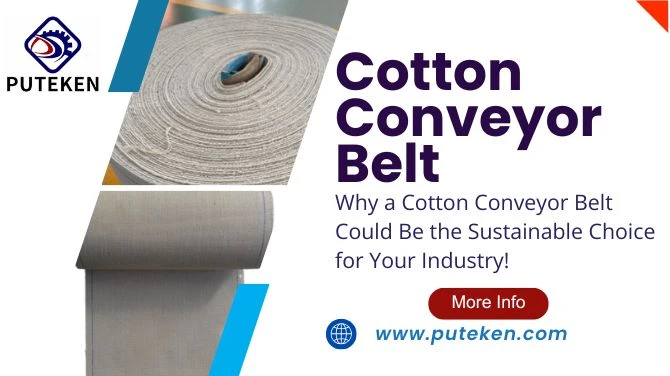
While synthetic belts made from PVC, PU, and other polymers dominate the market, an increasingly compelling alternative has emerged: the Cotton Conveyor Belt. Traditionally utilized in light-duty applications, cotton belts are now experiencing a resurgence due to their eco-friendly material composition, biodegradability, and overall alignment with sustainable development goals.
At Shanghai Puteken Transmission System Co., Ltd., we specialize in manufacturing and supplying high-quality transmission solutions, including Cotton Conveyor Belts tailored for diverse industrial applications. With years of engineering expertise and a firm commitment to green innovation, we are helping businesses reduce their carbon footprint without compromising performance or durability.
What Is a Cotton Conveyor Belt?
A Cotton Conveyor Belt is a material handling belt made predominantly from woven cotton or cotton-blended fabrics. Unlike synthetic belts, cotton belts are manufactured using natural fibers, offering a bio-based and biodegradable alternative to conventional belts.
Core Features:
- Woven fabric base made of 100% or blended cotton
- Available with or without synthetic reinforcements
- Can be coated with food-grade oils or resins when needed
- Typically used with light to medium loads
These belts are ideal for conveying items that require gentle handling or high hygienic standards, making them a popular choice in sectors like food processing, tobacco, paper, agriculture, and pharmaceuticals.
Why a Cotton Conveyor Belt Is a More Sustainable Choice?
Sustainability is no longer just a buzzword. Suppliers, manufacturers, and consumers now actively seek solutions that minimize harm to the environment. Here's how a Cotton Conveyor Belt delivers on sustainability fronts:
1. Natural and Renewable Material
Cotton is a renewable resource. Unlike petroleum-based synthetic belts, cotton fibers can be harvested seasonally and sustainably with a far lower carbon footprint.
2. Biodegradability
Cotton fibers decompose naturally. At the end of its lifecycle, a cotton belt can break down without releasing harmful microplastics into soil or water systems — unlike traditional plastic-based belts.
3. Recyclability
Cotton belts can be recycled or repurposed into non-industrial applications such as cushioning, filler material, or even textiles, reducing waste and landfill pressure.
4. Lower Carbon Emissions
The production of cotton belts often requires less energy compared to synthetic belts, leading to a reduction in greenhouse gas emissions associated with manufacturing.
5. Safe for Food & Sensitive Applications
Cotton’s natural composition makes it ideal for food-grade applications, especially when combined with food-safe coatings that meet international safety standards.
Technical Advantages of Cotton Conveyor Belts
Beyond sustainability, Cotton Conveyor Belts offer a host of technical advantages that make them suitable for a variety of industrial environments:
- Soft Surface:
Ideal for handling delicate items like baked goods, electronics, or pharmaceutical products without causing damage. - Customizable Build:
Can be manufactured in various widths, thicknesses, and layers depending on operational demands. - Minimal Static Generation:
Naturally dissipates static electricity, reducing the risk of fragmentation or dust ignition in sensitive environments. - Good Grip and Friction:
The woven texture provides natural grip and minimizes slippage on inclined conveyors. - Low Weight:
Their lightweight design allows ease of installation, adjustment, and transportation.
Industries That Benefit from Cotton Conveyor Belts
1. Food Processing
Used in bakeries, confectionery, fruits and vegetable handling — cotton belts meet hygiene and non-stick criteria essential for edible goods.
2. Tobacco Industry
Cotton belts are widely accepted in the tobacco industry due to their chemical-free, natural composition which doesn’t impart flavors or compromise product quality.
3. Textile and Garment Manufacturing
Gentle on fabrics and threads, cotton belts support smoothing, inspection, and packaging lines without abrasion.
4. Agriculture
Used in grading, sorting, and bulk transportation of crops — especially where minimal processing contamination is essential.
5. Pharmaceutical & Cosmetic Lines
Because of their low particulate generation and clean transport action, cotton belts are ideal for capsule, tablet, and small-component handling.
Customization Options with Shanghai Puteken Transmission System Co., Ltd.
We at Shanghai Puteken Transmission System Co., Ltd. offer custom options for Cotton Conveyor Belts, including:
- Tailored dimensions (widths, lengths, ply count)
- Edge treatments (sealed, stitched, or reinforced)
- Optional backing (to enhance grip or reduce noise)
- Food-grade coating for hygienic applications
- OEM branding and private labeling
Our R&D team works closely with global clients to create belts that meet both performance and environmental targets.
Installation and Maintenance Tips
Although Cotton Conveyor Belts are easy to maintain, some recommended best practices include:
- Maintain proper tension
Over-tensioning can reduce belt life and performance. - Schedule periodic inspections
Look for fabric fraying, stiffness, or surface contamination. - Use compatible cleaning agents
Avoid harsh chemicals that may degrade cotton fibers. - Regularly align pulleys and rollers
Misalignment can cause wear and tracking issues.
Small Change, Big Impact
Switching to a Cotton Conveyor Belt may seem like a small operational change, but it can lead to substantial environmental and economic benefits in the long run. By choosing a sustainable, reliable, and versatile conveyor solution, your industry not only aligns with modern environmental standards but also contributes toward climate resilience and resource efficiency.
FAQs – Cotton Conveyor Belt
Q1: Are cotton belts strong enough for industrial use?
Yes, when designed with multiple ply constructions or blended with synthetic threads, cotton conveyor belts can handle light-to-medium industrial loads efficiently.
Q2: Can cotton belts be used in wet environments?
While cotton naturally absorbs moisture, water-resistant finishes or coatings can be applied, making them effective even in damp or occasionally wet settings.
Q3: Are your cotton belts food-safe?
Absolutely. We offer food-grade cotton conveyor belts that comply with international food safety standards including FDA and EU regulations.
Q4: How long do cotton belts typically last?
Lifespan varies depending on usage conditions and load. On average, with proper maintenance, a cotton belt can function effectively for 18–36 months.
Q5: Can I replace my current synthetic belt with a cotton conveyor belt?
Yes, as long as your application does not demand extreme tensile strength or continuous heavy loads. Our team can assess your system and suggest the ideal replacement belt.
Q6: Do you offer international shipping and support?
Yes. Shanghai Puteken Transmission System Co., Ltd. exports worldwide and provides technical documentation, customization, and post-sale support for all markets.
Q7: What makes your cotton belts better than others?
Our belts are manufactured using premium-grade cotton, precision weave technology, and tested for dimensional accuracy, tensile strength, and fiber consistency. Furthermore, our customization service sets us apart in delivering application-specific solutions.





























Sign in to leave a comment.