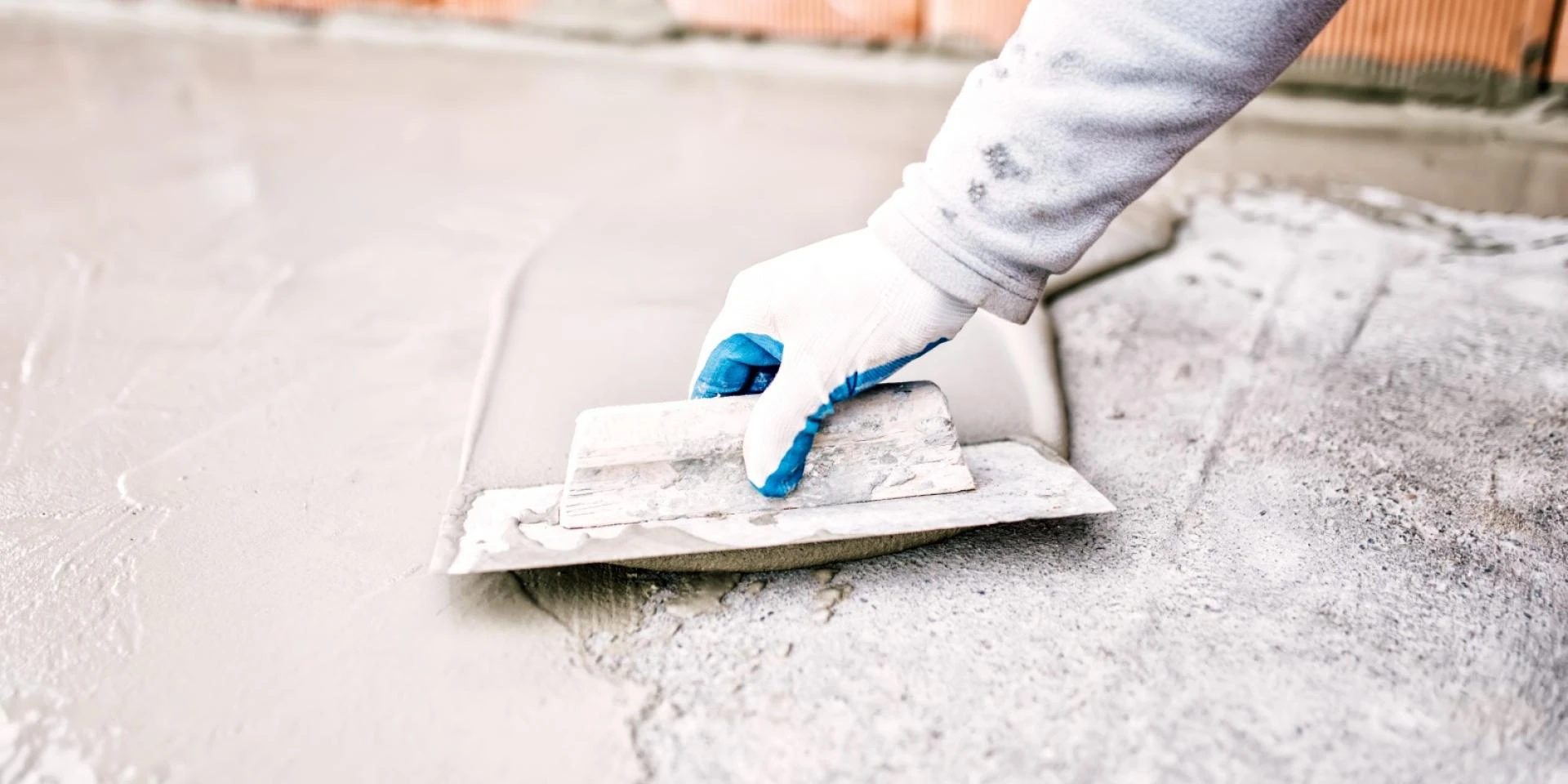

Concrete waterproofing in Pinedale, WY, is not merely an aesthetic choice but a structural necessity, given the region's severe freeze-thaw cycles and high water table. Preventing water infiltration stops the internal expansion that occurs when trapped moisture freezes, which is the primary cause of cracking and spalling in local foundations and driveways.
Failure to adequately waterproof concrete leads to rapid deterioration, often resulting in expensive foundation repairs or complete slab replacement within just a few years of construction. Water that penetrates the porous surface of concrete travels to the steel reinforcement bars within, causing rust that expands and breaks the concrete from the inside out.
The Impact of High-Altitude Climates on Concrete
Pinedale sits at an elevation of over 6,700 feet, exposing built environments to extreme temperature fluctuations that stress building materials. In this climate, concrete expands and contracts significantly as temperatures swing from sub-zero lows in winter to warm highs in summer.
The presence of snow for extended periods adds another layer of complexity to concrete maintenance in this region. As snow piles up against foundations and slowly melts, it creates a prolonged period of saturation known as hydrostatic pressure.
The Mechanics of Freeze-Thaw Damage
When water enters the capillary pores of concrete and subsequently freezes, it expands by approximately nine percent in volume. This expansion generates internal pressure exceeding the concrete's tensile strength, causing it to rupture from within. Over repeated cycles of freezing and thawing, this damage accumulates, turning solid concrete into a crumbling hazard.
In Pinedale, where temperatures frequently drop below freezing during spring and fall, this cycle can occur dozens of times in a single season. This prevents water absorption in the first place, thereby neutralizing the threat of expansion damage regardless of how cold the air temperature drops.
Protection Against De-icing Salts
To combat icy roads and driveways, residents and municipal services rely heavily on chemical de-icers and salts. While effective for safety, these chlorides are detrimental to concrete health. When dissolved in melting snow, salt water soaks into untreated concrete and attacks the chemical bonds of the cement paste.
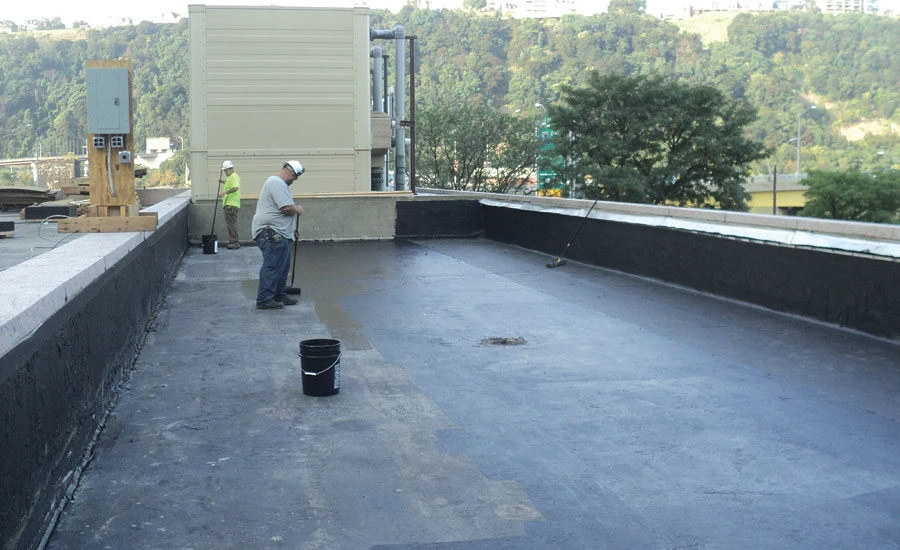
Key Points on Chloride Corrosion and Waterproofing:
- Chlorides migrate toward the steel reinforcement in concrete.
- When chloride levels reach a threshold on the steel, they destroy the protective passivation layer.
- This triggers rapid corrosion of the rebar.
- Waterproofing sealers act as a sacrificial barrier.
- Sealers keep harmful chemicals on the surface, allowing them to be washed away instead of penetrating the slab.
Bonus Tip: Seasonal Cleaning
Property owners should pressure wash concrete surfaces in the spring to remove accumulated salt residue. Applying a penetrating silane-siloxane sealer every few years after cleaning significantly reinforces the surface's resistance to water and chloride intrusion, extending the concrete's service life.
Types of Waterproofing Technologies
Selecting the correct waterproofing method depends on whether the project involves new construction or the remediation of an existing structure. Modern technology offers several approaches, ranging from physical barriers applied to the exterior to chemical additives mixed directly into the concrete batch. Each method has distinct advantages regarding application difficulty and long-term performance.
Integral Waterproofing Systems
Integral waterproofing involves adding specific chemical admixtures to the concrete at the batch plant before it is poured. This method is particularly effective because it does not rely on a surface coating that can be damaged during backfilling or landscaping work.
Advantages of Integral Systems:
- Permanent Protection: The waterproofing is part of the concrete matrix and does not wear off.
- Self-Healing Capabilities: Some crystalline admixtures can seal minor hairline cracks that develop over time.
- Construction Speed: Eliminates the time required to apply external membranes, speeding up the project schedule.
Surface-Applied Membranes
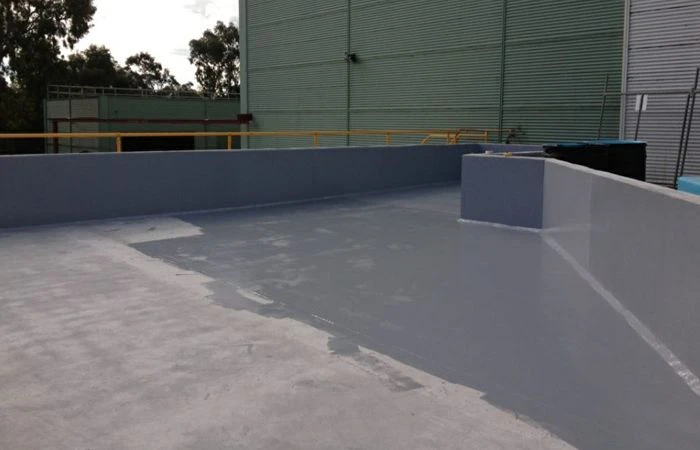
Surface membranes act as a physical shield, wrapping the concrete foundation in a watertight layer. These can be fluid-applied coatings that cure into a rubber-like shell or peel-and-stick sheets made of bitumen or synthetic materials. They are typically applied to the exterior (positive side) of basement walls to prevent water from reaching the concrete.
Crystalline Waterproofing Technology
Crystalline technology uses a chemical reaction to block water pathways. When applied to concrete, these chemicals react with calcium hydroxide and other byproducts of cement hydration, forming insoluble crystals. These crystals fill the capillary tracts and pores, blocking the passage of water while still allowing the concrete to breathe and release vapor.
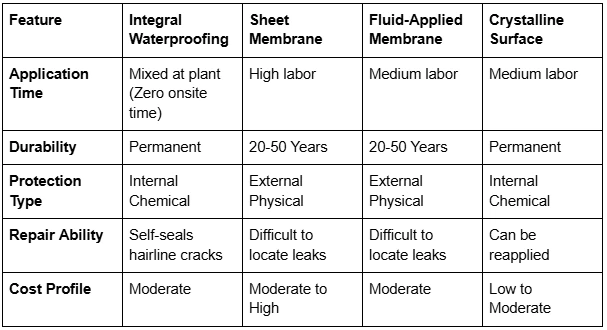
Key Performance Comparison
The following table outlines the differences between these standard waterproofing methods to help property owners identify the best fit for their needs.
Economic Benefits of Prevention
Investing in high-quality waterproofing during construction yields substantial financial returns by avoiding catastrophic repairs later. Market data suggests that the cost to waterproof a foundation during new construction is typically less than 3% of the total foundation cost. In contrast, excavating and repairing a leaking foundation years later can cost 10 to 20 times the original investment amount.
Water damage significantly devalues a property and complicates real estate transactions. A dry, structurally sound basement or garage increases usable square footage and appeals to buyers. By documenting the waterproofing systems installed, owners provide proof of quality and durability, which supports higher appraisal values and faster sales in the competitive housing market.
Things to Consider Before Making a Decision
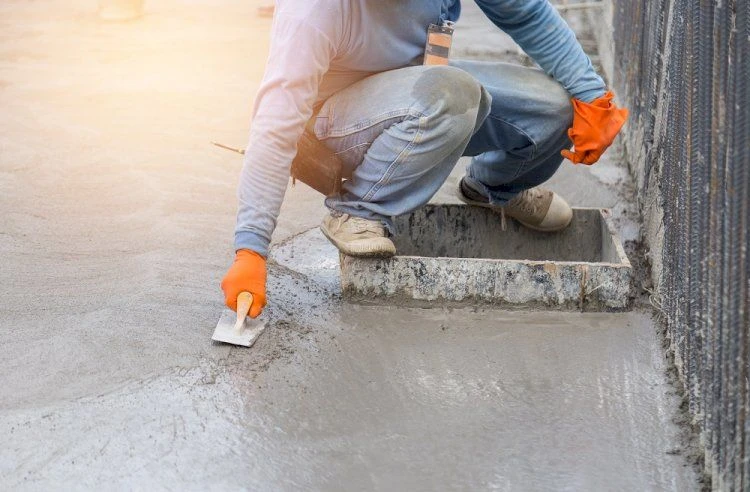
Before selecting a waterproofing strategy, one must evaluate the specific soil conditions and water table depth of the building site. In areas of Pinedale with poor soil drainage, simply applying a coating may not be enough. A comprehensive system often includes drainage boards and perimeter drain tiles to move water away from the structure, working in tandem with the waterproofing material.
The condition of the concrete surface also dictates the available options. For existing structures with cracks or honeycomb voids, these defects must be repaired with hydraulic cement before any waterproofing coating is applied. Ignoring surface preparation guarantees failure, as the waterproofing material cannot bridge significant gaps or adhere to loose debris.
New Construction vs. Retrofit
Retrofitting an existing home is far more invasive than waterproofing a new build. It often requires excavating the soil around the entire perimeter of the house to expose the foundation walls.
Bonus Tip: Grading Matters
No waterproofing system can withstand indefinite hydrostatic pressure if the ground slopes toward the house. Ensure that the soil grade falls at least six inches over the first ten feet away from the foundation.
Frequently Asked Questions
Can I waterproof my basement from the inside?
Yes, negative-side waterproofing (interior) is possible using crystalline coatings or specialized sealers. While this prevents water from entering the living space, it does not stop water from saturating the concrete wall itself. For total structural protection, positive-side (exterior) waterproofing is superior but requires excavation.
How long does waterproofing last?
The lifespan varies by material. Integral and crystalline systems can last the life of the concrete. Bituminous coatings and peel-and-stick membranes typically last 20 to 50 years, depending on soil conditions and installation quality.
Does concrete waterproofing prevent mold?
Waterproofing eliminates the moisture that mold needs to grow. By keeping the concrete and the interior space dry, you remove the primary catalyst for mold and mildew development, creating a healthier indoor environment.
Is tar the same as waterproofing?
No. Standard damp-proofing tar slows down moisture transmission but does not bridge cracks or withstand hydrostatic pressure. Proper waterproofing uses modified polymers or rubberized asphalt to create a continuous seal that holds back standing water.
What causes concrete to crack in the first place?
Concrete cracks due to shrinkage during curing, thermal expansion and contraction, settlement of the soil below, or physical overloading. Waterproofing helps mitigate cracks caused by freeze-thaw cycles, but cannot prevent cracks caused by structural settling.
Conclusion and Recommendations
Waterproofing concrete in Pinedale is a fundamental requirement for building longevity, dictated by the challenging high-altitude environment. The combination of freeze-thaw cycles, snow accumulation, and chemical exposure demands a robust defense strategy to maintain structural integrity. Whether using integral admixtures in new pours or applying advanced membranes to existing walls, the goal remains the same: stop water ingress to prevent internal destruction.
Professional Guidance and Support
For residents and builders in Pinedale seeking reliable solutions for concrete protection, High Country Solutions offers specialized expertise in high-performance materials. They understand the specific demands and offer products designed to withstand extreme weather conditions. Their team assists in selecting the right waterproofing systems to ensure long-term structural health.
To discuss specific project requirements or to learn more about available options, interested parties can contact them directly.
Contact Information:
- Company Name: High Country Solutions
- Email: [email protected]
- Phone: (307) 248-9063
Author: Skeeter Aimone, co-founder of High Country Solutions, develops eco-friendly products to improve sustainability in outdoor gear. Brad Morrison leads the company’s technology strategy, creating systems that enhance outdoor experiences while prioritizing environmental responsibility. Established in 2018, they bring years of experience to advancing sustainable outdoor living through high-performance, responsible insulation materials.
Reviewer: Samuel Harris has worked across various roles in spray foam insulation for over 11 years. His review focused on how businesses can better present their services to both new and returning clients.


























Sign in to leave a comment.