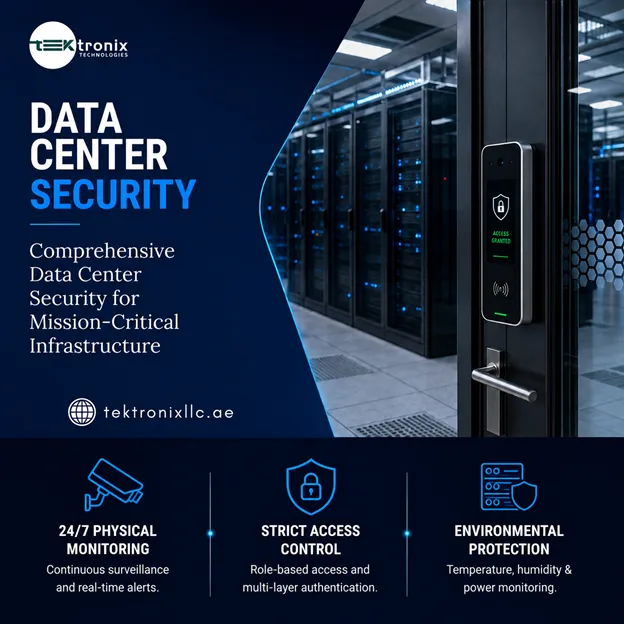

The UAE's push toward becoming a regional cloud and AI hub means more sensitive workloads — banking systems, government records, healthcare data — now sit inside local facilities than ever before. That shift has made Data Center Security a strategic priority rather than a back-office concern, and operators exploring perimeter and facility security solutions for data centers are finding that yesterday's fence-and-camera approach no longer satisfies today's tenants, auditors, or insurers.
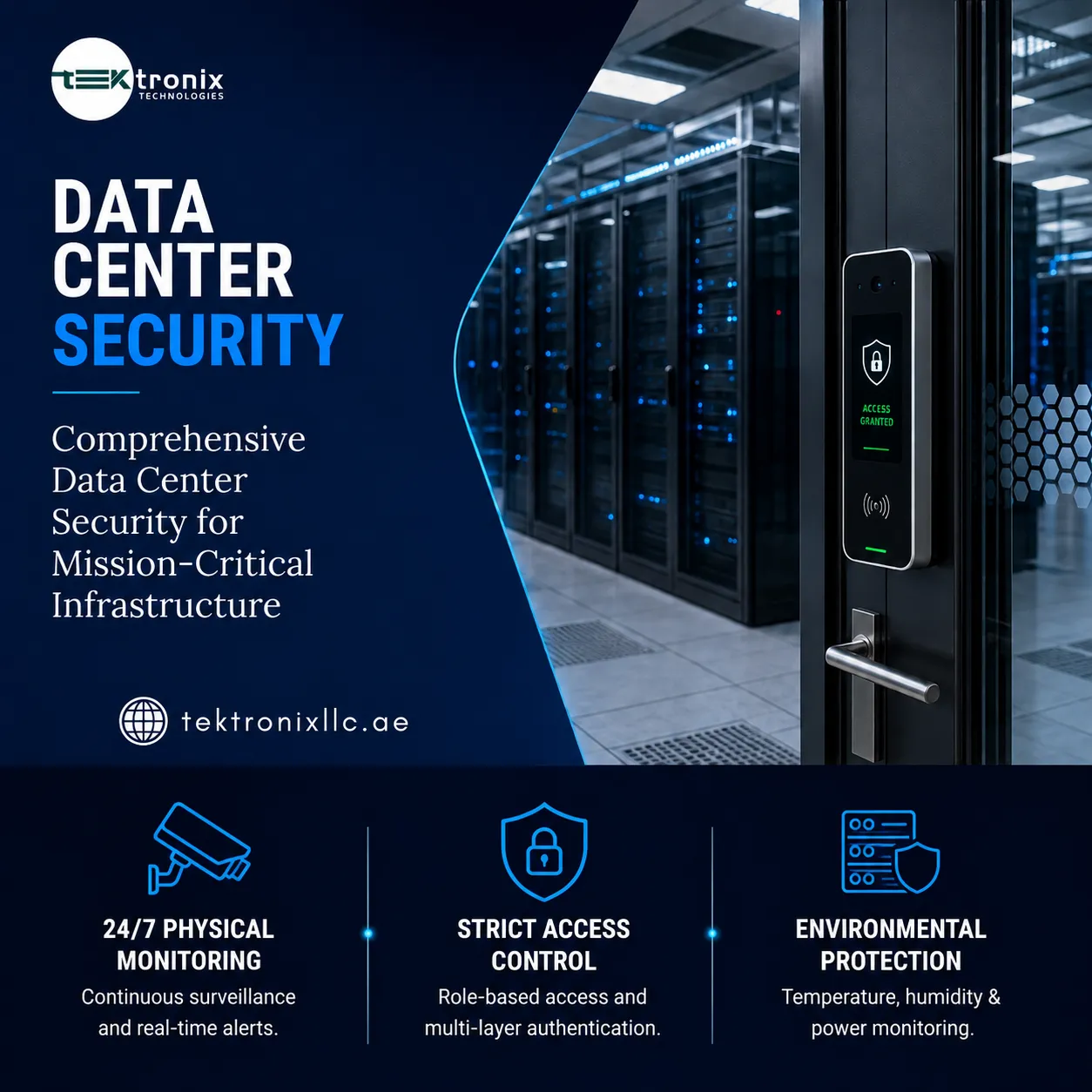
Every new hyperscale campus and colocation facility entering the market raises the stakes further: more tenants sharing infrastructure, more interconnects, more physical square footage to defend, and more regulatory scrutiny from authorities overseeing critical national infrastructure. This article looks at why the threat landscape has changed, what a modern security stack actually includes, and what UAE-specific compliance considerations shape a proper deployment.
The Rising Stakes for Data Centers in the UAE
Digital transformation initiatives across government, banking, and healthcare have pushed data localisation requirements up the priority list, meaning more regulated data now physically resides within UAE borders rather than in offshore cloud regions. That concentration of high-value data in a smaller number of physical sites makes each facility a higher-value target, whether the threat comes from a determined intruder, an insider with legitimate credentials, or a remote attacker probing the network perimeter.
At the same time, giga-projects and free-zone expansions across the Emirates are driving a wave of new data center construction, much of it built to serve international tenants who expect security postures that match — or exceed — what they'd find in Frankfurt, Singapore, or Northern Virginia. Facilities that fall short on physical or cyber controls risk losing enterprise tenancy deals before construction is even finished.
Building Blocks of a Modern Data Center Security Strategy
A resilient strategy treats physical and digital protection as one continuous system rather than two separate budgets managed by different teams. Perimeter fencing, building access, and rack-level restrictions form the outer layers; network segmentation, encryption, and continuous threat monitoring protect what's inside those walls. A gap in either layer — a propped-open service door or an unpatched management interface — can undo the value of every other control in place.
Perimeter and Facility-Level Protection
Data Center Access Control
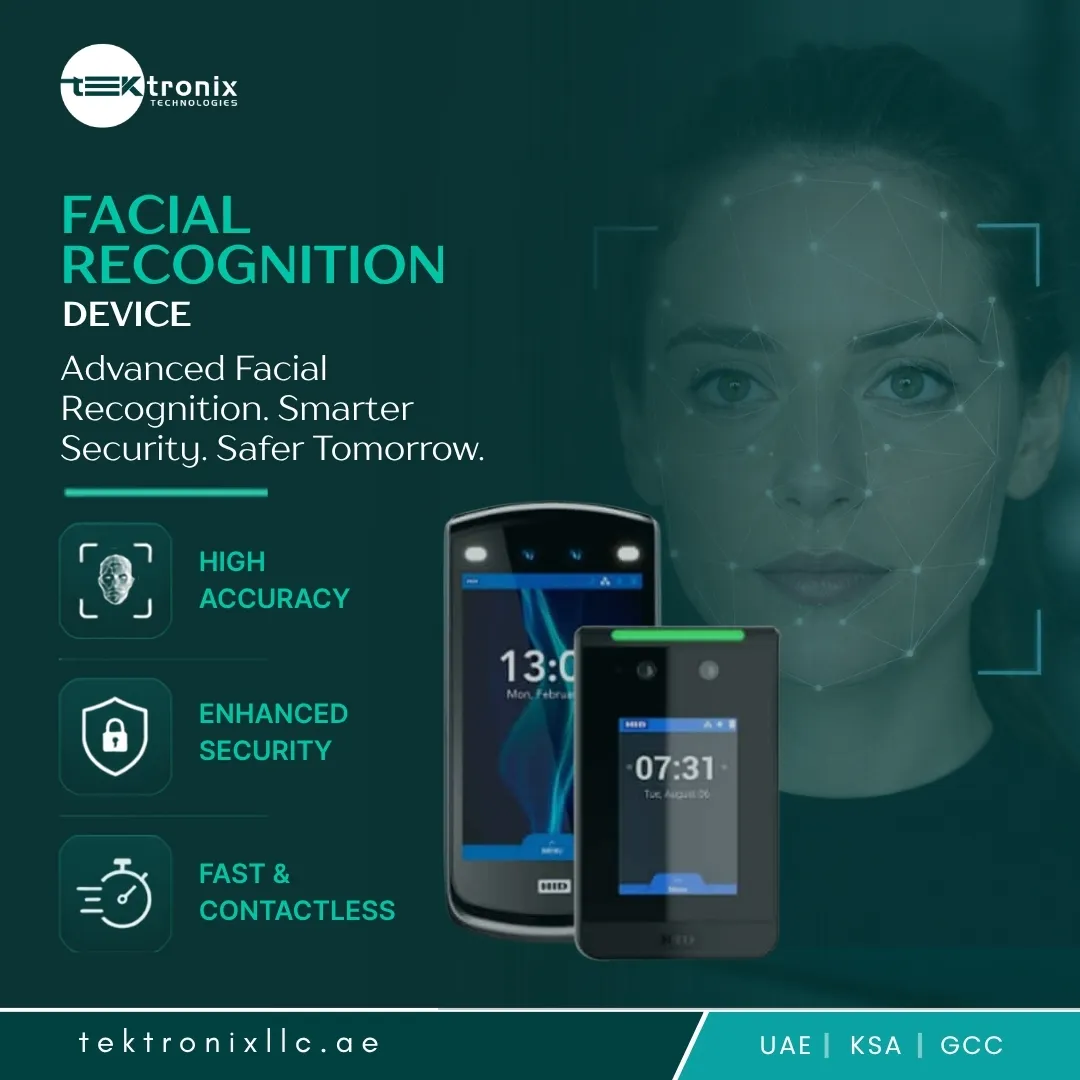
Layered Data Center Access Control — biometric checkpoints, individually issued credentials, and mantrap vestibules between the lobby and server floor — ensures every entry is tied to a named individual, with permissions scoped tightly to the zones each person actually needs to reach.
Data Center Surveillance
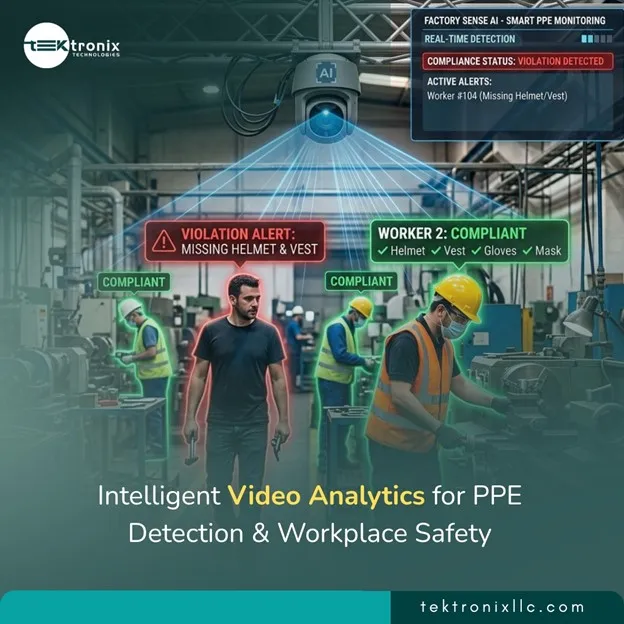
Round-the-clock Data Center Surveillance across loading docks, corridors, and server aisles gives security operators a complete visual record, while AI-assisted video analytics can flag unusual dwell time or movement patterns that a human monitoring dozens of feeds might otherwise miss.
Data Center Intrusion Detection
Physical Data Center Intrusion Detection extends coverage beyond the front door to roofs, service corridors, and perimeter fencing, using vibration sensors and beam detection to catch forced-entry attempts at the points an intruder is more likely to try first, precisely because they're less obviously guarded.
Network and Data-Layer Defenses
Cybersecurity for Data Center Infrastructure
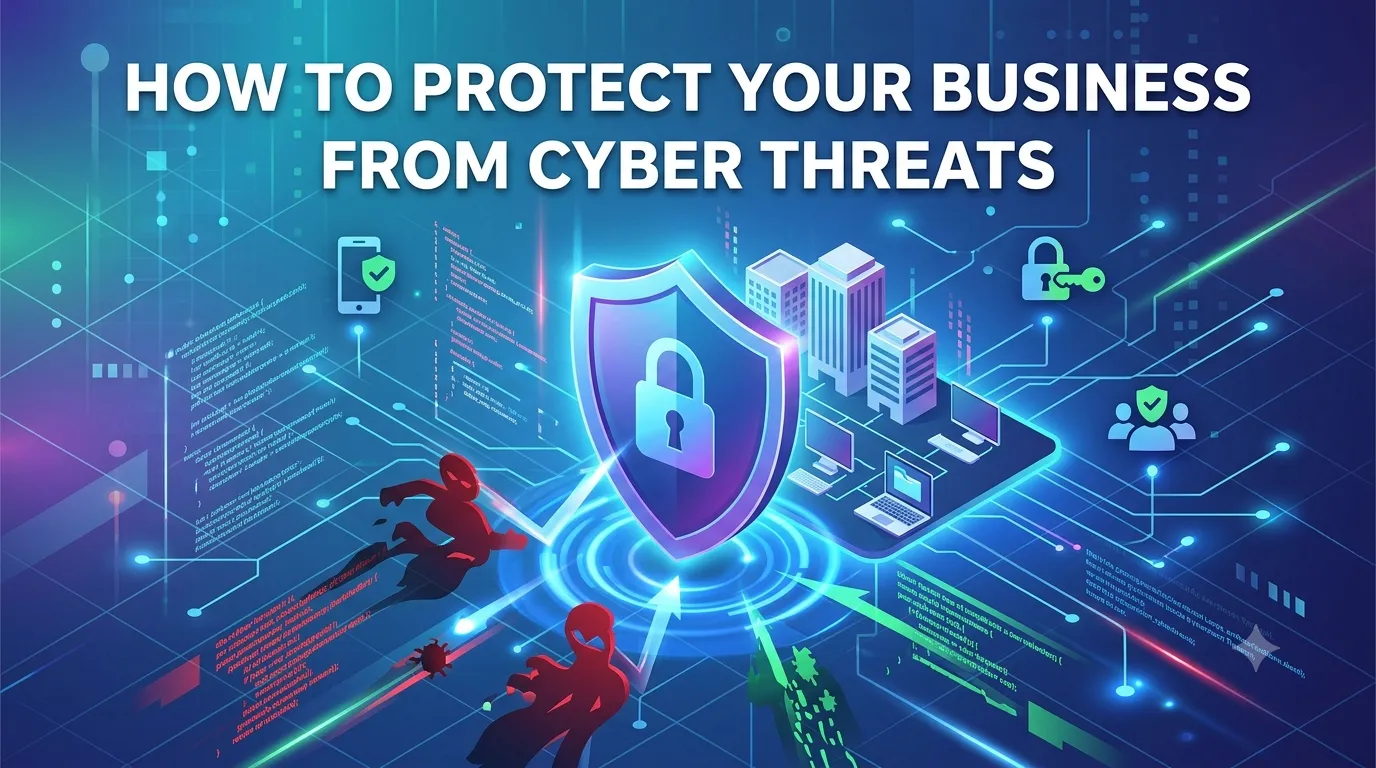
Strong physical controls only go so far without matching digital discipline. Cybersecurity for Data Center environments covers network segmentation, hardened management interfaces, and routine vulnerability assessments across every connected system — including the badge readers and cameras that make up the physical security layer itself.
Data Center Encryption
Applying Data Center Encryption to data at rest and in transit means that even a successful physical or network breach doesn't automatically translate into readable information, provided encryption keys are managed and rotated through a properly governed process rather than left static indefinitely.
Data Center Firewalls
Next-generation Data Center Firewalls segment tenant networks from one another in shared colocation environments, inspecting east-west traffic between systems rather than just filtering inbound connections at the network edge, which contains lateral movement if any single tenant's environment is compromised.
Data Center Threat Detection
Correlating signals from network activity, access logs, and surveillance feeds through unified Data Center Threat Detection platforms allows security teams to recognise coordinated physical-and-cyber-attack patterns early, rather than treating a badge anomaly and a network alert as two unrelated events reviewed by separate teams.
Data Center Security UAE: Local Considerations and Compliance
Deploying Data Center Security UAE-wide means designing around federal telecom regulation as well as emirate-specific expectations that shape everything from facility siting to audit frequency.
Data Center Security Dubai — Free Zone and Financial Hub Considerations
A Data Center Security Dubai project serving DIFC-based financial institutions or JAFZA logistics tenants typically needs to satisfy TDRA telecom licensing alongside DESC oversight for facilities supporting government or regulated financial workloads, with particular attention to auditable access logs during periodic reviews.
Data Center Security Abu Dhabi — Government and Critical Infrastructure Considerations
A Data Center Security Abu Dhabi deployment supporting government tenants or critical national infrastructure operators generally aligns with NESA information assurance standards, with ADHICS-based controls applying where healthcare-related data is hosted, reflecting the emirate's emphasis on sector-specific compliance frameworks over a one-size-fits-all baseline.
The Real Cost of a Data Center Security Failure
A single serious incident rarely stays contained to a technical fix. Downtime at a shared facility can trigger SLA penalty clauses across every affected tenant simultaneously, while a publicised breach can cost a colocation operator future enterprise contracts long after the immediate incident is resolved. Insurers are increasingly factoring physical and cyber security maturity into premium calculations, meaning weak controls now carry a direct, measurable financial cost beyond the incident itself.
Building a Future-Ready Security Roadmap
Forward-looking operators are moving toward zero-trust network architectures, where no internal system is implicitly trusted regardless of location, combined with unified security operations centres that give one team visibility across both physical and cyber alerts. AI-driven anomaly detection is increasingly applied to badge-access patterns and network traffic alike, catching subtle deviations from an individual's or system's normal behaviour long before a rules-based alert would trigger.
Regulatory and Standards Alignment
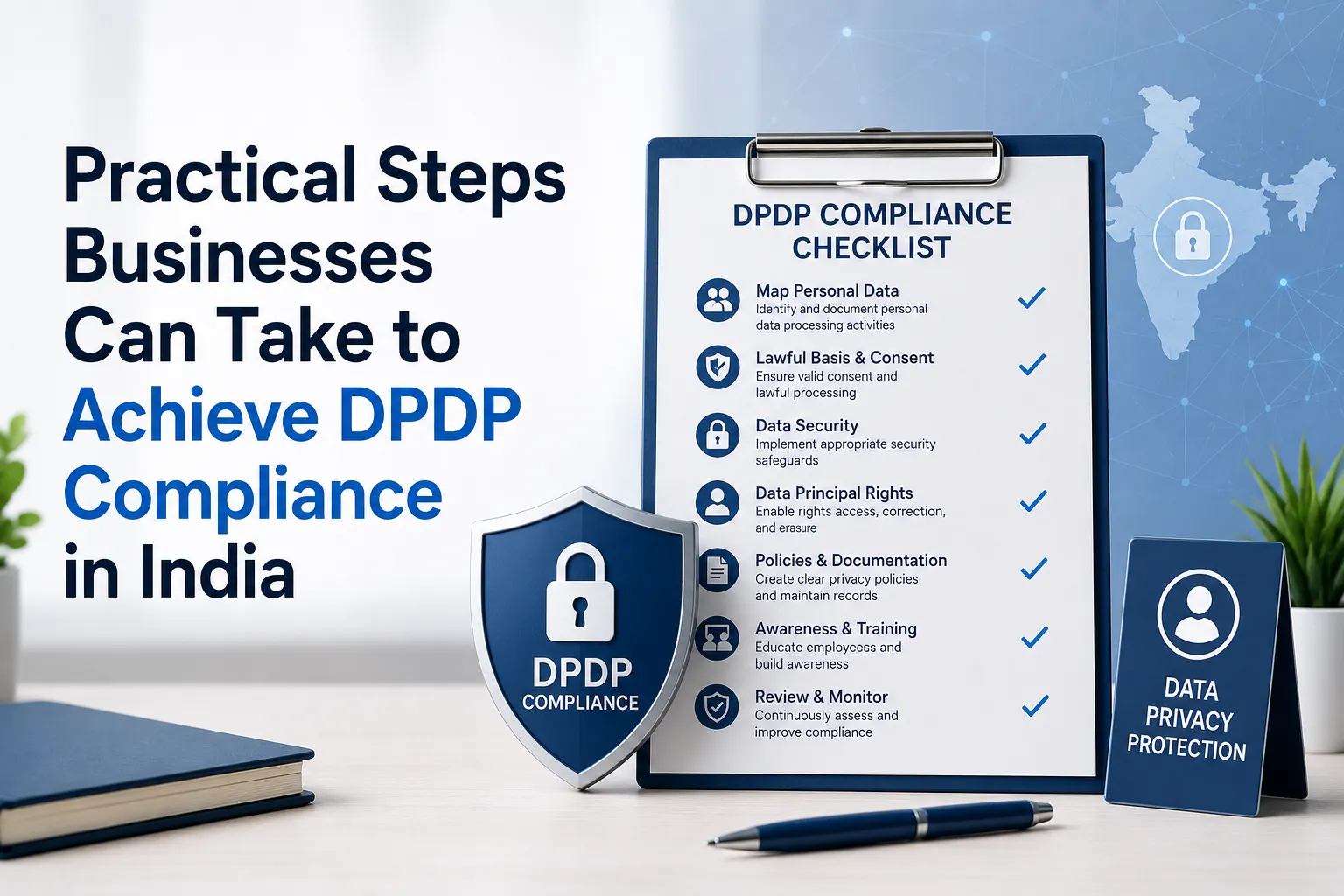
Facilities across the Emirates are typically benchmarked against the UAE Information Assurance Standard (NESA/SIA), ISO 27001 for information security management, and Uptime Institute Tier certification for infrastructure resilience. Payment-handling operators layer in PCI DSS requirements, and UAE PDPL compliance governs how personal data is stored, encrypted, and access-logged, with emirate-level bodies such as DESC and ADHICS adding sector-specific expectations on top of these federal baselines.
Why Operators Choose Tektronix for Data Center Security
Tektronix LLC has delivered integrated security programmes for data centers across the UAE, pairing access control, surveillance, and intrusion detection hardware from Genetec, Milestone, HID Global, and Honeywell with a project methodology built around each facility's specific compliance obligations. Every engagement begins with threat modelling and site risk assessment, followed by integration with the client's existing network security operations so physical and cyber teams share one incident-response playbook instead of working from separate, disconnected procedures.
Operators planning a new facility or upgrading an existing security posture can review Tektronix's data center perimeter security solutions to evaluate deployment approaches suited to hyperscale campuses, colocation facilities, and enterprise-owned data centers alike.
Conclusion
As more of the UAE's critical digital infrastructure moves on-shore, data center security has become inseparable from business continuity itself. Reliable Data Center Access Control and continuous Data Center Surveillance form the physical backbone, while Data Center Intrusion Detection closes the gaps a determined intruder might otherwise find.
Paired with disciplined Cybersecurity for Data Center operations, Data Center Encryption, Data Center Firewalls, and coordinated Data Center Threat Detection, these layers give operators genuine defense-in-depth rather than a patchwork of point solutions. Facilities investing in Data Center Security UAE-wide — including data center security Dubai sites serving global financial tenants and data center security Abu Dhabi facilities supporting critical national infrastructure — are best positioned to earn the trust of increasingly security-conscious enterprise and government clients.
FAQs
1. What makes UAE data centers a higher-value target than in the past?
Data localisation requirements and rapid cloud adoption mean more regulated, high-value data now sits within a smaller number of local facilities, concentrating risk in a way that makes each site a more attractive target for both physical and cyber threats.
2. How does a zero-trust approach change data center security?
Zero-trust removes the assumption that anything inside the network perimeter is automatically safe, requiring continuous verification for every user and system regardless of location — reducing the impact of a single compromised credential or device.
3. Do insurers actually factor security posture into data center premiums?
Increasingly, yes. Insurers are incorporating physical and cyber security maturity assessments into underwriting decisions, meaning weaker controls can translate directly into higher premiums or coverage limitations.
4. What's the difference between NESA/SIA and ADHICS compliance?
NESA/SIA is the UAE's broader information assurance standard applying to critical infrastructure generally, while ADHICS specifically governs healthcare information security in Abu Dhabi — a facility hosting healthcare tenant data may need to satisfy both.
5. How long does a full data center security upgrade typically take?
Timelines vary by facility size and scope, but a phased upgrade covering access control, surveillance, and network segmentation across an active facility typically spans several months, sequenced to avoid disrupting live tenant operations.
For more information contact us on:
Tektronix Technology Systems Dubai-Head Office
+971 50 814 4086
Data Center Encryption
Data Center Firewalls
Data Center Intrusion Detection



























Sign in to leave a comment.