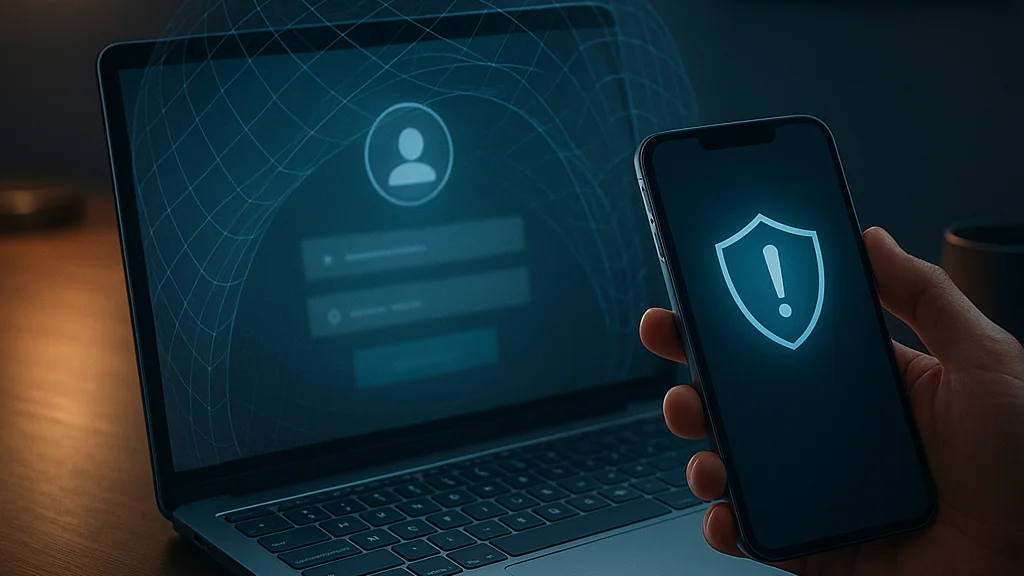

The modern phishing attack rarely looks dramatic. It looks like a delivery update, a Microsoft 365 password reset, a bank alert, a recruiter’s note, or a message from your boss sent five minutes before lunch—basically the digital equivalent of someone wearing a lanyard and walking past reception. That is the point. Phishing works because it borrows the costume of ordinary life, then waits for a human being to behave like a human being.
Security teams have been repeating the same warning for years—don’t click suspicious links, don’t open odd attachments, don’t trust urgency—and yet phishing remains one of the most successful forms of cybercrime. There is no mystery here. Attackers improve faster than user habits do, and modern scams are less about bad spelling and Nigerian princes than about precision, brand mimicry, and timing. According to the FBI’s Internet Crime Complaint Center, phishing and spoofing have remained among the most commonly reported cybercrimes in recent annual complaint data. Verizon’s Data Breach Investigations Report has also consistently shown the role of the human element in breaches, including social engineering and credential theft. The software changed; the species did not. That tends to be the recurring bug.
If you want a broader baseline before getting tactical, WriteUpCafe has covered the subject from several angles, including Rethinking How to Protect Yourself From Phishing Attacks and How to Protect Yourself From Phishing Attacks Effectively. This article goes further: what phishing looks like now, why old advice is no longer enough, and the practical system ordinary users can build to reduce risk without turning daily life into a hostage negotiation with every email.
Phishing is not mainly a technology problem. It is a trust problem delivered through technology—and that distinction changes how you defend yourself.
Why phishing still works when everyone says they know about it
People often assume phishing succeeds because victims are careless. That is tidy, moral, and mostly wrong. Phishing succeeds because attackers exploit routines: invoices arrive by email, HR sends links, banks text alerts, cloud apps ask for logins, and couriers send tracking notices. A convincing scam does not need genius-level deception; it only needs to resemble one more tile in the mosaic of digital admin. Most of us are not “fooled” in some theatrical sense—we are busy, distracted, and trained to respond quickly. Corporate life, especially, rewards speed. Security then arrives to explain that speed was a mistake. Very comforting.
The threat has also become more layered. Traditional email phishing remains common, but smishing via SMS, vishing by phone, QR code phishing, fake browser update prompts, OAuth consent scams, and business email compromise have all expanded the attack surface. The cryptocurrency sector has been especially exposed because irreversible transfers and wallet-draining links make mistakes expensive and final. Outlook India, in its discussion of phishing in the crypto era, notes how attackers prey on users through fake exchanges, wallet prompts, and impersonation campaigns. That pattern matters beyond crypto. Once an attacker can imitate a trusted workflow, the specific industry is almost secondary.
Another reason phishing persists is that many people still rely on visual inspection alone. They look for poor grammar, odd logos, or obvious sender mistakes. Those clues still matter, but they are no longer reliable filters. Attackers copy branding perfectly, buy lookalike domains, abuse legitimate cloud services, and use AI tools to produce cleaner language than many real companies. Some campaigns even route through compromised accounts, which means the email technically comes from someone genuine. The old red flags have not disappeared; they have simply stopped being sufficient. Like an IKEA manual missing three screws, the setup looks familiar right until the shelf collapses.
The smarter framing is this: phishing is a system failure, not a single bad click. Protection comes from layers—identity security, device hygiene, message verification, payment caution, and recovery planning. One habit will not save you. A stack of habits might.
The anatomy of a phishing message in 2026
The average phishing message is designed around three levers: urgency, authority, and friction reduction. Urgency tells you something bad will happen if you do not act now. Authority borrows the identity of a bank, employer, platform, or colleague. Friction reduction makes the path easy: one button, one QR code, one attached PDF, one “secure” login page. It is the shortest route to a mistake. Attackers are not composing literature; they are optimizing conversion funnels.
Email remains central, but the best campaigns now blend channels. You may receive an email about account verification, then a text with a code entry page, then a phone call from “support” asking you to confirm the suspicious login. Each step reinforces the last. This is especially effective against users who know to distrust any one message in isolation but lower their guard when multiple channels appear to validate the same story. What looks like confirmation is often choreography.
There are several common phishing formats worth identifying quickly:
- Credential harvesting: fake login pages for email, banking, cloud storage, payroll, or social media.
- Attachment-based malware: invoices, resumes, tax forms, or shipping documents carrying malicious files or macro prompts.
- Business email compromise: messages impersonating executives, vendors, or finance staff to redirect payments or request sensitive data.
- MFA fatigue and support fraud: repeated authentication prompts or fake help desk calls pushing users to approve a sign-in.
- OAuth consent phishing: a malicious app asks for account permissions, avoiding password theft entirely.
- QR phishing: codes on emails, posters, or messages that route victims to fake portals on mobile devices.
Generative AI has made parts of this easier for criminals. It can draft localized text, imitate tone, and remove the clumsy errors that once exposed scams. But AI is not magic; it mostly accelerates scale and polish. The deeper threat is operational discipline. Attackers research company structures, scrape public profiles, study invoice patterns, and time messages around payroll, tax deadlines, holidays, or product launches. That is why a phishing email can feel uncannily plausible—it was built from fragments you already made public.
If a message creates pressure and convenience at the same time, treat that combination as suspicious. Real security processes usually add friction; scams remove it.
WriteUpCafe’s How to Protect Yourself from Phishing Attacks: Strategies for Cybersecurity usefully emphasizes layered defense. The crucial upgrade in 2026 is to think beyond “spot the fake email” and toward “interrupt the attacker’s workflow.” That means verifying requests out of band, using phishing-resistant authentication, and refusing to let one message control your next move.
The personal defense stack that actually reduces risk
The most effective anti-phishing strategy is boring in the best way. It is a repeatable routine that makes your accounts harder to steal and your mistakes easier to contain. You do not need elite tradecraft. You need guardrails that still work when you are tired, rushed, or on mobile in the back of a cab pretending your battery is not at 2 percent.
Start with account security. Every important account should have a unique, strong password generated and stored by a reputable password manager. Reused passwords turn one stolen credential into a chain reaction across email, banking, shopping, and work tools. Email deserves special attention because it is the reset hub for everything else. If an attacker gets your primary inbox, they often get the keys to the kingdom and the spare keys in the drawer.
Next comes multi-factor authentication, but not all MFA is equal. SMS codes are better than no MFA, yet they remain vulnerable to SIM-swap fraud, social engineering, and interception risks. App-based authenticators are stronger. Best of all, where available, use phishing-resistant methods such as passkeys or hardware security keys. These approaches bind authentication to the legitimate site or device context, which makes credential harvesting far less useful to attackers. Major platforms have steadily expanded passkey support, and that shift is one of the most meaningful consumer security improvements of the past few years.
Your practical defense stack should include the following:
- Use a password manager to create unique passwords for every account.
- Turn on MFA everywhere, prioritizing authenticator apps, passkeys, or hardware keys over SMS where possible.
- Keep devices and browsers updated so known vulnerabilities are patched quickly.
- Use built-in safe browsing and spam filtering instead of disabling them for convenience.
- Separate critical email accounts from casual sign-ups and newsletters.
- Review account recovery options and remove old phone numbers or unused backup emails.
- Check login activity on major services and revoke sessions or app access you do not recognize.
One more habit matters enormously: never use the link inside a high-stakes message if you can reach the service another way. Open your banking app directly. Type the company domain yourself. Use a saved bookmark. Call the number printed on your card, not the one in the email. This “independent path” rule stops a surprising number of attacks because it breaks the attacker’s control over the interface. It is not glamorous. Neither is wearing a seat belt, and yet here we are.
How to inspect messages without becoming paranoid about everything
There is a fine line between caution and digital superstition. You do not need to treat every message like a cursed VHS tape. You do need a structured way to evaluate risk before clicking, paying, downloading, or replying. The goal is not suspicion for its own sake; it is verification before commitment.
Begin with the sender identity, but do not stop there. Display names are trivial to spoof, and even the visible address can be misleading if you only glance at it on mobile. Check the full sender address carefully. Then examine the request itself. Is the message asking for login credentials, payment changes, gift cards, tax forms, one-time codes, or urgent confidentiality? Those are classic pressure points. If the email claims to be from your boss and asks you not to call because they are “in a meeting,” that is not executive efficiency. That is social engineering wearing business casual.
Hovering over links on desktop still helps, but phishing kits now use convincing domains and subdomains. On mobile, where hovering is awkward or impossible, the safer approach is often not to interact at all. Open the service directly through your app or browser bookmark. Attachments deserve the same skepticism. Unexpected PDFs, ZIP files, Office documents requesting macros, and “secure document” portals should trigger verification. So should QR codes in emails. They are popular because they move scrutiny from the desktop to the phone, where users inspect less and tap more.
A useful personal checklist looks like this:
- Was I expecting this message or file?
- Does the request involve money, credentials, codes, or sensitive data?
- Is there pressure to act immediately or secretly?
- Can I verify this through a separate channel I already trust?
- Am I being pushed to scan a QR code, open an attachment, or approve an MFA prompt I did not initiate?
If the answer raises doubt, pause and verify. Contact the person using a known phone number, a fresh email you type yourself, or an internal chat thread you already use. For workplace requests involving invoices or bank changes, insist on a second confirmation step. Finance fraud thrives on politeness and haste. A thirty-second callback can save a five-figure transfer. That is not overkill; that is process.
For readers wanting more scenario-based guidance, 2026 Update: How to Protect Yourself from Phishing Attacks and How to Protect Yourself from Phishing Attacks in 2026 complement this approach with current examples. The recurring lesson is simple: do not let the attacker choose the channel, the deadline, and the proof all at once. That is their whole script.
What changed recently: phishing trends shaping 2026
Several developments have made phishing more dangerous—and, in some ways, more subtle—by mid-2026. The first is the rise of attacks targeting identity systems rather than just passwords. Criminals increasingly go after session cookies, OAuth permissions, and MFA workflows. If they can steal a session token or trick you into approving access for a malicious app, they may not need your password at all. This is one reason security professionals now stress app permission reviews and session management alongside password hygiene.
The second shift is platform blending. Attackers are no longer confined to email inboxes. Collaboration tools, social networks, messaging apps, job platforms, and SMS all serve as delivery channels. A fake recruiter message can lead to a credential page. A bogus shared document notice can trigger an OAuth prompt. A support DM on a social platform can push you toward account recovery fraud. The medium changes; the pressure mechanics remain the same.
Third, phishing has become more personalized through public data and AI-assisted drafting. Attackers can scrape role titles, vendor names, travel schedules, and posting habits from social media and company websites. They do not need a Hollywood-grade deepfake to be effective. Sometimes all it takes is using the right manager’s name, the right project acronym, and the right day of the month. Payroll week is a favorite for a reason.
Meanwhile, defenders have improved too. Email authentication standards such as SPF, DKIM, and DMARC are more widely deployed, major browsers have strengthened warnings, and passkeys are gaining traction. Large consumer platforms continue to push users toward stronger authentication and suspicious-login alerts. Yet those improvements mainly reduce mass, low-effort phishing. High-quality impersonation still slips through because the message may be technically well-formed even if the intent is criminal. Security infrastructure can filter a lot; it cannot fully replace judgment.
One area demanding special caution is cryptocurrency and digital asset management. As Outlook India’s report on crypto phishing explains, wallet prompts, fake airdrops, and imitation exchange pages remain potent because transactions are hard to reverse and users often operate outside traditional banking protections. The takeaway applies more broadly: any environment with instant action and limited recourse becomes a phishing magnet. The internet keeps inventing faster buttons. Attackers, naturally, adore buttons.
If you clicked already: the first hour matters most
Even careful people click bad links. They open the wrong PDF, type a password into a fake page, or approve a prompt they did not mean to approve. The difference between a scare and a disaster is often what happens next. Panic wastes time. Procedure saves it.
If you entered credentials on a suspicious site, change that password immediately from a clean device or a trusted app, then change any reused passwords elsewhere. Revoke active sessions if the service allows it. Review recent login activity and connected apps. If MFA was not enabled, turn it on at once—preferably with a stronger method than SMS. If you did approve an unexpected MFA request, reset your password and sign out other sessions because the attacker may already be inside.
If you downloaded a file or installed software, disconnect the device from the internet if you suspect malware, then run your security tools and seek professional help if the device contains work data, financial records, or access to critical accounts. For workplace incidents, report them immediately to IT or security. Early reporting is not embarrassing; it is useful. Silent damage is what hurts organizations. Security teams generally prefer a false alarm to a quietly compromised mailbox sending invoice fraud to the whole vendor list. Nobody wants to be the pilot episode of that sitcom.
For financial risk, contact your bank or card issuer through official channels, monitor transactions, and ask about account freezes or card replacement if needed. If the incident involves cryptocurrency, speed is even more important because recovery options are narrower. Document wallet addresses, transaction IDs, screenshots, and timestamps. If tax, payroll, or identity documents were exposed, consider fraud alerts or equivalent credit protections available in your jurisdiction.
Here is a rapid response order that works well for most users:
- Stop interacting with the message, site, or caller.
- Change affected passwords from a trusted route.
- Revoke sessions, app permissions, and unknown devices.
- Enable or strengthen MFA.
- Check financial accounts and payment methods.
- Scan the device or isolate it if malware is suspected.
- Report the incident to your employer, provider, or bank.
- Warn relevant contacts if your account may have sent messages to others.
The emotional trap after a phishing incident is denial. People hope nothing happened because admitting risk feels worse than the work of remediation. Unfortunately, attackers benefit from that delay. Treat suspicion as enough reason to act. You can always scale down later. Cleaning up early is tedious; cleaning up late is a miniseries.
Building long-term habits at home and at work
Phishing defense becomes durable when it is social, not just individual. Families need simple rules: no sharing one-time codes, no paying from links in messages, no installing “support” software for callers, no scanning random QR codes for account recovery, and no shame in asking a second person to inspect a suspicious message. Teenagers, older relatives, and busy professionals all get targeted differently, but the core defense is the same—slow the moment down and verify through a channel you control.
At work, process beats awareness posters. Employees should know exactly how to confirm payment changes, executive requests, payroll updates, and document-sharing invitations. Dual approval for transfers, vendor callback procedures, restricted admin rights, and phishing-resistant MFA do more than annual training modules ever will. Training still matters, especially when it uses realistic examples, but the strongest organizations assume someone will click eventually and design systems that limit the blast radius.
Leaders also need to stop rewarding dangerous speed. If staff are praised for instant responsiveness but scolded for verification delays, phishing wins by policy. Security culture is not a slogan; it is what happens when an employee pauses a suspicious request and management says, “Good catch,” rather than “Why did this take so long?” That one sentence determines more than many expensive tools do.
The future of phishing will likely involve more impersonation across voice, video, and collaboration platforms, plus more abuse of legitimate cloud tools and identity workflows. The answer is not despair. It is disciplined skepticism paired with stronger authentication and cleaner recovery paths. Protect your email like a primary asset. Use passkeys where you can. Verify money requests out of band. Treat unexpected MFA prompts as incidents, not annoyances. And remember that the smoothest digital experience is not always the safest one. Sometimes the secure path feels slightly inconvenient—like software asking you to restart when you have seventeen tabs open and a false sense of control. Annoying, yes. Still better than getting phished.
The safest habit is not “trust nothing.” It is trust slowly, verify independently, and design your accounts so one mistake does not become total compromise.
That, more than any single trick, is how to protect yourself from phishing attacks now. Not by becoming impossible to fool, because that is fantasy, but by becoming difficult to exploit. The difference sounds small. It is not.




















Sign in to leave a comment.