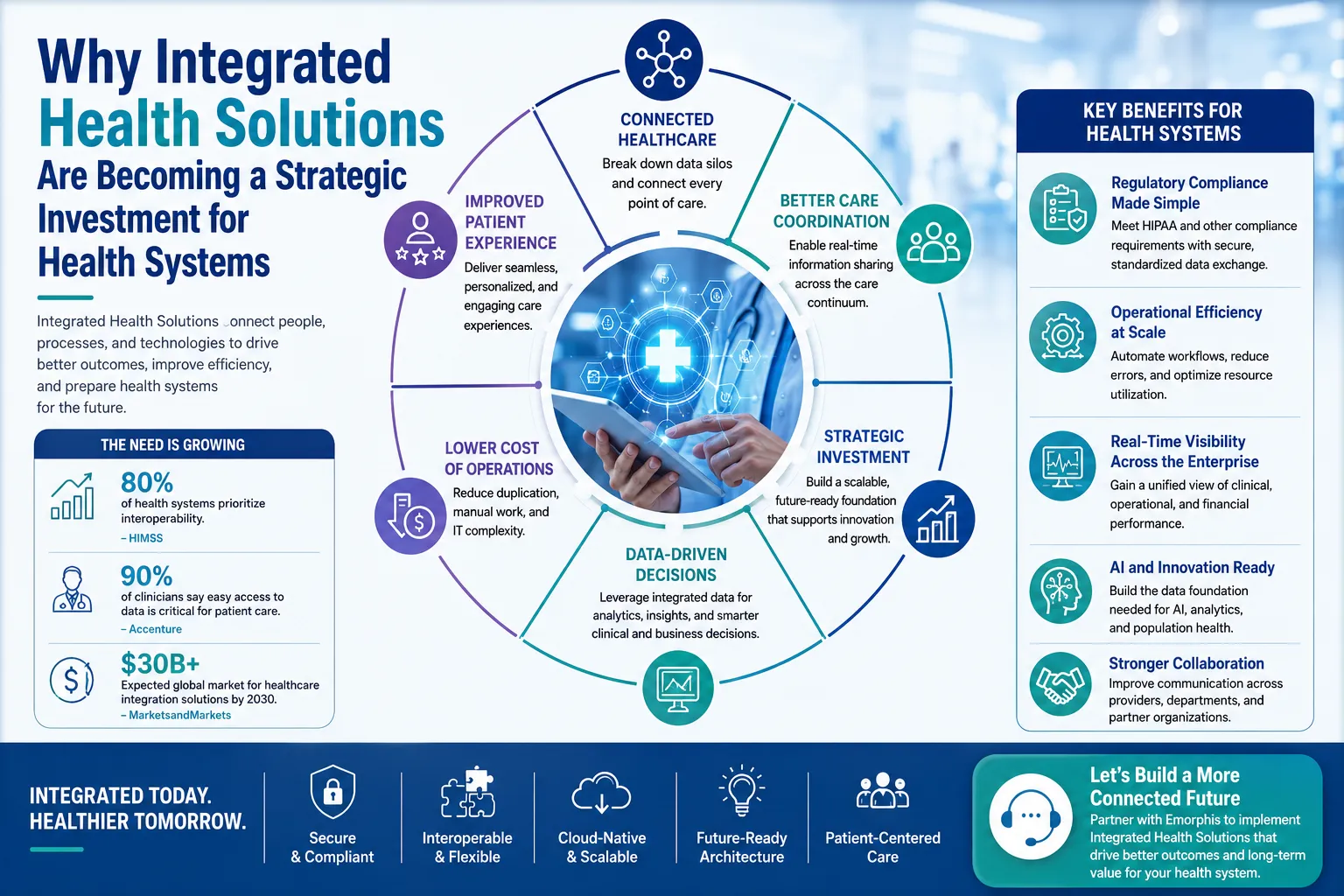

Healthcare systems are navigating one of the most significant periods of digital transformation in their history. Hospitals, multi-specialty clinics, health networks, and care providers are investing heavily in technologies that improve patient care, streamline operations, and support value-based healthcare. Electronic Health Records (EHRs), telehealth platforms, Remote Patient Monitoring (RPM), AI-powered clinical applications, and patient engagement solutions have become essential components of modern healthcare delivery. However, these investments can only deliver their full value when they work together as a connected ecosystem.
Many healthcare organizations continue to struggle with disconnected applications, fragmented patient information, and manual workflows that limit operational efficiency. Clinical teams often switch between multiple systems to access patient data; administrative staff spend valuable time reconciling information, and leadership lacks a comprehensive view of organizational performance. These challenges increase operational costs while making it more difficult to deliver coordinated, patient-centered care.
This is why Integrated Health Solutions are rapidly becoming a strategic investment rather than simply another IT initiative. Instead of implementing standalone technologies that operate independently, healthcare organizations are adopting integration strategies that connect clinical, operational, and administrative systems into a unified digital environment. These connected ecosystems improve interoperability, enable real-time information sharing, and provide healthcare professionals with the insights they need to deliver better patient outcomes.
As healthcare continues to evolve toward personalized medicine, AI-assisted decision-making, and value-based care. Integrated digital infrastructure will play a critical role in helping organizations remain competitive and future-ready.
The Shift from Isolated Systems to Connected Healthcare
Healthcare organizations rarely rely on a single software platform. Over time, they implement specialized solutions for clinical documentation, laboratory management, imaging, pharmacy operations, revenue cycle management, scheduling, and patient engagement. While each application addresses a specific operational requirement, they often function independently, creating barriers to seamless information exchange.
This fragmented approach affects every aspect of healthcare delivery. Clinicians may need to retrieve patient records from multiple systems before making treatment decisions, while care coordinators spend additional time verifying information across departments. Administrative teams also face challenges in generating accurate reports because operational data is scattered across various applications.
Modern Integrated Health Solutions eliminate these barriers by connecting existing technologies rather than replacing them. Through standardized interoperability frameworks, APIs, and cloud-based integration platforms, healthcare organizations can establish a connected digital ecosystem where authorized users have secure access to accurate, real-time information.
This shift from isolated systems to integrated healthcare environments improves communication across departments, enhances care coordination, and supports faster clinical decision-making.
Rising Demand for Interoperability
Interoperability has become one of the highest priorities for healthcare organizations worldwide. As patients receive care across hospitals, specialty clinics, laboratories, pharmacies, and virtual care platforms, healthcare providers require immediate access to complete and up-to-date patient information.
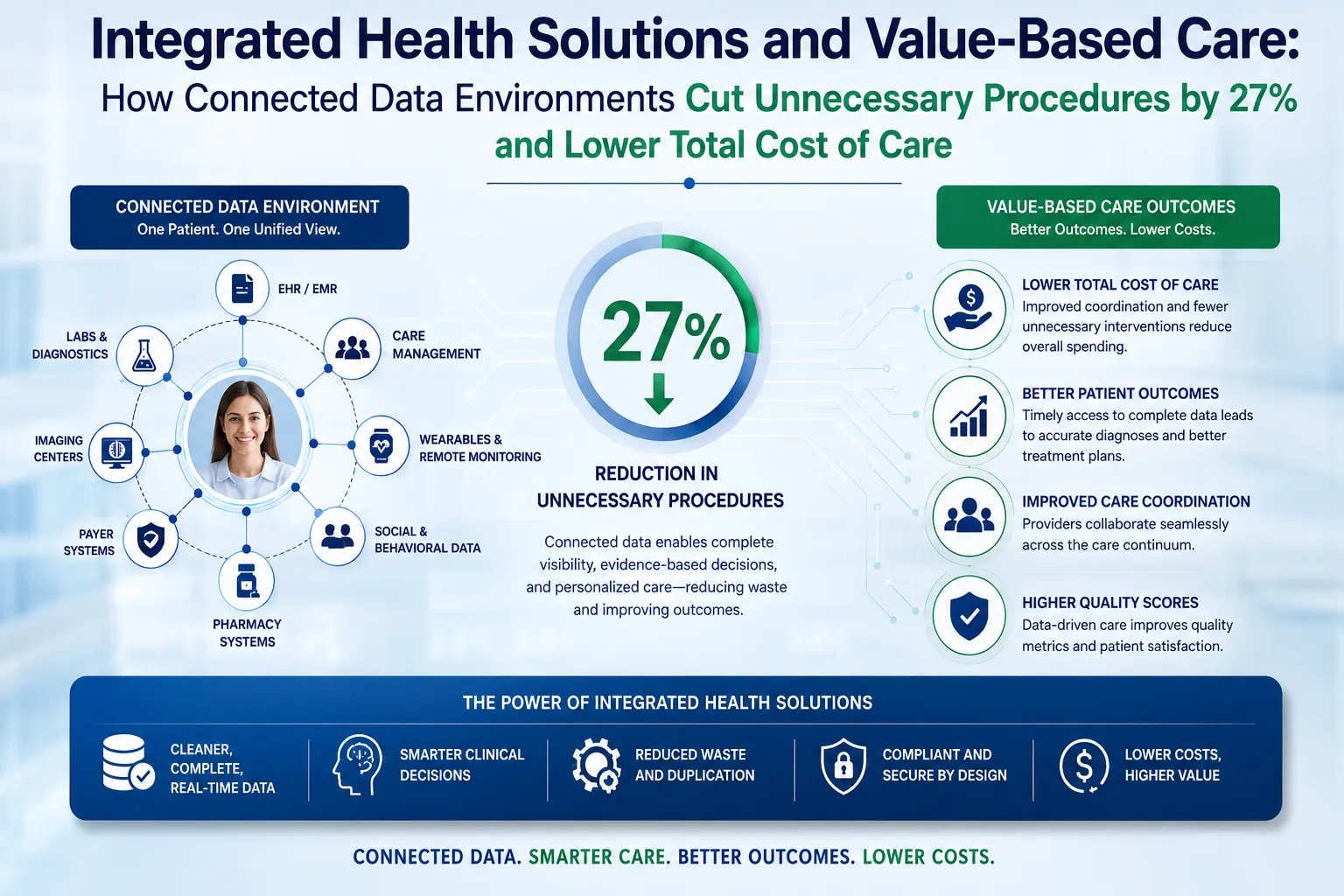
Disconnected systems create unnecessary delays and increase the likelihood of duplicate testing, incomplete medical histories, and fragmented care experiences. By implementing Integrated Health Solutions, organizations enable seamless information exchange between Electronic Health Records, medical devices, telehealth applications, and third-party healthcare systems.
Standards such as HL7 FHIR and API-driven integration have significantly simplified interoperability, allowing healthcare providers to connect diverse applications while maintaining data accuracy and security. Instead of manually transferring information between systems, clinicians receive timely access to comprehensive patient records that support more informed treatment decisions.
Beyond improving clinical workflows, interoperability also enables organizations to participate more effectively in health information exchanges, collaborative care programs, and population health initiatives.
Supporting Value-Based Care and Patient Experience
Healthcare is steadily shifting from volume-based care models to value-based care, where reimbursement increasingly depends on patient outcomes, quality measures, and coordinated care delivery. Achieving these objectives requires healthcare organizations to share information efficiently across multiple care settings.
Integrated Health Solutions provide the technological foundation for this transformation. When providers have access to complete patient histories, medication records, laboratory results, imaging reports, and care plans within a connected environment, they can coordinate treatment more effectively while reducing unnecessary duplication of services.
Patients also benefit from improved digital experiences. Integrated patient portals, mobile applications, telehealth platforms, and Remote Patient Monitoring solutions create continuous communication between providers and patients, enabling more proactive care management.
From an operational perspective, connected healthcare systems reduce administrative workload by automating data exchange, minimizing manual documentation, and improving workflow efficiency. Healthcare professionals spend less time searching for information and more time delivering patient care.
For health system leaders, investing in Integrated Health Solutions is no longer solely about improving technology infrastructure. It is about creating an interconnected healthcare ecosystem capable of supporting better clinical outcomes, enhanced patient satisfaction, and long-term organizational growth.
Why Health Systems Are Investing in Integrated Health Solutions
As healthcare organizations expand their digital capabilities, technology investments are increasingly evaluated based on long-term business value rather than short-term implementation costs. Health systems are no longer looking for standalone software that solves individual problems. Instead, they are prioritizing Integrated Health Solutions that create a connected technology ecosystem capable of supporting clinical excellence, operational efficiency, and future innovation.
An integrated approach enables healthcare providers to unify data from multiple applications, automate workflows, and establish a single source of truth across the organization. This connected environment not only improves day-to-day operations but also prepares health systems to adopt emerging technologies such as Artificial Intelligence (AI), predictive analytics, and personalized medicine.
Improving Operational Efficiency
Operational efficiency is one of the primary reasons health systems invest in Integrated Health Solutions. Hospitals and healthcare networks generate enormous volumes of clinical and administrative data every day. When this information is distributed across disconnected applications, employees spend valuable time searching for records, manually transferring data, and reconciling inconsistencies between systems.
Integrated platforms eliminate many of these inefficiencies by enabling automated data exchange across departments. Patient registration information flows directly into clinical systems, laboratory results become immediately available within Electronic Health Records (EHRs), billing systems receive updated treatment information automatically, and administrative dashboards reflect real-time operational performance.
This level of connectivity reduces manual effort, minimizes duplicate documentation, and accelerates clinical workflows. Physicians spend less time navigating multiple applications, while care teams collaborate more effectively using complete and accurate patient information.
Operational visibility also improves decision-making for healthcare executives. Instead of waiting for manually prepared reports, leadership teams gain access to real-time dashboards that monitor patient flow, resource utilization, financial performance, quality metrics, and operational KPIs. This enables faster responses to emerging challenges while supporting continuous improvement initiatives across the organization.
Enabling AI, Analytics, and Population Health
Artificial Intelligence and advanced analytics are rapidly transforming healthcare, but their success depends on access to high-quality, connected data. AI models cannot generate reliable insights when patient information remains isolated across multiple systems.
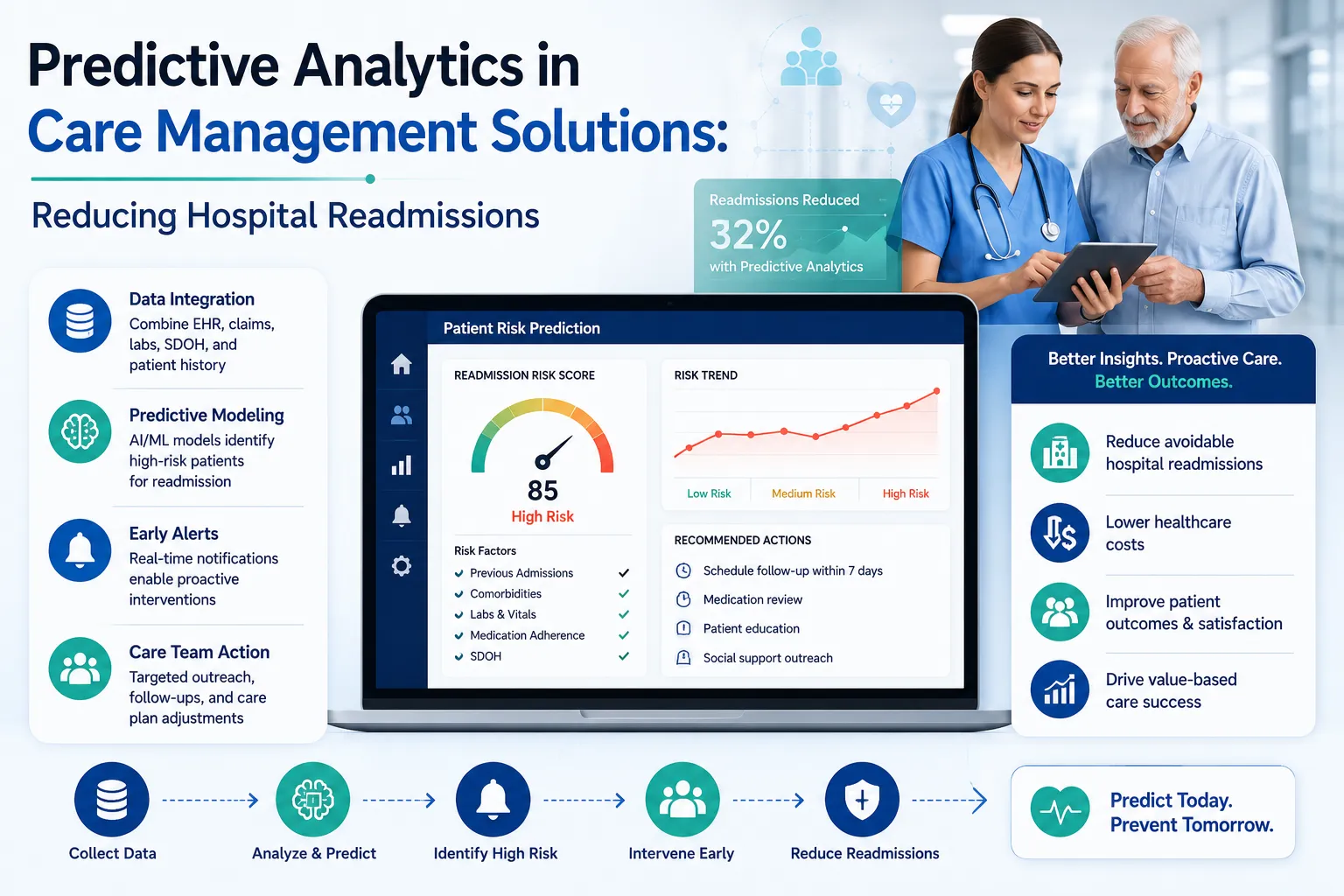
Integrated Health Solutions create the data foundation required for intelligent healthcare applications. By connecting EHRs, imaging systems, laboratory platforms, wearable devices, telehealth applications, and Remote Patient Monitoring (RPM) solutions, organizations establish a comprehensive data ecosystem that supports predictive analytics and AI-driven decision-making.
Healthcare providers can identify high-risk patients earlier, monitor chronic disease progression more effectively, optimize resource allocation, and improve care coordination using real-time insights generated from integrated data.
Population health management also becomes significantly more effective when healthcare organizations can analyze complete patient information across different care settings. Integrated systems enable care teams to monitor treatment outcomes, identify preventive care opportunities, and improve health outcomes for entire patient populations rather than focusing solely on individual encounters.
As healthcare continues embracing digital innovation, organizations with integrated technology ecosystems will be better positioned to adopt future AI capabilities and data-driven care models.
Reducing Long-Term Technology Costs
Many healthcare organizations initially assume that maintaining multiple specialized applications is the most cost-effective approach. However, disconnected systems often create hidden operational expenses that increase over time.
Separate applications require individual maintenance, custom integrations, software upgrades, user training, and ongoing technical support. Manual processes associated with fragmented systems also increase labor costs while reducing employee productivity.
Investing in Integrated Health Solutions helps reduce these long-term costs by consolidating workflows, simplifying system management, and improving operational efficiency. Standardized integration frameworks reduce future implementation effort whenever new applications are introduced, making technology expansion faster and more cost-effective.
Organizations also gain greater flexibility when responding to mergers, acquisitions, regulatory changes, or new digital health initiatives because their integration architecture is designed to scale with evolving business requirements.
Choosing an Integration Partner That Supports Future Growth
Technology alone cannot deliver successful healthcare integration. The expertise of the implementation partner plays an equally important role in ensuring long-term success.
Healthcare integration projects require specialized knowledge of interoperability standards such as HL7, FHIR, SMART on FHIR, API development, cloud architecture, cybersecurity, and healthcare compliance. Beyond technical expertise, implementation partners must understand clinical workflows and the operational realities of hospitals, health systems, and healthcare providers.
A reliable integration partner should also design solutions with scalability in mind. Healthcare organizations continue adopting new technologies, expanding care delivery models, and increasing data volumes. Integration architectures should accommodate future growth without requiring major redesigns every time new applications or services are introduced.
Companies like Emorphis Technologies specialize in developing secure, scalable Integrated Health Solutions that connect legacy systems, modern cloud applications, medical devices, and third-party healthcare platforms. With deep expertise in healthcare interoperability, custom software development, and digital transformation, Emorphis helps organizations build connected healthcare ecosystems that support both current operational needs and future innovation.
Conclusion
Healthcare organizations are moving beyond isolated software investments toward connected digital ecosystems that improve patient care, streamline operations, and support long-term innovation. As interoperability becomes a strategic priority, Integrated Health Solutions are emerging as one of the most valuable investments health systems can make.
By connecting clinical, operational, and administrative systems, healthcare providers gain real-time visibility, improve care coordination, reduce manual effort, and establish the data foundation needed for AI, analytics, and value-based care. Rather than solving individual technology challenges, integrated platforms create a scalable infrastructure that supports continuous digital transformation.
Organizations that invest in integrated healthcare technologies today will be better prepared to deliver efficient, patient-centered care while adapting to the rapidly evolving healthcare landscape.
Build Future-Ready Integrated Health Solutions with Emorphis
Digital transformation begins with connected healthcare systems. Emorphis Technologies helps healthcare organizations design and implement secure, scalable Integrated Health Solutions that connect EHRs, clinical applications, medical devices, cloud platforms, and third-party healthcare systems.
Whether you're modernizing legacy infrastructure, implementing HL7 FHIR interoperability, or building a comprehensive digital health ecosystem, our healthcare integration experts can help you accelerate innovation while maintaining security and compliance.
Talk to Emorphis today to build Integrated Health Solutions that improve interoperability, strengthen care coordination, and prepare your health system for the future of connected healthcare.






























Sign in to leave a comment.