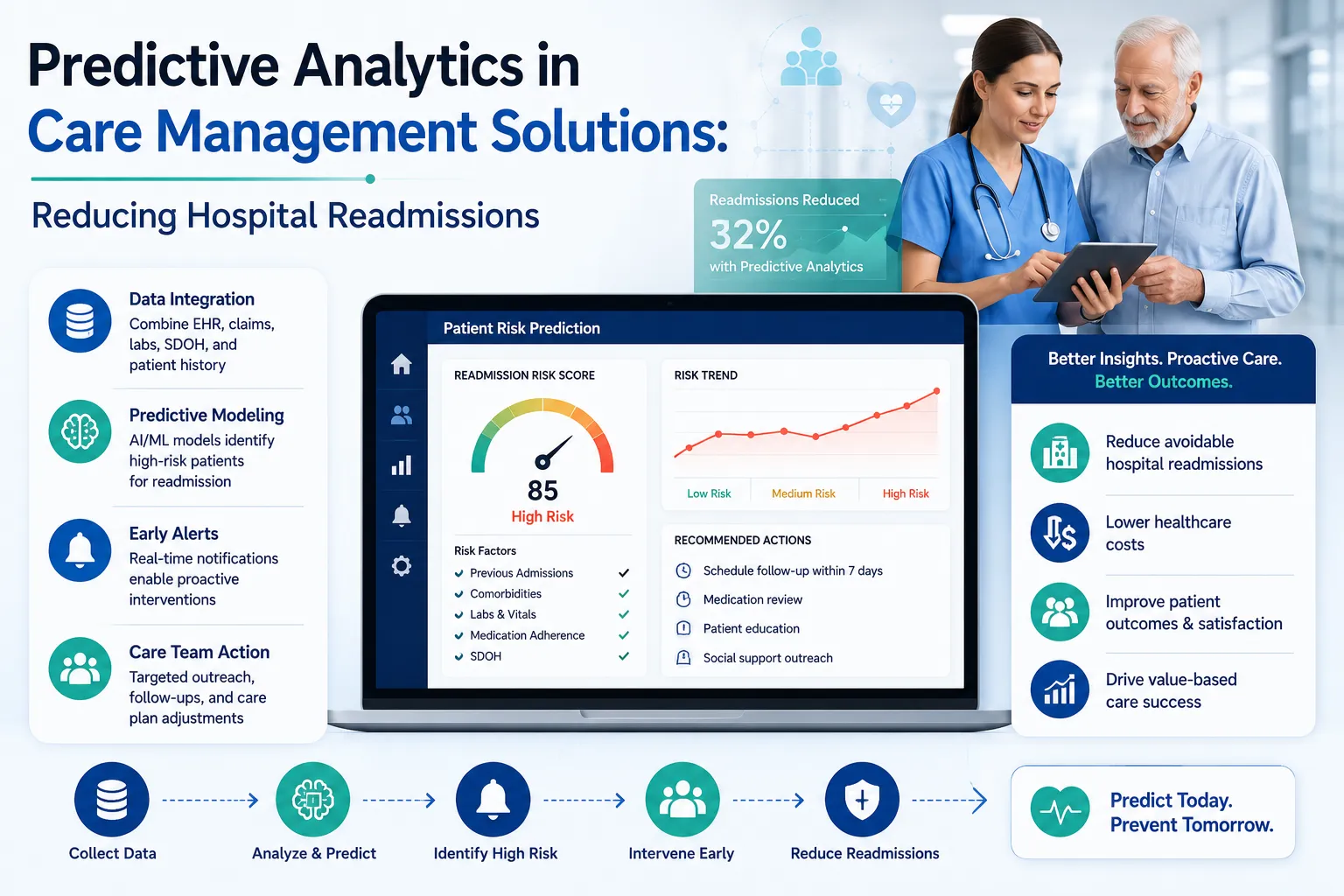

Hospital readmissions are no longer just a clinical quality metric — they're a direct hit to hospital revenue and a growing compliance risk under CMS's Hospital Readmissions Reduction Program (HRRP). For fiscal year 2026, CMS data shows 240 hospitals (8.1%) will face readmission penalties of 1% or more, up from 208 hospitals (7%) in FY2025 — the first year-over-year increase after five consecutive years of decline. With readmissions costing the U.S. healthcare system an estimated $52 billion annually, and a single readmission costing a hospital roughly $15,000 once penalties and direct costs are factored in, the financial case for smarter prevention has never been stronger.
This is exactly where a modern, AI-powered care management solution earns its investment. Predictive analytics is transforming care management from a reactive, post-discharge scramble into a proactive system that identifies at-risk patients before they leave the hospital — and keeps them stable long after.
Why Legacy Care Management Solutions Can't Solve the Readmission Problem
Static Risk Scores Miss Real-Time Changes
Most legacy care management solutions rely on scoring tools like LACE or HOSPITAL, calculated once at or near discharge. These models use a handful of fixed variables and don't update as a patient's condition evolves post-discharge, leaving care teams working from an outdated snapshot rather than a current risk picture.
Fragmented Data Creates Blind Spots
Clinical data, claims history, pharmacy fills, and social determinants of health (SDOH) typically live in separate systems. Without true interoperability, a care management solution can't connect the dots between, say, a missed prescription refill and a looming heart failure exacerbation.
Manual Triage Wastes Scarce Care Manager Time
When every discharged patient gets the same level of manual review, care managers spend as much time on low-risk patients as high-risk ones — a resource allocation problem that predictive analytics is purpose-built to solve.
How Predictive Analytics Actually Reduces Readmissions
Continuous, Dynamic Risk Stratification
Rather than a single static score, AI models embedded in a care management solution recalculate readmission risk continuously, pulling in real-time EHR data, historical utilization patterns, and SDOH indicators. This gives care teams a living risk profile instead of a discharge-day guess.
Early Warning Signals After Discharge
AI care management platform development increasingly incorporates remote patient monitoring data — weight trends, blood pressure, oxygen saturation — so predictive models can flag early signs of decompensation days before a patient would otherwise end up back in the ER.
Evidence From the Field
The results are measurable. A safety-net health system that layered predictive AI and automated discharge workflows onto its care management solution cut readmission rates from 27.9% to 23.9% by the end of 2023 — a statistically significant improvement published in the American Journal of Managed Care (2025). A separate initiative that linked a readmission prediction model to social care coordination reported a 14.3% drop in 30-day readmissions. Broader industry reporting puts realistic reductions in the 10–50% range depending on population complexity and implementation maturity, with one health system halving $4.2 million in annual preventable-readmission costs within 18 months of deployment.
Where AI Care Management Platform Development Delivers the Highest ROI
Risk-Based Discharge Planning
Instead of applying identical discharge protocols to every patient, predictive risk tiers let care teams direct enhanced planning, home health referrals, and closer follow-up scheduling toward the patients who actually need it — protecting staff bandwidth without cutting corners on high-risk cases.
Automated, Prioritized Outreach
A care management solution with predictive prioritization can generate discharge worklists automatically, ensuring the highest-risk patients get a call or home visit within the critical 48-hour post-discharge window, while automation handles routine check-ins for everyone else.
Medication Adherence Prediction
Non-adherence is a leading readmission driver. Predictive models can flag patients likely to struggle with complex regimens based on fill history and social risk factors, enabling pharmacist or care manager intervention before a missed dose becomes an ER visit.
What to Look for Before Investing in an AI Care Management Platform
Interoperability as a Non-Negotiable
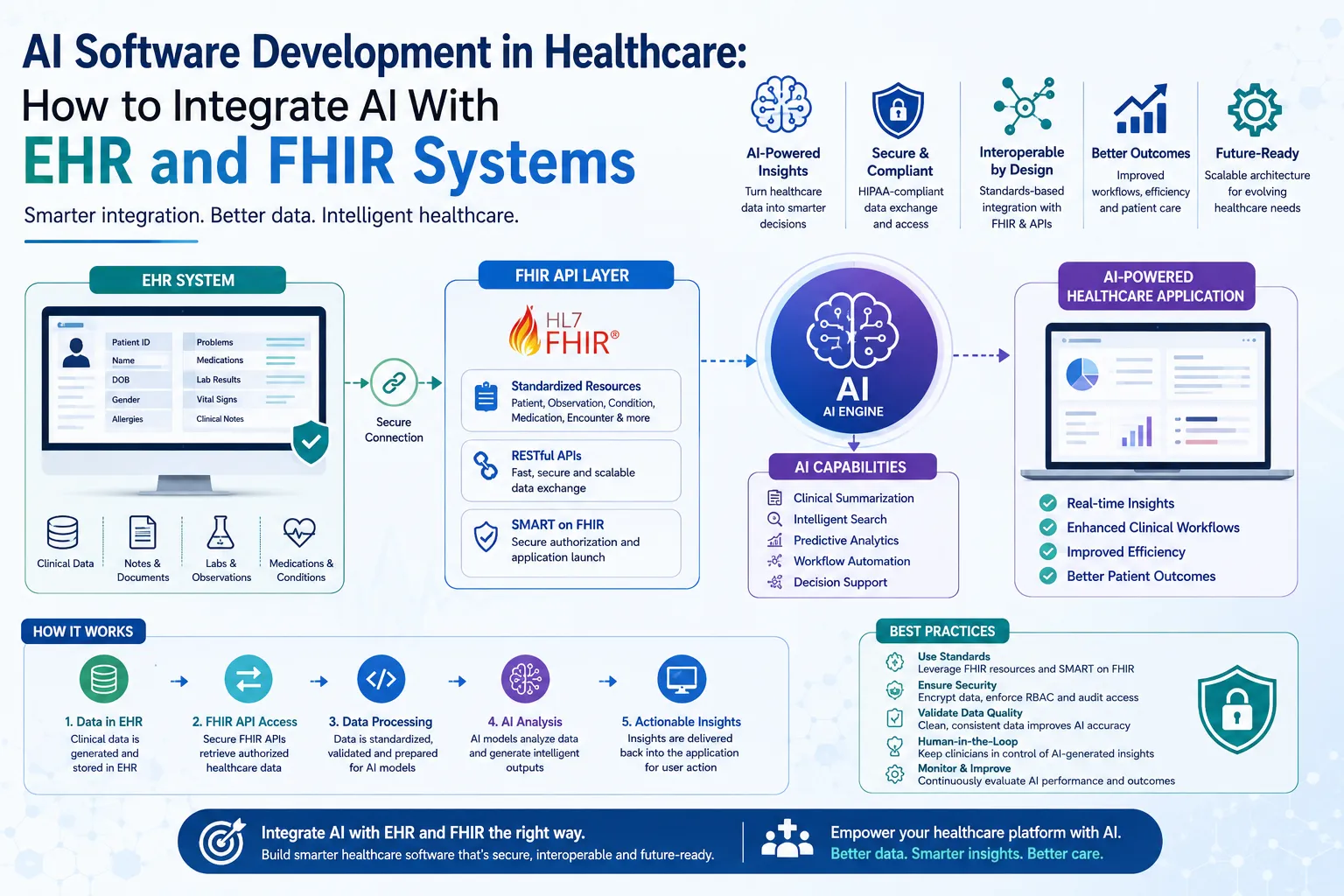
Any platform must integrate cleanly with EHRs, claims systems, and SDOH data sources using FHIR and HL7 standards. Predictive models are only as strong as the data feeding them — fragmented data means fragmented predictions.
Explainable, Not Black-Box, AI
Clinical teams and compliance officers need to understand why a patient was flagged high-risk. Platforms that can't explain their reasoning face slower adoption and greater regulatory scrutiny, regardless of underlying accuracy.
Built for Scale and Continuous Retraining
Patient populations shift, and models that aren't retrained regularly lose accuracy over time. The right platform architecture supports ongoing model monitoring and retraining without requiring a full rebuild.
The Market Is Already Moving
The shift toward AI-enabled care management isn't theoretical — it's already reshaping vendor investment. The AI-based care coordination market is valued at $2.15 billion in 2026 and is projected to grow at a 23.79% CAGR through 2031. Enterprise signals reinforce this trajectory: in April 2026, Innovaccer announced a $250 million investment specifically targeting AI capabilities in prior authorization, utilization management, and care management. Health systems and payers that delay adoption risk falling behind competitors already capturing these efficiency and outcome gains.
Build vs. Buy: A Strategic Decision for Provider and Payer Organizations
Off-the-shelf care management solutions offer speed to deployment, but organizations with unique population health needs, specific compliance requirements, or ambitions to differentiate their care model are increasingly exploring custom AI care management platform development. A custom-built approach allows healthcare organizations to train models on their own population data, build integrations tailored to their specific EHR and claims ecosystem, and maintain full control over explainability and data governance — advantages that become more valuable as value-based care contracts tie reimbursement more tightly to outcomes.
The Bottom Line
As CMS penalties climb and value-based care arrangements expand, predictive analytics is shifting from a competitive differentiator to a baseline expectation for any serious care management solution. Health systems and payers that invest now — in interoperable, explainable, continuously-trained AI care management platforms — are positioning themselves to reduce avoidable readmissions, protect Medicare reimbursement, and materially improve outcomes for the patients most at risk.
Ready to build predictive readmission capabilities into your care management solution? Talk to our healthcare software development team about designing an AI care management platform tailored to your patient population, compliance requirements, and existing EHR ecosystem.




























Sign in to leave a comment.