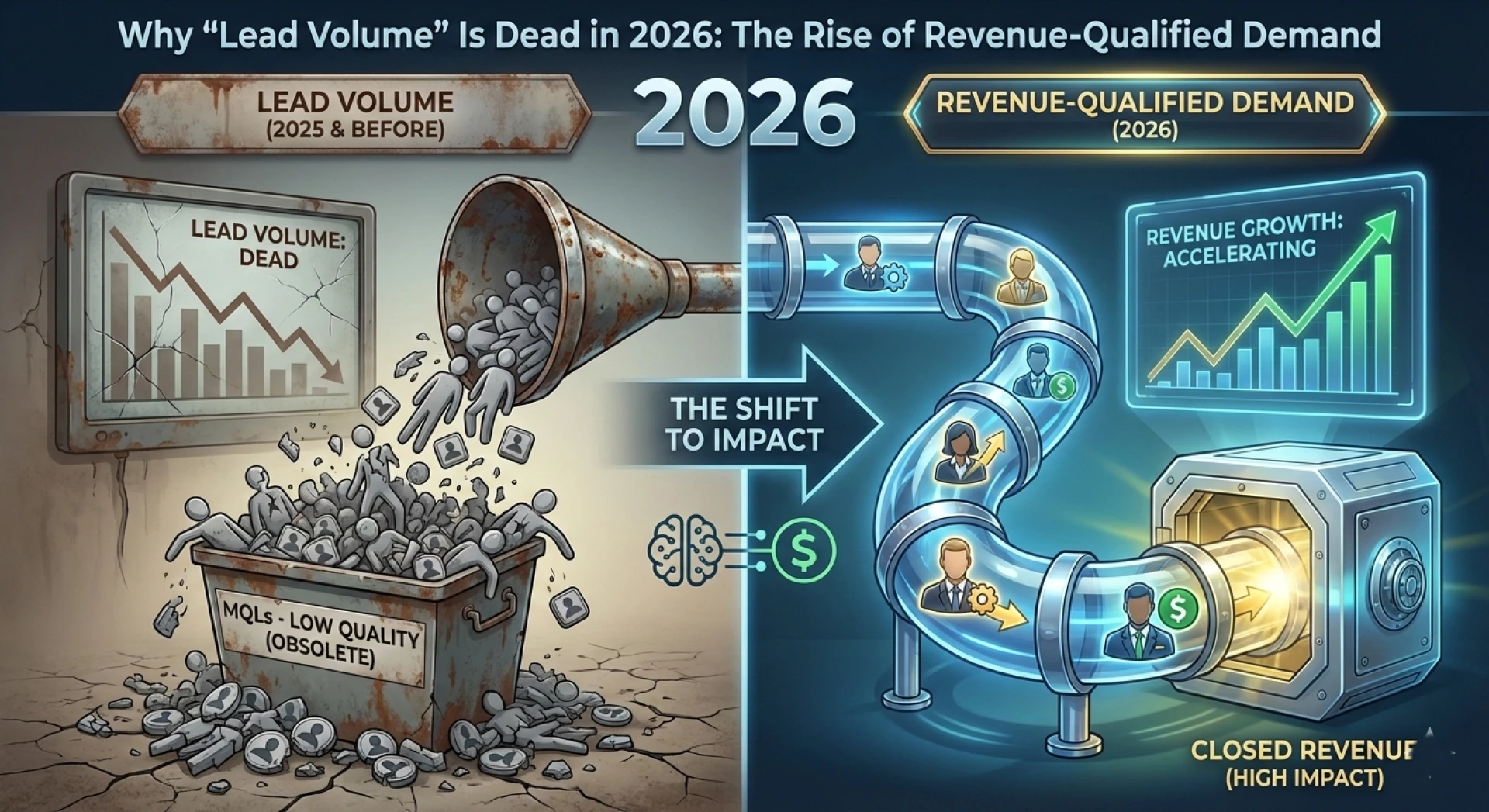

For years, the success of B2B marketing could be judged by the single metric: how many leads had we produced?
More leads resulted in better performance. More leads meant growth.
In 2026, such thoughts are not merely old-fashioned but are actively undermining pipeline quality.
B2B buying has shifted. Anonymously researched buys, larger buying committees, and salespeople no longer having the capacity to pursue names of thousands of unqualified individuals. Consequently, lead volume no longer indicates growth. Revenue-qualified demand does.
This new reality is revolutionising the way B2B Lead Generation and Lead Nurture Programs are created, analysed, and optimised.
The Problem With Lead Volume in Modern B2B
In creating mass lead potentiality, it gives the perception of growth. However, it poses three significant issues:
• The sales teams spend time on low-intent leads.
• No correlation between marketing success and revenue performance.
• Pipeline velocity becomes slower rather than increasing.
In typical B2B businesses, only a fraction of the converted leads get converted into actual opportunities. The rest of them get stored in CRMs, fill dashboards, and silently burn resources.
In 2026: Efficiency triumphs over scale.
What Revenue-Qualified Demand Actually Means
Revenue-qualified demand targets account and buyer profiles that have a genuine buying intention, and not merely form submissions.
Instead of Asking:
“How many leads did we get?”
Effective teams ask:
"How many buying accounts advanced towards revenue?"
Revenue-qualified demand is based on:
• Buying stage signals
• Account engagement
• Intent-driven Behaviour
• Stakeholder engagement
This is where the Contemporary B2B Lead Generation paradigm changes from Lead Generation to Buyer Readiness.
Why Lead Nurture Programs Must Evolve in 2026
Classic Lead Nurture Campaigns were linear:
Download → email sequence → sales handoff
It doesn’t work anymore.
In 2026, buyers
• Start and stop routes randomly.
• Multi-channel research.
• Interact with various vendors simultaneously.
Today’s lead nurture programs must be:
• Action-dependent, not time-dependent.
• Account-aware, not contact-centric.
• Revenues, not funnels.
Also, nurturing has stopped being about pushing emails. It’s about triggering the relevant message at the relevant time, depending on what buyers are actually searching for.
How B2B Lead Generation Is Being Redefined
Successful B2B marketers today start with the design of the lead generation process based on quality rather than quantity.
Important changes in 2026:
• From MQLs to buying group engagement.
• From form fills to intent surges.
• From Campaigns to Connected Journeys.
• From Lead Scoring to Account Prioritization.
Now the objective is not to produce even more leads.
The objective is to create fewer, better opportunities.
The Metrics That Matter Now
If you’re still reporting lead volume, you’re reporting lagging indicators.
Contemporary revenue-driven squads monitor:
• Account engagement intensity
• Intent-to-opportunity conversion
• Lead to meeting velocity
• Pipeline affected by nurture programs
• Revenue contribution, not lead count
All these metrics link Lead Generation in B2B to the generation of revenues.
Conclusion: From Lead Quantity to Revenue Confidence
In 2026, growth doesn’t come from more leads-it comes from better demand.
The companies winning today have already stopped chasing volume. They are investing in smarter Lead Nurture Programs, intent-driven B2B Lead Generation, and revenue-aligned metrics that sales teams actually trust.
If your pipeline still depends on lead count, it’s time to rethink the model.
Ready to move beyond lead volume and build revenue-qualified demand?
Partner with Demandify Media to design intent-led B2B Lead Generation and Lead Nurture Programs that prioritise buying readiness, accelerate pipeline velocity, and drive measurable revenue impact in 2026.
Follow for More.






























Sign in to leave a comment.