
Personal change is like a door that only opens from the inside. Strangely, most advice tries to yank it open from the outside.
If you’re reading this, you probably already know what you should do. You know the habits you want, the boundaries you need, the mindset you admire. And yet, knowledge hasn’t translated into the calm focus, confidence, or growth you imagined. That gap is the quiet frustration running beneath so many driven professionals in the USA and UK.
I’ve sat with dozens of founders, healthcare professionals, coaches, athletes, and executives who share the same truth: Self-help sounded brilliant in theory, but useless in practice.
So today I want to explore why it fails so often, and the methods that finally create movement. And because personal growth is never abstract for me, I’ll begin where one of my biggest mindset fractures happened.
A lesson shaped by a market and a medal
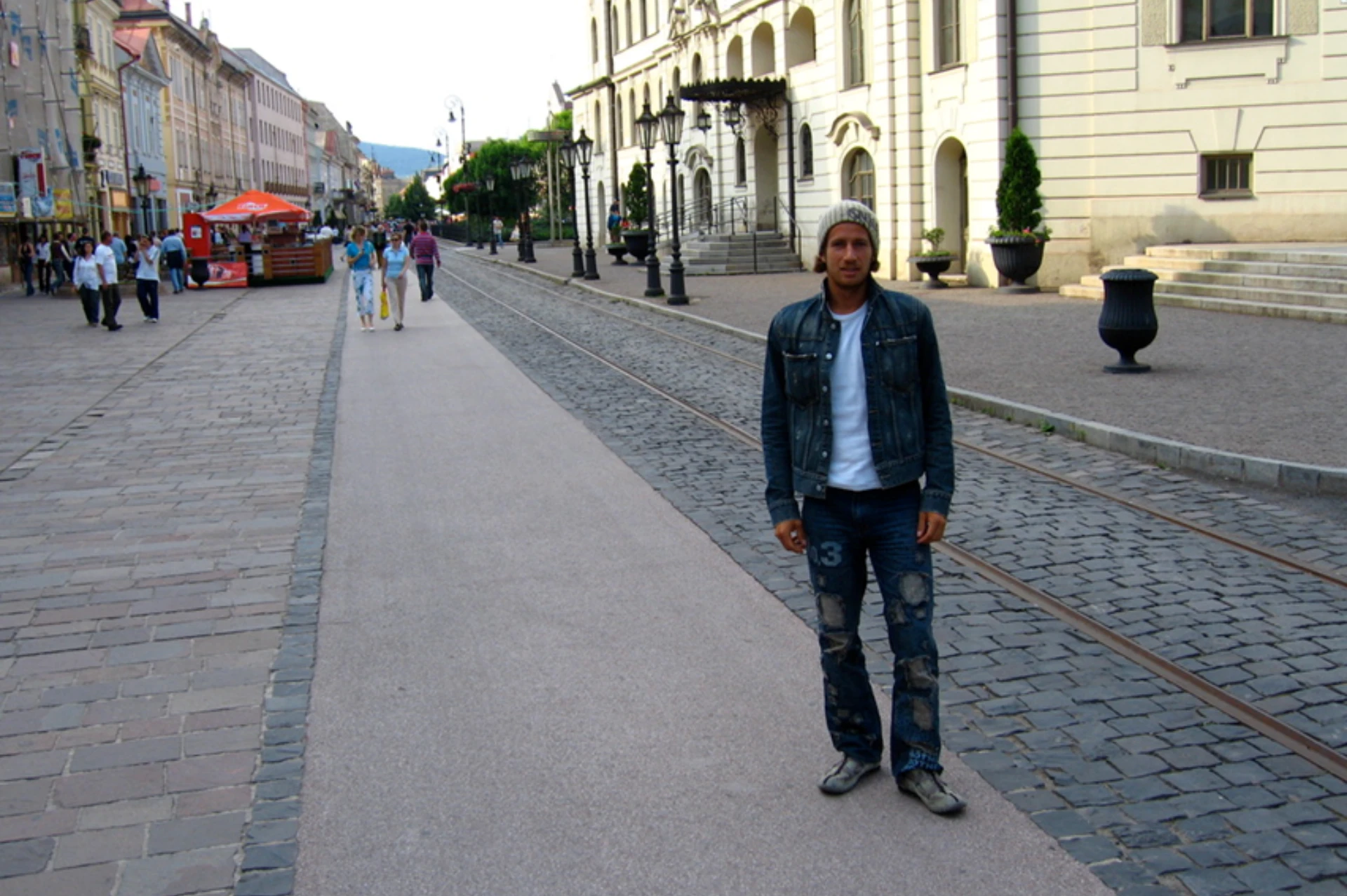
The first time I stepped into Samarkand, it was for tennis. I was competitive, meticulous, structured. I wanted results, rankings, certainty. The city gave me results. But it also rearranged my internal measuring system for what actually matters.
At the center of that city sits Registan Square. If your eyes have ever needed a reason to slow down, that place has 100 reasons waiting. The symmetry, the patience in design, the reverence for detail that serves beauty without shouting.
In 2002, I won a tournament there, facing three formidable players: Oleg Ogorodov, Simon Greul, and a competitor whose name would stick with me due to timing and irony, John van Lottum.
By 2005, I returned again. I beat a young rising challenger, Denis Istomin, and then lost the final to Boris Pashanski, though that part didn’t linger half as long as the conversations I had in the local market later that week.
A translator named Olga walked me through the world beyond the baseline. She told me most people around her survived on just $80 per month. I expected heaviness behind those words. Instead, I saw people moving through their day with presence, ritual, generosity, and grounded calm. They couldn’t always choose their circumstances, but they fiercely chose their interpretation of them.
That moment cracked open a belief in me that still sits at the heart of my work today as The Metamorphosis coach.
Because metamorphosis coaching begins at perspective, not performance. Performance becomes easier only after perspective changes the weight you’re trying to lift.
Why self-help often feels hollow
I don’t say this as someone who enjoys dismantling concepts. I say it as someone who has lived inside the outcomes of mindset, behavior, human endurance, and mental pressure for decades.
Most self-help fails for 4 major reasons:
- It’s universal, not personal
- Advice written for everyone speaks truly to no one. The human brain doesn’t change because a concept was intelligent. It changes when the concept feels recognizable.
- It focuses on motivation more than behavior
- People don’t change with inspiration highs. They change with behavior repeatability. Consistency beats intensity every time.
- It preaches habits without addressing identity
- Telling someone to “think positive” or “wake up early” makes little difference if their self-image, self-trust, or internal narration still runs on self-protection.
- It speaks to the mind, not the body
- Stress and focus are not cognitive spreadsheets. They live inside physical sensation, cortisol responses, breath patterns, attention pulses, and muscle memory. If the body isn’t involved, change doesn’t stick.
During one of those market walks in Samarkand, I realized a simpler truth:
The advice wasn’t wrong. The delivery system was incomplete.
Quotes I wrote later in life, that summarize it well in my voice:
“Advice changes no one. Recognition changes everything. When you finally see yourself in the problem, the solution no longer feels borrowed.”
“Change doesn’t care if you’re motivated. It cares if you can repeat the smallest honest action without negotiating with your own mind every morning.”
The real problems beneath the scroll
Most of the people who find me online come with similar struggles dressed in different titles. Leaders and high performers in the US/UK rarely lack ambition. They lack:
- mental quiet
- their mind moves at a sprint even when their body sits still
- emotional regulation
- stress peaks wipe focus clean
- direction clarity
- they feel busy but not anchored
- internal permission
- they overthink before acting
- identity security
- they read advice like it belongs to someone else
- nervous system trust
- they try to solve stress by logic
- calm stamina
- they work intensely and crash just as fast
The desire is almost poetic in itself:
They want a mind that works as hard as they do, but hurts less while doing it.
The answer isn’t more self-help advice. It’s applied psychology, somatic calm access, identity rewiring, narrative editing, and behavioral conditioning.
This is why my work naturally overlaps areas like applied cognitive reframing, performance psychology, breath regulation, inner narration shifts, and modalities like NLP, without ever sounding like a manual.
The Shift from information to integration
Here is the turning point most people miss when consuming self-help:
Self-help gives you information
Coaching gives you integration
Integration means:
- your brain recognizes the advice as yours
- your body knows how to access calm physically
- your identity stops debating the edges of change
- behavior becomes smaller, simpler, repeatable
The moment self-help begins to work is when you stop consuming it, and begin translating it into patterns your life can physically sustain.
That’s the bridge metamorphosis coaching focuses on.
Solutions That Actually Create Focus, Calm and Real Change
1. Identity before habits
Don’t adopt a habit until you adopt the identity that deserves it.
Instead of “I should meditate”, the phrase becomes “I am someone who protects 6 minutes of mental silence every day, even when pressure exists.”
2. The body gets the first vote
Stress spikes delete focus. So calm must be physically accessible.
Most reliable system: exhale-centric breathing, shoulder release, slow walking, cool air reset, jaw unclench, 6 minutes of physical stillness.
No emotional negotiation. Just physics.
3. Micro-action without narration
Choose the next smallest action that moves you 1% forward and do not narrate it into a catastrophe or a prediction.
If action needs 30 seconds, don’t give it a 30-minute story.
4. Perspective is the mental lens, not the mental war
Pressure doesn’t break you. The narration around pressure does.
Solution: shrink narratives into 2 lines. Remove self-threat language. Replace with curiosity, not combat.
5. Focus works in pulses
Work deliberately in blocks, then detach deliberately in blocks.
Your brain cannot sprint for 10 hours, but it can sprint for 45 minutes 6 times. The rest is release, not regret.
6. Ritualize what stabilizes
Samarkand taught me rituals don’t need complexity. They need devotion.
Tea, prayer, morning walks, evening conversations, deliberate pauses.
Modern leaders need their own rituals:
calendar boundaries, cold air resets, breathing anchors, half-day single task commitments, evening decompression, conversation spaces without agenda.
7. Self-trust is rebuilt in repetition
Confidence is not declared. It is rebuilt through small promises you actually keep to yourself daily.
When you repeat those micro-actions long enough, something quiet blossoms. And that blooming is the real metamorphosis, not more motivational text.
What finally works
What works is not chasing a new state, but building a new system.
Not intensity, but repeatability.
Not mental combat, but somatic cooperation.
People don’t need more advice. They need advice that recognizes their face in the mirror.
And that mirror moment? That is where transformation begins.
A final invitation
If you take one thing from this blog, take this:
The calm you want is not hiding in some future version of you. It’s hiding in the sentences you allow yourself to believe today. It’s hiding in whether your shoulders are tight right now. It’s hiding in the 45-minute pulse you choose to commit to next.
Ask yourself the question I learned to ask in Samarkand:
“What story am I telling myself that weighs more than the reality itself?”
And then follow it with the second question:
“What is the smallest honest action I can take without negotiating with my own fear for permission?”
Answer those honestly, repeat them kindly, and watch the metamorphosis unfold without force.
FAQs
1. Why does self-help advice fail for high performers?
Because it focuses on motivation, not identity. Information, not integration. Mind, not body. Intensity, not repeatable patterns.
2. What is metamorphosis coaching?
It’s the process of shifting internal narration, identity, and body-stored calm so that focus and transformation become sustainable and personal.
3. Do mindset shifts work immediately?
Some do, especially physical calm resets. The deeper shifts strengthen within weeks when practiced consistently in small pulses.
4. Is breathwork necessary for calm and focus?
Yes. Calm is most reliable when physically accessible. Without the body’s cooperation, focus collapses under stress.
5. How do you rebuild self-trust?
By keeping micro-promises to yourself daily. Confidence grows when you stop negotiating with your internal narrative for permission.
6. Can perspective change the emotional weight of pressure?
Absolutely. Two people face the same circumstances. One stays steady. One collapses. The difference is the internal narration they allow to publish.


























Sign in to leave a comment.