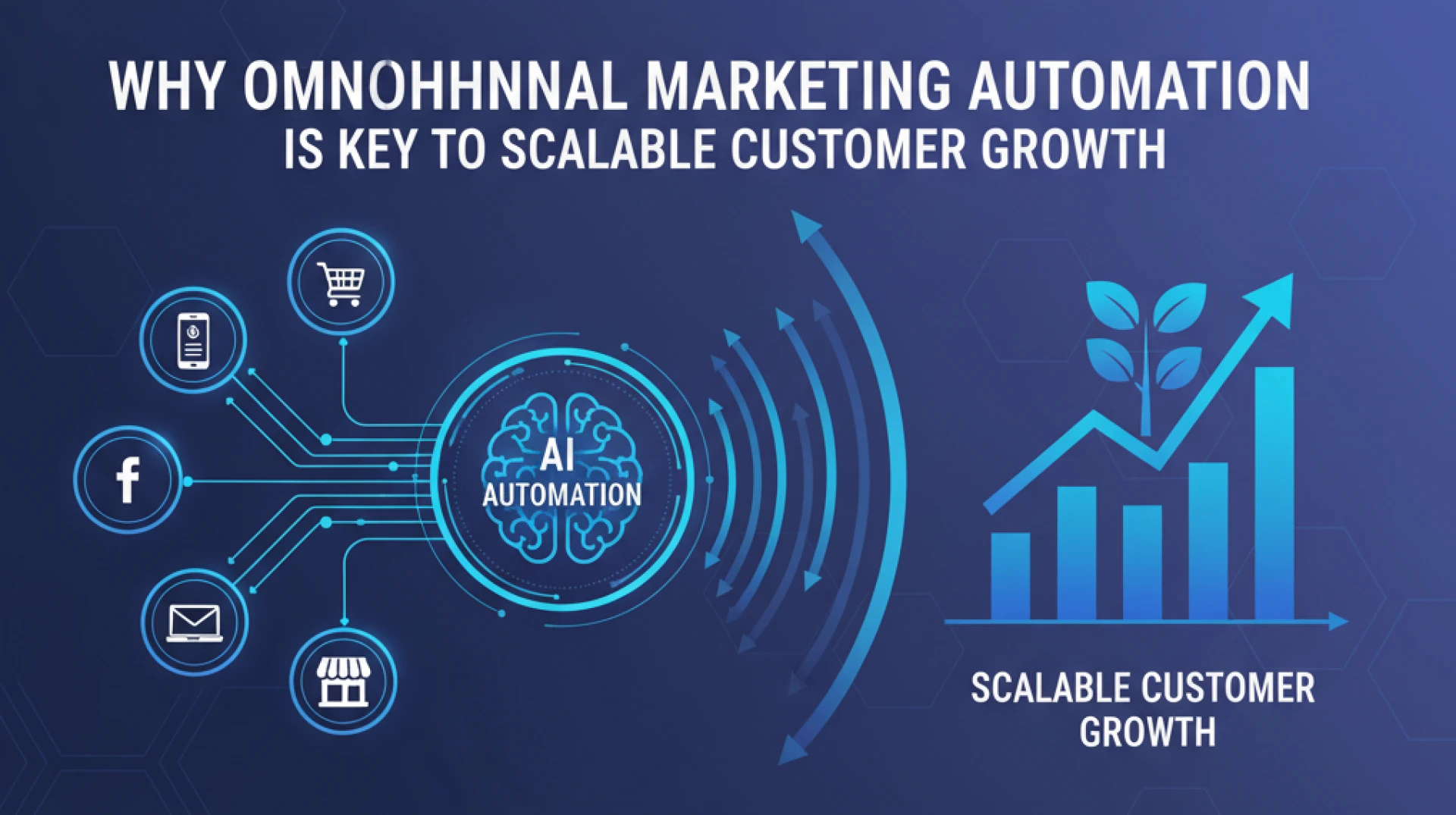

Today, customers evaluate brands based on the entire experience they receive, not a single touchpoint. Consumers frequently switch between websites, mobile apps, emails, ads, and physical stores while expecting every interaction to feel seamless and personalized.
When these experiences are disconnected, customers quickly lose interest. According to PwC, 55% of consumers stop engaging with a brand after several poor experiences, while 32% leave when experiences feel inconsistent across channels.
This growing expectation is why businesses are adopting omnichannel marketing automation. By integrating data, technology, and communication channels, organizations can create a unified customer journey that adapts to real-time behavior and improves engagement across every touch point.
Rather than managing isolated marketing campaigns, companies can coordinate data-driven customer interactions that drive better conversions, stronger retention, and long-term growth.
Why Businesses Are Moving Toward Omnichannel Customer Journeys
Customer acquisition costs continue to rise, making retention and loyalty more important than ever. Businesses are shifting from running disconnected campaigns to managing end-to-end customer journeys.
Omnichannel customers are significantly more valuable, research shows they shop nearly 70% more frequently than single-channel shoppers.
To support this shift, organizations must integrate communication across multiple channels such as:
- Email and SMS
- Websites and mobile apps
- Paid advertising
- Customer support
- Offline interactions
Businesses implementing these strategies often start with automation frameworks designed specifically for digital commerce. You can explore this in our detailed guide on Omnichannel Marketing Automation for eCommerce.
How Omnichannel Marketing Automation Works
Modern marketing automation platforms coordinate engagement through three core components.
Unified Customer Data
Customer information from CRM systems, analytics tools, eCommerce platforms, and service channels is combined into a single customer profile.
This unified data layer enables businesses to understand behavior, preferences, and engagement patterns across channels.
Organizations often rely on scalable omnichannel commerce solutions to unify these digital and physical touch points.
Intelligent Decisioning and Orchestration
Automation systems use behavioral triggers, predefined rules, and AI insights to determine the next best action for each customer.
Examples include:
- Sending cart abandonment reminders
- Delivering personalized product recommendations
- Re-engaging inactive customers
- Prioritizing high-value customer support
This orchestration transforms marketing from isolated campaigns into continuous, lifecycle-driven engagement.
Cross-Channel Execution
Once a decision is made, communication is activated across channels such as email, SMS, push notifications, advertising, and website personalization.
Automation ensures messaging remains consistent, relevant, and well-timed, preventing duplicated communication across channels.
Email automation remains a key part of these journeys. Our article on Unlocking Growth with Smarter Email Marketing Flows explains how lifecycle email campaigns improve engagement and retention.
Business Impact of Omnichannel Marketing Automation
Organizations implementing automation across customer journeys often see measurable improvements in performance and efficiency.
Revenue Growth
Personalized engagement across channels increases conversion opportunities and customer value.
Benefits include:
- improved conversion rates
- higher average order value (AOV)
- stronger customer lifetime value (CLV)
- better customer retention
Automation also enables proactive engagement with customers who may be at risk of churn.
Operational Efficiency
As customer segments and product catalogs expand, manual campaign management becomes difficult to scale.
Automation helps marketing teams:
- reduce manual segmentation
- accelerate campaign launches
- improve targeting accuracy
- minimize messaging errors
This allows teams to focus on optimization and strategic growth initiatives rather than repetitive tasks.
Scalable Growth Infrastructure
Omnichannel marketing automation also provides the foundation for sustainable growth. Businesses can expand operations across:
- new markets and regions
- multiple brands or product lines
- increasing customer volumes
Instead of redesigning marketing processes during each expansion phase, organizations can scale on top of an integrated orchestration framework.
Companies planning to build this capability can explore Omnichannel Marketing Services designed to support enterprise automation strategies.
Key Implementation Considerations
Successful automation requires alignment across technology, processes, and teams.
Data Governance
Automation effectiveness depends on accurate and unified data. Businesses must invest in:
- identity resolution systems
- real-time data pipelines
- clear ownership of customer data
Without strong data governance, personalization and automation lose effectiveness.
Customer Journey Mapping
Organizations should first map their customer lifecycle stages, including acquisition, onboarding, cross-selling, and retention.
Automation should support the entire lifecycle rather than isolated marketing campaigns.
For companies operating in B2B environments, our article on Marketing Automation for B2B Businesses – Benefits and Key Trends provides additional insights.
The Future of Omnichannel Marketing Automation
Automation platforms are evolving rapidly with advancements in AI, predictive analytics, and privacy-focused data strategies.
Key trends shaping the future include:
AI-powered journey orchestration
Automation systems will increasingly determine optimal messaging, timing, and channels automatically.
Privacy-first marketing strategies
Organizations are focusing more on first-party data and consent-based engagement models.
Revenue-driven marketing metrics
Marketing performance is increasingly evaluated based on business impact and revenue growth, not just engagement metrics.
To explore these frameworks in detail, download our resource for Omnichannel Marketing Automation for eCommerce Success Guide.
Conclusion
Omnichannel marketing automation is no longer just a marketing efficiency tool. It has become a strategic growth system for modern businesses.
By integrating customer data, automation workflows, and cross-channel engagement, organizations can create experiences that are:
- consistent across channels
- personalized in real time
- optimized for conversion and retention
Businesses that successfully implement automated customer journeys gain stronger customer relationships, higher lifetime value, and more predictable revenue growth.
At Krish TechnoLabs, we help enterprises design and implement scalable omnichannel marketing automation strategies that align technology, data, and business objectives to deliver measurable results.
If you’re ready to build connected customer journeys that drive sustainable growth, connect with our experts today.



























Sign in to leave a comment.