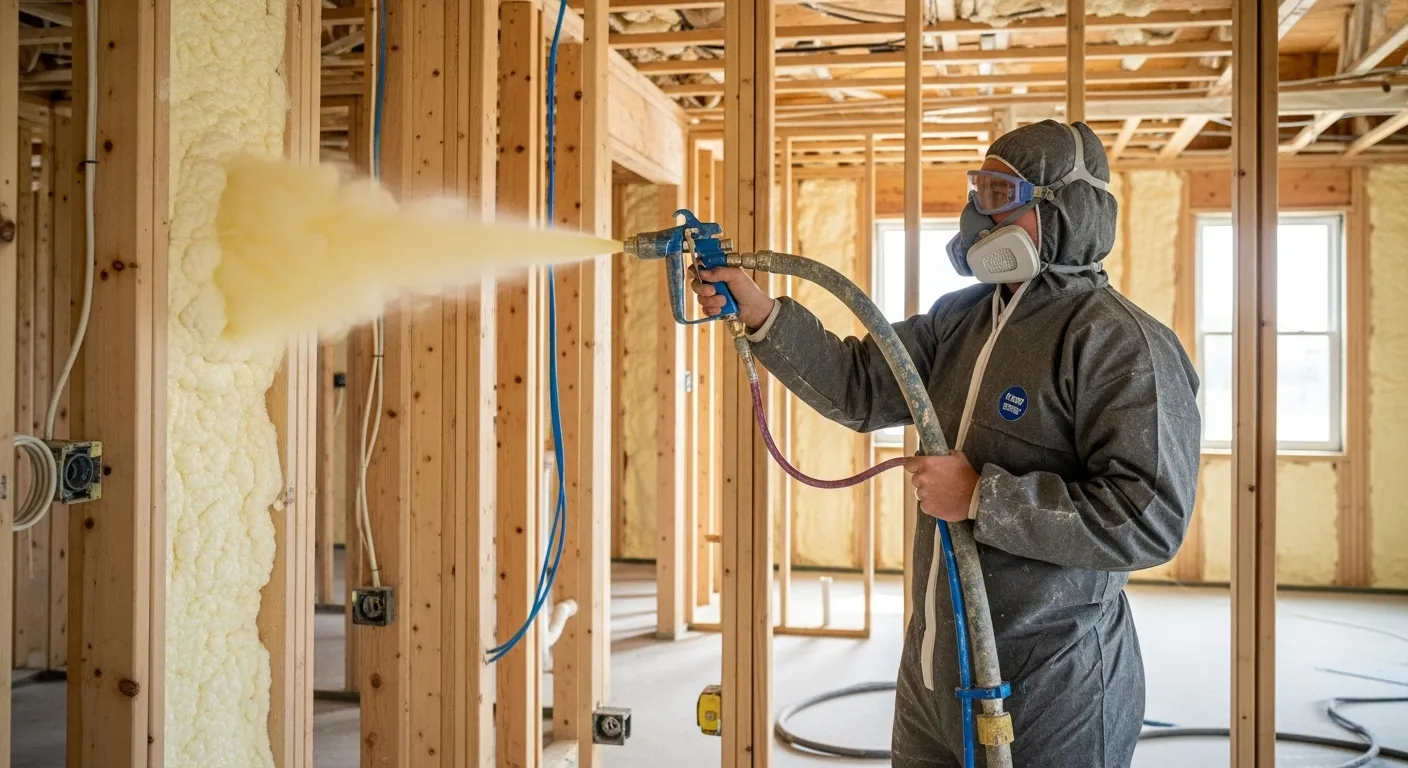

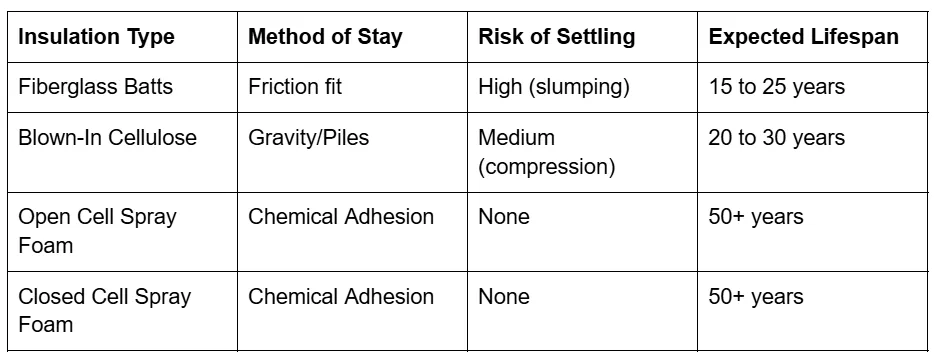
When we talk about home performance, the most common question we hear involves longevity. Most homeowners are used to the idea that insulation eventually wears out, sags, or loses its effectiveness over time. However, our spray foam insulation is different: it is a chemically bonded material that adheres directly to your home's structure. Unlike fiberglass batts or blown-in cellulose that rely on gravity and friction to stay in place, our spray foam undergoes a chemical reaction during application that turns it into a rigid or semi-rigid structure. Once it cures, it stays exactly where we put it for the life of the building.
We have spent years installing these systems in everything from residential attics to large-scale agricultural shops, and we consistently see the same result: a permanent air barrier that doesn't budge. In this guide, we will explain the science behind why our foam remains stable, how it compares to traditional materials that settle, and what you should know when choosing the right solution for your property.
The Science of Dimensional Stability
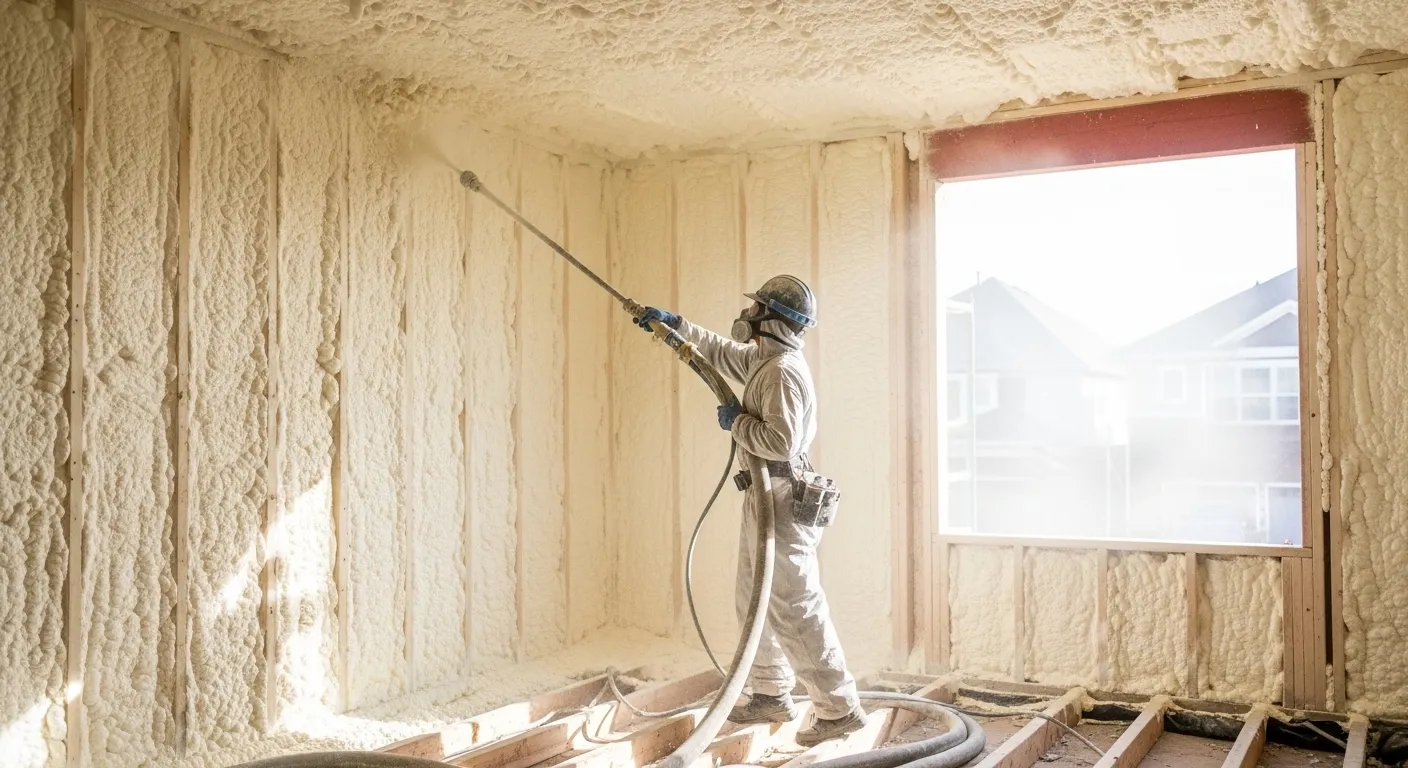
The reason our spray foam doesn't settle comes down to its cellular structure. Whether we are installing open-cell (a flexible, lightweight option) or closed-cell (a dense, rigid version) foam, the material is applied as a liquid that expands within seconds to fill every gap and crack. During this expansion, the foam forms a strong bond with the substrate, whether wood, metal, or masonry.
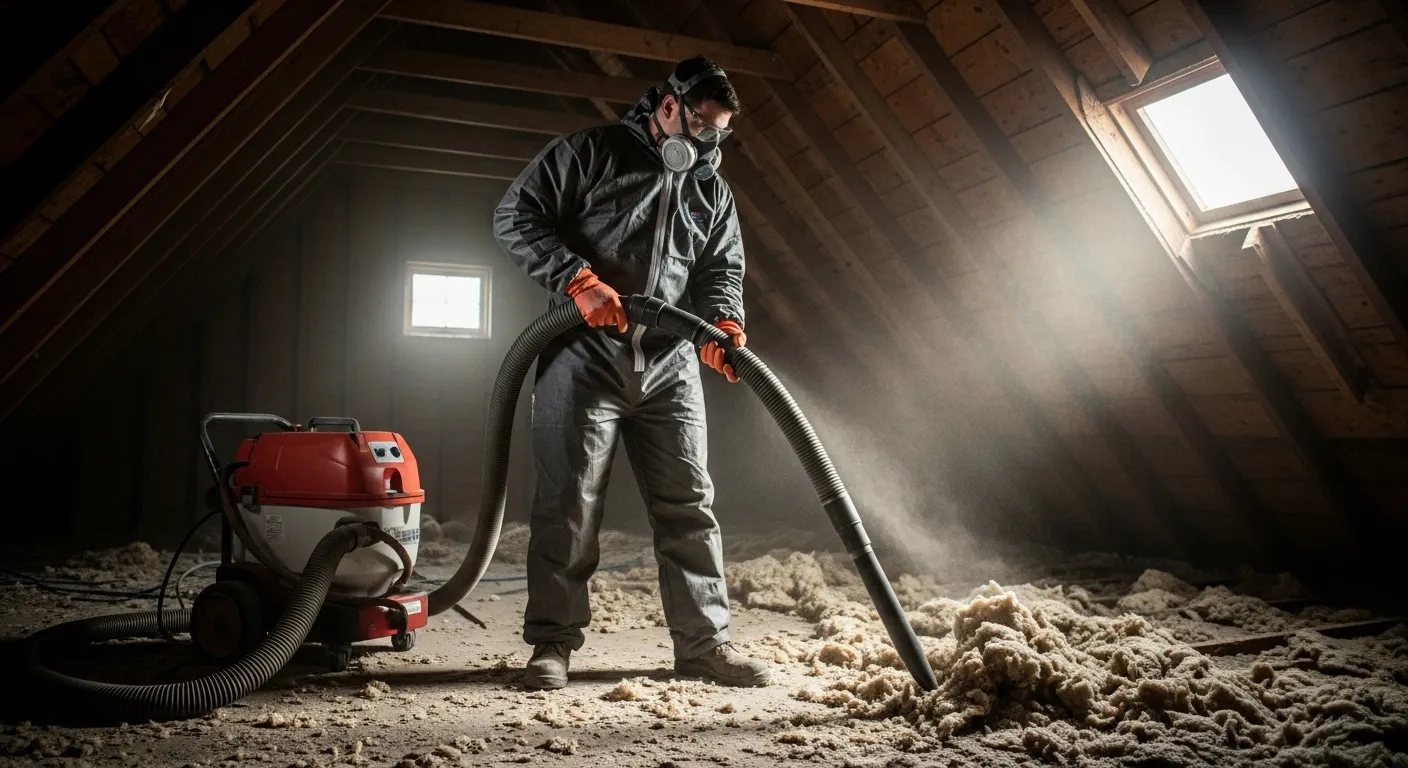
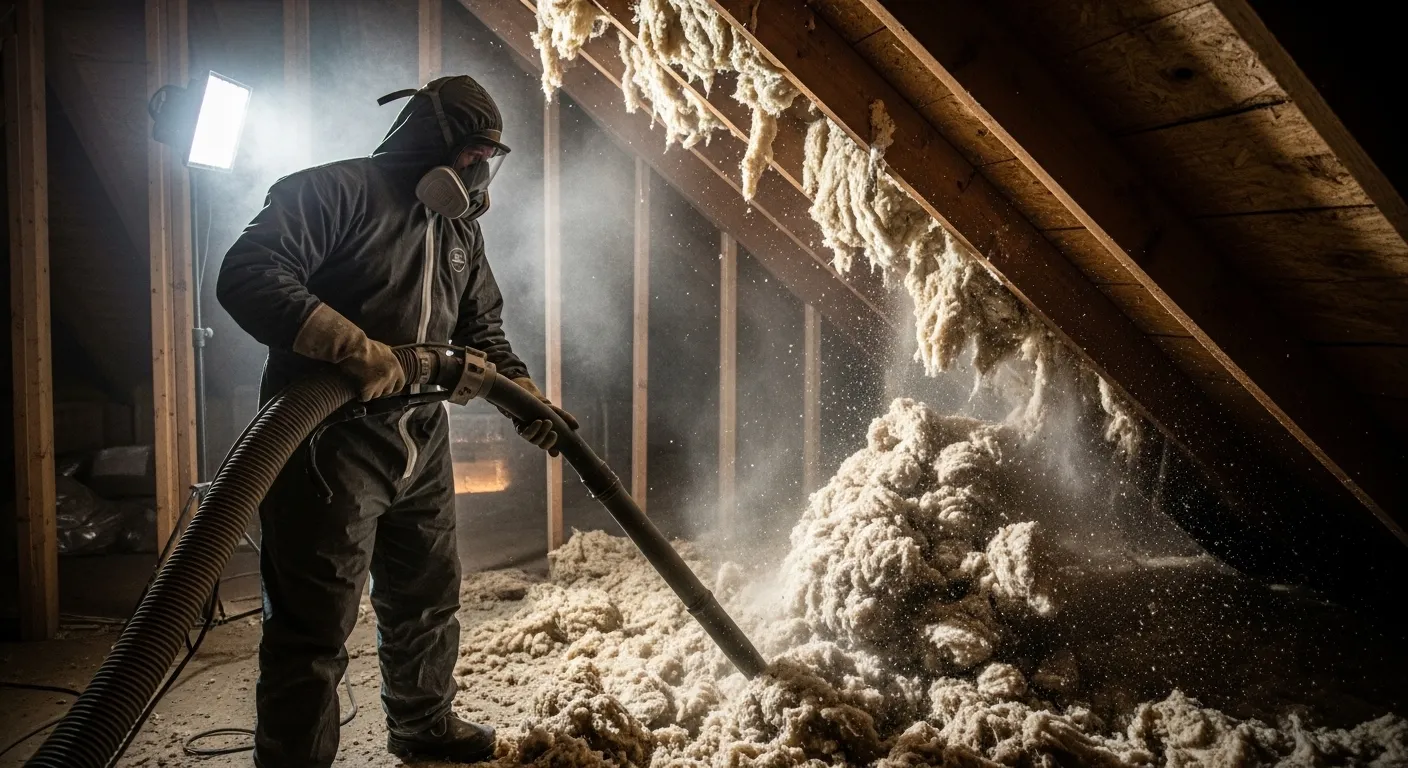
Traditional materials like fiberglass or cellulose are composed of loose fibers. Over time, factors like gravity, moisture, and vibrations from the house shifting cause these fibers to compress. As they pack down, they leave gaps at the top of wall cavities or thin spots in the attic floor. Because our foam is a solid, monolithic layer, it lacks the "loose" properties required for settling. It becomes a permanent part of the building envelope itself.
Chemical Bonding vs. Mechanical Friction
Most insulation stays in place through mechanical friction. A fiberglass batt is cut slightly wider than the stud bay so it stays tucked in. However, as the wood dries and shrinks, that friction is lost, and the batt begins to slump.
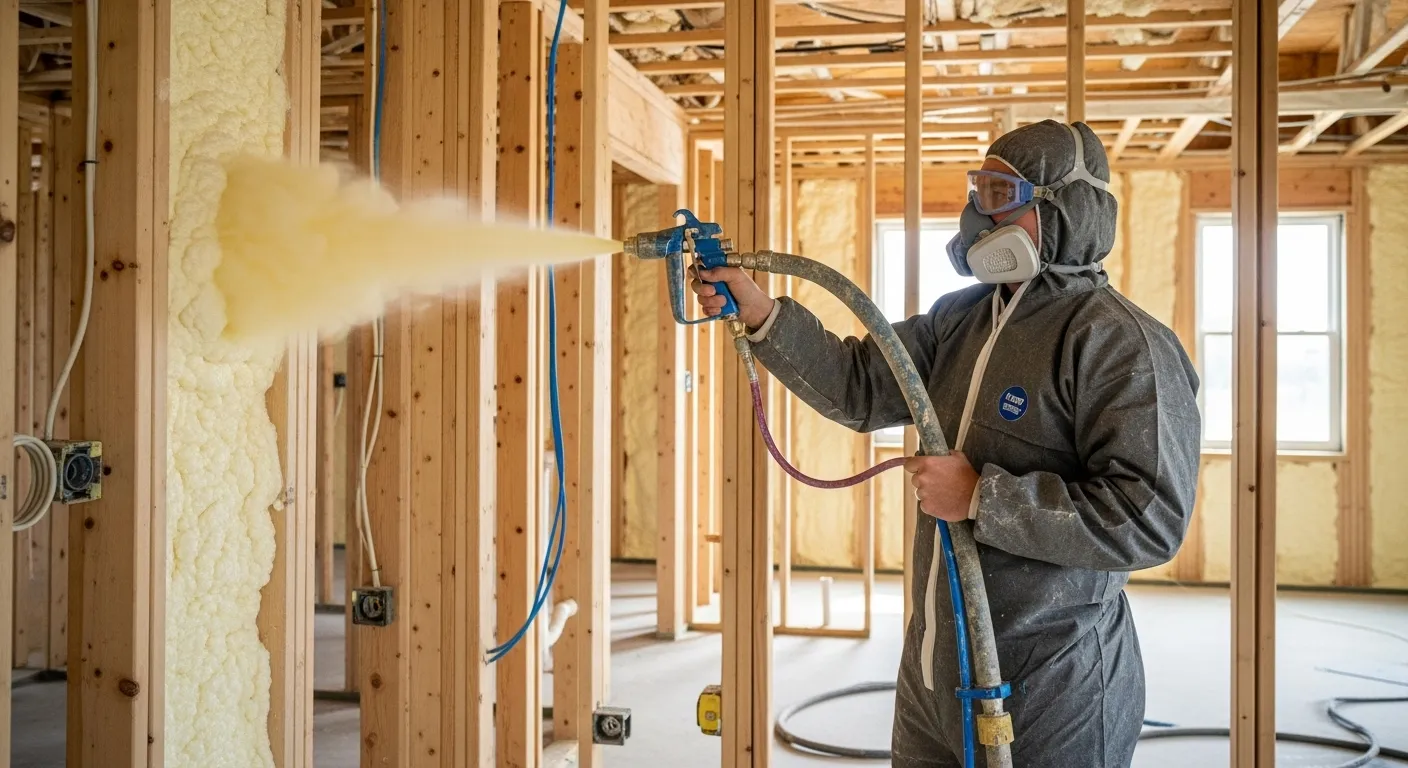
We use a two-part chemical process to avoid this. When the resin and isocyanate meet at the tip of our spray gun, they form polyurethane. This plastic doesn't just sit in the wall; it sticks to it. This adhesion is so strong that closed-cell foam can actually enhance the structural integrity of a wall assembly. Because the bond is chemical rather than mechanical, it is not affected by the minor seasonal movements of a home.
Comparing Material Longevity and Performance
To understand why we prioritize spray foam for long-term projects, it helps to look at how different materials behave over a decade or more. Industry data suggests that traditional loose-fill insulation can lose up to 20 percent of its R-value over time simply due to settling and moisture absorption.
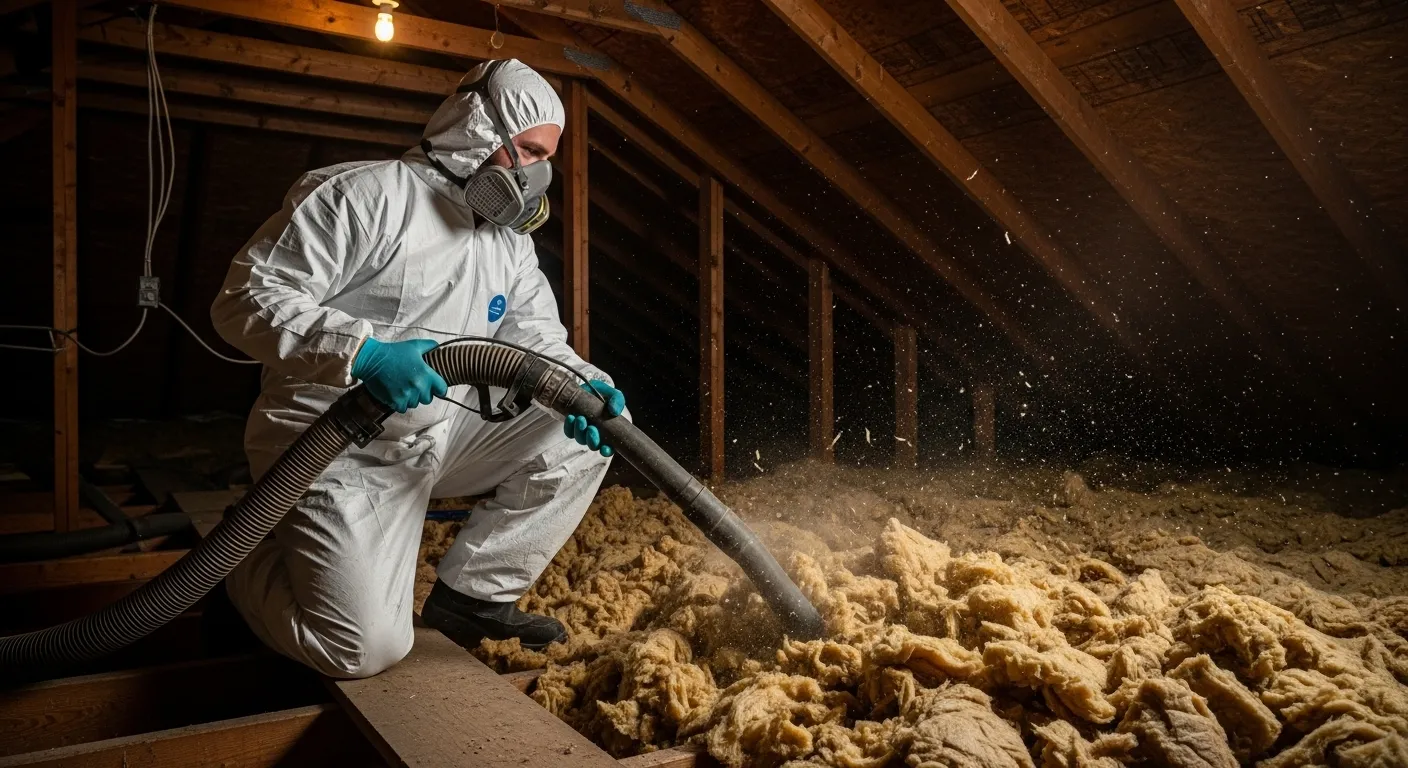
Bonus Tip: If you currently have blown-in insulation in your attic, we recommend checking the depth near the eaves and hatches once a year. If you see the tops of your ceiling joists, your insulation has likely settled or shifted, and we can help you transition to a more permanent solution.
Why Traditional Alternatives Fall Short
We often see homes where the insulation was "topped off" every few years. This is a common cycle with cellulose and fiberglass. While these materials are budget-friendly up front, they are prone to several issues that can lead to failure.
Gravity and Weight Constraints
In a wall cavity, the weight of the insulation at the top presses down on the material at the bottom. Over five to ten years, this creates a "void" at the top of the wall. These gaps allow heat to escape and cold air to enter, creating uncomfortable cold spots on your drywall.
Moisture Absorption and Weight Gains
Traditional fibers can hold onto moisture from humidity or minor leaks. When they get wet, they get heavy. A heavy, damp fiberglass batt will almost always fall out of place. While we previously noted that moisture reduces R-value, it also causes physical failure; however, our spray foam is moisture-resistant (and in the case of closed cells, a total vapor barrier), meaning it won't gain weight or sag due to dampness.
Pest Interference and Displacement
Rodents love to nest in soft, fibrous materials. They tunnel through them, move them around, and compact them. We’ve found that pests are far less likely to disturb the rigid structure of spray foam, as it does not provide the soft nesting material they seek.
The Role of Air Sealing in Stability
One of the reasons we emphasize spray foam is its ability to provide air sealing and insulation in one step. Settling isn't just about the material moving down; it’s about air moving through. Even if fiberglass stays in place, air can still wash through it. We call this “thermal bypassing.”
Because our foam expands to fill the tiniest crevices, it stops air movement entirely. This prevents the "stack effect," where warm air rises and escapes through your attic while drawing cold air into your crawl space. Since the foam doesn't settle or shrink, that airtight seal remains just as tight in year twenty as it was on day one.
Bonus Tip: When we insulate a crawl space, we often recommend crawl space encapsulation. Combining our spray foam with a heavy-duty vapor barrier creates a permanent, climate-controlled environment that protects your floor joists from rot.
Things to Consider Before Making a Decision
Before you decide which insulation is right for your project, our team suggests looking at these practical factors:
- Building Movement: If you live in an area with high winds or soil that causes frequent house shifting, you need a material that moves with the house. Open-cell foam has enough flexibility to stay bonded even during minor shifts.
- Access Requirements: Spray foam is a permanent choice. If you plan on rewiring your entire home next year, you might want to finish that work before we apply the foam, as it is much harder to "fish" wires through cured foam than through loose fiberglass.
- Upfront Cost vs. Lifetime Value: While our spray foam has a higher upfront cost than blown-in options, you have to factor in that you will never need to replace it or "top it off." We view it as a one-time investment in the building's infrastructure.
- Moisture Profiles: In damp areas like basements or metal buildings, traditional insulation can trap moisture against the structure, leading to rust or rot. We prefer closed-cell foam in these spots because it blocks moisture and protects the building material.
Our Commitment to Long-Term Efficiency
At Selkirk Energy Solutions, we believe that your insulation should be a "set it and forget it" part of your home. We've seen too many homeowners frustrated by rising energy bills caused by insulation that simply gave up after a few years. By choosing a material that bonds with your home and resists gravity, you ensure that your energy efficiency doesn't degrade over time.
Whether we are working on a new construction project, a pole barn, or a residential retrofit, our goal is to provide a solution that stands the test of time. We focus on precision during the installation process because we know that a perfect application today means a comfortable home for the next fifty years.
If you are tired of dealing with drafty rooms or the constant need to upgrade your attic insulation, we are here to help. Our team can evaluate your current setup and show you how a permanent foam solution can change the way your home feels and performs.
Feel free to reach out to us at Selkirk Energy Solutions if you have questions about which type of foam is best for your specific project. You can contact our team directly at [email protected] or call us at (208) 295-9780. We’re happy to talk through your needs and provide a clear path toward a more efficient, permanent solution for your property.
Common Questions About Foam Stability
Does spray foam shrink over time?
When installed correctly by our trained professionals, spray foam does not shrink. Shrinkage only occurs if the chemical mix is off-ratio or if the temperature of the substrate is too cold during application. We monitor these variables constantly to ensure the foam cures into a stable, permanent state.
Can the foam pull away from the wood?
In some cases, if the wood is extremely wet or covered in heavy dust, the bond can be compromised. This is why our team spends time on site preparation. We ensure the surfaces are clean and dry so that the chemical bond is absolute. Once bonded, it will not pull away under normal conditions.
Is the foam affected by high heat in attics?
No. Our spray foam is designed to withstand the high temperatures found in attics during the peak of summer. It does not melt, off-gas after curing, or lose its structural form due to heat.
Will it become brittle and crumble?
Quality polyurethane foam remains stable for decades. It is not prone to crumbling unless it is exposed to direct UV light for an extended period. Since your insulation is tucked away in walls, attics, or crawl spaces, it is protected from the sun and maintains its integrity.



























Sign in to leave a comment.