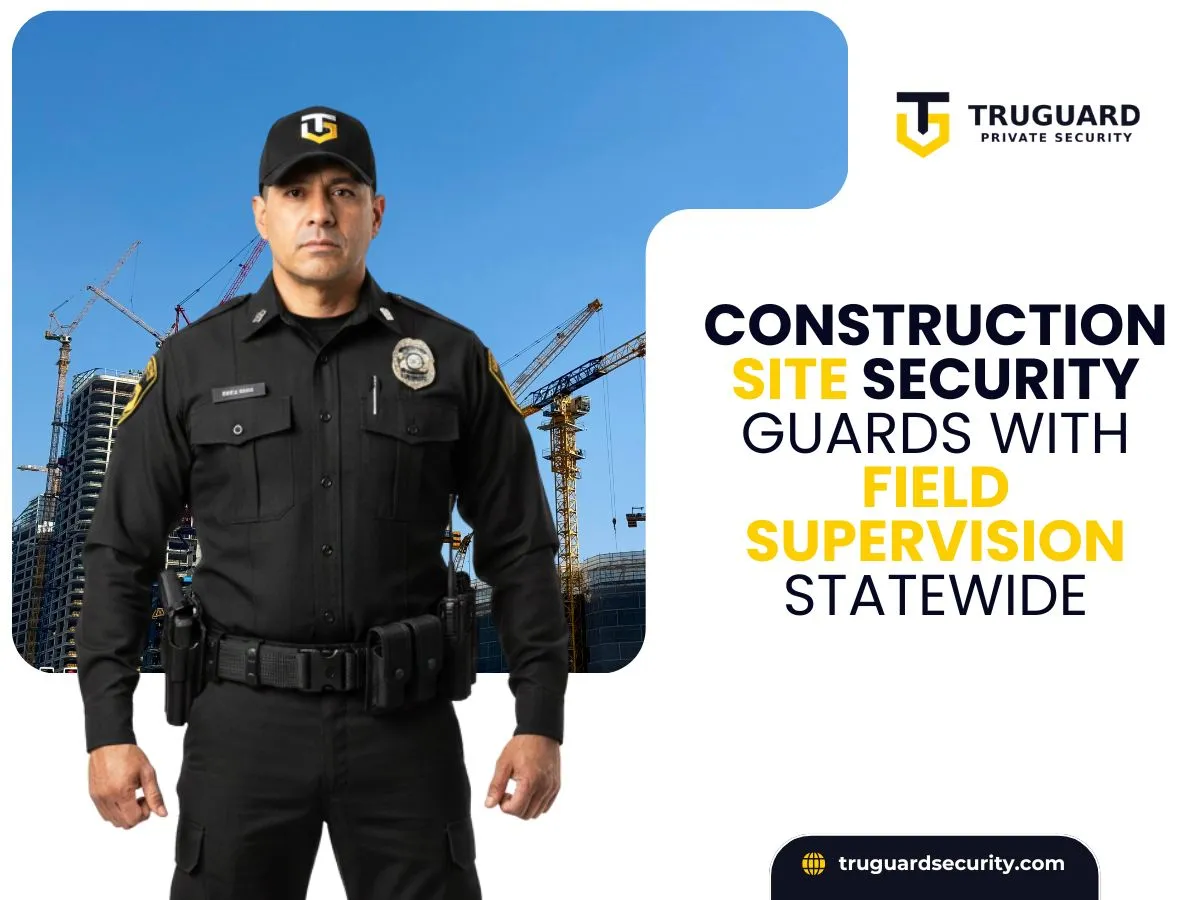

When was the last time you walked into a public building and actually felt watched over - not by a camera, but by a person who noticed you? If you're drawing a blank, you're not alone.
A lot of public buildings lean almost entirely on badge readers, turnstiles, and security cameras, and call it a day. It's clean, it's automated, and on paper, it looks thorough.
But here's the thing - a locked door doesn't ask questions. Public buildings - courthouses, county offices, civic centers, social services buildings - aren't just spaces people badge into. They're places where real people show up stressed, upset, confused, or sometimes looking to cause trouble. And that calls for more than hardware. It calls for trained, licensed security guards for public buildings. Read on to know why.

Why Public Buildings Need Licensed Security Services?
Here's why public buildings need licensed security services:
Cameras Watch. People Respond.
Access control is great at one thing - controlling access. It logs who came in and when. It locks doors after hours. Simple, useful, done. What it can't do is react. And public buildings deal with real, messy, human situations every single day. None of that gets solved by a screen. It takes a person - someone trained to notice, step in, and calm things down before they blow up.
County Offices Need People Who Get the Room
Anyone who's worked the front desk of a county office knows the mood can shift in seconds. People show up stressed. Permits get denied. Lines get long. Tempers get short. A good security guard company for county offices doesn't just post a guard by the door and call it a day. They train guards to actually read the room - to spot tension building before it turns into a real problem, and to keep things calm without making the whole place feel like a lockdown.
Social Services Offices Call for a Softer Touch:
People walk into social services buildings on some of the worst days of their lives - benefit denials, housing issues, custody battles. It's heavy stuff. A solid security guard company for social services offices trains its guards differently here. Patience matters just as much as awareness. The goal isn't to look intimidating - it's to quietly step in before a tense moment turns into a real one.
What "Licensed" Actually Means (And Why It's Not Just a Formality)?
Not every guard is trained the same way. Licensed security guards for public buildings go through real, state-required training - things like:
- Legal de-escalation and use-of-force limits
- Emergency response for fires, medical issues, or threats
- Proper incident reporting
- How to talk to the public respectfully, even under pressure
Skip the licensing, and you're rolling the dice on a taxpayer-funded building. That's a risk most places can't afford to take.
What Licensed Guards Actually Bring to a Public Building?
- Real-time judgment calls that software can't make
- A visible deterrent that discourages bad behavior before it starts
- Faster, calmer response to medical or safety emergencies
- Better visitor experience through guidance, courtesy, and presence
- Documented incident reports that protect the building legally
- Trained de-escalation instead of automated alerts after the fact
The Bottom Line
Access control is a good starting point. It's just not the finish line. Public buildings need eyes that notice, ears that listen, and people who can actually act - not just record what happened after the fact.
If your building is still leaning on locks and cameras alone, it might be time to rethink that. At TruGuard Security, we help public buildings add trained, licensed guards where it actually matters - because real safety takes people, not just tech. For more information, explore our website right now.
FAQs
Q. Do public buildings really need guards if they have access control already?
A. Yes. Access control manages entry. It doesn't manage people. Guards handle the in-the-moment stuff cameras simply can't.
Q. What makes a guard "licensed" versus just wearing a uniform?
A. Licensed guards complete state-required training — de-escalation, emergency response, legal boundaries. Unlicensed guards may have none of that.
Q. Are guards worth it for smaller offices too?
A. Yes. Even small offices deal with unpredictable visitors. A trained guard often prevents problems just by being there.
Q. Can one company cover different types of public buildings?
A. Yes - a provider experienced with county offices, civic centers, and social services buildings knows how to staff each one differently.






























Sign in to leave a comment.