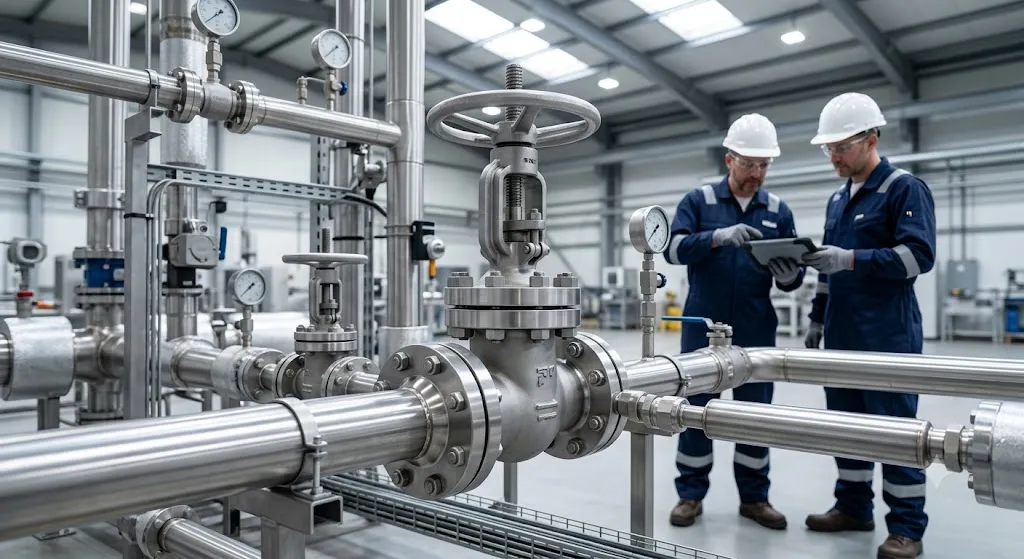

When businesses invest in industrial equipment, the focus often falls on large assets such as pumps, compressors, motors, or processing systems. Yet some of the most important components are much smaller. Industrial valves, for example, quietly control the flow of liquids, gases, and steam every day, playing a vital role in keeping operations safe and efficient.
Because valves are often viewed as routine components, it's tempting to choose the lowest-priced option. However, that decision can lead to higher maintenance costs, unexpected downtime, and reduced system performance over time. Investing in a high-quality industrial valve is about far more than the initial purchase price—it's about long-term reliability, operational efficiency, and protecting valuable assets.
The True Cost Goes Beyond the Purchase Price
A valve may represent only a small percentage of the total cost of an industrial system, but it has a significant impact on how that system performs.
A lower-cost valve might reduce upfront spending, but if it fails prematurely, the consequences can include:
- Production interruptions
- Emergency maintenance
- Costly repairs
- Product loss
- Increased labour expenses
- Delayed customer deliveries
When these indirect costs are considered, a premium valve often becomes the more economical choice over its service life.
Better Materials Mean Longer Service Life
Industrial valves operate in demanding environments that may involve high pressure, elevated temperatures, corrosive chemicals, abrasive fluids, or continuous operation.
High-quality valves are manufactured using carefully selected materials such as stainless steel, carbon steel, alloy steel, bronze, or specialised corrosion-resistant alloys.
These materials offer several advantages:
- Improved resistance to corrosion
- Greater mechanical strength
- Better wear resistance
- Longer operating life
- Consistent performance under harsh conditions
Choosing the right material helps minimise premature failures and extends maintenance intervals.
Precision Manufacturing Improves Reliability
The performance of an industrial valve depends not only on the material but also on how it is manufactured.
Premium valves undergo strict machining, precision assembly, pressure testing, and quality inspections before leaving the factory.
Accurate machining ensures:
- Smooth valve operation
- Reliable sealing
- Reduced leakage
- Consistent flow control
- Lower operating torque
These details may not be immediately visible, but they significantly influence long-term reliability.
Reduced Downtime Protects Productivity
Unexpected shutdowns are among the most expensive challenges facing industrial facilities.
A single valve failure can interrupt an entire production process, requiring maintenance teams to isolate equipment, replace components, and restart operations.
High-quality valves reduce this risk by providing dependable performance even under demanding operating conditions.
For industries such as oil and gas, water treatment, chemical processing, manufacturing, and power generation, improved reliability directly supports higher productivity.
Lower Maintenance Costs Over Time
Frequent valve repairs consume valuable maintenance resources.
Technicians spend time diagnosing problems, sourcing replacement parts, and performing repairs that could often be avoided through better equipment selection.
Quality valves typically require:
- Fewer repairs
- Longer maintenance intervals
- Less frequent seal replacement
- Reduced spare parts inventory
- Lower labour costs
These savings continue throughout the equipment's operating life, helping facilities optimise maintenance budgets.
Supporting Safety and Environmental Protection
Industrial valves perform important safety functions by controlling process fluids under pressure.
Poor-quality valves can develop leaks, fail to seal properly, or malfunction during critical operating conditions.
Reliable valves help protect:
- Employees
- Industrial equipment
- Production processes
- The surrounding environment
By maintaining dependable flow control, they reduce the likelihood of hazardous releases, equipment damage, and costly compliance issues.
The Importance of Choosing the Right Supplier
Even the highest-quality valve performs best when supported by expert technical guidance.
An experienced supplier helps customers select the most appropriate valve based on:
- Fluid characteristics
- Operating pressure
- Temperature range
- Valve function
- Material compatibility
- Industry standards
- Maintenance requirements
This technical expertise helps avoid incorrect product selection and improves long-term system performance.
Quality Adds Value Throughout the Equipment Lifecycle
When evaluating industrial equipment, the focus should always be on lifecycle value rather than purchase price alone.
A premium industrial valve delivers value by:
- Increasing equipment reliability
- Reducing maintenance frequency
- Improving operational efficiency
- Extending service life
- Lowering total ownership costs
- Supporting safer operations
These benefits become increasingly significant over years of continuous industrial use.
Final Thoughts
Industrial operations depend on reliable equipment, and valves are among the most critical components within any process system. While lower-cost products may appear attractive initially, investing in a high-quality industrial valve provides greater reliability, improved safety, reduced maintenance, and stronger long-term financial returns.
If you're planning a new project or upgrading an existing system, work with a trusted industrial valve supplier that offers premium products, expert technical support, and dependable solutions tailored to your operational requirements. The right valve today can deliver years of reliable performance and measurable cost savings.
Frequently Asked Questions
Why are high-quality industrial valves worth the investment?
Quality valves offer greater durability, improved reliability, reduced maintenance costs, and longer service life, making them more economical over the long term despite a higher initial purchase price.
Which industries rely heavily on industrial valves?
Industrial valves are widely used in oil and gas, chemical processing, water treatment, manufacturing, food processing, pharmaceuticals, HVAC systems, and power generation.
How do industrial valves improve operational efficiency?
Reliable valves maintain accurate flow control, reduce equipment failures, minimise downtime, and support consistent production, helping facilities operate more efficiently.





























Sign in to leave a comment.