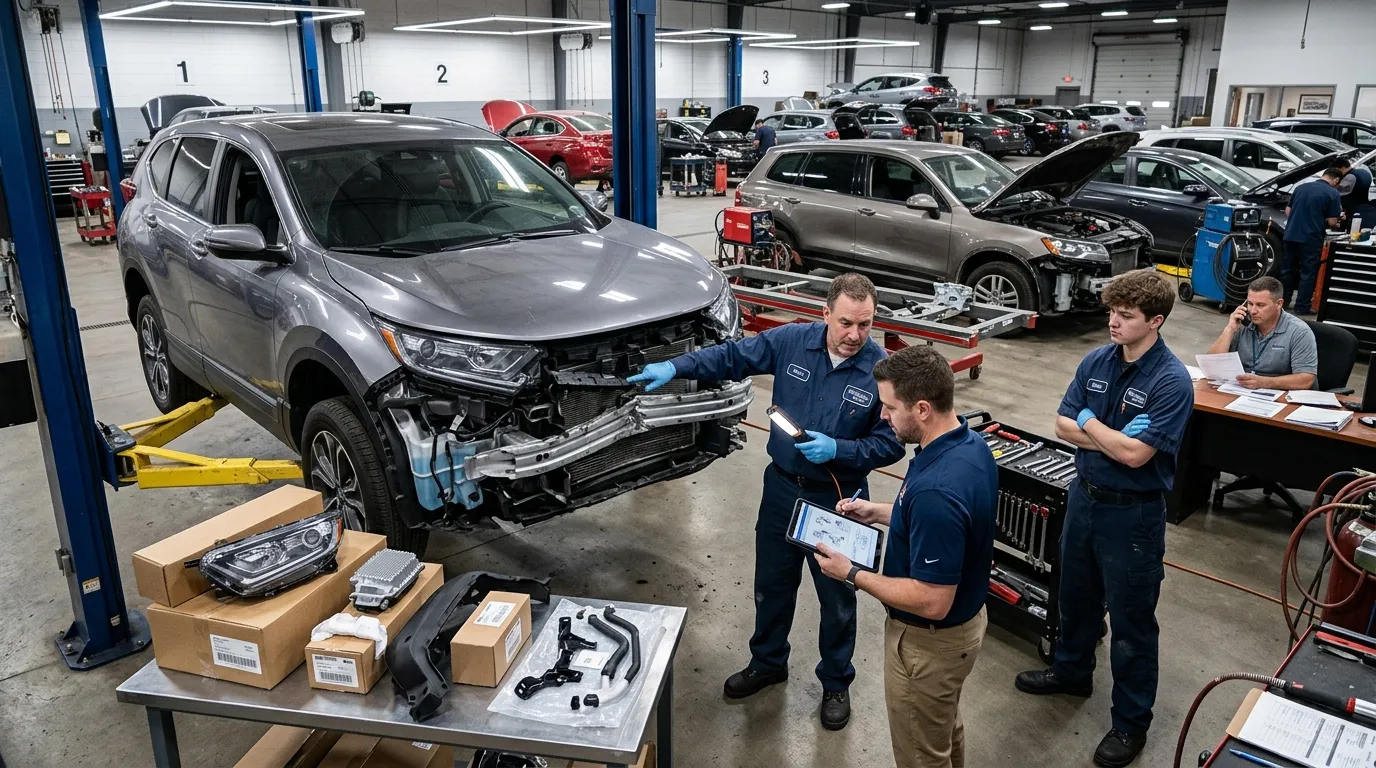

A vehicle may enter the shop with a straightforward repair plan, but hidden damage can quickly turn a simple job into a scheduling nightmare.
If you work in the collision repair industry, you've likely experienced this scenario more times than you can count. A repair begins smoothly, technicians start disassembly, and then additional damage appears. Suddenly, a supplement needs to be created, approved, and communicated to multiple parties before work can continue.
While supplements are a normal part of collision repair, the way they are managed often determines whether a repair stays on schedule or falls behind. In many cases, delays that frustrate customers and disrupt operations are not caused by the damage itself. They start with poor supplement coordination.
For repair shops striving to improve efficiency and customer satisfaction, understanding this challenge is essential.
As Benjamin Franklin wisely said, "By failing to prepare, you are preparing to fail." This quote perfectly reflects the role supplement coordination plays in the repair process. Without a structured approach, even minor supplemental repairs can create significant delays.
Understanding the Role of Supplements in Collision Repair
Supplements exist because not all damage is visible during the initial estimate.
Once technicians begin dismantling a vehicle, they often uncover additional structural issues, damaged components, or hidden repair requirements. These findings must be documented and submitted for approval before repairs can continue.
The supplement process typically involves several steps:
- Identifying additional damage
- Documenting findings with photos and notes
- Updating repair estimates
- Submitting information to insurers
- Waiting for review and approval
- Ordering any newly required parts
Each step requires communication and coordination. When any part of the process breaks down, delays begin to accumulate.
Communication Gaps Create Immediate Bottlenecks
One of the biggest reasons repairs fall behind schedule is poor communication between stakeholders.
Collision repair involves multiple parties working together, including repair facilities, insurance companies, vehicle owners, parts suppliers, and technicians. When information is not shared quickly or accurately, progress slows.
For example, a technician may identify hidden damage but fail to communicate it immediately. An estimator may submit incomplete documentation. An insurer may request additional information that takes time to gather.
These communication gaps often result in:
- Delayed approvals
- Extended vehicle downtime
- Missed scheduling targets
- Frustrated customers
- Increased administrative workload
The longer communication takes, the longer repairs remain on hold.
Incomplete Documentation Slows Approvals
Insurance companies rely on accurate documentation when reviewing supplements.
If repair shops submit incomplete information, approval requests may be delayed while additional evidence is gathered. Even a small oversight can create unnecessary back-and-forth communication.
Some common documentation issues include:
- Missing photos
- Incomplete damage descriptions
- Incorrect labor calculations
- Unclear repair recommendations
- Missing supporting evidence
When documentation is thorough from the beginning, insurers can review requests more efficiently, helping repairs move forward faster.
A well-organized process not only saves time but also reduces frustration for everyone involved.
Poor Coordination Impacts the Entire Repair Schedule
Many repair shops focus on the supplement itself but overlook its impact on the larger workflow.
A delayed supplement does not affect just one repair. It can disrupt the entire production schedule.
Technician Productivity Suffers
When repairs pause while waiting for supplement approval, technicians may need to switch between jobs. Constant interruptions reduce efficiency and make scheduling more complicated.
Shop Capacity Becomes Limited
Vehicles waiting for approvals continue occupying valuable shop space. This limits the number of new jobs the facility can accept and slows overall throughput.
Customer Expectations Become Harder to Manage
Customers often expect realistic timelines and regular updates. When supplements cause unexpected delays, customer satisfaction can decline quickly.
The ripple effects of poor coordination often extend far beyond the original repair.
Technology Is Helping Shops Improve Supplement Workflows
Modern collision repair businesses are increasingly turning to digital solutions to streamline operations.
Manual processes, spreadsheets, and scattered communication channels can make supplement management unnecessarily complicated. Today, many shops are looking for better ways to organize information and improve efficiency.
If your goal is to reduce repair delays and improve workflow visibility, investing in better supplement coordination processes can make a significant difference. Streamlined communication, faster documentation sharing, and improved tracking help repair teams move supplements through the approval process more efficiently.
The result is faster repairs, happier customers, and a more productive shop environment.
Why Customers Feel the Impact First
Customers may not fully understand the supplement process, but they certainly feel its effects.
From their perspective, a repair delay often appears as poor service. Most vehicle owners are not aware of insurer approvals, documentation requirements, or hidden damage discoveries. They simply want their vehicle returned as quickly as possible.
When supplements are poorly coordinated, customers commonly experience:
- Unexpected delays
- Limited communication
- Confusing repair updates
- Extended rental vehicle costs
- Reduced confidence in the repair process
Clear communication and efficient supplement handling help maintain trust throughout the repair journey.
Repair shops that proactively update customers tend to create a better overall experience, even when unexpected damage is discovered.
Building a More Efficient Supplement Process
The good news is that many supplement-related delays can be prevented through better planning and organization.
Successful repair facilities often follow a structured approach that prioritizes communication, documentation, and accountability.
Some best practices include:
- Capturing detailed photos during disassembly
- Creating supplements immediately after damage discovery
- Standardizing documentation procedures
- Maintaining consistent communication with insurers
- Tracking approval status in real time
- Keeping customers informed throughout the process
Small improvements in coordination can produce significant gains in efficiency.
When everyone involved understands their role and information flows smoothly, repairs progress more predictably and with fewer interruptions.
Final Thoughts
Repair delays rarely happen because of a single problem. More often, they result from a series of small breakdowns in communication, documentation, and workflow management.
Poor supplement coordination is one of the most common causes of these delays. When information is incomplete, approvals take longer, schedules become disrupted, and customer satisfaction suffers.
The most successful collision repair shops recognize that supplements are not simply paperwork. They are a critical part of the repair process that requires careful management and coordination.
By improving communication, standardizing workflows, and embracing smarter solutions, repair facilities can reduce delays, improve efficiency, and create better experiences for both customers and insurance partners.
In today's competitive collision repair industry, strong supplement coordination is no longer just an operational advantage. It is a key factor in delivering repairs on time and maintaining long-term business success.






























Sign in to leave a comment.