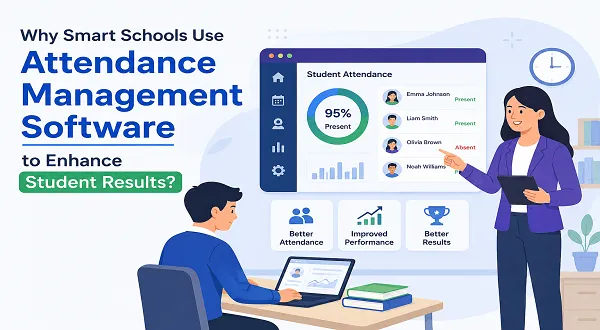

Schools are focusing more on improving student performance, increasing engagement, and creating efficient academic systems. Traditional attendance methods using paper registers and manual tracking are no longer effective for modern educational institutions. Smart schools are now adopting Attendance Management Software to streamline operations, improve communication, and enhance student academic results.
Attendance plays a major role in student success. Consistent attendance helps students stay connected with lessons, participate in classroom activities, and maintain academic discipline. By implementing advanced digital solutions, schools can monitor attendance in real time and identify students who may require additional support before academic performance declines.
The Growing Need for Digital Attendance Systems in Schools
Educational institutions manage hundreds or even thousands of students daily. Manual attendance tracking consumes time, increases administrative workload, and often leads to human errors. Smart schools are replacing outdated methods with automated Attendance Management Software that simplifies attendance tracking and improves operational efficiency.
Digital attendance systems allow teachers to record attendance instantly through mobile apps, biometric systems, RFID cards, or cloud-based platforms. School administrators can access reports, monitor trends, and communicate with parents more effectively.
Modern schools understand that attendance is directly connected to student learning outcomes. When attendance improves, academic performance often improves as well.
How Attendance Management Software Improves Student Results
Real-Time Attendance Monitoring:
One of the biggest advantages of Attendance Management Software is real-time attendance tracking. Teachers can instantly mark attendance, and the system automatically updates records in the database.
This allows schools to:
- Identify irregular attendance patterns quickly
- Monitor student participation
- Reduce absenteeism
- Improve accountability among students
Students who attend classes regularly are more likely to perform better academically because they remain actively involved in classroom learning.
Better Parent-School Communication:
Parents play an important role in a student’s educational journey. Modern attendance systems automatically send notifications or alerts to parents when students are absent or late.
This instant communication helps parents:
- Stay informed about attendance records
- Take corrective actions early
- Support student discipline
- Monitor academic consistency
When schools and parents work together, students become more responsible and focused on their studies.
Reduced Administrative Burden:
Manual attendance management requires significant time and paperwork. Teachers often spend valuable classroom time maintaining records instead of focusing on teaching.
By implementing automated School Management Software, schools can reduce repetitive administrative tasks and improve productivity. Teachers can dedicate more time to academic activities, student interaction, and classroom engagement.
This creates a more productive learning environment that positively impacts student outcomes.
Accurate Data and Reporting:
Advanced attendance systems generate detailed reports and analytics that help schools make informed decisions.
Administrators can analyze:
- Student attendance percentages
- Monthly attendance trends
- Chronic absenteeism
- Class-wise attendance performance
These insights help schools identify students who may be struggling academically due to poor attendance. Early intervention can improve student retention and academic achievement.
Integration with School Management Software
Modern educational institutions prefer integrated digital ecosystems rather than separate systems for each task. Many schools combine Attendance Management Software with complete School Management Software solutions.
Integrated systems help schools manage:
- Student records
- Academic performance
- Timetables
- Fee management
- Examination records
- Communication systems
This centralized approach improves operational efficiency and ensures smooth management across departments.
Role of School Portal in Student Success
A modern School Portal acts as a communication bridge between students, parents, teachers, and administrators. Attendance systems integrated with school portals provide instant access to attendance records, assignments, exam schedules, and academic updates.
Benefits of a school portal include:
- Improved transparency
- Better student engagement
- Faster communication
- Easy access to academic information
- Enhanced collaboration between teachers and parents
Students become more responsible when they can monitor their own attendance and academic progress through digital platforms.
Supporting Student Discipline and Accountability
Attendance tracking systems encourage students to maintain discipline and punctuality. Automated systems reduce manipulation or false attendance entries and create a transparent environment within schools.
When students know their attendance is monitored accurately, they become more accountable for their classroom participation and academic responsibilities.
Improved discipline often leads to:
- Better concentration
- Increased classroom participation
- Higher academic performance
- Stronger learning habits
Enhancing Educational Resource Management
Many smart schools also integrate attendance systems with Library Management Software to improve overall student engagement and resource utilization.
Integrated educational systems help schools monitor:
- Student attendance
- Library usage
- Reading habits
- Learning activity participation
Students who actively engage with school resources, including libraries and digital learning tools, often show improved academic performance and better learning outcomes.
Cloud-Based Attendance Solutions for Modern Schools
Cloud-based attendance systems provide flexibility, scalability, and remote accessibility. School administrators can monitor attendance data from anywhere using secure digital platforms.
Cloud technology offers several advantages:
- Secure data storage
- Automatic backups
- Easy software updates
- Remote access
- Multi-device compatibility
These features help schools maintain efficient academic operations while supporting modern learning environments.
Improving Teacher Efficiency
Teachers are one of the most important contributors to student success. Automated attendance systems reduce manual workload and help teachers focus more on classroom instruction.
Features like automated reports, quick attendance marking, and student performance tracking improve teacher productivity and classroom management.
Efficient teachers create better learning experiences, which directly contributes to improved student results.
Data-Driven Decision Making in Schools
Educational institutions are increasingly relying on data analytics to improve student outcomes. Attendance reports generated by digital systems help schools make strategic academic decisions.
School leaders can:
- Identify at-risk students
- Improve intervention programs
- Develop attendance improvement strategies
- Enhance student engagement policies
Data-driven education management helps schools create personalized learning support systems that benefit students academically.
Future of Attendance Management in Education
Technology is transforming the education sector rapidly. Artificial intelligence, biometric verification, mobile integration, and predictive analytics are becoming part of advanced attendance systems.
Future-ready schools are investing in smart educational technologies to:
- Improve academic performance
- Increase operational efficiency
- Enhance student engagement
- Strengthen parent communication
- Create smarter learning environments
Schools that embrace digital transformation are better positioned to support student growth and academic excellence.
Conclusion
Smart educational institutions understand that attendance is more than just recordkeeping. It is a critical factor that influences student discipline, engagement, participation, and academic success.
By implementing advanced Attendance Management Software, schools can reduce absenteeism, improve communication, simplify administration, and create better learning environments for students.
When combined with solutions like School Management Software, Library Management Software, and an interactive School Portal, schools can build a complete digital ecosystem that supports both operational efficiency and student achievement.
As education continues to evolve, schools that adopt intelligent digital solutions will remain ahead in delivering quality education and improving student results.



























Sign in to leave a comment.