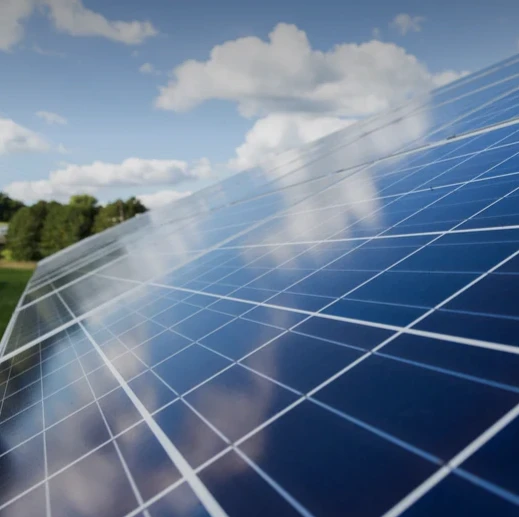

If you’ve ever stood on a solar site at noon in western India, you know the heat feels relentless. I remember visiting a ground-mounted plant near Jodhpur where the ambient temperature crossed 45°C before lunch. The modules were clean, recently installed, and well-aligned. Still, the output was lower than the design estimate. That day taught me something brochures rarely mention: solar modules behave very differently once heat and dust enter the picture.
Heat Changes How Modules Produce Power
Most solar module manufacturers rate their panels at 25°C. That number looks harmless on a datasheet. On site, it’s almost meaningless. In hot regions, module surface temperatures can reach 65–70°C. I’ve measured this myself using an infrared thermometer during a rooftop inspection.
As temperature rises, voltage drops. For crystalline silicon modules, you often lose around 0.4–0.45% power for every degree above 25°C. Over a 30–35°C increase, that adds up fast. I’ve seen plants in desert zones lose nearly 12–15% output during peak summer afternoons, even though sunlight levels were excellent.
This is why some solar module manufacturers now focus heavily on better temperature coefficients. When companies like KPI Green Energy design or select modules for hot climates, this single parameter often matters more than headline wattage.
Dust Isn’t Just a Surface Problem
Dust looks simple. Just dirt on glass. In reality, it’s more complicated.
During a maintenance audit at an industrial plant, I noticed uneven power loss across strings. The reason wasn’t shading. Fine cement dust had settled into micro-textures on the glass surface. Even after cleaning, residue remained. Output improved, but never fully recovered.
In dusty regions, modules can lose 5–20% generation if cleaning cycles are irregular. Some solar module manufacturers now experiment with anti-soiling coatings, but field results vary. I’ve seen coatings work well in dry desert zones and fail near coastal industrial areas where dust mixes with moisture.
Hotter Regions Stress Materials Faster
Heat doesn’t just reduce daily output. It ages modules faster.
On one five-year-old rooftop system I reviewed, backsheet discoloration appeared much earlier than expected. The site faced high heat and airborne dust from nearby traffic. The modules still worked, but insulation resistance had dropped. That’s a long-term reliability concern.
Solar module manufacturers designing for such regions must focus on backsheet quality, frame corrosion resistance, and sealing. This is where experience matters more than lab certifications.
What This Means for You
If you’re installing solar in a hot and dusty region, don’t chase the highest watt number. Ask deeper questions. What’s the temperature coefficient? How does the module perform after two summers? How often will you clean, and with what method?
From what I’ve seen on real sites, performance differences aren’t random. They’re the result of design choices made by solar module manufacturers and how well those choices match the environment. When companies like KPI Green Energy plan projects, they factor in these harsh conditions early, not after output drops.
Solar works brilliantly in tough climates. But only when you respect how heat and dust truly behave in the field.


























Sign in to leave a comment.