

For years, pharmaceutical innovation has focused on improving pipeline efficiency.
Faster trials.
Better data analysis.
Reduced time-to-market.
But a quieter shift is starting to take place.
Efficiency is no longer the only metric that matters.
Visibility across the entire clinical research system is becoming just as critical.
The Limits of Pipeline Optimization
The traditional clinical research model is built around stages.
Discovery → Preclinical → Clinical Trials → Approval
Each stage is optimized independently.
But as pipelines scale, this approach starts to break down.
Because the real bottlenecks are not inside the stages.
They exist between them.
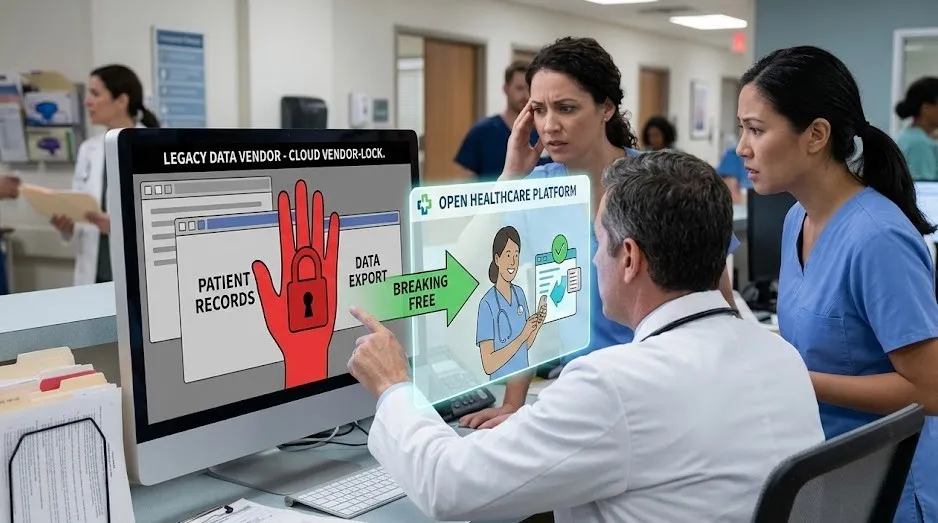
Data does not move seamlessly.
Teams operate in silos.
Decisions are delayed due to incomplete context.
The pipeline moves, but not cohesively.
The Shift Toward System-Level Thinking
What is emerging is a shift from stage-level optimization to system-level visibility.
Instead of asking, “How do we make this phase faster?” organizations are starting to ask:
“How do we make the entire system more connected?”
This changes the focus:
- from isolated performance → to continuous coordination
- from phase outputs → to cross-stage data flow
- from delayed insights → to real-time visibility
In this model, success depends on how well information moves across the pipeline, not just how well each stage performs individually.
Why Visibility Now Matters More Than Speed
Modern clinical pipelines generate vast amounts of data.
But without visibility, data does not translate into action.
Disconnected systems create blind spots.
And blind spots slow everything down.
This is similar to what is happening in digital ecosystems, where visibility across platforms is becoming more important than isolated optimization strategies. AI-driven systems now prioritize trusted, structured, and well-connected information over traditional ranking signals.
In other words, being present everywhere in a connected way matters more than performing well in one place.
Rethinking the Clinical Pipeline
“The clinical research pipeline consists of multiple stages, including discovery, preclinical research, clinical trials, and post-approval monitoring, designed to evaluate safety and effectiveness” (source: Konverge Digital Solution)
That definition still holds.
But the way it operates is evolving.
The pipeline is no longer just a sequence.
It is becoming a coordinated system.
What Leading Organizations Are Doing Differently
Instead of investing only in faster tools, forward-looking teams are:
- building unified data environments
- improving interoperability between systems
- enabling real-time monitoring across phases
- designing workflows that span the entire lifecycle
The goal is not just speed.
It is clarity.
The Bigger Shift
This reflects a broader transformation in how complex systems are managed.
In many industries, optimization is no longer about improving individual components.
It is about improving how those components connect.
Clinical research is moving in the same direction.
Final Thought
Pipelines don’t break because stages fail.
They break because systems don’t connect.
And in the next phase of pharmaceutical innovation, visibility across the system may matter more than the speed of any single step.




























Sign in to leave a comment.