
Introduction
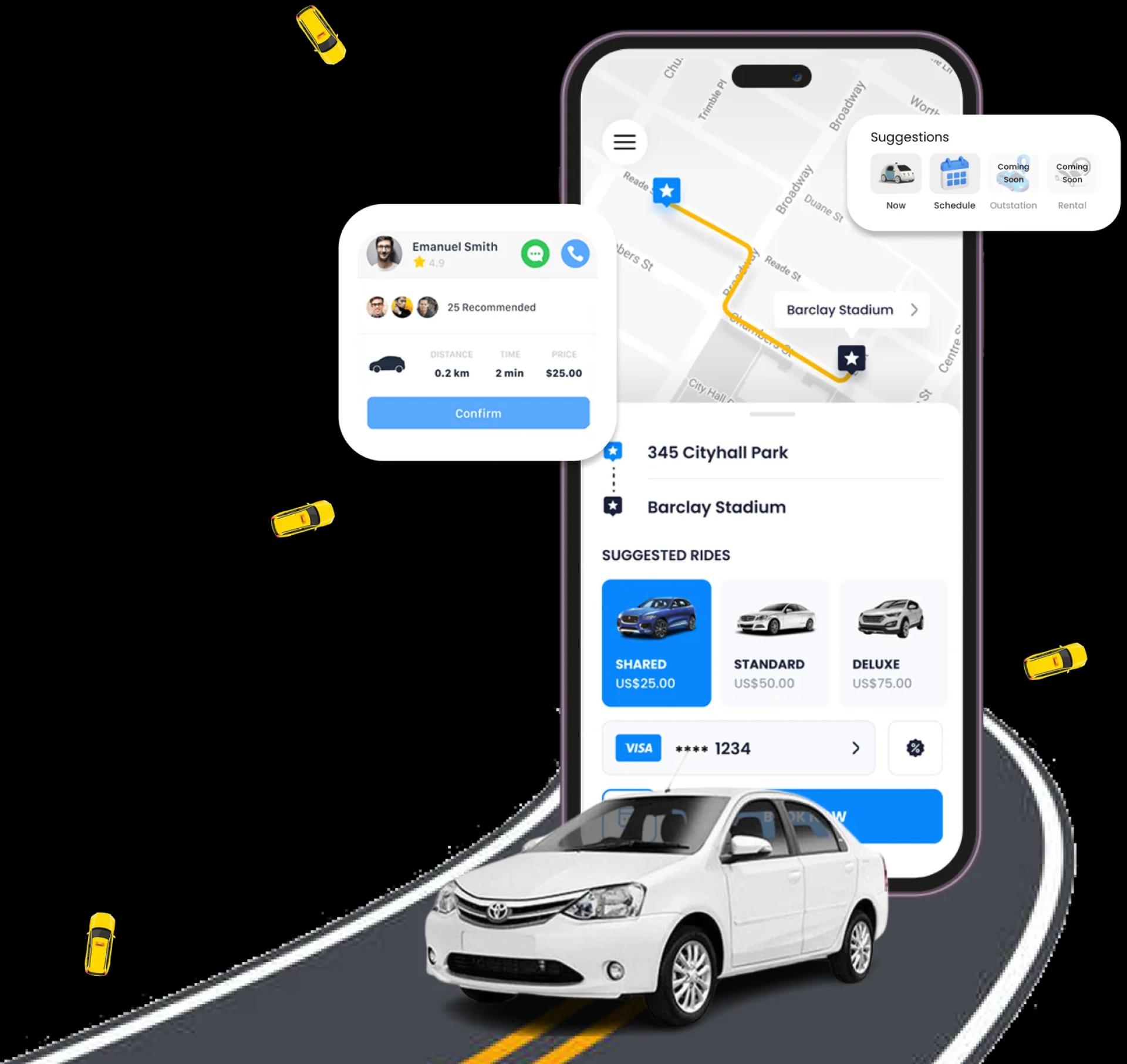
The taxi industry is evolving rapidly, and in 2025, having a mobile app is no longer a luxury but a necessity. With the rise of ride-sharing platforms, increasing customer expectations, and advancements in technology, taxi businesses must adopt mobile applications to stay competitive. A well-developed taxi app enhances customer experience, improves operational efficiency, and boosts revenue.
The Growing Demand for Taxi Apps
The global ride-hailing and taxi market is projected to experience significant growth in the coming years.According to a report by The Business Research Company, the market size is expected to increase from $79.13 billion in 2024 to $90.5 billion in 2025, reflecting a compound annual growth rate (CAGR) of 14.4%.Another study by Mordor Intelligence estimates the market size at $203.54 billion in 2025, with an anticipated rise to $322.47 billion by 2030, at a CAGR of 9.64% during the forecast period. These variations in projections highlight the dynamic nature of the market and the influence of factors such as smartphone adoption and the convenience of digital payments, which are driving this growth.
Key Benefits of Having a Taxi App
1. Enhanced Customer Experience
A mobile app provides a seamless booking process, real-time tracking, and multiple payment options. Features like ride history, fare estimation, and in-app chat make it convenient for users.
2. Increased Business Efficiency
A taxi app automates dispatching, fare calculation, and driver allocation, reducing manual work and increasing efficiency. This helps in better fleet management and faster service.
3. Higher Revenue Generation
With features like dynamic pricing, ride-sharing, and surge pricing, a taxi app can maximize revenue. Integration with loyalty programs and promotional offers further increases customer retention.
4. Competitive Edge Over Traditional Taxis
Companies like Uber and Lyft dominate the ride-hailing industry. A taxi app helps local taxi businesses compete effectively by offering similar or better services.
5. Real-Time Tracking and Safety Features
Real-time GPS tracking ensures safety for both passengers and drivers. Features like SOS alerts, ride-sharing details with contacts, and driver verification increase trust among users.
Latest Trends in Taxi App Development for 2025
1. AI-Powered Route Optimization
Artificial Intelligence (AI) is being used to optimize routes, reduce waiting times, and improve fuel efficiency.
2. Electric and Autonomous Vehicles Integration
With governments pushing for sustainable transport, integrating electric and self-driving cars into taxi fleets is becoming a reality.
3. Contactless Payments & Digital Wallets
Digital payment methods, including cryptocurrency and digital wallets, are becoming a preferred choice for ride payments.
4. Voice and Chatbot Booking
AI chatbots and voice assistants are being integrated into taxi apps for hands-free booking and customer support.
5. Subscription-Based Ride Services
Many taxi apps are now offering subscription models, allowing users to pay a monthly fee for unlimited rides.
Taxi App Development Cost in 2025
The Taxi App Development Cost depends on several factors, including features, platform (iOS, Android, or both), and development time. Here is an estimated cost breakdown:
- Basic Taxi App: $15,000 - $40,000
- Mid-Level Taxi App: $40,000 - $80,000
- Advanced Taxi App with AI & IoT Features: $80,000 - $150,000
For accurate pricing, consulting a taxi app development company is recommended.
Steps to Develop a Taxi App
1. Market Research & Competitor Analysis
Before developing a taxi app, conducting in-depth market research is crucial. This includes:
- Identifying the target audience and their preferences.
- Studying competitors like Uber, Lyft, and other regional taxi apps.
- Analyzing industry trends and customer behavior.
- Understanding government regulations and compliance for ride-sharing apps.
2. Define App Features & Functionality
Decide on the essential and advanced features your taxi app should include. Some key features are:
- User Panel: Ride booking, fare calculation, real-time tracking, payment options, and ride history.
- Driver Panel: Ride requests, navigation assistance, earnings dashboard, and rating system.
- Admin Panel: Fleet management, analytics, driver verification, and promotional offers.
- Additional Features: AI-based route optimization, surge pricing, ride-sharing, and voice-based booking.
3. Choose the Right Development Partner
Partnering with a skilled taxi app development company ensures seamless execution. Consider:
- Experience in ride-sharing app development services.
- A strong portfolio of past projects.
- Expertise in technologies like React Native, Flutter, or native iOS/Android.
- Post-launch support and maintenance services.
4. UI/UX Design & Development
The user interface (UI) and user experience (UX) play a vital role in customer satisfaction. Key aspects include:
- Creating an intuitive and attractive design.
- Ensuring a smooth navigation flow.
- Developing interactive elements for better user engagement.
- Testing the app layout for responsiveness on different devices.
5. Testing & Quality Assurance (QA)
Before launching the app, rigorous testing is required to ensure a bug-free experience. This includes:
- Functional Testing: Checking all features for proper operation.
- Performance Testing: Ensuring fast response times and smooth operation under high traffic.
- Security Testing: Implementing secure payment gateways and data protection measures.
- Usability Testing: Ensuring a seamless experience for both drivers and passengers.
6. App Launch & Marketing
Once the app is ready, launch it on platforms like the Google Play Store and Apple App Store. Effective marketing strategies include:
- App Store Optimization (ASO) for better rankings.
- Social media and influencer marketing to boost visibility.
- Referral and loyalty programs to attract more users.
- Paid promotions like Google Ads and Facebook Ads.
7. Ongoing Maintenance & Updates
To stay ahead in the competitive taxi industry, continuous improvements are essential. This includes:
- Fixing bugs and improving performance based on user feedback.
- Updating features to keep up with technology trends.
- Enhancing security to protect customer data.
- Scaling the app to new regions or services like ride-sharing or corporate taxi solutions.
Why Choose ARKA Softwares to Develop a Taxi App
ARKA Softwares is a leading taxi app development company with expertise in building scalable, user-friendly, and feature-rich ride-sharing applications. Here’s why you should choose ARKA Softwares:
- Experienced Developers: Skilled in the latest technologies and trends.
- Custom Solutions: Tailored apps to meet specific business needs.
- Scalable & Secure: Ensuring high performance and robust security.
- 24/7 Support: Dedicated support team for maintenance and updates.
- Affordable Pricing: Competitive development costs without compromising quality.
Future of Taxi Apps in 2025
With the advancement of ride-sharing app development services, the future of taxi apps looks promising. More businesses are integrating AI, automation, and sustainable transport options to improve user experience and operational efficiency.
FAQs
1. How much does it cost to develop a taxi app in 2025?
The cost varies based on features and complexity. It typically ranges from $15,000 to $150,000.
2. How long does it take to build a taxi app?
Depending on the requirements, it can take 3-9 months for development and deployment.
3. What features are essential in a taxi app?
Real-time tracking, payment integration, ride scheduling, driver profiles, and an admin panel are must-have features.
4. Can I integrate AI and automation into my taxi app?
Yes, AI-based route optimization, chatbots, and automation can enhance the user experience and efficiency.
5. Why should I choose ARKA Softwares for taxi app development?
ARKA Softwares provides customized solutions with the latest technology, ensuring a scalable and secure taxi application.
Conclusion
In 2025, having a taxi app is crucial for business success. With benefits like improved customer experience, higher revenue, and real-time tracking, investing in a taxi app is a smart move. If you are looking to develop a taxi app, partnering with a taxi app development company will ensure the best results. Get started today and stay ahead in the competitive taxi industry!
























Sign in to leave a comment.