Innovation in industrial automation and materials handling continues to evolve at a rapid pace. As manufacturers seek maximum efficiency, reliability, and versatility, the humble Round Belt is emerging once again as a go-to solution in modern conveying systems. While flat and V-shaped belts have dominated the conversation for decades, recent advancements in materials engineering, coupled with evolving operational needs, have set the stage for the Round Belt’s dynamic resurgence.
At Shanghai Puteken Transmission System Co., Ltd., we’ve witnessed a growing trend: more clients across industries are revisiting the capabilities of Round Belt conveyors. Their unique combination of flexibility, durability, and adaptability is proving invaluable in settings ranging from food processing to textile manufacturing to precision electronics assembly.
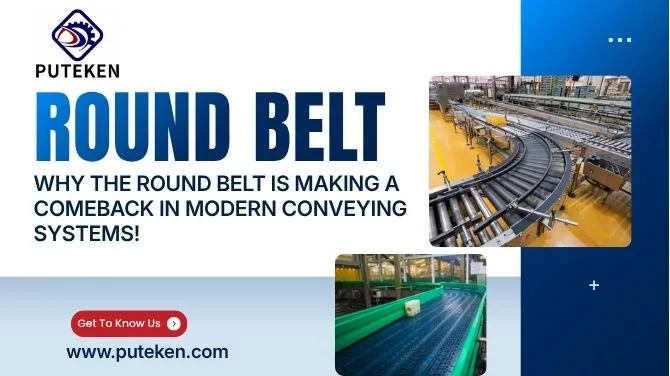
Why the Round Belt is Making a Comeback in Modern Conveying Systems?
In a world where industrial technology is often driven by the latest trends, it’s remarkable to see a classic solution like the Round Belt reclaiming its spot in the spotlight. The steady return of the Round Belt in modern conveying systems is a testament to both its timeless engineering principles and its capacity for innovation.
1. The Round Belt: A Historical Perspective
The Round Belt—sometimes known as an O-ring belt—is among the oldest forms of conveyor belting. Originally crafted from rawhide or rubber and used in sewing machines or textile mills, these belts were prized for their simplicity and effectiveness. Over the years, technological progress introduced numerous other profiles: flat belts for smooth drives, V-belts for heavy load transmission, and toothed belts for precise timing.
However, as conveying demands evolved, so did the Round Belt. Today’s high-quality Round Belt, especially those manufactured by companies like Shanghai Puteken Transmission System Co., Ltd., benefit from advanced polymers, improved crosslinking technology, and exceptional manufacturing tolerances.
2. What Makes the Modern Round Belt Stand Out?
- Superior Flexibility and Versatility
One of the distinct benefits of the Round Belt is its exceptional flexibility. A Round Belt can easily bend around pulleys of various diameters, navigate complex track layouts, and transition seamlessly between horizontal and vertical conveying sections. This property alone makes them ideal for industries handling everything from delicate baked goods to small technical components. - High-Quality Material Choices
Advancements in polyurethane, silicone, and thermoplastic materials have vastly expanded the performance envelope of the Round Belt. These materials provide:
- Excellent wear and abrasion resistance.
- Superior chemical and moisture resistance.
- Customizable hardness or elasticity for unique applications.-
- Consistent performance over a wide temperature range.
Shanghai Puteken Transmission System Co., Ltd. offers a portfolio of Round Belt solutions engineered for specific environments, such as food-safe belts for bakeries or antistatic belts for electronics.
- Easy Joining and Customization
Round Belts can be quickly joined endless with simple tools, even by in-house maintenance staff. This means minimal downtime—a crucial advantage for industries running 24/7. In addition, varying the thickness or durometer of the belt allows for precise customization of load capacities, speed, and grip. - Gentle Product Handling
A core reason for the Round Belt’s comeback lies in its gentle yet effective conveying action. The rounded cross-section supports products with minimal surface area contact, reducing the risk of marring or damaging delicate items like packaged foods, fragile electronics, or soft textiles.
3. Industry Applications: Where the Round Belt Excels
From its historic role in textile spinning to pivotal use in today’s automated factories, the Round Belt proves invaluable in a host of industries. Let’s examine some key sectors driving the renewal of Round Belt technology:
- Food & Beverage
Food processors value Round Belts for their easy-to-clean surfaces, resistance to fungal or bacterial growth, and compliance with regulatory standards for food contact. Whether moving chocolates in a candy factory or supporting bakery trays in ovens, Round Belts provide the ideal combination of hygiene and flexibility. - Packaging & Logistics
In high-speed packaging, Round Belts excel at handling lightweight, unstable loads. Their flexibility and grip help maintain consistent flow rates on diverters, sorters, and transfer conveyors, improving throughput and reducing jams. - Textiles & Fabrics
The textile industry was an early adopter of the Round Belt—and for good reason. Modern systems rely on these belts for their low tension, smooth movement, and gentle fabric handling, supporting everything from spinning and weaving to finishing and packaging. - Electronics
Electronics manufacturing demands ESD-safe (electrostatic discharge safe) and non-marking conveyor solutions. Polyurethane or silicone Round Belts are perfect for conveying circuit boards and delicate assemblies without contamination or static buildup. - E-commerce Distribution
E-commerce fulfillment centers, tasked with conveying a variety of package types and sizes, use Round Belts to drive powered roller systems. The belts can be quickly configured, replaced, or adjusted to suit seasonal peaks in demand.
4. Engineering Innovations: The Modern Round Belt
Round Belt designs have evolved far beyond their basic origins. Today’s models incorporate:
- Reinforced cords for extra strength without sacrificing flexibility.
- Precision extruded profiles for consistent diameter and smooth operation.
- Antimicrobial or antistatic additives to meet strict regulatory standards.
- Color coding for quick identification and maintenance.
Shanghai Puteken Transmission System Co., Ltd. collaborates directly with end users to develop solutions tailored to each industry’s specific requirements—be it for high temperatures, cleanroom applications, or heavy-duty performance.
5. System Integration: How Round Belts Transform Conveying Design
System designers and plant engineers increasingly value the straightforward integration that Round Belts offer. Here’s why:
- Easy Routing and Retrofitting
The inherent flexibility of the Round Belt enables easy routing along complex conveyor paths—including curves, twists, and spirals—where flat belts or modular sections would be cumbersome or cost-prohibitive. - Compact Layouts
With small minimum pulley diameters, Round Belts allow for compact system designs, maximizing use of space in crowded factories or distribution centers. - Rapid Maintenance and Reduced Downtime
Round Belts can often be joined or replaced on-site with a simple heat-welding tool or mechanical connector, requiring no dismantling of the conveyor structure. This dramatically reduces mean time to repair (MTTR) and keeps productivity high. - Energy Efficient
Low friction and optimized elasticity minimize drive power requirements and lower overall system energy use—a growing consideration as industries aim to shrink their carbon footprint.
6. Maintenance Best Practices for Round Belts
Ensuring long-lasting, trouble-free operation starts with proper maintenance. Here are best practices recommended by Shanghai Puteken Transmission System Co., Ltd.:
Regular Inspection
- Check for Surface Wear: Examine belts for signs of cracking, glazing, or uneven wear.
- Monitor for Stretching: Over time, inspect for changes in belt tension or length.
- Visual Alignment: Misaligned pulleys accelerate wear and can cause belt tracking issues.
Correct Tensioning
- Avoid Over-tensioning: Too much tension can overstress the belt and bearings.
- Ensure Proper Slack: Round Belts should have a small amount of deflection when lightly pressed.
Cleanliness
- Keep Belts and Pulleys Free of Debris: Dust, oil, or other contaminants can degrade belt material.
- Use Gentle Cleaning Agents: Avoid harsh chemicals unless confirmed compatible with your belt material.
Proactive Replacement
- Don’t Wait for Failure: Replace belts when signs of significant wear appear, especially in critical applications.
- Keep Spare Belts On Hand: The ability to cut and join a new Round Belt on-site minimizes downtime.
Documentation and Training
- Maintain Maintenance Logs: Record inspections, replacements, and adjustments.
- Train Staff: Ensure personnel are aware of the correct handling, splicing, and tensioning procedures.
7. Trends Fueling the Round Belt Resurgence
Several broader industrial trends contribute to the Round Belt’s modern popularity:
- Increased Automation: Flexible, quickly reconfigurable systems favor the adaptable Round Belt.
- Custom, Small-Batch Production: Versatile conveyors support rapid changeovers between different products.
- Emphasis on Product Safety and Hygiene: Smooth, easy-to-clean Round Belt surfaces benefit industries subject to stringent health standards.
- Focus on Downtime Reduction: Quick, tool-less belt changes are crucial in high-throughput plants.
8. Custom Solutions: Shanghai Puteken Transmission System Co., Ltd.
At Shanghai Puteken Transmission System Co., Ltd., our expertise in precision engineering ensures each Round Belt is crafted to deliver optimal performance. We offer:
- Custom diameters, durometers, and lengths for any industrial need.
- Specialized formulations for heat-resistance, food safety, or chemical exposure.
- On-site technical support for system integration and staff training.
- Bulk and just-in-time delivery for maximum plant efficiency.
Our customer partnerships focus on long-term success, addressing both current challenges and future growth.
9. The Future of Conveyor Solutions
As conveying challenges become more complex—handling new materials, products, and process flows—the case for the Round Belt only strengthens. Expect to see further innovations in belt materials, joining technology, and sensor integration for predictive maintenance.
Facilities looking to optimize their conveying systems would be wise to revisit the Round Belt, not as a relic, but as a future-proof component blending classic simplicity with cutting-edge engineering.
The comeback of the Round Belt in modern conveying systems is no coincidence. Their flexibility, ease of maintenance, gentle yet reliable product handling, and broad material choices make them a superior choice in an array of industries. By leveraging today’s technological advancements and adhering to best maintenance practices, facilities can extend the life and performance of their Round Belt conveyors, ensuring efficient operations in a rapidly evolving marketplace.
Frequently Asked Questions
To close this extensive guide, here are answers to the most frequently asked questions about Round Belt systems.
Q1: What are the biggest advantages of using a Round Belt over a flat or V-belt?
A: The Round Belt offers greater flexibility, easier routing in multidirectional conveyor designs, faster splicing/joining, and is typically gentler on delicate products due to its small surface contact area.
Q2: Are there different materials available for Round Belts?
A: Yes! Modern Round Belts are manufactured from various polymers, such as polyurethane, silicone, and PVC. Each material is selected based on application requirements—such as resistance to abrasion, chemicals, high or low temperature, or food safety.
Q3: How long can I expect a Round Belt to last in my system?
A: Service life depends on load, speed, environmental conditions, and maintenance. With proper installation and routine inspection, a high-quality Round Belt can last several years, but it's wise to inspect regularly for signs of stretching or wear.
Q4: Can I join a Round Belt myself, or does it require special equipment?
A: Many Round Belts can be joined with simple, on-site tools like heat welders or mechanical connectors provided by Shanghai Puteken Transmission System Co., Ltd. This enables fast belt changes and minimal downtime.
Q5: Is the Round Belt suitable for high-speed or heavy-load conveying?
A: While the Round Belt excels at light to medium loads and moderate speeds, reinforced or specialty belts are available for more demanding applications. Consult with our engineering team for optimal solutions tailored to your needs.
Q6: Are Round Belts food-grade and safe for direct contact with consumables?
A: Absolutely! Food-grade polyurethane Round Belts, compliant with FDA or EU standards, are available and widely used in bakeries, confectioneries, and other food processing environments.
Q7: How do I clean and maintain my Round Belt system?
A: Wipe belts regularly using mild detergent and water. Avoid harsh solvents unless approved for your belt material. Remove debris from pulleys and check for signs of wear or misalignment during routine maintenance cycles.
Q8: Can Round Belts be customized for color or size?
A: Yes. Shanghai Puteken Transmission System Co., Ltd. offers Round Belts in a range of colors to assist in identification or process organization, plus custom diameters and lengths to suit any system requirements.
Q9: What should I do if my Round Belt keeps slipping off?
A: Slipping may indicate excessive wear, incorrect tension, misaligned pulleys, or a mismatch in belt size. Inspect the system, adjust tension, and consult with our technical team for a thorough solution.
Q10: Where can I source high-quality Round Belts for my facility?
A: Look no further! Shanghai Puteken Transmission System Co., Ltd. offers a comprehensive range of industrial Round Belts, backed by in-house engineering and support. Contact us for tailored recommendations and fast delivery.


























Sign in to leave a comment.