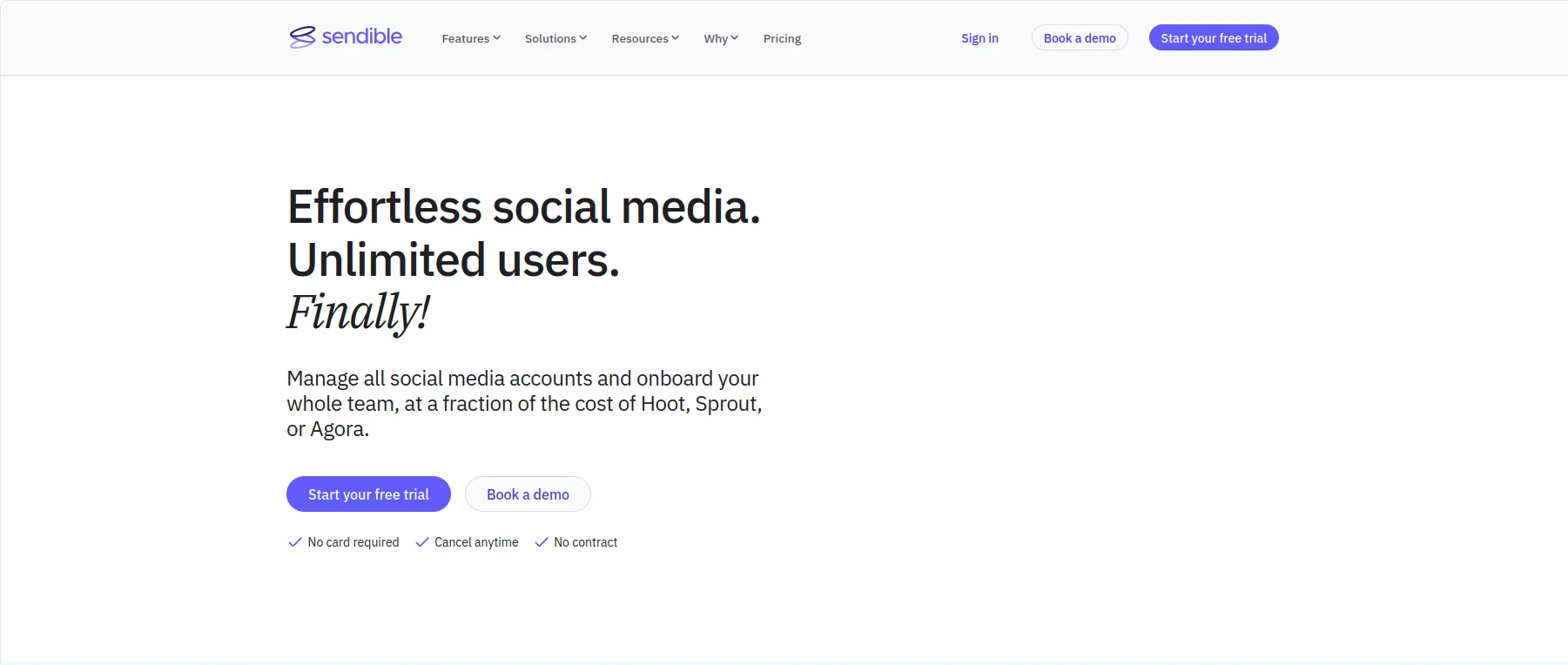

Why We Moved Away From Sendible for Our Client Accounts
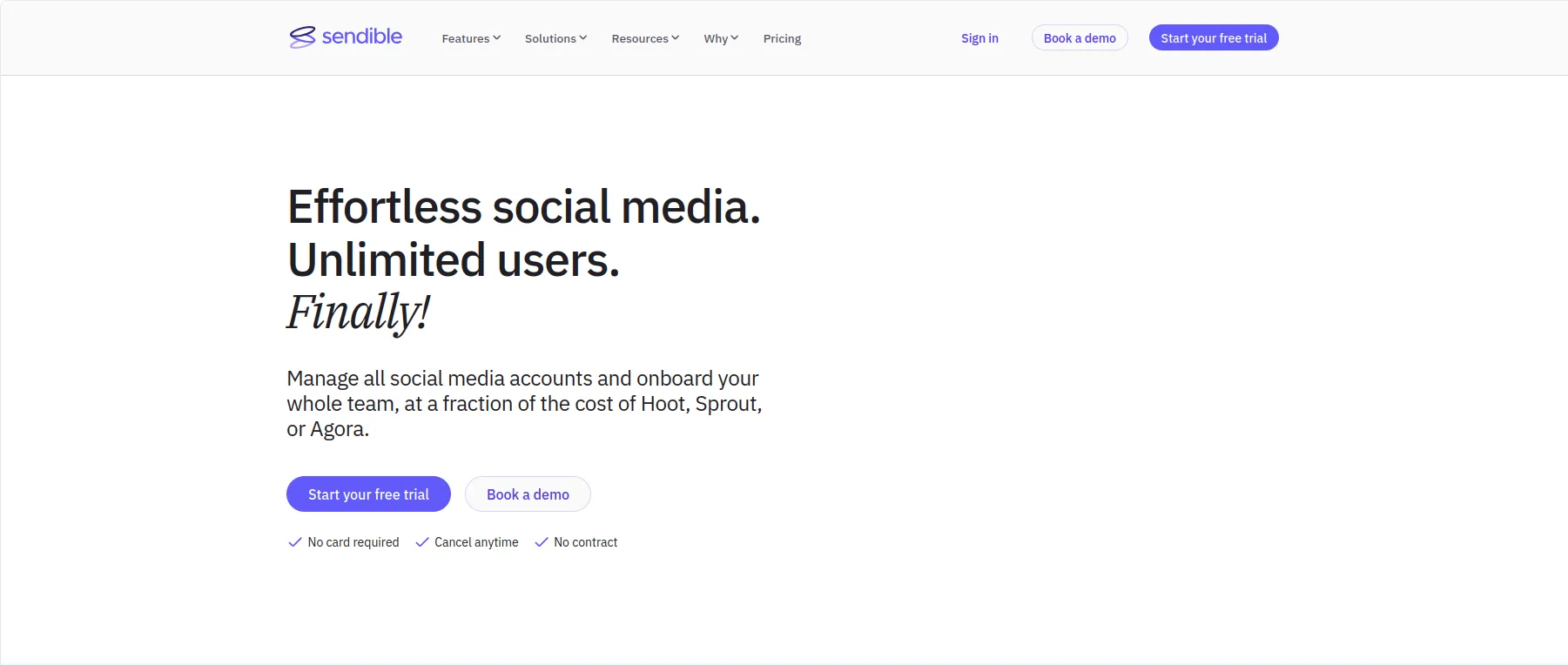
For nearly two years, Sendible was a central part of how we managed social media for our clients. It wasn't a platform we were particularly enthusiastic about, but it handled the basics well enough. And when you're running an agency, a tool that is "good enough" can remain in your workflow for much longer than it should.
That changed as our agency began to grow.
We started taking on more clients, managing more social accounts, and bringing additional team members into our workflow. As the operation became more complex, the limitations we had previously tolerated became increasingly difficult to overlook.
When Sendible Became Difficult to Scale
Our agency, BrightPath Social Media, works with eight clients and manages approximately 40 social media accounts across platforms such as Instagram, Facebook, LinkedIn, and several newer networks. We aren't a massive agency, but we're well beyond the stage of a single person managing a handful of accounts.
On a typical day, three team members are involved in creating, scheduling, reviewing, and managing content.
The problem wasn't that Sendible suddenly became unusable. It was that the platform increasingly felt like it was creating obstacles as we grew.
Adding a new client often came with additional complications. The white-label features, which should have helped us deliver a professional branded experience, felt more like an additional layer that required extra configuration. Setting up a branded client portal wasn't as straightforward as we expected, and the overall experience felt somewhat dated.
The pricing model also became more challenging. Because costs were tied to individual social profiles, adding a new client with five accounts meant calculating the additional software expense before we could even finalize our pricing proposal.
Reporting was another source of frustration. We regularly exported PDF reports and then spent considerable time adjusting and cleaning them up before sharing them with clients. When a supposedly routine process consistently requires extensive manual editing, the problem goes beyond the workflow. The tool itself is adding unnecessary work.
What We Wanted From Our Next Platform
Before considering a replacement, we identified the features that mattered most to our agency:
A real white-label experience
We didn't want to simply add our logo to an otherwise unchanged platform. We wanted clients to access a fully branded environment that felt like an extension of our agency rather than a third-party tool.
More automation
Our team was spending too much time repeating the same publishing and content management tasks across different accounts. We wanted software that could handle more of that repetitive work automatically.
Pricing that made growth easier
The cost of adding a client shouldn't become a major concern every time the agency grows. We wanted a pricing model that made it easier to scale rather than increasing our expenses with every additional profile.
A faster publishing workflow
We publish a significant amount of content every week. A slow composer or overly complicated workflow can turn simple tasks into hundreds of unnecessary clicks.
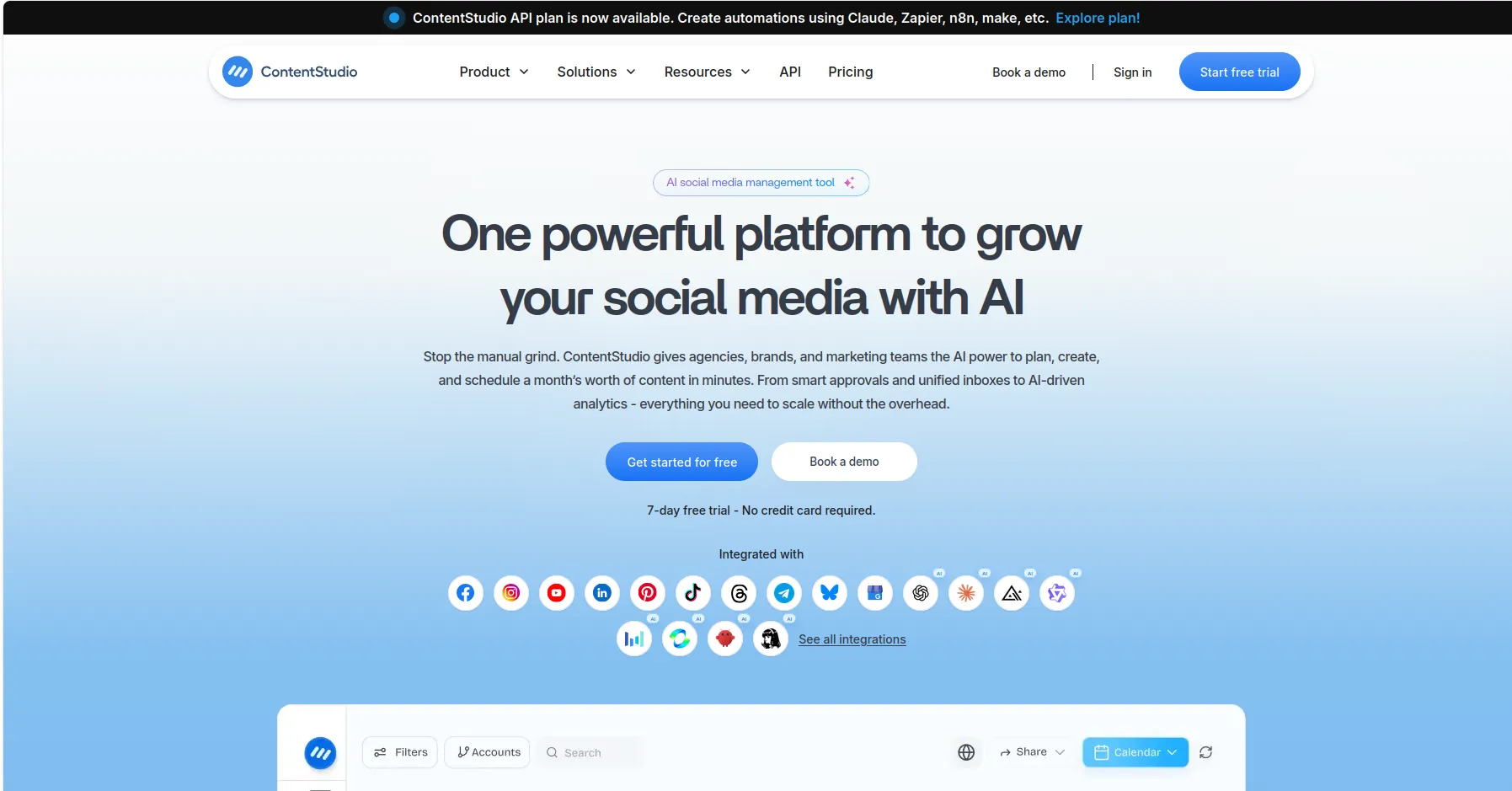
After comparing several options against this checklist, ContentStudio stood out as a strong candidate. We also spent time comparing ContentStudio with Sendible directly to make sure the move would genuinely solve the problems we were experiencing.
The Migration Process
Switching platforms is one of the biggest concerns for any agency. We had active clients, scheduled content, connected social accounts, and ongoing campaigns. The last thing we wanted was a migration problem that disrupted our work at the start of a new week.
Fortunately, the transition took approximately one week. I initially expected the process to take closer to a month.
Reconnecting the social accounts was relatively straightforward. We did have to recreate scheduled content because there wasn't a simple one-click import process. However, that turned out to be less of a problem than expected. It gave us the opportunity to review and reorganize several content queues that had become cluttered over time.
Once the migration was complete, we began noticing several practical differences.
What Improved After the Switch
The biggest improvement was the white-label experience.
Our clients now access a branded portal featuring our logo and domain. When they review content calendars, approve posts, or interact with their scheduled content, the environment feels like part of our agency. That was the type of experience we had wanted to provide for a long time.
Automation also made a meaningful difference.
For two clients that needed a consistent flow of relevant industry news, we set up content automations to help manage the process. Work that previously required roughly an hour each week per client now runs automatically. That has allowed our team to spend more time on strategy and less time performing repetitive publishing tasks.
The pricing structure was another positive change.
Moving from a model based heavily on individual social profiles to a flat agency plan made our costs more predictable. We can add a new client without immediately needing to recalculate our software expenses. That has made it easier to prepare proposals and plan for growth.
The publishing experience also became more efficient. We can create content and adapt it for multiple networks more easily, while AI assistance is helpful when we need to develop ideas or turn a brief into a finished post quickly.
Over the course of a full publishing week, these small improvements add up to a noticeable amount of saved time.
Would I Recommend Switching From Sendible?
Sendible isn't necessarily a poor choice for everyone. A freelancer or small business managing a limited number of social accounts may find it perfectly adequate.
However, as an agency grows, certain limitations can become more noticeable. Profile-based pricing, a white-label experience that may feel less central to the platform, and limited automation can all create additional friction as the number of clients and accounts increases.
For our agency, the biggest advantages of switching were the stronger branded client experience and the ability to automate more of our recurring work.
Instead of simply hiring more people to handle repetitive tasks, we wanted our software to help us work more efficiently. That became increasingly important as the agency expanded.
Six months after making the switch, we haven't had a reason to go back. Our client portals look more professional, reporting takes significantly less time, and our software costs are easier to predict when we bring on new clients.
If you're currently using Sendible and beginning to experience similar challenges, it may be worth researching different Sendible alternatives before your next renewal. Comparing platforms based on pricing, automation, reporting, publishing workflows, and white-label capabilities can help you find a solution that is better suited to the way your agency plans to grow.
Read more articles:
https://owenparker200.livepositively.com/technology/why-we-replaced-sendible-across-our-clients


























Sign in to leave a comment.