
You walk into a showroom and it feels cold. The displays don't speak to you. The space screams "future-tech" but there's nothing human about it. Sound familiar?
Here's the truth—a tech experience center isn't about having the latest gadgets or the flashiest screens. It's about how people move through your space, what they feel when they touch something, and whether they leave ready to buy or just ready to leave.
The Real Problem: Spaces Without Purpose
Most companies build tech centers backwards. They start with the technology and then try to fit people into it. But here's what actually works—you design for people first, then let the technology support that journey.
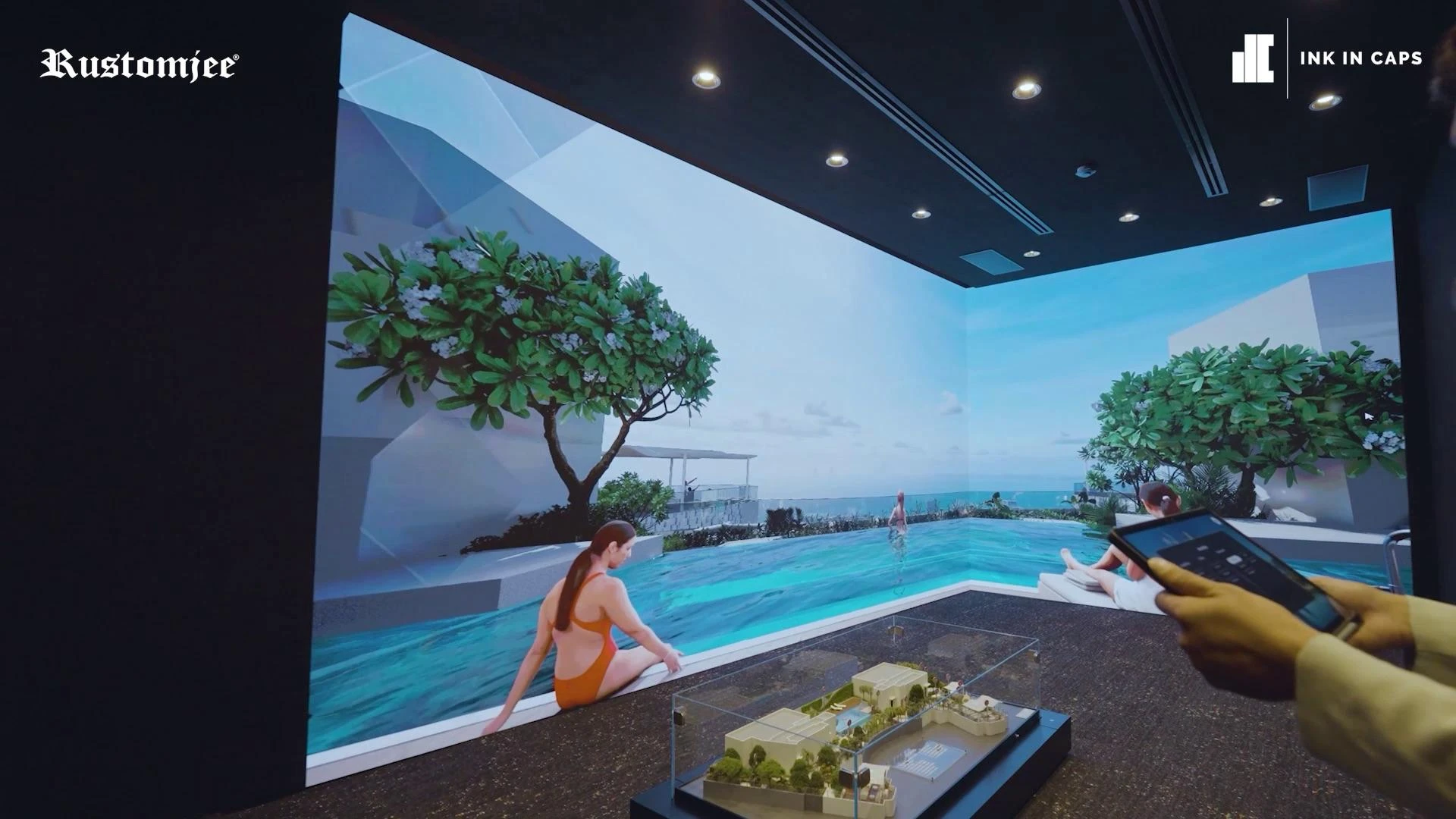
Think about Rustomjee's challenge. They had a luxury property to sell in Mumbai. Pre-construction. Their buyers couldn't walk into the apartments. There was nothing physical to touch, no sea breeze to feel, no sense of what it would actually be like to live there. A brochure wouldn't cut it. Neither would a standard floor plan presentation.
So they built something different. They created a tech experience center that didn't feel like a showroom at all. It felt like stepping into your future home.
The Three Mistakes You're Probably Making
First, your layout is fighting against you. Most spaces have everything crammed together. Visitors don't know where to look first. They get overwhelmed and their minds shut down. What you need instead is a journey. Zones that flow naturally. A reception that welcomes. Spaces that breathe.
Second, your content isn't telling a story. It's just facts. Specs. Numbers. But people don't buy specs—they buy feelings. They buy the idea of how something will improve their life. Your content needs to show them that movie, not read them the script.
Third, you're not actually letting people interact. You've got displays, sure, but is someone truly engaged with them or just watching? There's a huge difference. Real interaction means people have control. They explore at their own pace. They discover things themselves.
How Layout Actually Drives Behavior
Rustomjee's experience center worked because of how it was structured. You didn't walk in and see everything at once. Instead, you moved through four distinct zones, each revealing something new.
The first zone showed the project itself—the building, the location, the architectural vision. It gave context. It answered the question: "What is this?"
Then came the amenities. Here's where the space shifted emotionally. Now it wasn't just about the physical structure. It was about lifestyle. About morning coffee overlooking gardens. About where your kids would play. This is where people started to imagine their life there.
The third zone—this was the emotional pivot point. A massive display showing the apartment view. Not a photo. Not a video. A full-scale simulation of what you'd actually see from your windows. Morning light. Sea views. The specific perspective from the exact unit you're considering.
Finally, the consultation zone. Here, potential buyers could explore floor plans, neighborhood details, interior options, everything they needed to make a decision. But at this point, they were already emotionally invested.
This isn't random layout. This is psychology applied to space.
Content That Actually Connects
The difference between a space that works and one that doesn't often comes down to storytelling. Rustomjee didn't just show what the apartments looked like. They showed how living there would feel.
The amenity zone told a lifestyle story. The panoramic view gave an emotional experience. The consultation suite provided practical information—but only after the visitor was already sold on the dream.
This matters because people make decisions emotionally and then justify them rationally. You need to hit the emotion first. Everything else follows.
Making People Actually Do Something
Here's the metric nobody talks about enough: engagement time. At Rustomjee, visitors spent an average of 50 minutes in the experience center. That's remarkable. Most showrooms see 10-15 minutes.
Why? Because people had control. They could explore what interested them. They could pause, rewind, look closer. There were touchscreens that let them customize views. There were display models they could physically examine alongside the digital versions.
This matters because an engaged visitor is someone collecting information for a real decision. They're not just killing time. They're building confidence.
Within the first month, Rustomjee facilitated over 700 personalized demos. All 4BHK units sold through the digital walkthrough experience. Retention rate hit 74%, compared to an industry average of 45-50%.
These aren't random numbers. They're the result of a space designed to move people through a journey that ends in a decision.
The Real Insight: It's All Connected
A great tech experience center isn't about choosing between beautiful design or impressive technology. It's about making them work together. The layout supports the story. The story builds emotion. The interactive elements let people explore that emotion themselves. And the whole thing points toward one outcome—action.
Your visitors should leave with clarity. With confidence. With the desire to move forward. Not because they were sold to, but because they discovered something real.
Start Here
If your tech experience center isn't driving the action you want, look at these three things:
Does your space flow like a natural journey, or does it feel like a maze? Can visitors move at their own pace, or does it force them through a predetermined route? Is your content telling a story about what people will experience, or just listing what you're selling? Are your interactive elements putting control in visitors' hands, or just showing off what's possible?
The companies winning with tech experience centers right now aren't winning because they have the most expensive technology. They're winning because they've put people at the center of everything—the layout, the content, the interaction.
That's the difference between a showroom and a space that actually changes minds.
Ready to Build a Tech Experience Center That Actually Works?
Understanding the principles of effective layout, content, and interaction is one thing. Actually building something that converts is another.
This is exactly where most brands get stuck. They know what they want to achieve, but the execution—translating strategy into a space that moves people—requires expertise most teams don't have internally.
IIC works with brands to design scalable experiential marketing campaigns that harness the right technology—whether that's interactive displays, spatial design, content development, or full immersive experiences—without the buzzword oversell.
We've seen what works because we've built it. We know how to structure a customer journey spatially. We understand how to develop content that creates emotional connection. We can deploy interactive technology in ways that actually serve human behavior rather than distract from it.
If you're ready to move from "interesting showroom" to "experience that drives decisions," let's talk about what your customers need to discover.
























Sign in to leave a comment.