
Workday has become the backbone of workforce operations for modern enterprises. It tracks who is hired, promoted, transferred, or exits the organization—often in real time.
Yet in many organizations, access control still lags behind these changes.
That disconnect raises an important question: if HR systems already know who someone is and what they do, why does access management still depend on manual interpretation and delayed action?
The HR–IT Gap That Still Exists
On paper, HR data should drive identity decisions. In reality, many enterprises still operate with a handoff model—HR records a change, and IT is expected to catch up.
This approach creates predictable challenges:
- Access is provisioned late or inconsistently
- Role changes don’t translate cleanly into permissions
- Offboarding becomes reactive rather than immediate
- Security and compliance teams lack real-time assurance
The issue isn’t Workday’s capability. It’s what happens—or doesn’t happen—after HR events occur.
Identity Is No Longer a Back-Office IT Task
As enterprises expand their use of SaaS platforms, cloud services, and distributed workforces, identity has evolved into a shared control point across the business.
Access decisions now directly influence:
- Security posture
- Regulatory exposure
- Employee productivity
- Audit readiness
When identity lifecycle processes rely on manual intervention, risk accumulates quietly—and at scale.
Why HR-Driven Identity Matters Now
The most effective identity strategies treat HR as the authoritative trigger, not just a data source.
When identity systems respond automatically to Workday events:
- Access aligns with real job responsibilities, not assumptions
- Changes occur consistently, not eventually
- Policies are enforced systematically rather than manually
This shift reduces operational friction while improving accuracy, accountability, and control.
How OpenIAM Supports a Workday-Centric Identity Strategy
Enterprises don’t need more workforce data—they need a way to turn HR events into enforced, auditable access decisions.
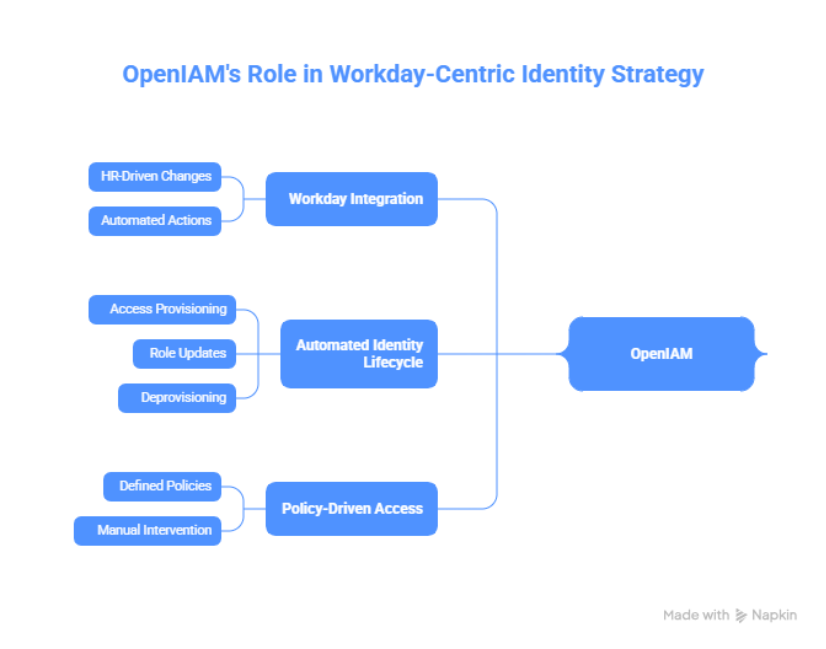
This is where platforms like OpenIAM play a critical role. By integrating directly with Workday, OpenIAM helps organizations translate HR-driven changes into automated identity lifecycle actions across enterprise systems. Access provisioning, role updates, and deprovisioning follow defined policies, ensuring consistency without manual intervention.
Rather than adding complexity, this approach creates a governed identity layer that complements Workday’s HR authority while extending control across IT environments.
Conclusion
Workday has transformed how organizations understand their workforce. The next challenge is ensuring access follows that understanding—automatically and consistently.
In an environment where speed, compliance, and trust all matter, identity can no longer afford to be reactive.

























Sign in to leave a comment.