


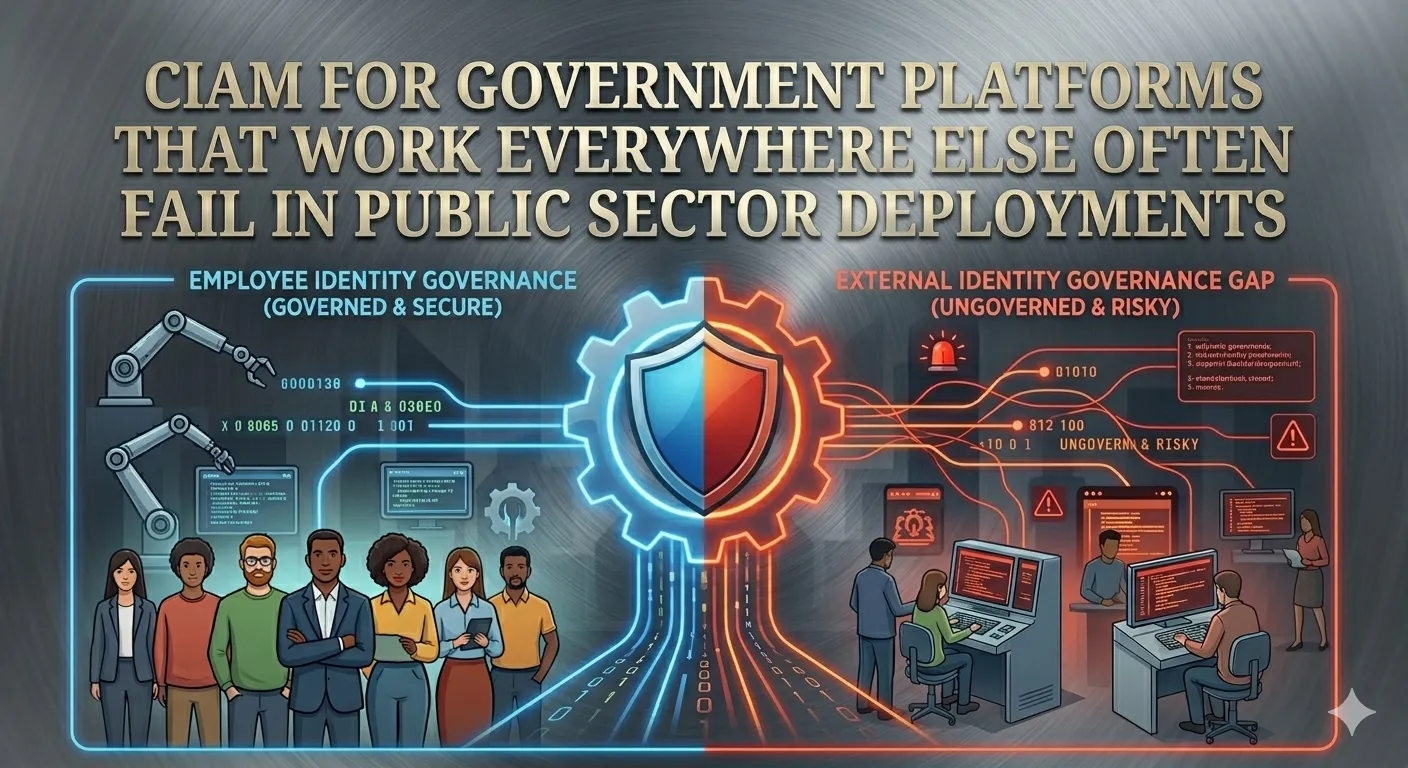
Government agencies often mistakenly select commercial CIAM platforms built for friction-free consumer sign-ups. However, citizen identity requires strict, long-term legal accountability over decades, not months. Commercial solutions lack the deep architecture to handle decades-long lifecycles, real-time consent enforcement at the authorization layer, or data sovereignty constraints that prohibit cloud-only deployment models. True public sector deployments require an evaluation framework
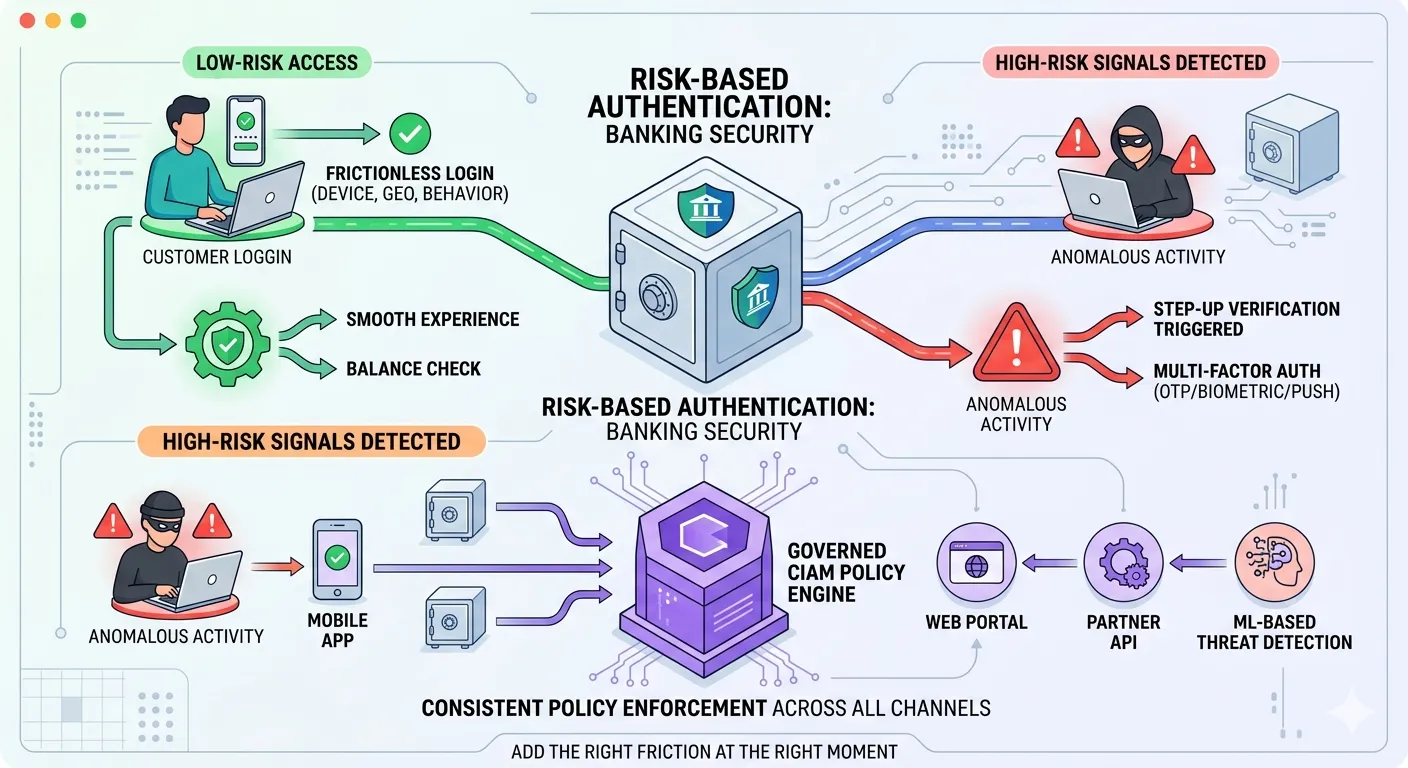
In an era where account takeover attacks are rampant, understanding Customer Identity becomes crucial for financial institutions. This article delves into the nuances of risk-based authentication, revealing how banks can strengthen their defenses without compromising user experience. Discover the innovative strategies that can transform security from a burden into a seamless process.
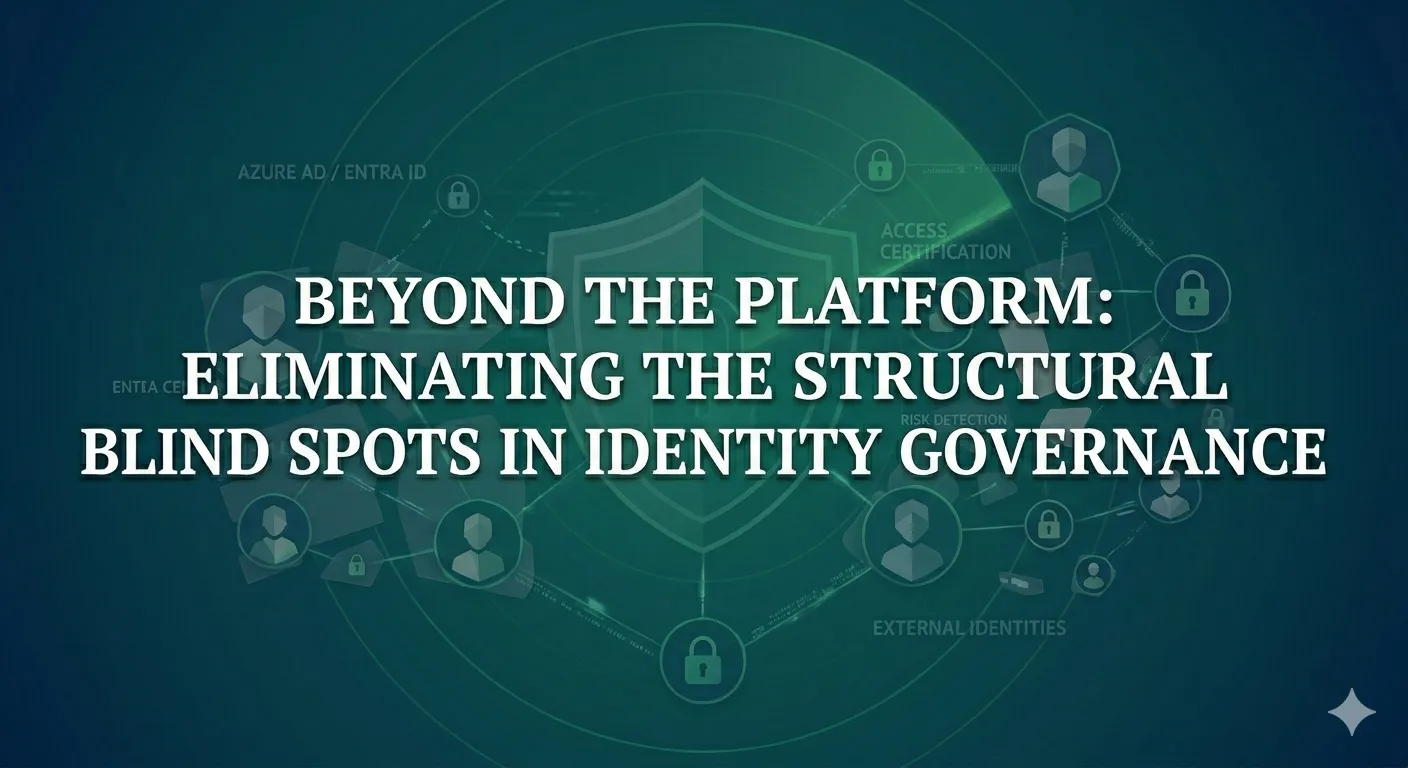
Platform-centric identity models create dangerous structural blind spots. Learn why governance must move beyond platform boundaries to eliminate audit gaps and risk.
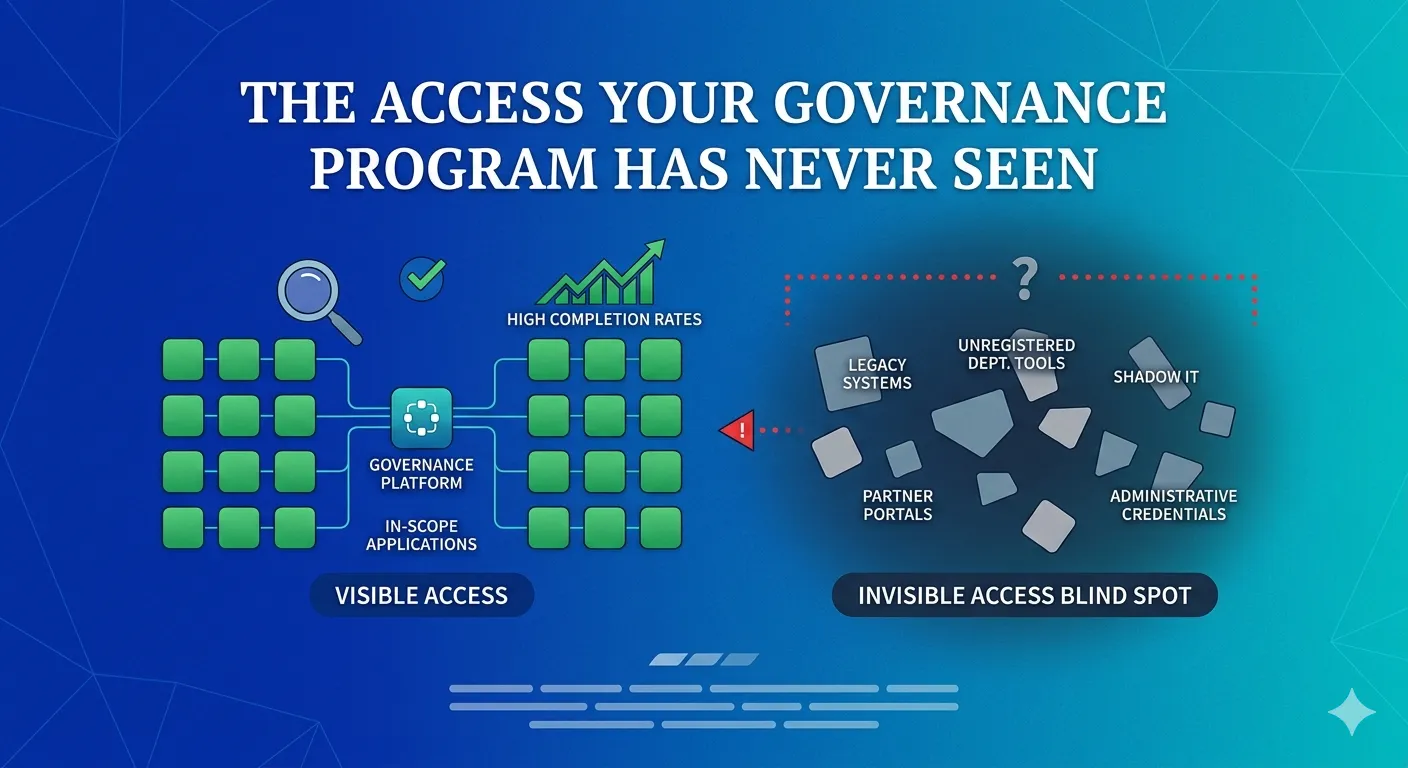
Discover why high access review completion rates hide unmanaged security risks. Learn how to identify identity governance blind spots and expand system coverage.
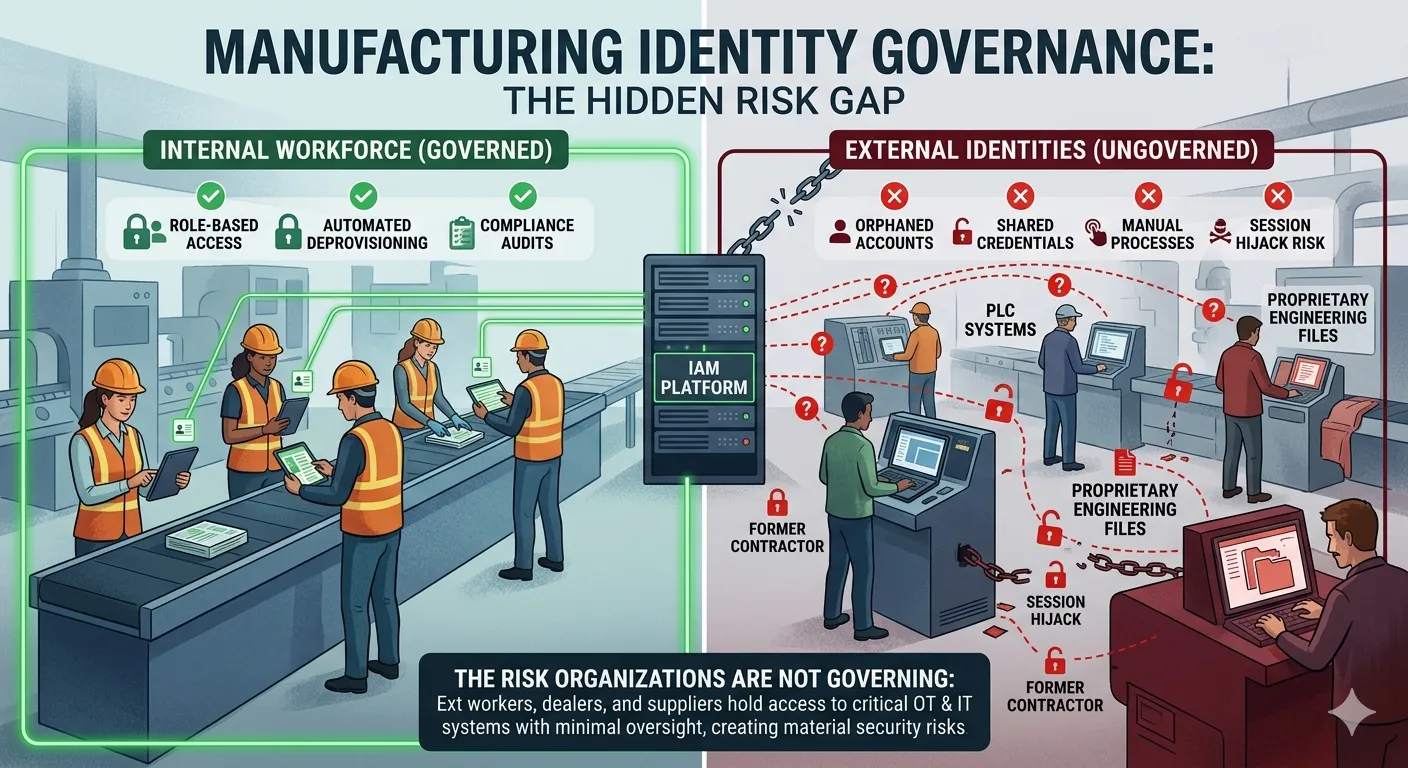
Manufacturing organizations excel at managing employee identities, but what about external partners? With outdated access protocols, suppliers and contractors can inadvertently compromise sensitive systems. Delve into the complexities of external identity governance and find out how a unified approach can protect your operational integrity and intellectual property.
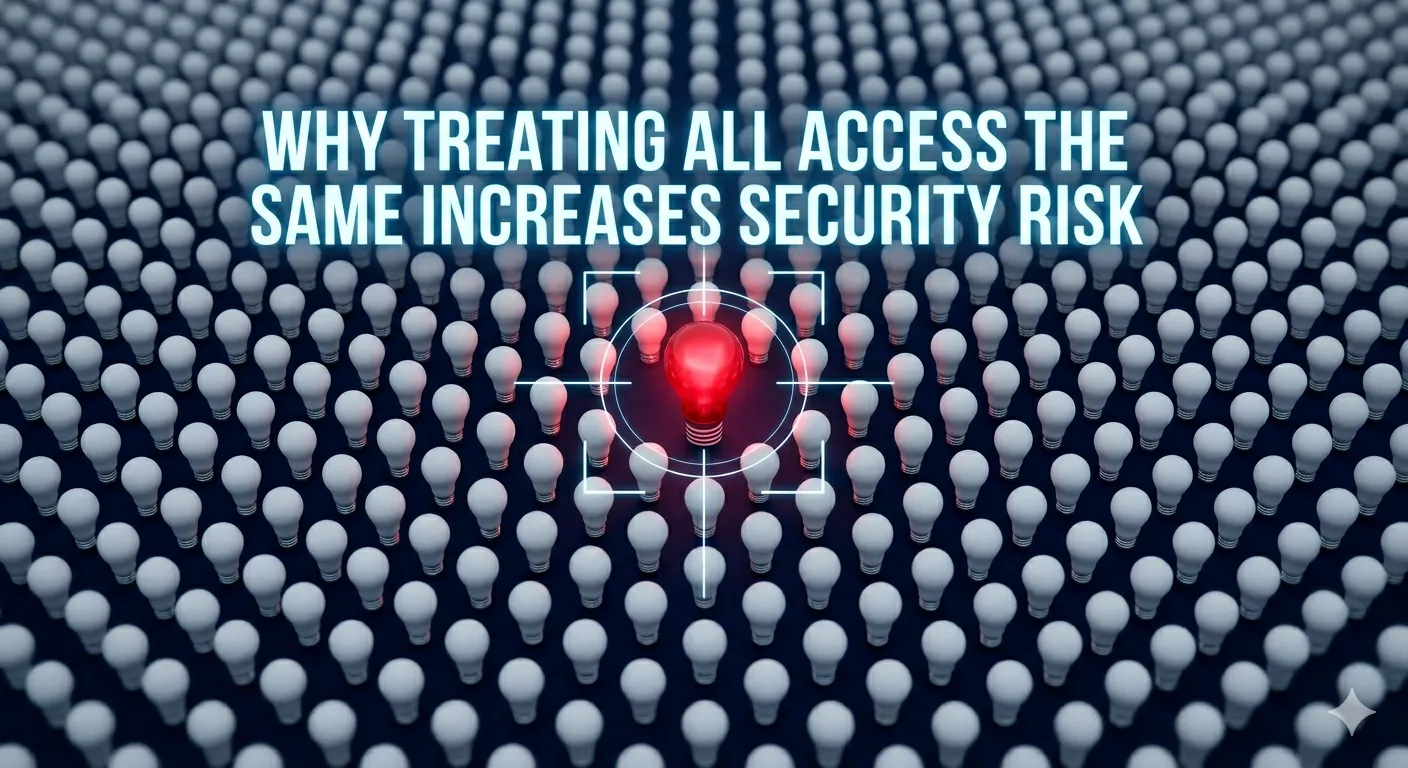
Treating all user permissions the same creates "reviewer fatigue" and hides high-risk access. Learn why effective identity governance requires risk-based prioritization over uniform coverage.

Are your Identity Governance programs designed to pass audits or reduce risk? Discover why focusing solely on compliance documentation is a widespread mistake and what regulatory frameworks actually require for effective oversight.
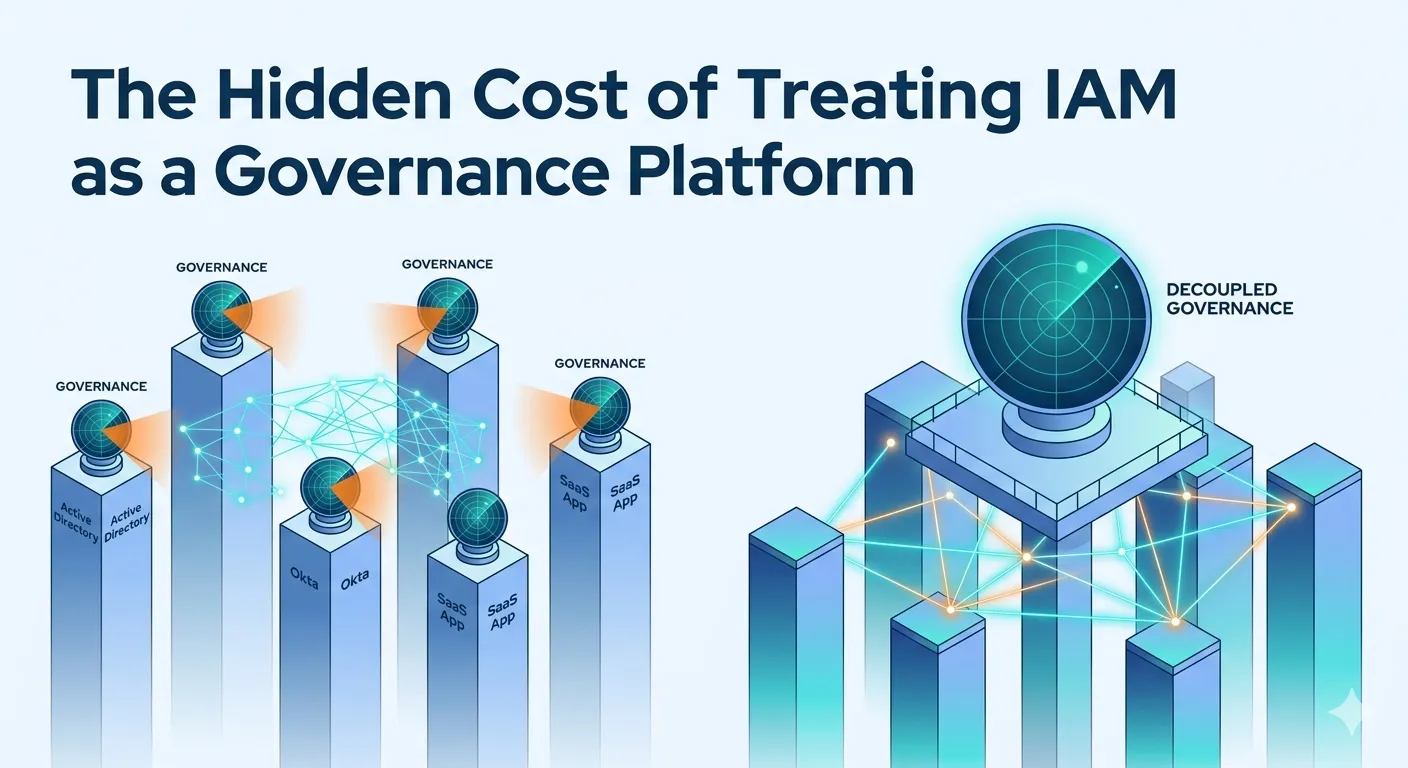
Many enterprises mistakenly believe that their Identity and Access Management (IAM) systems can govern access as effectively as they enforce it. However, this assumption leads to governance programs that may appear functional at first glance but ultimately fail under scrutiny. Discover the critical differences between enforcement and oversight that can expose significant governance gaps in your organization.
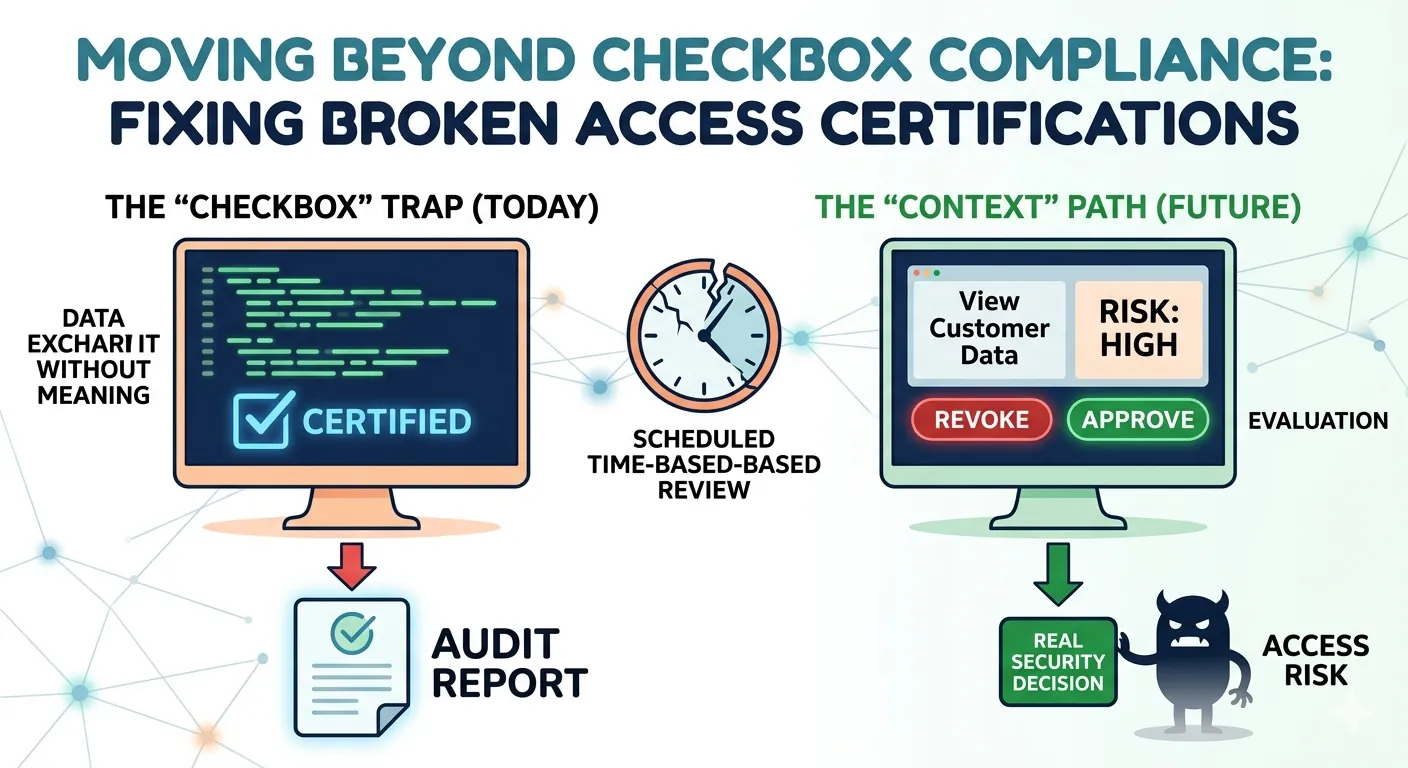
Despite timely reviews and clean reports, many organizations still struggle with risky access issues. The core problem isn't process failure but rather a lack of informed decision-making during access reviews. Discover the hidden flaws in IGA program designs that prevent effective governance and learn how to transform access reviews into meaningful evaluations.
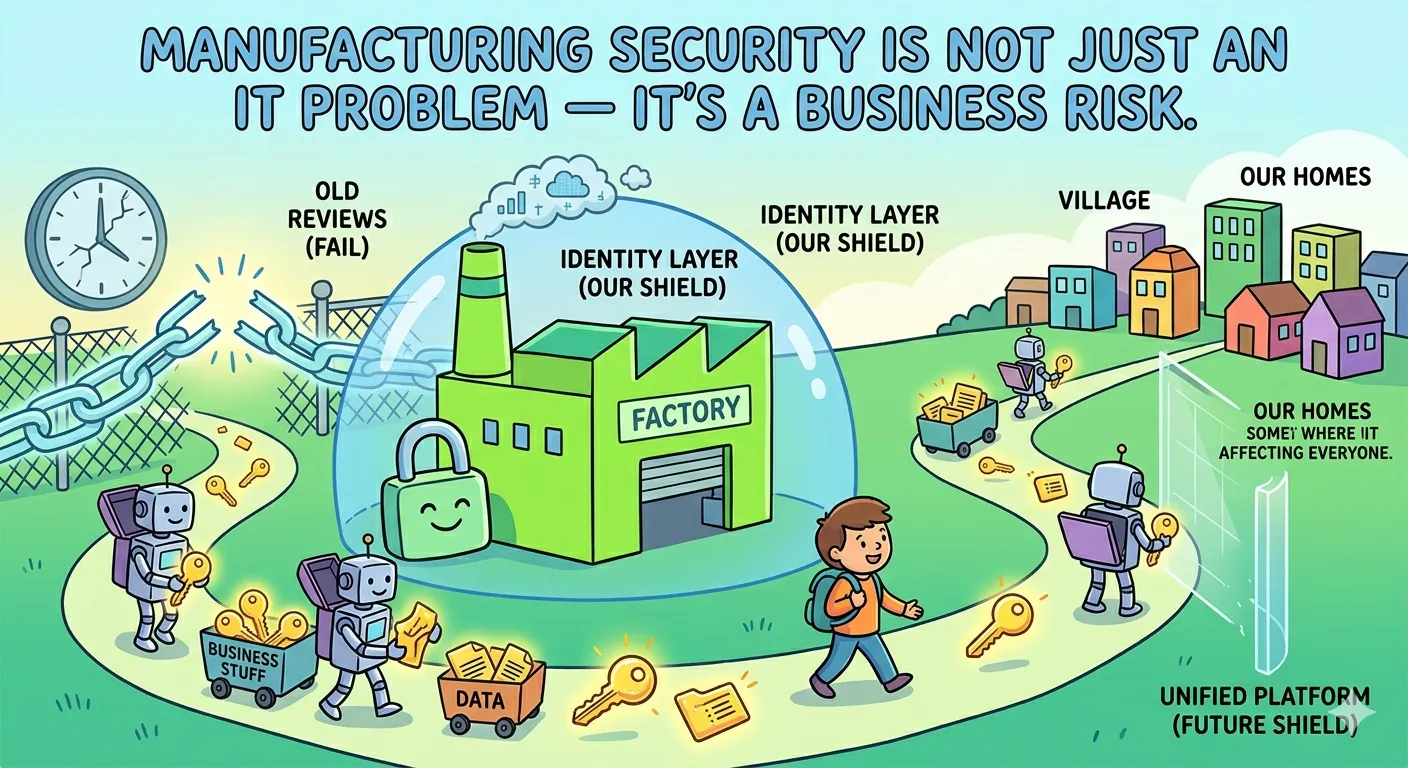
Infographic mapping a complex manufacturing ecosystem, highlighting vulnerability points created by unmanaged, accumulated digital access keys of suppliers and contractors.

Infographic illustrating access drift and the accumulation of legacy permissions during employee role changes.
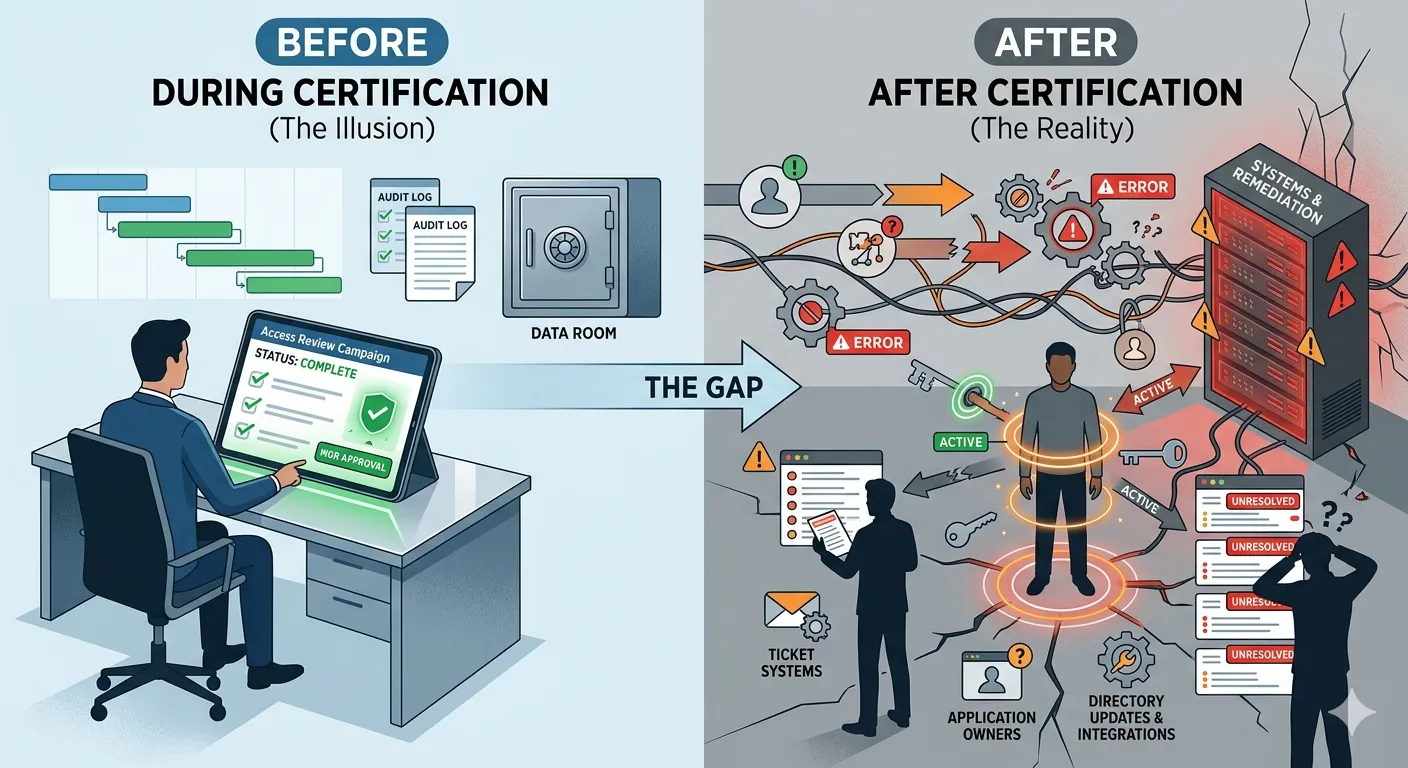
A split-screen illustration titled 'Before vs After Certification.' The left side shows a clean 'Complete' status on an audit dashboard (The Illusion). The right side shows a chaotic web of broken gears, ticket systems, and active user permissions labeled 'The Reality' of failed remediation.

Why Your Access Review Is Lying to You (& How SaaS Made It Worse)
Improving Identity Governance Controls Without Platform Modernization
Why Access Review Completion Rates Don't Equal Risk Reduction: Solving the Fatigue Problem
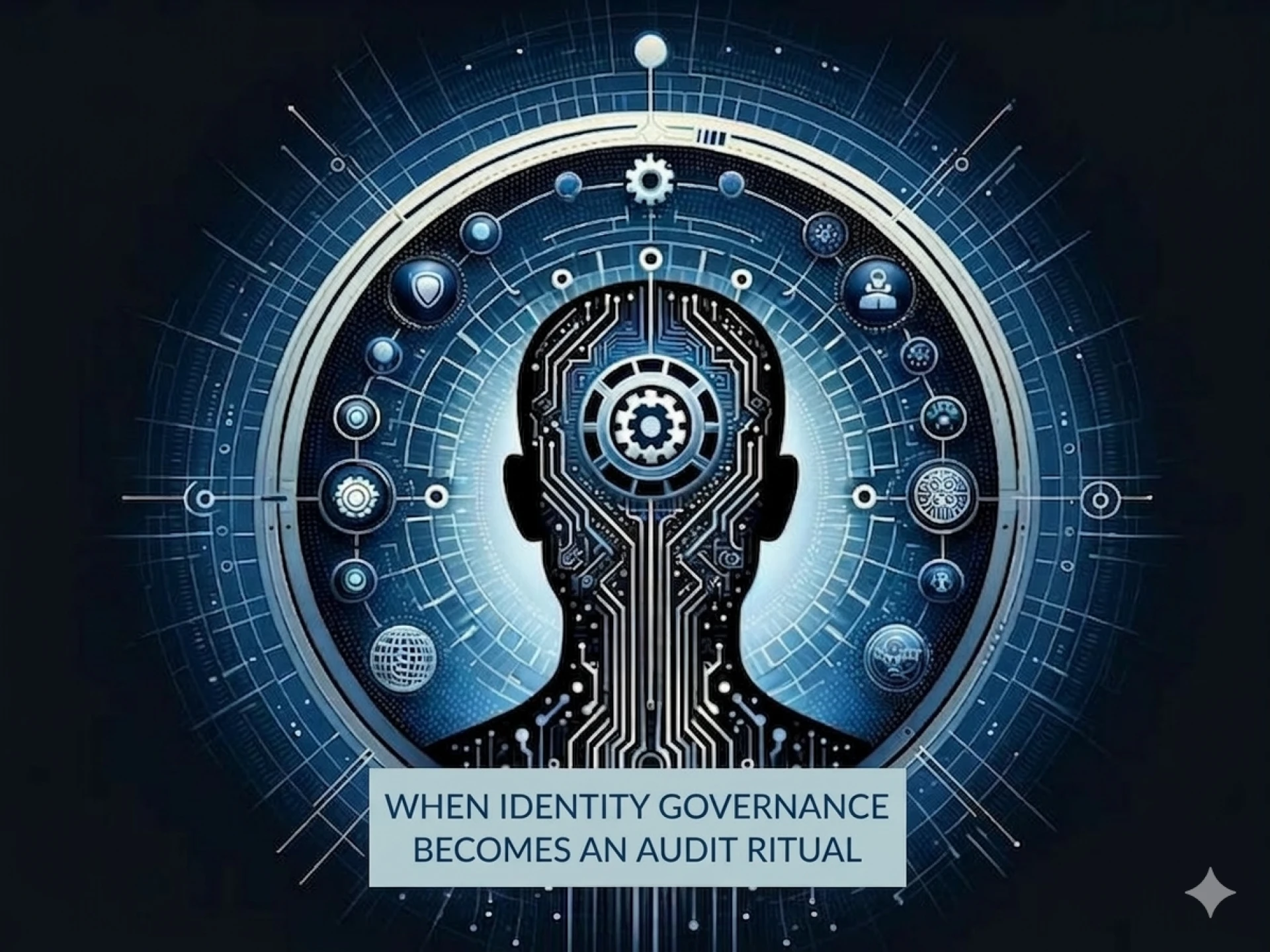
Is your IGA program reducing risk or just passing audits? Discover why identity governance often becomes a "compliance ritual" and how to shift from binary checkpoints to longitudinal risk reduction.

In financial services, healthcare systems, and government agencies, identity governance often begins with a familiar objective: Pass the audit.&n
Access reviews are a foundational control in enterprise security and compliance programs. They are designed to ensure that users have only the access
Access reviews are a required control in regulated organizations, but they are also one of the least trusted. In hybrid environments, reviews often be