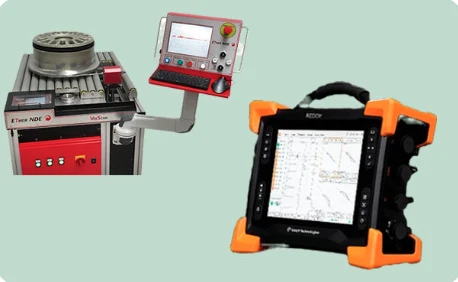
"I can figure it out on the job." – Think again.
One of the biggest misconceptions about Eddy Current Testing (ECT) is that you can learn it on the fly, without formal training. But here's the truth: without structured Eddy Current training, you’re not just limiting your opportunities—you’re risking non-compliance, poor inspections, and potentially dangerous oversights.
So, if you're asking, “How do I get ECT certified?”—you’re already ahead of the curve.
Let’s break down exactly what you need to know about eddy current certification levels and the roadmap that takes you from beginner to expert.
Understanding the ECT Certification Ladder
Level I: The Starting Point
This is where you get your hands dirty—in the best way.
What you’ll learn:
● Basic principles of electromagnetism and coil configurations
● Calibration and equipment handling
● Performing inspections under supervision
Why it matters:
You’ll be able to carry out tests and collect data—but you can’t interpret results independently. Think of this as your apprenticeship phase.
Who it’s for:
New technicians, QA assistants, or anyone looking to break into aerospace, nuclear, or automotive NDT roles.
But here’s the catch—without progressing to Level II, your job options may hit a wall sooner than you think…
Level II: The Career Shifter
This level is the game-changer for most professionals.
What you’ll learn:
● Advanced signal interpretation
● Writing inspection procedures
● Supervising Level I personnel
Why it matters:
At Level II, you're now certified to evaluate results and make critical decisions. This is where most hiring happens—companies want technicians who can both test and analyze.
Career growth:
According to ASNT (2024), over 64% of ECT job postings in the US required at least Level II certification—a sharp increase from 48% in 2020.
(Source: ASNT Annual Industry Report, 2024)
Ready to take on senior roles? There's one more level that can get you in the door of high-level consulting and compliance…
Level III: The Expert’s Arena
If you're aiming to teach, supervise programs, or consult on compliance, this is your level.
What you’ll master:
● Procedure development and code compliance
● Audit and certification reviews
● Training and examining other personnel
Ideal for:
Inspectors, training coordinators, NDT program managers, and quality control heads.
At Level III, you're not just part of the team—you’re steering the ship.
Quick Snapshot: Certification Levels Compared
Certification Level Primary Role Key Skillset Who It’s For
level I Execute tests under guidance Setup, basic data collection Entry-level techs, trainees
Level II Analyze and interpret Data evaluation, procedure writing Mid-level techs, field inspectors
Level III Program leadership Compliance, training, auditing Senior consultants, QA managers
So, How Do You Get ECT Certified?
The process is regulated under ASNT SNT-TC-1A or ISO 9712 standards, depending on your region or employer. Here’s the simplified path:
- Choose a Recognized Training Provider:
Make sure your institute meets ISO or ASNT guidelines. Not all certifications are created equal.
- Complete Required Training Hours:
For Level I, you’ll need 40-60 hours. Level II usually requires an additional 40-60 hours on top.
- Accumulate On-the-Job Experience:
Depending on the level, required experience ranges from 210 to 840 hours.
- Pass Written + Practical Exams:
These test both your theory knowledge and field performance.
- Maintain and Renew:
Certifications often require renewal every 3-5 years, depending on the certifying body.
Is Eddy Current Testing Worth Your Time?
Absolutely—Eddy test is one of the fastest-growing NDT methods in sectors like aerospace, medical device manufacturing, and petrochemical inspection. With increasing demand for surface and sub-surface flaw detection, professionals with ECT skills are seeing a significant rise in job opportunities and salaries.
And here’s something to think about:
Have you considered how ECT skills could open doors to international compliance projects or military-grade inspections?
Final Thought: Certification is a Career Accelerator
Whether you're a student, technician, or engineer exploring new verticals, Eddy Current training is more than just a technical skill—it's a career investment.
Don’t wait for an opportunity. Get certified, get visible, and get ahead!
























Sign in to leave a comment.