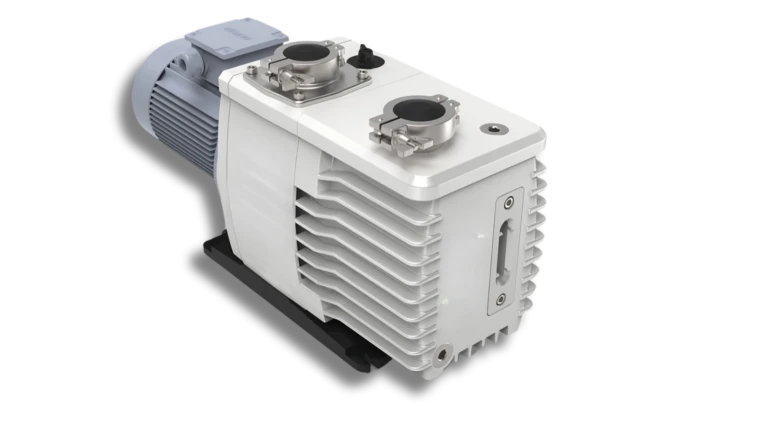

Vacuum pumps play a crucial role in a wide array of industrial and scientific applications. Among the most commonly used are rotary vane pumps, known for their reliability and efficiency. However, a key decision users must make is whether to choose a single-stage or double-stage rotary vane pump. This decision depends heavily on your application's requirements, including vacuum level, budget, and operating environment. In this blog, we break down the differences to help you determine which type best suits your needs.
What Is a Single Stage Rotary Vane Pump?
A single-stage rotary vane pump has one set of vanes and a single compression chamber. It pulls gas from a system and compresses it directly to the exhaust. These pumps are ideal for processes requiring medium vacuum levels and are typically more cost-effective and compact.
Key Advantages:
- Lower upfront cost
- Simpler design and easier maintenance
- Adequate for many general-purpose applications
Common Uses:
- Laboratory vacuum systems
- Packaging machines
- Refrigeration evacuation
What Is a Double Stage Rotary Vane Pump?
Double-stage rotary vane pumps feature two compression stages in series. After the first stage partially compresses the gas, it moves to the second stage for further compression. This design allows the pump to achieve a deeper ultimate vacuum and perform better in more demanding conditions.
Key Advantages:
- Higher vacuum capability
- Better efficiency at low pressures
- Improved performance for sensitive or high-precision processes
Common Uses:
- Mass spectrometry
- Freeze drying
- Semiconductor manufacturing
- Medical and pharmaceutical equipment
Which One Should You Choose?
- Go with a Single Stage Pump if:
- Your application requires a moderate vacuum (above 1 mbar).
- You are focused on cost-effectiveness.
- The system doesn’t need extremely low pressure levels.
- Choose a Double Stage Pump if:
- You need a deep vacuum (down to 10⁻³ mbar or better).
- The process involves sensitive materials or measurements.
- Performance and reliability at low pressure are critical.
Conclusion
Selecting between a single and double stage rotary vane pump ultimately depends on your application’s specific vacuum requirements and operating budget. While single stage pumps are sufficient for many routine tasks, double stage pumps shine in high-performance environments. Understanding your operational needs will ensure you invest in a pump that delivers optimal efficiency, durability, and value.
Read Moore: https://padlet.com/mechvatech/mechvac-kfdve5xsjtgx5pis/wish/KxJvag9PYbP8ZAg0


























Sign in to leave a comment.