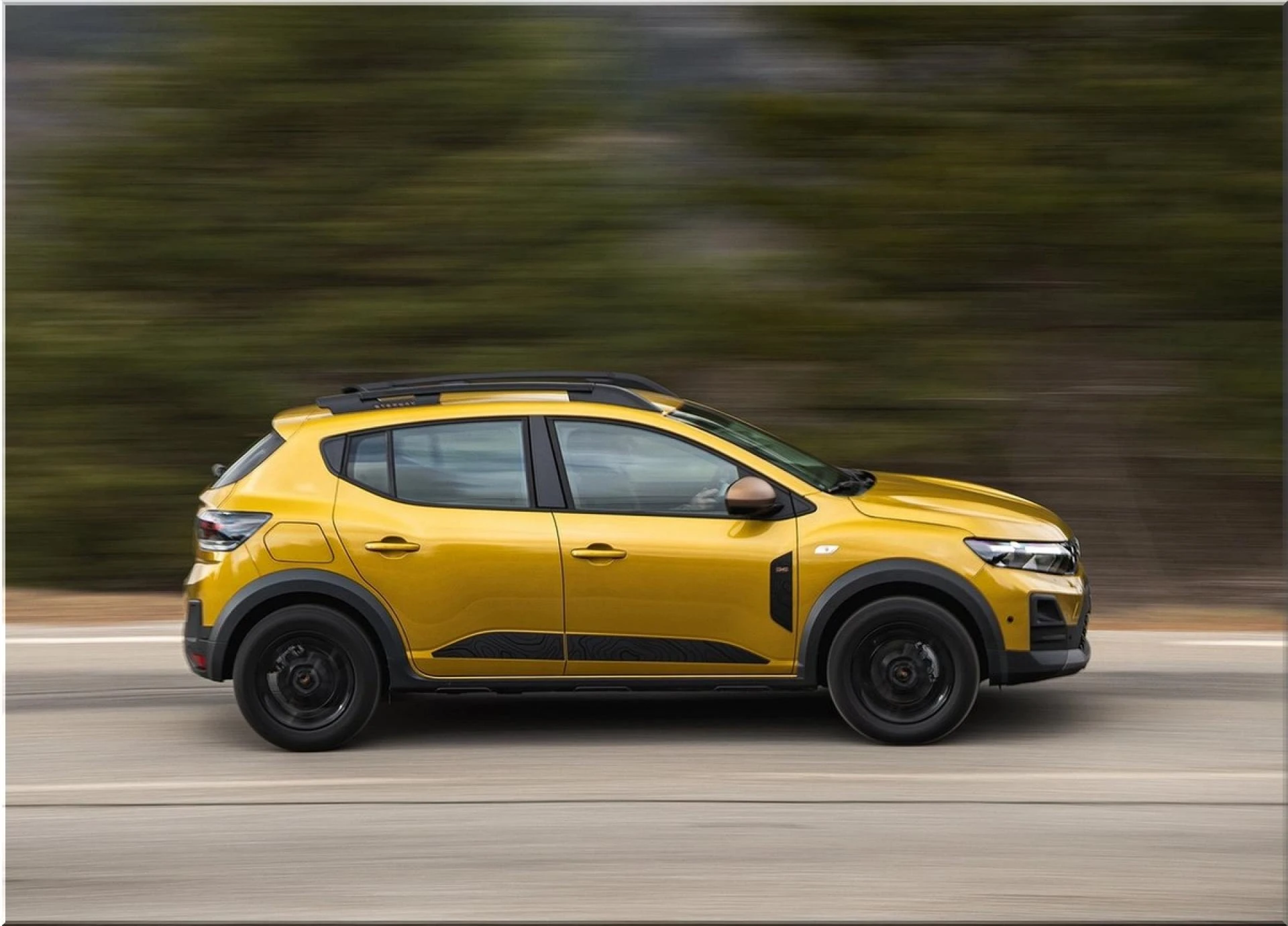

The 2026 Dacia Sandero Stepway takes a familiar formula and tightens it with smarter tech, sharper design work, and a broader powertrain story. That matters because the Sandero Stepway has always sold on simple math: useful size, SUV-style stance, low running costs, and packaging that punches above its footprint. For 2026, Dacia keeps that core intact while adding features buyers had started to expect from pricier small crossovers.

Looking at the data, this facelift does not chase excess. It focuses on visible upgrades, cabin tech, powertrain spread, and daily-use improvements. That makes sense for a model that lives in the value end of the European B-segment, where buyers watch fuel cost, cargo space, insurance class, and real-world equipment far more closely than badge prestige.
From an expert perspective, the 2026 Dacia Sandero Stepway succeeds because Dacia did not waste resources on the wrong things. The company refreshed the lighting signatures, improved the rear design, expanded infotainment, kept the practical body, and widened the engine menu with TCe 110, Eco-G 120, and a later Hybrid 155 option. That is the right play for a vehicle built to move households, commuters, and budget-minded drivers through crowded cities and mixed suburban routes without draining the bank account.
What Changed for the 2026 Dacia Sandero Stepway
The facelift brings visible changes at both ends of the car. Up front, the 2026 Dacia Sandero Stepway adopts Dacia's newer LED signature with an inverted 'T' graphic integrated into the headlamps. The grille also changes, with squared decorative elements set into a dark background and the updated Dacia badge centered between the lamps. Consequently, the front view looks lower, wider, and more modern without changing the vehicle's mission.
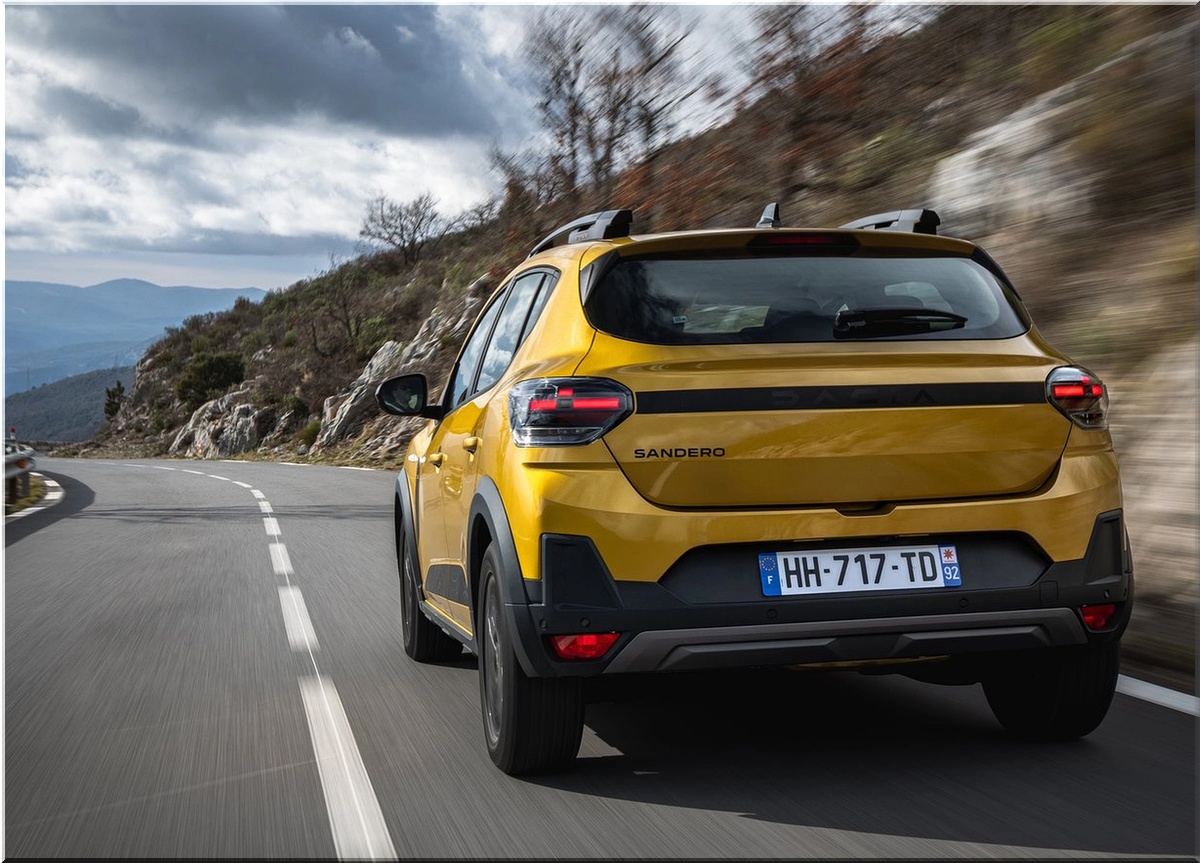
At the rear, Dacia adds updated LED 'pixel' taillamps that stretch the visual width of the hatch and clean up the back end. The bumper treatment also shifts, with a lower silver-look insert that mimics an underbody protector. That piece does real visual work. It gives the Stepway the crossover attitude buyers want, even though this remains a front-wheel-drive small hatch with raised suspension rather than a true off-road machine.
The side profile keeps the ingredients that made the Dacia Sandero Stepway easy to spot in traffic:
- Black wheel-arch cladding
- Additional lower-body protection
- Higher ride height than the standard Sandero
- Raised roof rails
- Chunkier visual stance than the base hatchback
By comparison, the standard Sandero reads as a straightforward supermini. The Stepway version wants to look tougher, taller, and more outdoor-ready, even if most of its life will be school-run duty, supermarket duty, and commuting duty. That visual distinction remains one of the model's biggest selling points.
Exterior Design Logic: Why the Facelift Works
Small-budget facelifts often do one of two bad things: too little, or too much. The 2026 Sandero Stepway avoids both traps. Dacia changed the elements owners see every day from curb height and mirror height: lamps, grille, bumper textures, wheel-arch graphics, and the rear light signature. Specifically, those areas deliver the biggest visual return without requiring a costly body-shell rethink.
That matters because the Stepway competes in a class where replacement cycles can stretch out. Buyers hold onto these cars. A facelift has to make the new one look clearly newer than the old one in traffic, parking lots, and online listings. The 2026 update does that.
The finish strategy also fits the brand. Dacia uses untreated, unpainted protective elements in places where city cars usually take abuse: arch lips, lower door sections, sill areas, and bumper corners. The logic is brutally practical. Leave those surfaces unpainted, and they resist scuffs better, cost less to repair, and keep the vehicle looking cleaner after minor daily hits.
Definition: What 'Stepway' Means in the Dacia Lineup
Stepway is Dacia's raised, more rugged-looking variation of its small car platform. On the Sandero Stepway, that means:
- More ground clearance
- Body cladding and protection pieces
- Roof rails
- SUV-style visual cues
- A more upright look than the standard Sandero
It does not mean serious rock-crawling hardware. There is no claim here of low-range gearing or hard-core trail geometry. The point is style, ease of entry, rough-road tolerance, and everyday usability.
Dimensions and Packaging: Small Footprint, Useful Cabin
The published spec data for the listed 1.0L TCe 110 6MT FWD version paints a clear picture. The 2026 Dacia Sandero Stepway measures 161.5 inches (4102 mm) in length, 73.0 inches (1854 mm) in width, and 62.4 inches (1585 mm) in height, with a 102.5-inch (2604 mm) wheelbase. Ground clearance stands at 7.9 inches (201 mm).

Those numbers explain the vehicle's appeal better than any marketing slogan could. A 4102 mm overall length keeps the car easy to place in tight urban streets and compact parking spaces. A 2604 mm wheelbase, on the other hand, gives Dacia enough distance between the axles to free up decent cabin space for front occupants and acceptable second-row room for shorter trips.
Here is the key spec view for the published 110-hp version:
| Specification | 2026 Dacia Sandero Stepway 1.0 TCe 110 6MT |
|---|---|
| Length | 161.5 in / 4102 mm |
| Width | 73.0 in / 1854 mm |
| Height | 62.4 in / 1585 mm |
| Wheelbase | 102.5 in / 2604 mm |
| Front track | 59.8 in / 1519 mm |
| Rear track | 59.4 in / 1509 mm |
| Ground clearance | 7.9 in / 201 mm |
| Cargo volume | 13.1 cu ft / 371 L |
| Unladen weight | 2414 lb / 1095 kg |
| Gross weight limit | 3494 lb / 1585 kg |
| Tire size | 205/60 R16 |
Looking at the data, the 201 mm ground clearance sits at the heart of the Stepway story. That is a meaningful figure for broken pavement, winter road grime, curb cuts, steep ramps, and rural secondary roads. It also changes the hip point, which helps many drivers get in and out without dropping down into the cabin like they would in a lower supermini.
The 371-liter cargo area also deserves attention. In a B-segment hatch with SUV-flavored styling, that is a useful number. It will take grocery runs, cabin bags, strollers, gym gear, and the daily pile of small household cargo that decides whether a car feels easy or annoying after six months of ownership.
Cabin and Technology: Dacia Finally Pushes the Right Buttons
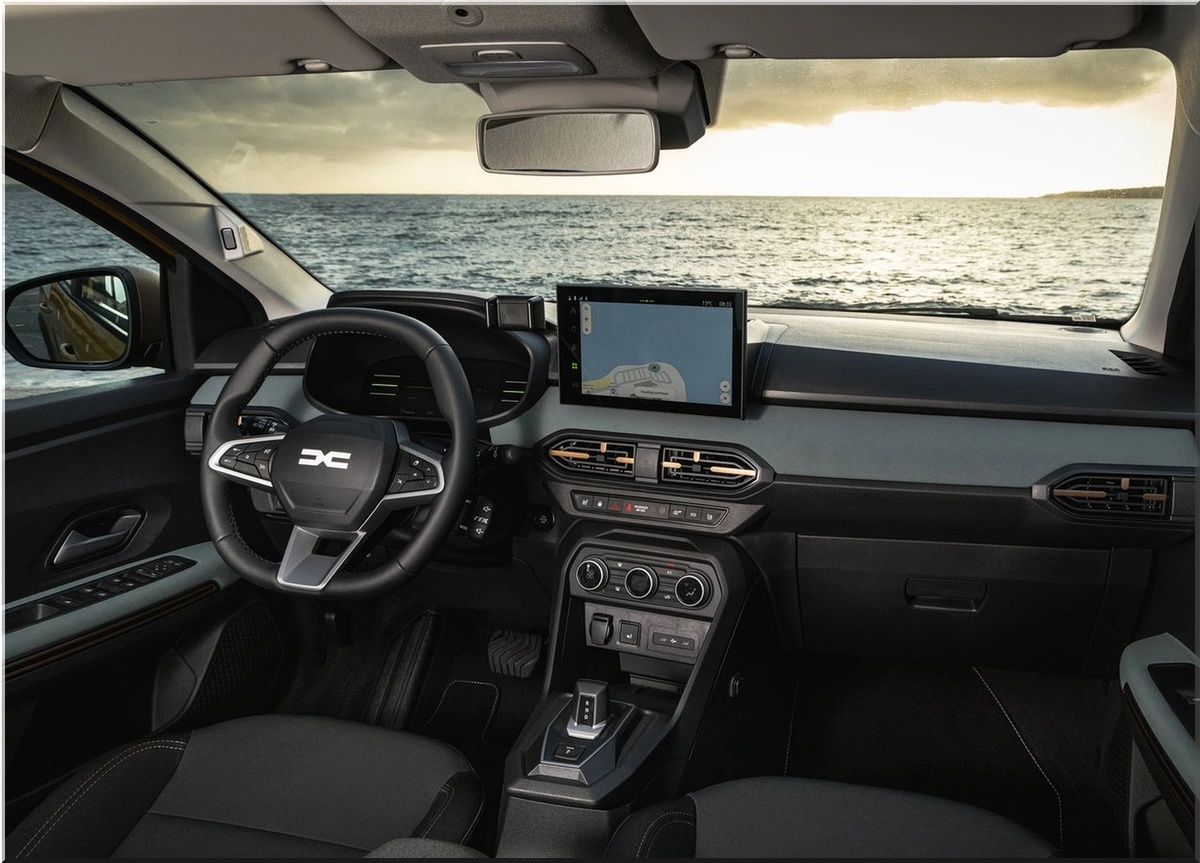
Inside, Dacia moves the 2026 Sandero Stepway in the right direction with better screen options and more visible tech. Buyers can get a 7-inch digital instrument cluster and an available 10-inch central touchscreen for infotainment. In addition, wireless smartphone charging joins the options list, and smartphone integration remains part of the model's pitch.
That is a sharp upgrade path for a budget-led vehicle. It lets Dacia serve two buyer groups at once. One group wants low monthly cost and basic functionality. The other wants modern screens, navigation, connected media, and the kind of digital layout now common in mainstream small crossovers. Dacia can now reach both without overloading the entry trims.
The seating layout also stays sensible. The front seats sit relatively high, which supports the crossover feel and improves outward visibility. Rear-seat packaging still reflects the car's footprint, so adults will fit best on shorter trips, while teenagers and smaller passengers will find the second row more natural over longer distances.
Pro-Tip: How to Spec a Sandero Stepway Without Overpaying
If you want the best-value Dacia Sandero Stepway, focus on features that improve daily use rather than brochure bragging rights:
- Choose the engine based on your fuel access and annual mileage.
- Put real value on the 10-inch touchscreen if you use navigation every day.
- Add the rear camera and parking aids if you live in a dense city.
- Do not chase appearance-only options before you cover comfort and safety tech.
- If you spend hours in traffic, the automatic gearbox matters more than an extra styling pack.
That sounds obvious. It still saves buyers money, because many small-car shoppers overpay for cosmetic trim and underbuy the features they touch every day.
Powertrains: Three Clear Answers for Three Buyer Types
The 2026 Dacia Sandero Stepway launches with a mix of small-displacement turbo power and bi-fuel LPG capability, then adds a hybrid later. That lineup gives the car unusual breadth for its price class.
The confirmed or cited engine lineup includes:
- 1.0L TCe 110 6MT FWD
- 1.2L Eco-G 120 6AT FWD
- 1.2L Eco-G 120 6MT FWD
- Later Hybrid 155
That spread matters. Specifically, Dacia now covers the buyer who wants a conventional manual turbo-petrol, the buyer who wants LPG bi-fuel efficiency, and the buyer who wants a stronger hybrid setup with better urban fuel behavior and easier traffic manners.
Powertrain Comparison Table
| Powertrain | Output | Transmission | Fuel Type | Core Buyer Profile |
|---|---|---|---|---|
| 1.0 TCe 110 | 110 hp / 200 Nm | 6-speed manual | Gasoline | Drivers who want lower weight and simpler mechanical feel |
| 1.2 Eco-G 120 | 120 hp | 6-speed manual | Gasoline + LPG | High-mileage users with easy LPG access |
| 1.2 Eco-G 120 Auto | 120 hp | 6-speed dual-clutch automatic | Gasoline + LPG | City users who want LPG savings without clutch work |
| Hybrid 155 | 153 hp class | Hybrid automatic setup | Hybrid gasoline-electric | Buyers who want stronger acceleration and urban efficiency |
1.0 TCe 110: The Light, Straightforward Choice
The published 1.0-liter three-cylinder turbocharged direct-injection engine produces 110 hp at 5000-5250 rpm and 148 lb-ft (200 Nm) at 2900-3500 rpm. That torque figure is the important one. In a car weighing 2414 lb (1095 kg), 200 Nm should give the Stepway decent midrange response for daily traffic, on-ramps, and light-load highway work.
The three-cylinder layout brings the usual tradeoffs. It saves weight and packaging space, and it can return strong economy when boosted correctly. It also tends to sound a bit more mechanical under load than a four-cylinder. In this class, that is a fair trade. Buyers care more about low-end shove, fuel cost, and tax efficiency than silky acoustics.
Eco-G 120: LPG Still Makes Sense
The Eco-G 120 setup adds a bigger 1.2-liter turbo three-cylinder with 120 hp, plus dual-fuel flexibility. The big news sits in the transmission list. For the first time, Dacia pairs the LPG-friendly engine with a 6-speed dual-clutch automatic. That is a real usability gain.
Why does that matter? Because LPG powertrains have long appealed to cost-conscious drivers, taxi operators, and commuters with predictable fuel-stop access. Pairing LPG with an automatic removes the daily friction that used to come with the fuel-saving choice. Buyers no longer have to pick between lower fuel spend and smoother stop-start driving.
Dacia also increased LPG tank capacity on the Stepway to 48.8 liters, up from 40.0 liters. Consequently, the brand claims a total LPG + petrol range of 1480 km for the Stepway. That is a major real-world usability win for buyers who cover long distances and want fewer fuel stops.
Hybrid 155: The New Top-End Play
Later in the model year, Dacia adds a Hybrid 155 powertrain rated at 155 PS, or roughly 153 hp. That instantly changes the top end of the Dacia Sandero Stepway range. It gives the model a stronger headline output and likely much better low-speed response in traffic, where hybrid torque fill and smoother launch behavior pay off.
By comparison, the hybrid also changes how the Stepway is perceived. It no longer sits only in the 'cheap, simple, small crossover' lane. It starts to look like a budget-minded crossover that can also answer modern urban emissions pressure, fuel-cost concerns, and buyer demand for two-pedal convenience.
Performance and Fuel Economy: What the Numbers Say
For the published TCe 110 manual version, performance specs list a 0-62 mph (0-100 km/h) time of 10.0 seconds and a top speed of 112 mph (180 km/h). Those are sensible figures for a raised B-segment hatch with value priorities. Nobody buys a Sandero Stepway for hot-hatch pace. Buyers want enough shove to merge cleanly, pass without panic, and carry passengers without feeling flat.
Fuel economy for that same version lands at:
- 36.8 mpg US low cycle
- 49.0 mpg US high cycle
- 36.8 mpg US extra-high cycle
- 41.3 mpg US combined
- 129 g/km CO2 combined
Here is the published performance and economy view for the TCe 110 manual:
| Metric | 2026 Sandero Stepway 1.0 TCe 110 6MT |
|---|---|
| Power | 110 hp |
| Torque | 148 lb-ft / 200 Nm |
| 0-62 mph | 10.0 sec |
| Top speed | 112 mph / 180 km/h |
| Fuel tank | 13.2 gal / 50.0 L |
| WLTP low | 36.8 mpg US |
| WLTP high | 49.0 mpg US |
| WLTP extra high | 36.8 mpg US |
| WLTP combined | 41.3 mpg US |
| CO2 combined | 129 g/km |
Looking at the data, the Stepway pays a small aerodynamic and weight penalty versus a lower, cleaner standard hatchback. That comes with the raised ride height, body cladding, and crossover-focused shape. Even so, 41.3 mpg US combined remains a strong result for a gasoline-powered small crossover-style vehicle with manual transmission and 110 hp on tap.
Chassis, Brakes, Tires, and Daily Driving Logic
The listed brake package uses ventilated front discs and rear drums. Some buyers will sneer at rear drums. They should not. In this weight class and cost target, drums still make sense. They are cheap, durable, compact, and perfectly adequate for the rear axle load profile of a small front-wheel-drive hatchback.
The tire size, 205/60 R16, also tells a story. That sidewall height works in the car's favor. It helps ride comfort on broken pavement and reduces the sharp-edge harshness that many large-wheel rivals suffer. In addition, replacement tire cost stays more reasonable than it would on trendy 17-inch or 18-inch packages.
That is classic Dacia logic: spend where the user gains something tangible, cut where the buyer barely notices, and protect the ownership budget over years rather than one flashy showroom moment.
Safety and Driver Assistance
The 2026 Dacia Sandero Stepway fits into Dacia's move toward broader compliance with newer safety rules. Reported equipment and model-family updates include:
- Automatic emergency braking with detection for vulnerable road users
- Traffic sign recognition with speed alert
- Lane departure warning
- Lane keeping assist
- Driver attention warning
- Rear parking assist
- Light and rain sensors
- Emergency stop signal
The car also fits SAE Level 1-grade driver assistance rather than any self-driving fantasy. That means the system can support the driver with warning and light assistance functions, but it does not take over sustained control. Good. That keeps expectations honest.
Where the 2026 Sandero Stepway Wins
The Dacia Sandero Stepway makes its strongest case in areas that buyers actually live with.
Key Strengths
- Raised 201 mm ground clearance for poor roads and urban obstacles
- 371-liter cargo area in a compact overall footprint
- Broad powertrain spread from manual petrol to LPG automatic to hybrid
- Updated cabin tech with 7-inch cluster and 10-inch touchscreen
- Rugged styling without oversized dimensions
- Running-cost logic built into materials, wheels, and mechanical spec
From an expert perspective, the LPG automatic may be the sleeper hit of the range. Cheap fuel plus automatic convenience used to be an awkward combination in this class. Dacia saw the gap and attacked it.
Tradeoffs Buyers Should Understand
No smart buyer walks into a small crossover deal blind. The 2026 Dacia Sandero Stepway still carries compromises.
What You Give Up
- Rear-seat space remains limited for tall adults on long trips
- Rear drum brakes may bother buyers who shop by spec sheet
- The raised body and crossover styling can cost a little efficiency
- The cabin will still prioritize function over soft-touch theater
- It remains front-wheel drive, so the rugged look exceeds true trail hardware
None of that kills the package. It simply frames the product honestly. The Stepway wins because it knows what it is.
What Now: Who Should Buy the 2026 Dacia Sandero Stepway?
If you want one clean answer, here it is: buy the 2026 Dacia Sandero Stepway if you want the visual stance of a small SUV, the parking ease of a hatchback, and ownership math that still works in the real economy.
Best Fit Buyer Profiles
Choose the TCe 110 manual if you want:
- The simplest engine choice
- Lower mass
- Solid torque for daily use
- Good combined economy
Choose the Eco-G 120 manual or automatic if you want:
- Lower fuel spend over high mileage
- LPG flexibility
- Long combined driving range
- An automatic without moving to a hybrid
Choose the Hybrid 155 if you want:
- The strongest output in the range
- Better stop-start refinement
- A more modern two-pedal urban setup
- A Stepway that feels less entry-level in daily traffic
Pro-Tip: The Smartest Spec for Most Buyers
For many European buyers, the best-value point may sit with the Eco-G 120 automatic. It pairs usable power, LPG savings, and clutch-free operation in one package. If local LPG infrastructure is strong, that version could be the quiet hero of the lineup.
Final Take
The 2026 Dacia Sandero Stepway does exactly what a facelift should do. It sharpens the design, upgrades the cabin tech, improves the drivetrain story, and keeps the practical body that built the model's reputation. In addition, it avoids the trap of trying to impersonate a premium crossover through fake luxury fluff and oversized wheel drama.
By comparison with many small crossovers that pile on cost faster than capability, the Stepway stays disciplined. It gives buyers a compact body at 4102 mm, a useful 2604 mm wheelbase, strong 201 mm ground clearance, solid cargo space, and engine choices that now cover old-school petrol simplicity, LPG thrift, and modern hybrid convenience.
That is a hard combination to beat. The 2026 Dacia Sandero Stepway still looks like one of the smartest buys in the affordable crossover-flavored hatchback class.





















Sign in to leave a comment.