
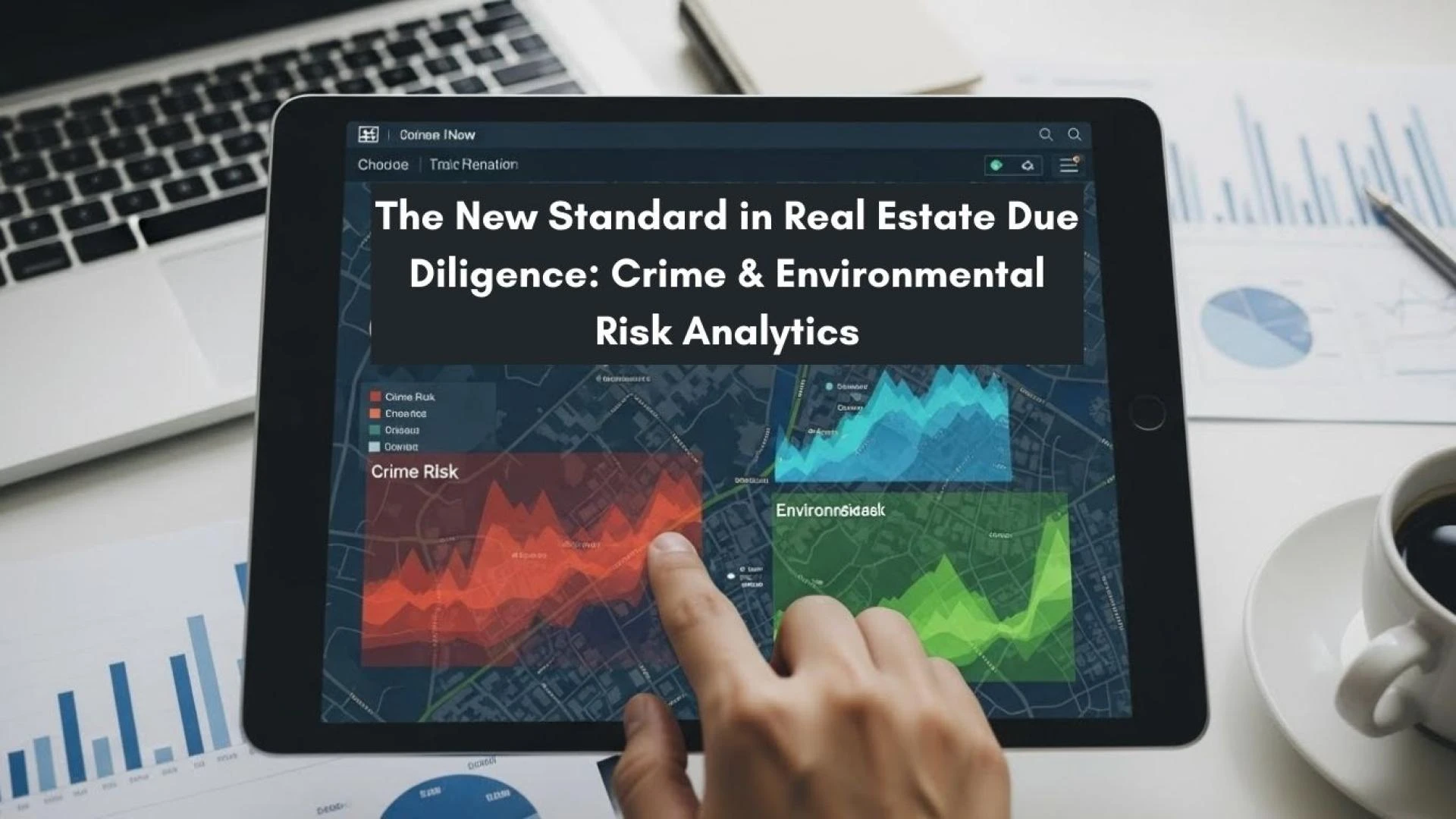
Commercial real estate decisions are often driven by familiar metrics such as occupancy rates, rental yields, demographics, and projected ROI. While these numbers remain important, they rarely provide a complete understanding of the hidden risks attached to a location.
Today, businesses, retailers, investors, developers, and insurers operate in an environment where crime exposure, environmental conditions, and operational vulnerabilities can directly impact profitability and long-term asset value. Many of these risks do not appear in standard property reports.
This is where CrimeRisk.ai helps organizations make smarter, data-driven decisions through advanced crime risk intelligence, block-level crime analysis, and predictive location insights.
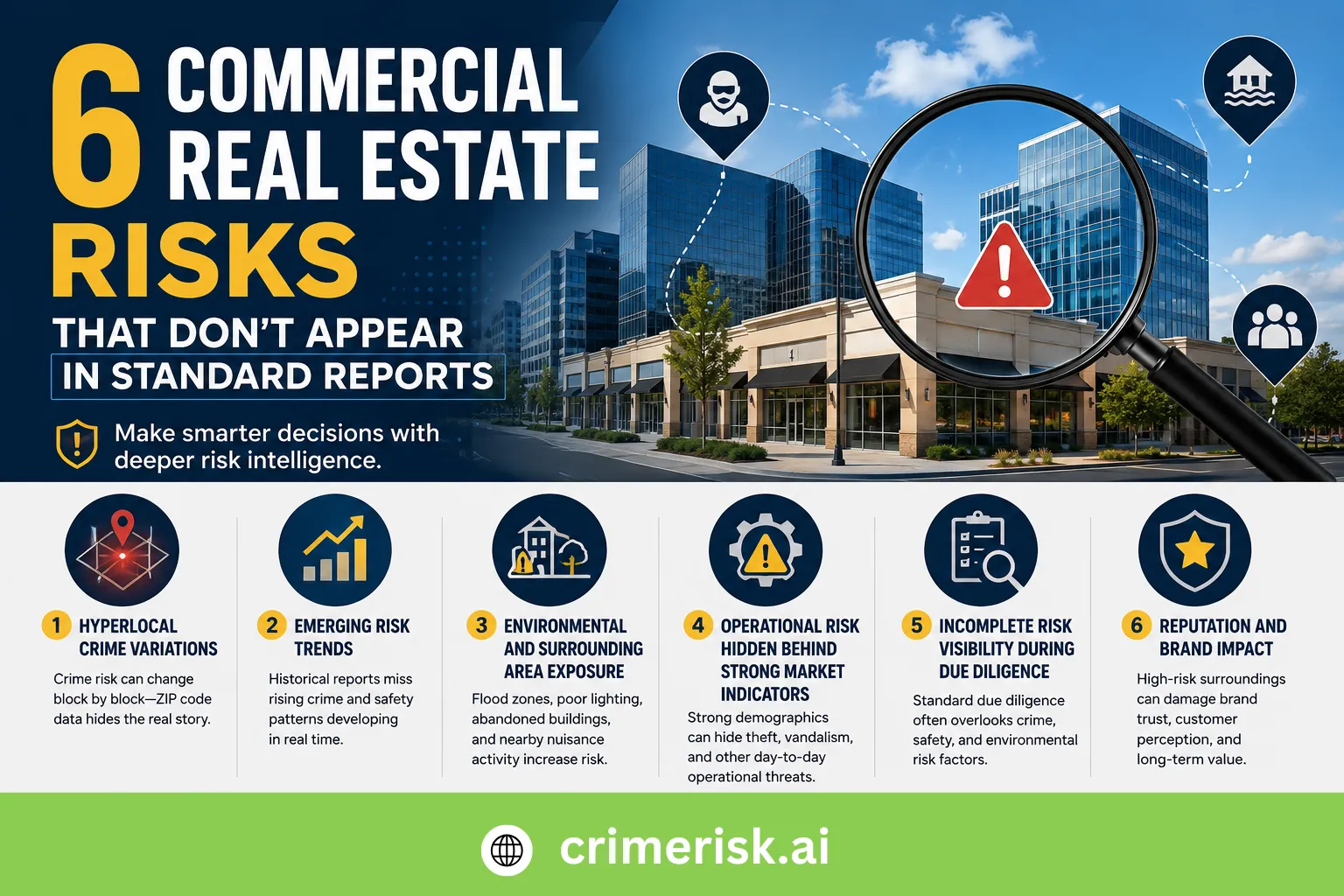
Below are six commercial real estate risks that traditional reports often fail to reveal.
1. Hyperlocal Crime Variations
Traditional commercial property reports usually rely on ZIP-code or city-level crime statistics. While this data may provide a broad overview, it often misses the actual conditions surrounding a specific property.
Crime patterns can change significantly within a few streets. One business corridor may experience repeated theft or vandalism incidents, while nearby blocks remain comparatively stable. Standard reports often fail to identify these hyperlocal variations.
Without detailed visibility, businesses risk selecting locations that create higher security costs, operational disruptions, and reduced customer confidence.
Using block-level crime risk reports from CrimeRisk.ai allows organizations to evaluate risk with greater precision before making investment decisions.
2. Emerging Crime Trends Hidden Behind Historical Data
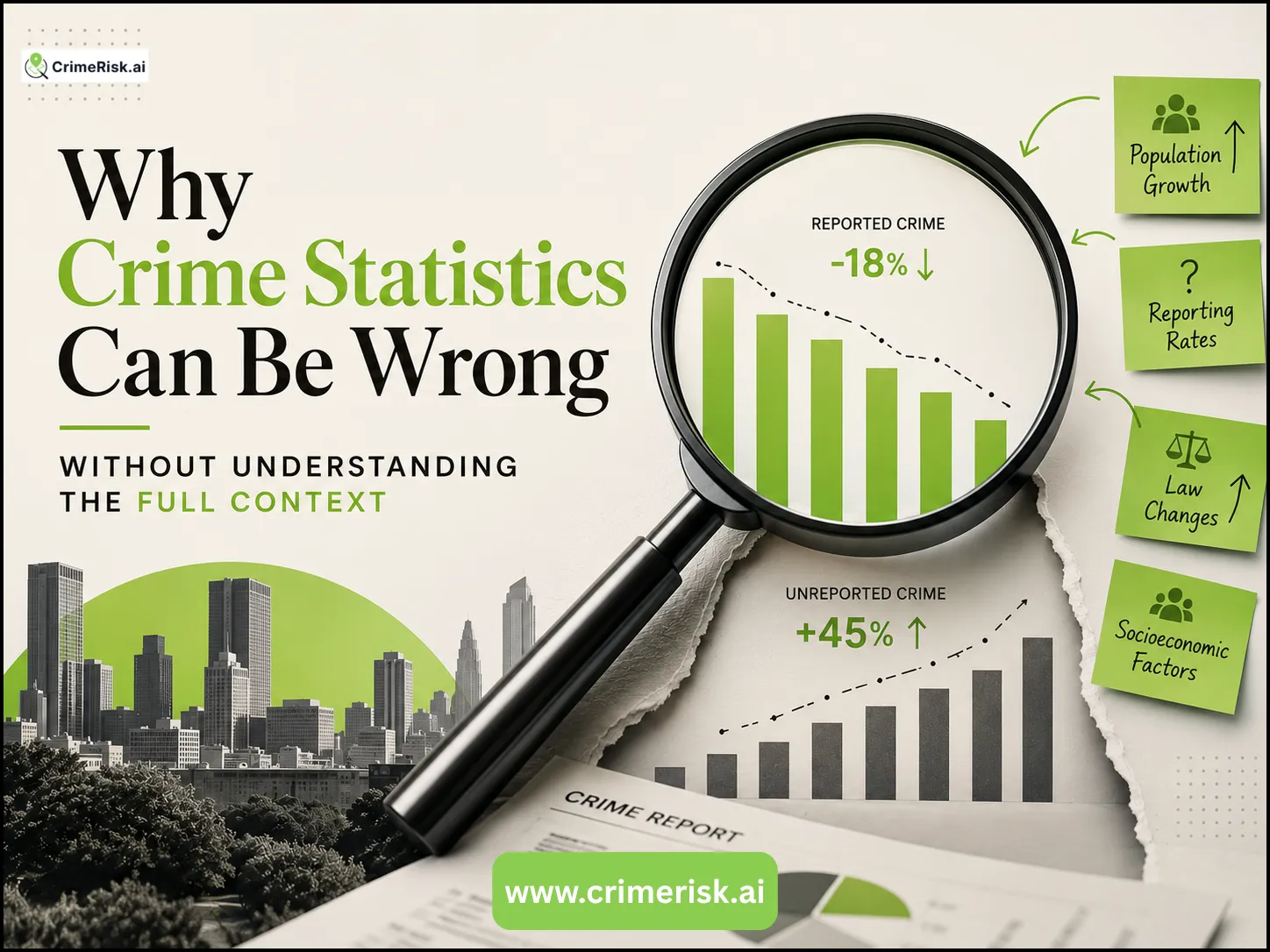
Most traditional property evaluations focus heavily on historical information. The problem is that past data alone cannot explain how risk conditions are evolving today.
Neighborhoods change rapidly due to commercial growth, population movement, infrastructure projects, and economic shifts. Areas experiencing development may also face increasing theft, property crime, or safety-related operational issues.
By the time these changes appear in standard reports, businesses may have already committed to leases or acquisitions.
Modern crime risk data platforms help businesses identify emerging trends earlier through predictive analysis and real-time intelligence.
This enables organizations to reduce uncertainty and make more informed commercial real estate decisions.
3. Environmental and Surrounding Area Risks
Commercial property evaluations often focus on the building itself while overlooking surrounding environmental exposure.
Factors such as poorly lit streets, vacant properties, high-risk intersections, flood-prone zones, and nearby nuisance activity can all affect the long-term stability of a location.
Two properties with similar financial performance may carry completely different operational risks depending on their surroundings.
For retailers, this may influence customer traffic and employee retention. For logistics and healthcare businesses, it can affect operational continuity and safety planning.
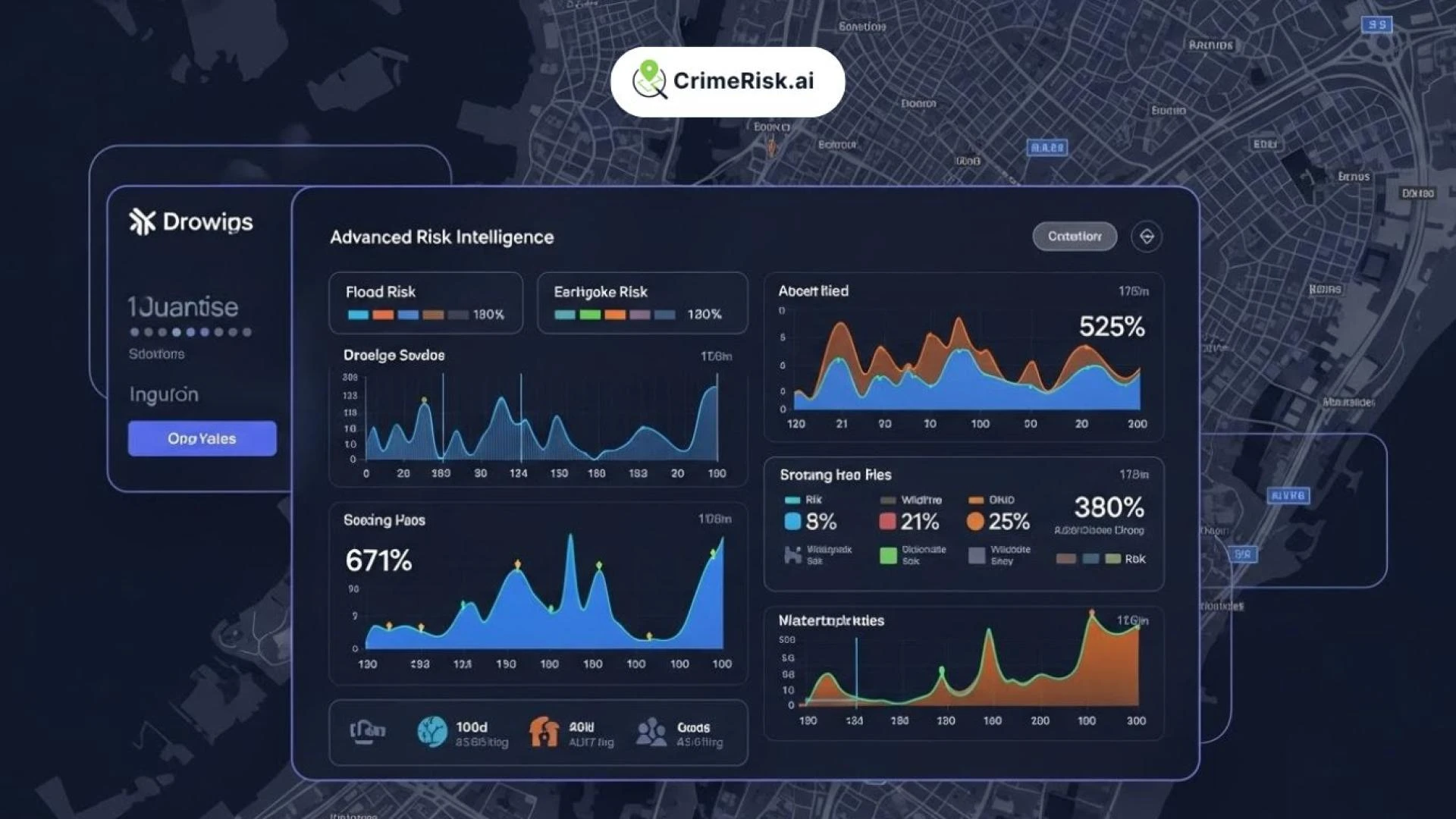
Advanced crime risk assessment tools from CrimeRisk.ai combine crime intelligence and environmental analysis to provide a more complete understanding of site exposure.
4. Operational Risks That Don’t Appear in Demographic Reports
A location may appear attractive based on population growth and foot traffic, but those indicators alone do not guarantee long-term business stability.
Many organizations discover operational challenges only after entering a market.
These risks may include:
- Frequent theft incidents
- Employee safety concerns
- Parking lot crime
- Reduced customer confidence
- After-hours disturbances
- Higher insurance exposure
Traditional demographic reports rarely capture how localized crime patterns affect daily operations.
Retail chains, financial institutions, hospitality brands, and healthcare providers increasingly rely on crime index USA insights to better understand operational exposure before expansion.
Hyperlocal risk intelligence helps businesses balance growth opportunities with long-term stability.
5. Incomplete Due Diligence and Hidden Risk Exposure
Traditional due diligence processes usually prioritize financial, legal, and structural evaluations while overlooking location-specific risk intelligence.
As a result, businesses may move forward with acquisitions without fully understanding nearby crime concentration, environmental vulnerabilities, or localized safety patterns.
This creates long-term exposure that becomes difficult and expensive to manage after occupancy begins.
Modern site selection strategies now require:
- Hyperlocal crime analysis
- Environmental risk mapping
- Geographic risk comparison
- Trend forecasting
- Incident concentration analysis
By integrating advanced crime risk reporting platforms into due diligence workflows, businesses gain deeper visibility before making high-value commercial real estate decisions.
6. Reputation and Brand Impact Linked to Location Safety
One of the most overlooked commercial real estate risks is the impact of location safety on brand reputation.
Customers, employees, tenants, and business partners associate physical locations with trust and security. Repeated incidents near a property can negatively affect customer perception even when incidents are not directly connected to the business.
Over time, this may lead to reduced foot traffic, lower tenant retention, hiring challenges, and declining brand confidence.
Traditional property reports rarely evaluate how surrounding crime exposure may affect long-term business reputation.
Using crime risk intelligence solutions helps businesses proactively identify hidden reputation risks before they impact operations.
The Future of Commercial Real Estate Decisions
Commercial real estate decisions now require more than traditional metrics like pricing, demographics, and traffic volume. Businesses must also evaluate safety, operational stability, environmental exposure, and localized crime trends that can impact long-term performance.
While standard property reports provide basic market insights, they often fail to identify hidden risks surrounding a location. This is where CrimeRisk.ai helps businesses make smarter decisions through advanced crime risk intelligence, block-level crime analysis, and predictive location insights.
By providing hyperlocal risk visibility, CrimeRisk.ai enables investors, retailers, developers, and enterprise businesses to reduce uncertainty, strengthen site selection, and identify safer commercial real estate opportunities with greater confidence.























Sign in to leave a comment.