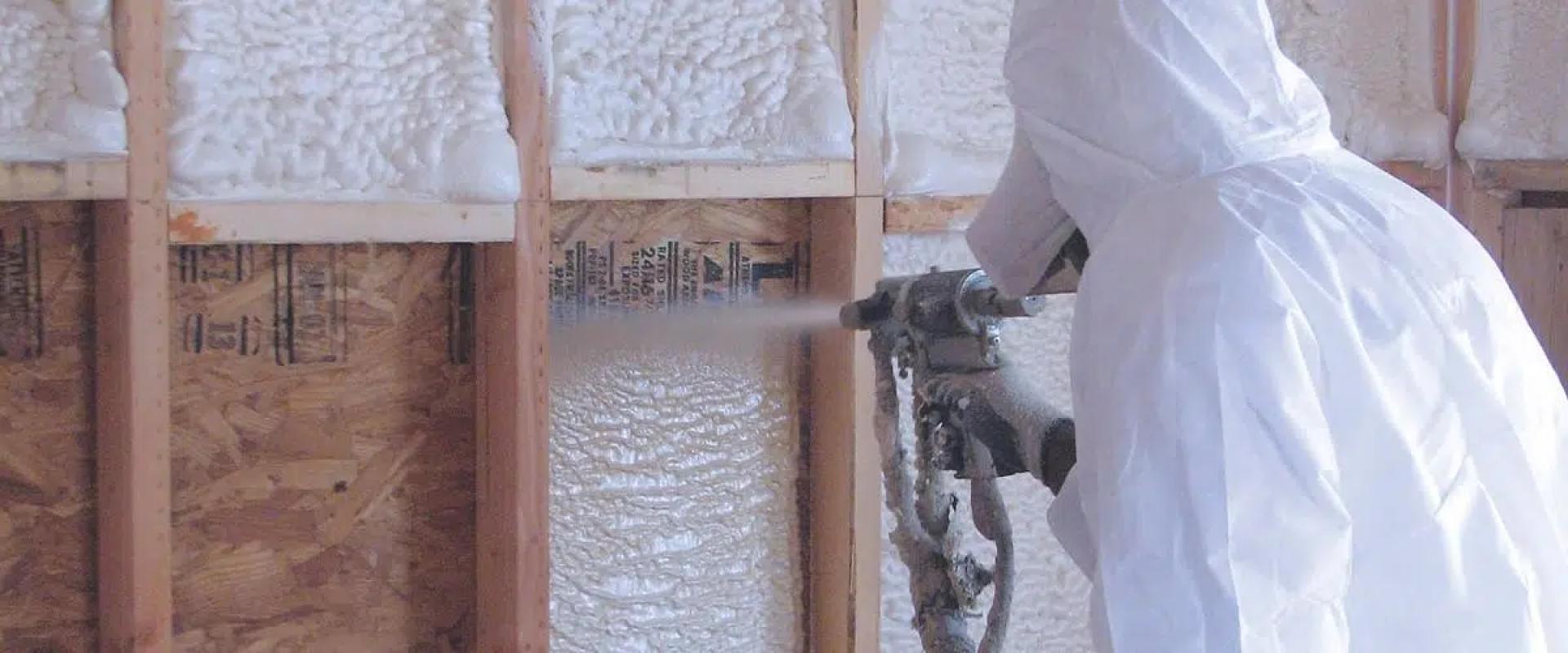

If you’ve been throwing cash at energy bills that never seem to go down, it’s probably not your HVAC system’s fault. More often than not, it’s your insulation—or the lack of good insulation—messing things up behind the walls. Closed-cell spray foam may not sound exciting, but it could be the thing keeping your house or building from leaking dollars every month.
You’re not alone if you’re tired of drafty rooms, humid indoor air, or heating systems that seem to run non-stop. This is where a professional closed-cell spray foam insulation service earns its reputation. It’s dense, airtight, and designed to solve more than just one problem—energy efficiency, indoor comfort, moisture control—you name it.
Closed-Cell Spray Foam Creates a Superior Air Seal
One of the top reasons people switch to closed-cell spray foam is its ability to completely seal air leaks. Gaps, cracks, and poorly insulated cavities can sabotage your building’s ability to regulate temperature.
How the Seal Works
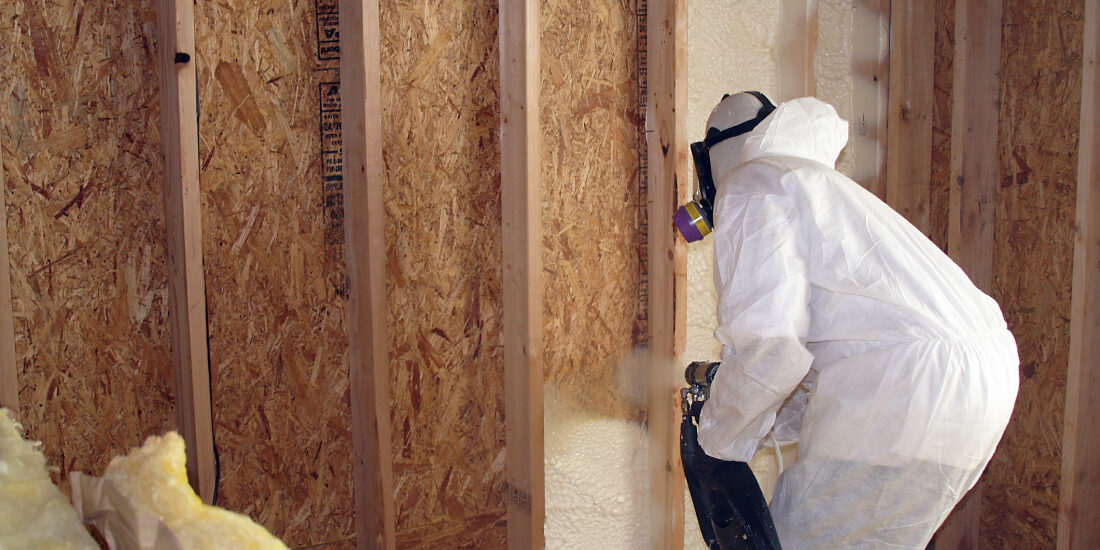
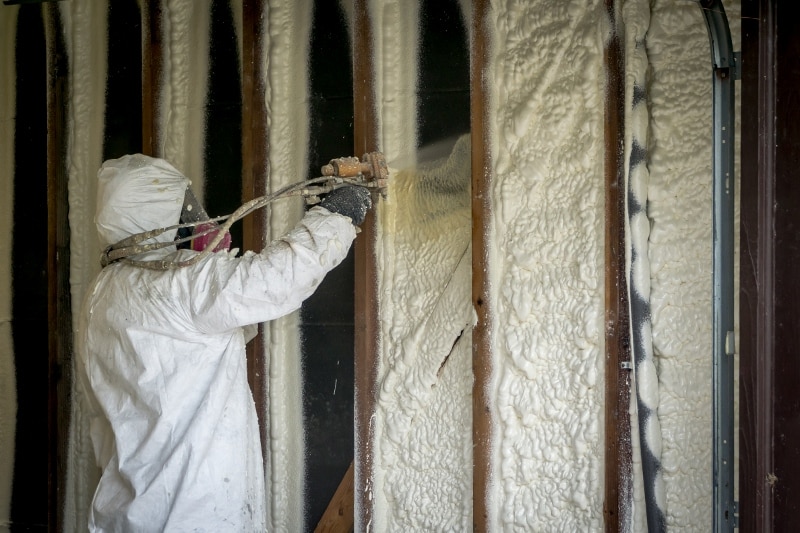
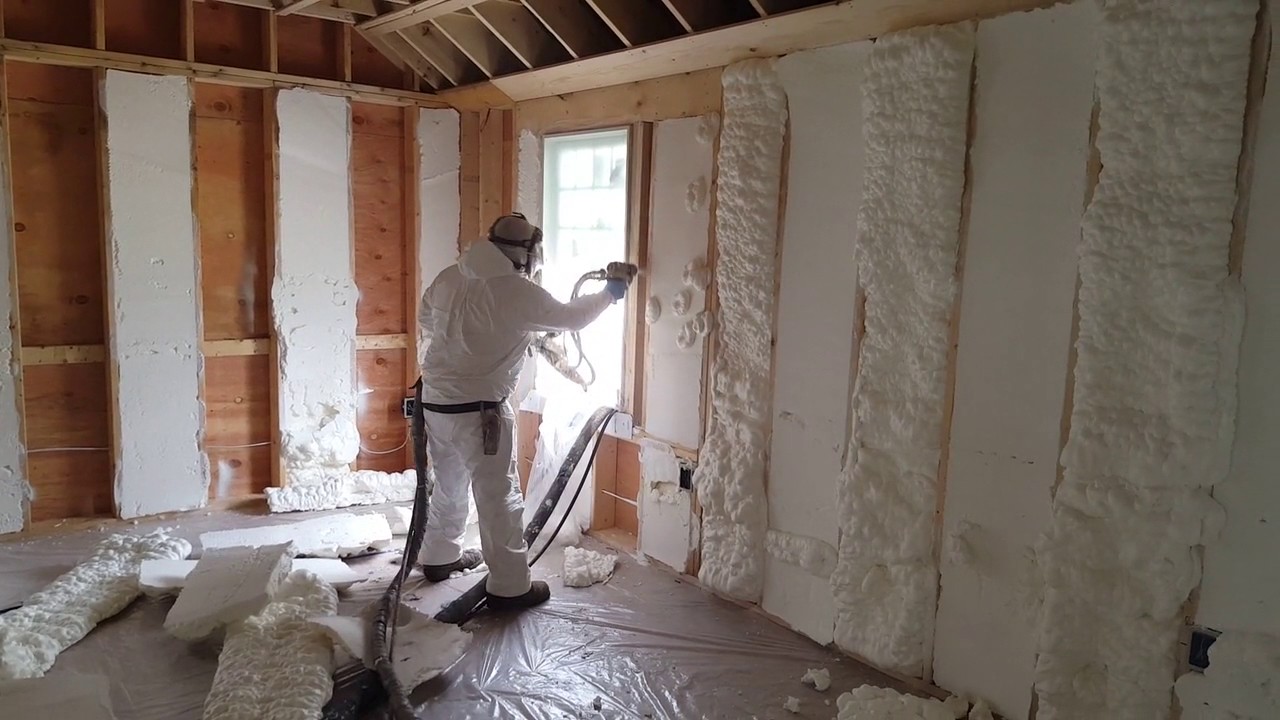
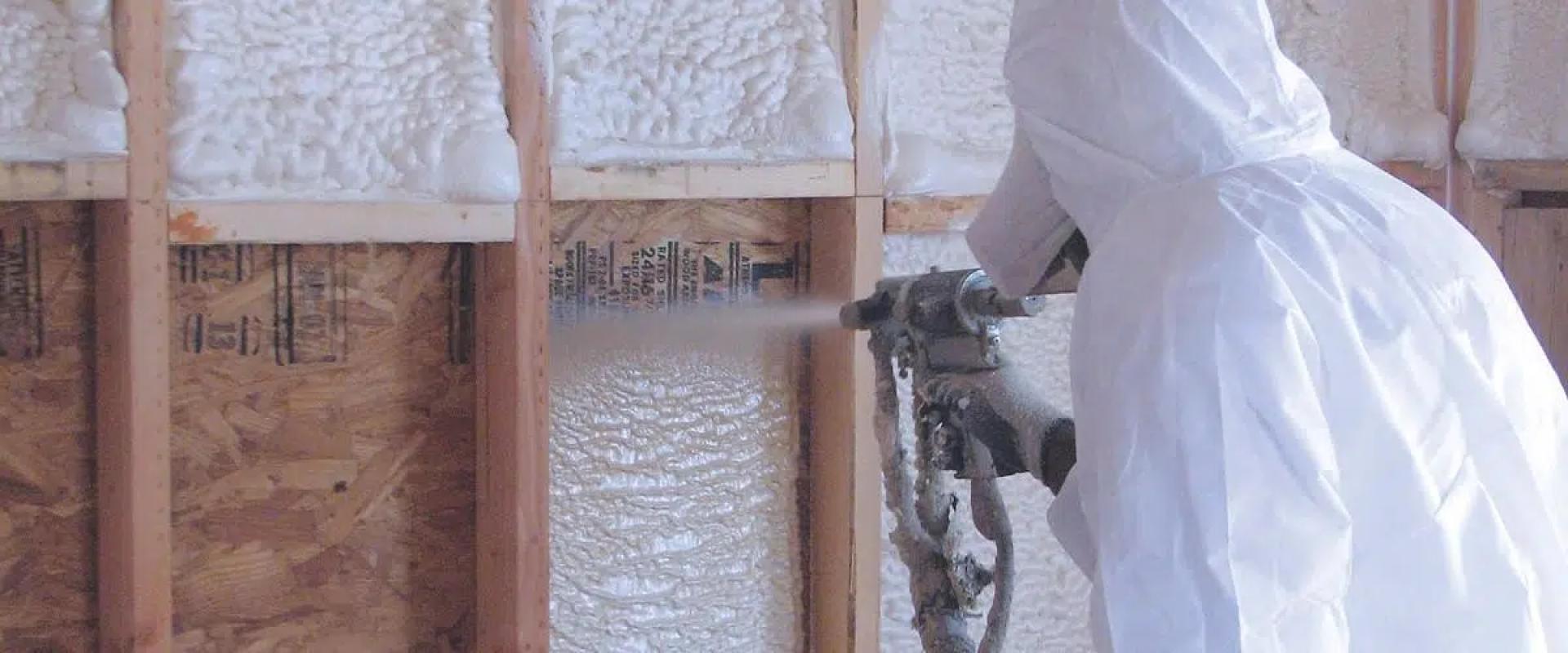
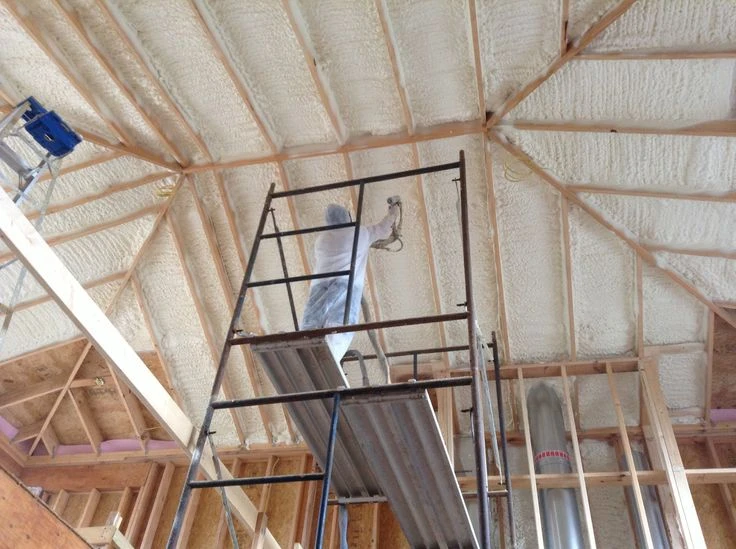
Closed-cell foam expands on contact, pushing itself into even the smallest crevices. Once it cures, it forms a rigid, airtight layer that doesn't sag or shrink over time.
Air Leakage and Energy Loss
Air leaks account for up to 30% of heating and cooling loss in buildings with traditional insulation. Closed-cell foam puts a stop to that.
Sealing Wall Cavities and Framing Gaps
It’s especially effective around wall-to-floor connections, rim joists, and penetrations—places where fiberglass insulation just doesn’t cut it.
Fun Fact: Closed-cell spray foam can improve a building’s structural strength by up to 250%, making it one of the few insulation types that reinforces the frame while sealing it.
It Performs as Both Insulation and Vapor Barrier
Closed-cell spray foam doesn’t just insulate. It also acts as a built-in vapor barrier, eliminating the need for multiple layers of materials.
R-Value and Moisture Resistance
- Offers an R-value of approximately 6.5 per inch, among the highest in insulation materials
- Water-resistant properties prevent moisture from seeping through walls and ceilings
Mold Prevention and Indoor Air Quality
- Blocks moisture buildup that often leads to mold behind drywall and around pipes
- Helps maintain better indoor air quality by reducing mold growth risk
Better Than Fiberglass or Blown-In
- Does not trap moisture like fiberglass batts
- Maintains thermal performance even in changing weather conditions
Fun Fact: Closed-cell foam is one of the few insulation options approved for flood-prone zones by FEMA due to its water resistance.
It Works in Tight, High-Humidity, or Hard-to-Reach Spaces
Closed-cell spray foam is versatile enough to work in areas where other materials can’t do the job properly—or safely.
Basements, Crawl Spaces, and Rim Joists
These areas are common problem zones for moisture and air leakage. Closed-cell foam fills every gap, even around irregular framing or tight mechanical corners.
Pole Barns and Metal Buildings
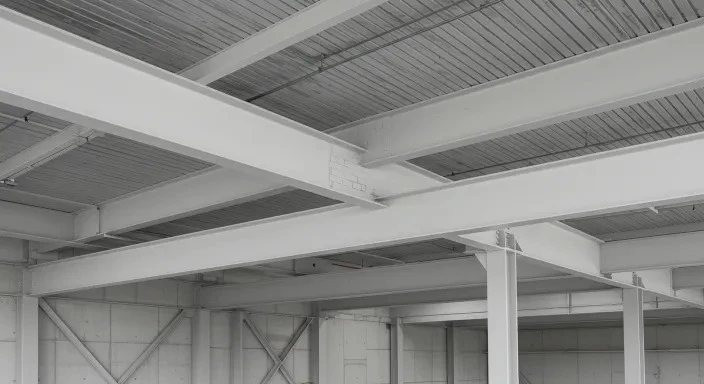
In unconditioned metal structures, condensation and thermal bridging are major concerns. Closed-cell foam combats both by forming a continuous barrier.
New Construction and Retrofit Compatibility
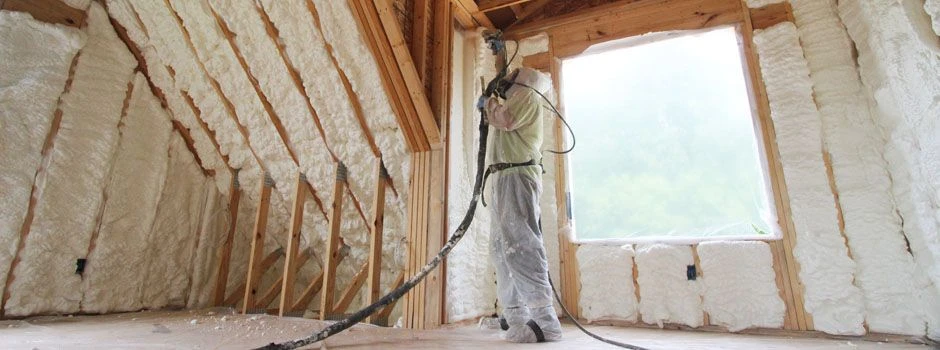
Closed-cell spray foam can be used in both new builds and retrofits. In remodels, it’s often injected into wall cavities through small access holes.
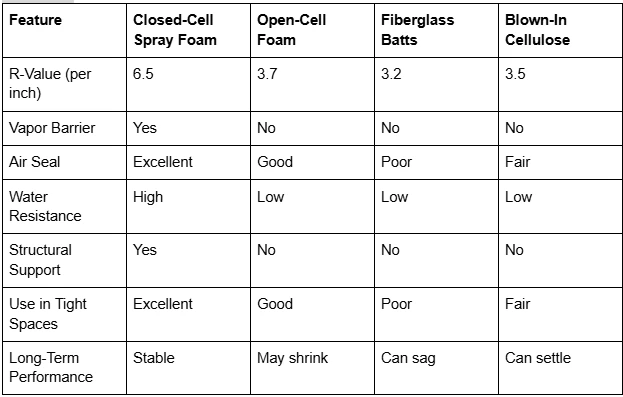
Comparison Table: Closed-Cell Foam vs. Other Insulation Types
Reduces HVAC System Wear and Improves Efficiency
If your heating or cooling system is constantly running, your insulation might be making it work harder than it should. Closed-cell foam helps systems run more efficiently by reducing energy loss.
Less Frequent Cycling
Buildings with air-tight insulation stay within temperature set points longer. This reduces how often HVAC systems need to turn on and off.
Lower Maintenance Costs
Less HVAC runtime means fewer repairs and extended equipment life.
Energy Load Reduction
Closed-cell foam helps meet energy code requirements and can reduce overall load calculations during building design.
Boosts Long-Term Energy Savings Year After Year
Energy savings from closed-cell spray foam aren’t a one-time benefit—they compound every year the insulation remains in place.
ROI Over Time
Homeowners and business owners typically see reduced heating and cooling costs of 15–40% annually, depending on climate and building type.
No Degradation or Settling
Once installed and cured, closed-cell foam maintains its structure and performance for decades without needing to be replaced or topped off.
Utility Bill Predictability
Better insulation leads to more stable monthly energy usage, which helps with long-term budget planning for both homes and commercial properties.
Strengthens Building Envelope and Increases Durability
Closed-cell foam helps extend the life of the building itself, not just the HVAC system.
Reinforces Framing and Sheathing
Because it cures into a rigid material, it increases the strength of walls and roofs, making structures more resilient against high winds and weather shifts.
Protection From Pests and Weather
Unlike fiberglass, which rodents and insects often nest in, closed-cell foam doesn’t attract pests and seals off entry points.
Helps Comply With Building Codes
In areas prone to hurricanes, earthquakes, or heavy snow, closed-cell foam can help meet or exceed structural and thermal performance codes.
Minimizes Environmental Impact With Long-Term Efficiency
Closed-cell spray foam isn't just a short-term solution—it supports energy efficiency goals that matter for the environment, too.
Lower Energy Demand
With better insulation, buildings use less energy from grid sources, many of which still rely on fossil fuels.
Reduced Carbon Footprint
By cutting down on HVAC-related emissions, closed-cell foam contributes to long-term reductions in a building’s operational carbon footprint.
Less Material Waste Over Time
Unlike batt or blown-in insulation that may need replacing, closed-cell foam stays put and does its job for decades.
Conclusion
Closed-cell spray foam insulation isn't just about staying warm in the winter or cool in the summer—it’s about controlling your building’s energy use, air quality, and moisture exposure long-term. It seals where other materials fail, supports the structure it’s applied to, and continues working efficiently year after year without sagging, shifting, or letting in outside air.
For homes or buildings where energy bills keep rising or indoor air feels unstable, this type of insulation could be the permanent fix. Whether you’re working on a retrofit project or building from the ground up, an expert spray foam insulation contractor offers practical, lasting value.
FAQs
How does closed-cell spray foam reduce energy costs?
It seals air leaks, improves insulation value, and acts as a vapor barrier—all of which reduce heating and cooling demands over time.
Can closed-cell foam be used in humid or flood-prone areas?
Yes, it’s ideal for those environments because it's water-resistant and doesn’t absorb moisture like other insulation materials.
Does closed-cell foam improve indoor air quality?
By limiting moisture and air infiltration, it helps reduce allergens, mold risk, and pollutants from entering the indoor environment.
What’s the difference between closed-cell and open-cell spray foam?
Closed-cell foam is denser, provides higher R-value, acts as a vapor barrier, and adds structural support. Open-cell is softer, has a lower R-value, and allows moisture to pass through.
Is closed-cell foam a good fit for retrofitting older homes or buildings?
Yes, it can be injected into wall cavities or applied in attics and basements, making it effective for improving energy performance in existing structures.
Reviewer: Jacob Wright has 6 years of experience in spray foam insulation. He reviewed this content and made sure it focused on the real decisions small business owners deal with every day.



























Sign in to leave a comment.