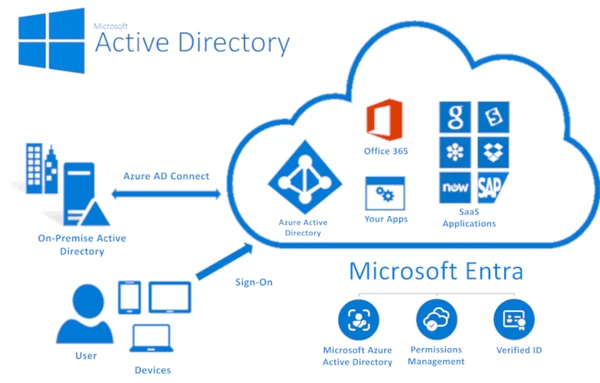

Active Directory (AD) remains the backbone of identity and access management for most organizations. As cyber threats grow more advanced in 2026, attackers increasingly target misconfigured Active Directory environments to gain full control over networks. This makes an Active Directory Assessment not just a best practice—but a critical security requirement.
This guide explains why Active Directory assessments matter more than ever, what risks they uncover, and how organizations can strengthen their defenses.
What Is an Active Directory Assessment?
An Active Directory Assessment is a comprehensive security review of your AD environment. It evaluates configurations, permissions, policies, and attack paths that could be exploited by cybercriminals.
Key Areas Covered in an Assessment
- User and group permissions
- Privileged account management
- Password and authentication policies
- Group Policy Objects (GPOs)
- Domain trust relationships
- AD attack paths and misconfigurations
The goal is to identify weaknesses before attackers do.
Why Active Directory Is a Prime Target in 2026
Modern cyberattacks rarely stop at one compromised endpoint. Attackers aim to escalate privileges and move laterally—and Active Directory is their main gateway.
Increasing AD-Based Attack Techniques
- Ransomware groups exploiting AD misconfigurations
- Credential theft and privilege escalation
- Abuse of legacy protocols and weak policies
- Attacks on hybrid AD and cloud-connected environments
Without regular Active Directory Assessment, these risks often go unnoticed.
Security Risks Uncovered by an Active Directory Assessment
Many organizations are surprised by what an assessment reveals.
Common Vulnerabilities Found
- Excessive admin privileges
- Weak or outdated password policies
- Unmonitored service accounts
- Insecure GPO configurations
- Unpatched domain controllers
Each of these issues can allow attackers to gain domain-wide access within hours.
How Active Directory Assessment Supports Zero Trust Security
Zero Trust is a major security focus in 2026, and Active Directory plays a central role.
Aligning AD with Zero Trust Principles
- Least-privilege access enforcement
- Continuous monitoring of privileged accounts
- Strong authentication and access controls
- Reduced attack surface
An Active Directory Assessment helps organizations transition from legacy trust models to Zero Trust-ready environments.
Active Directory Assessment for Compliance and Audits
Regulatory standards now demand stronger identity security.
Compliance Benefits
- Supports frameworks like ISO 27001, SOC 2, HIPAA, and GDPR
- Identifies gaps before audits
- Improves documentation and access controls
- Reduces compliance-related penalties
Regular assessments demonstrate proactive security management to auditors and stakeholders.
How Often Should You Perform an Active Directory Assessment?
In 2026, security environments change rapidly.
Recommended Frequency
- At least once a year
- After mergers or infrastructure changes
- Following major security incidents
- Before compliance audits
Frequent assessments ensure that new risks don’t slip through unnoticed.
Why Choose Lmntrix Active Defense for Active Directory Assessment?
Choosing the right security partner is just as important as the assessment itself.
Lmntrix Active Defense specializes in advanced Active Directory Assessment services designed to uncover real-world attack paths—not just surface-level issues.
What Sets Lmntrix Active Defense Apart
- Deep AD attack path analysis
- Real-world attacker simulation
- Actionable remediation guidance
- Enterprise-grade security expertise
Their assessments help organizations move from reactive defense to proactive resilience.
Conclusion: Make Active Directory Assessment a 2026 Security Priority
In 2026, protecting endpoints alone is no longer enough. Identity is the new perimeter, and Active Directory is at its core. A regular Active Directory Assessment is essential to detect hidden vulnerabilities, prevent ransomware attacks, and meet compliance requirements.
Strengthen your identity security today with Lmntrix Active Defense
Schedule an expert Active Directory Assessment and take control of your organization’s security before attackers do.
FAQs About Active Directory Assessment
1. What is the main goal of an Active Directory Assessment?
The primary goal is to identify misconfigurations, excessive privileges, and attack paths that could allow attackers to compromise the entire domain.
2. Is an Active Directory Assessment different from penetration testing?
Yes. While penetration testing simulates attacks broadly, an Active Directory Assessment focuses specifically on identity infrastructure and privilege escalation risks.
3. Can small and mid-sized businesses benefit from Active Directory Assessments?
Absolutely. Organizations of all sizes use Active Directory, and smaller environments often have higher risks due to limited security monitoring.
























Sign in to leave a comment.