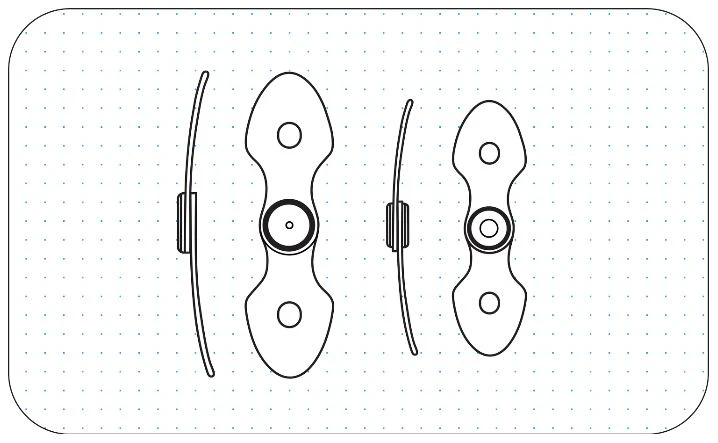

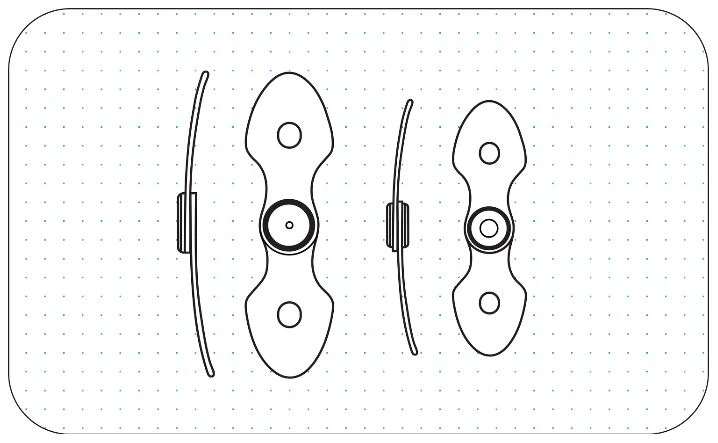
Selecting an ankle hinge for an adult AFO is rarely a simple hardware decision. It shapes how the brace interacts with gait, how comfortable it feels over long wear periods, and how well it adapts as the patient’s condition evolves.
The adult AFO joint sits at the center of that equation. Choose wisely, and the orthosis supports movement rather than fighting it. Choose poorly, and even a well-made AFO can underperform.
This post walks through how clinicians can make confident, outcome-driven ankle hinge choices for adult patients.
Understanding hinge behavior beyond basic motion
Not all ankle hinges behave the same, even when they appear similar. The real difference lies in how motion is controlled and where resistance engages. Some hinges allow free dorsiflexion while stopping plantarflexion abruptly. Others introduce gradual resistance that changes how forces transfer through the limb.
For adult users, predictability matters. A hinge that behaves the same at slow walking speeds and during faster cadence improves confidence and reduces fall risk. Consider how the hinge transitions between stance and swing. Sudden stops or mechanical noise often signal poor alignment or mismatched resistance.
This is where reviewing detailed component resources becomes useful. Even without committing to a specific component, understanding these design principles sharpens clinical judgment.
Start with the patient, not the joint.
Every successful hinge decision begins with a clear understanding of the patient’s functional goals. Are you trying to restore controlled dorsiflexion during stance? Limit plantarflexion to manage knee hyperextension? Or simply allow smoother tibial progression for energy-efficient walking?
Adult patients present with stable but often complex conditions. Stroke, MS, post-traumatic injury, and degenerative neuromuscular disorders each demand a different approach. Before narrowing joint options, observe gait patterns, assess muscle strength, and note compensatory strategies. A hinge should confirm what you already see clinically, not attempt to override it.
This mindset prevents overengineering. Many gait issues do not require maximum adjustability or resistance systems. They require the right amount of motion, delivered consistently.
Matching hinge type to common adult conditions
Different adult pathologies benefit from different hinge strategies. For drop foot with good knee control, allowing dorsiflexion while limiting plantarflexion often restores a smoother gait. In contrast, patients with quadriceps weakness may need more controlled sagittal plane motion to prevent knee collapse.
For rigid deformities or severe instability, a solid or near-solid configuration may still outperform an articulated option. Hinges are tools, not defaults. The best outcomes come from pairing hinge behavior with the specific deficit you are treating.
In long-term conditions, adaptability becomes important. Adult patients may experience gradual changes rather than rapid progression. Choosing a hinge that supports future adjustment can extend device lifespan and reduce replacement frequency.
Alignment: The hinge’s silent partner
Even the best hinge fails when alignment is off. Adult anatomy leaves little room for error. Small deviations from the anatomical ankle axis introduce torque that patients feel immediately.
When setting joints, respect the oblique nature of the ankle axis. Avoid aligning hinges purely for visual symmetry. Use landmarks, cross-check bilaterally, and verify alignment before final lamination. During fitting, watch for smooth tibial advancement and listen for signs of binding.
Alignment is especially critical with an adult AFO joint because adult users place higher loads through the device. Errors show up faster and more forcefully than in pediatric cases.
Durability and daily life considerations
Adults expect their orthoses to integrate into real life. Work shoes, casual footwear, uneven terrain, and long wear times all test hinge durability. Low-profile designs improve shoe compatibility and reduce social friction. Durable materials reduce service calls and downtime.
Weight matters too. Heavier hinges increase energy expenditure over long distances. For active adults, even small weight differences influence acceptance. Balancing strength with minimal bulk often leads to better compliance.
Clinicians should also consider serviceability. Hinges that are easy to inspect, adjust, or replace support long-term care without starting from scratch.
Avoiding common hinge selection mistakes
One frequent mistake is choosing the most adjustable hinge by default. Complexity does not equal better outcomes. Overly complex systems can confuse patients and complicate follow-up.
Another issue is ignoring footwear. A hinge that fits perfectly in theory may fail in practice if it forces the patient into limited shoe options. Always factor footwear into hinge choice early.
Finally, avoid copying and pasting decisions without reassessment. What worked for one adult patient may not suit another, even with similar diagnoses. Individual gait patterns matter.
Educating the patient improves outcomes.
Adult patients benefit from understanding how their hinge works. A brief explanation builds trust and encourages proper use. Explain what motion the hinge allows and why. Discuss what sensations are normal and what signals a problem.
When patients understand the purpose of their adult AFO joint, they report issues earlier and adapt faster. This feedback loop improves long-term success.
Adult orthotic care does not end at delivery. Regular follow-up reveals whether the hinge continues to meet functional goals. Watch for changes in gait speed, fatigue, or discomfort.
Hinges that allow gradual modification support evolving needs without full replacement. This approach aligns with value-based care and patient-centered practice.
Key questions to ask before finalizing hinge choice
Before committing, pause and ask:
- Does this hinge support the primary gait goal?
- Will it behave predictably under daily loads?
- Does it fit the patient’s footwear and lifestyle?
- Can it adapt if the condition changes?
Clear answers signal a strong choice.
Final thoughts
Choosing the right ankle hinge for an adult AFO blends biomechanics, alignment skills, and practical insight. The adult AFO joint should support movement, not dictate it.
By grounding decisions in patient presentation, understanding hinge behavior, and respecting alignment principles, clinicians can deliver orthoses that perform reliably in the real world.
When hinge selection aligns with clinical intent, the result is a brace that patients trust and rely on every day.




























Sign in to leave a comment.