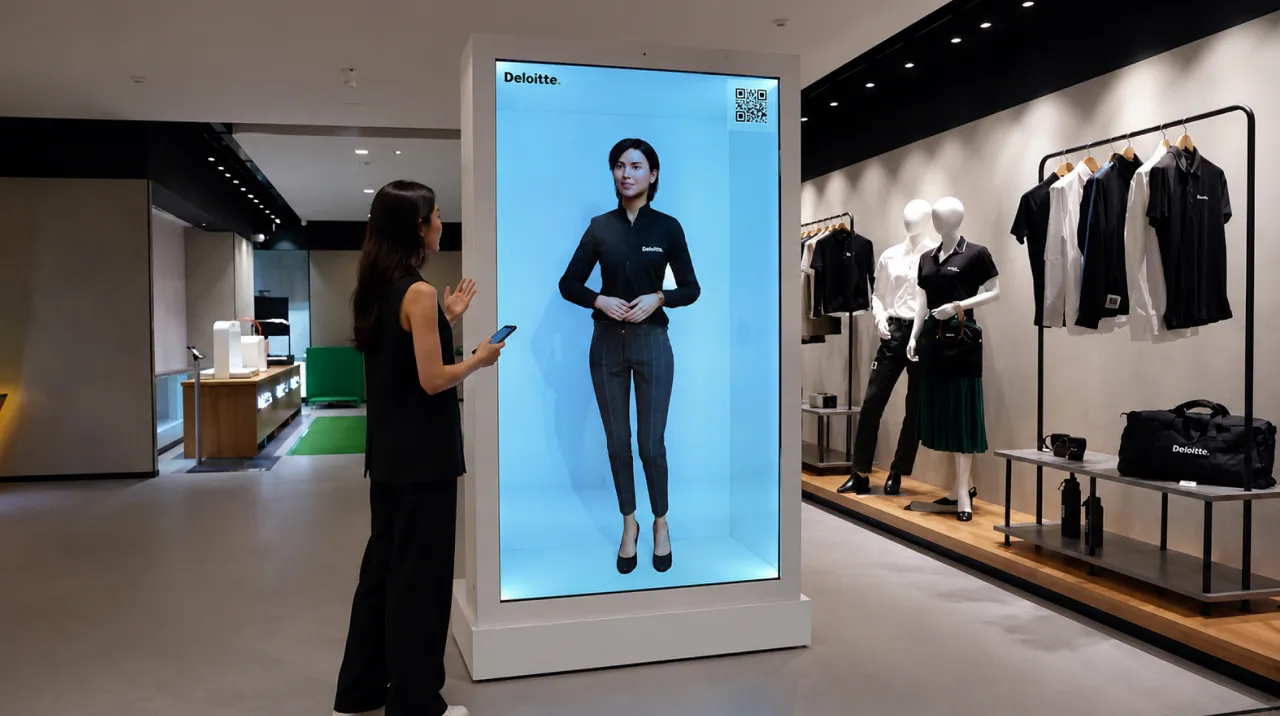

Most shoppers have lived a version of this. You walk into a store with a vague idea of what you need. You navigate displays that were designed for a composite customer who does not quite match you. You find something that might be right. You are not sure. And you either buy something you are not fully confident about, or you leave without buying anything at all.
This is not a customer service failure. It is a discovery failure. The gap between what the customer is actually looking for and what the retail environment delivers is real, persistent, and costly — and it is not one that better-trained staff or more attractive displays can fully close at scale.
The best AI development services being applied to retail right now are built specifically to close that gap — to make product discovery feel like it was designed for the individual standing in front of it, not for the average person the brand imagined.
The Discovery Problem in Modern Retail: A Structural Gap
Retail has always had a discovery problem. The solution for decades was human curation — a knowledgeable sales associate who could read the customer, ask the right questions, and navigate the catalogue on their behalf.
As retail scaled, as stores grew larger, and as cost pressures reduced floor staff density, that human curation became increasingly rare. What replaced it was visual merchandising — the hope that the right product placement would create discovery serendipitously.
Visual merchandising is genuinely valuable. But it is an approximation of personalisation, not the real thing. It anticipates the median customer rather than the actual person standing in front of the display.
AI changes this fundamentally. For the first time, it is possible to deliver something close to the quality of a genuinely knowledgeable human assistant — at scale, without the staffing economics — inside a physical retail space.
Static Content vs. Interactive Discovery: The Commercial Difference
The contrast between static product displays and interactive AI-powered discovery illustrates precisely why this transition matters in retail.
A static display — however beautifully designed — presents the same information to every visitor. The customer who knows exactly what they want finds it useful. The customer who is uncertain, exploring, or comparing options gets the same fixed information and no guidance. That second customer — arguably the most commercially valuable, because their decision has not been made yet — is underserved.
Interactive content generates twice the conversions of passive content — and the mechanism is not novelty, but relevance. When content responds to who you are and what you need, it earns attention and drives action in a way that broadcast content cannot.
Brands implementing interactive product visualisations see conversion rate improvements of up to 70% — a lift that reflects the commercial value of helping uncertain customers make confident decisions.
In retail, the uncertain customer is the opportunity. And interactive, AI-powered discovery is the tool that converts that opportunity into a purchase.
What Personalised Product Discovery Actually Requires
The phrase "personalised retail experience" is used so liberally that it needs to be anchored in specifics. Here is what genuine personalisation in product discovery actually involves:
Understanding the actual need, not just the stated preference. A customer who says "I'm looking for something for a special occasion" has a stated preference. Their actual need might be "I want to give my father something meaningful for his retirement that he will actually use." Those two briefs lead to completely different product recommendations. An AI system built for real discovery learns to listen for the actual need beneath the surface statement.
Navigating a large catalogue without overwhelming. Being shown too many options is as frustrating as being shown the wrong ones. Effective AI product discovery progressively narrows the field based on what the customer reveals — making the catalogue feel smaller and more relevant with every exchange.
Knowing when to recommend and when to ask another question. The pacing of a discovery conversation matters. An AI that pushes a recommendation too early feels like it is not really listening. One that asks too many questions before offering anything feels exhausting. Getting this balance right is a conversational design challenge, not just a technical one — and the best AI development agencies invest significantly in this calibration.
Explaining the recommendation in the customer's own language. A technical product specification means something different to an expert and a first-time buyer. The AI needs to detect which explanation is appropriate — usually from conversational cues — and adapt without asking explicitly
Which AI Development Companies Are Delivering Personalised Retail Experiences?
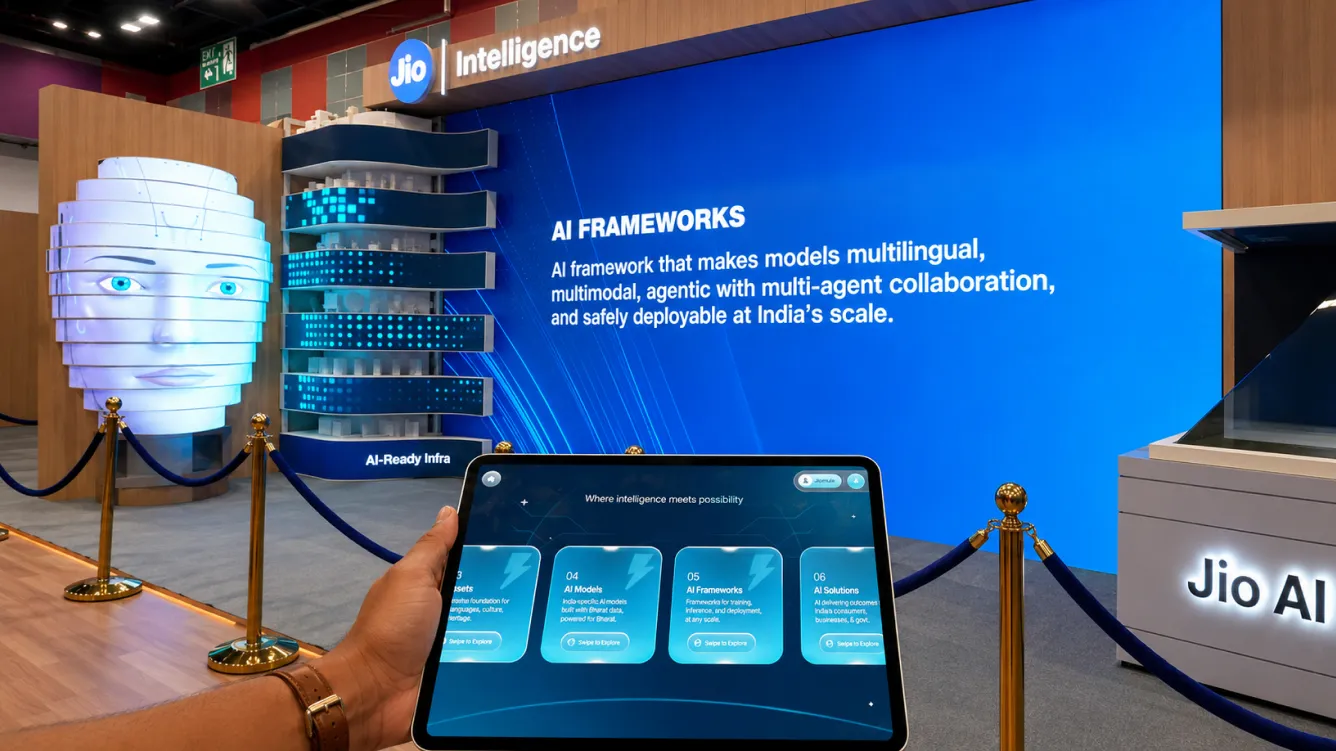
The landscape of AI development companies offering retail personalisation solutions spans a wide spectrum — from global commerce platforms like Salesforce Commerce Cloud and Adobe Commerce, which offer AI personalisation at the digital channel level, to specialised experiential agencies that deploy AI within physical retail spaces.
For digital channel personalisation — website product recommendations, email targeting, paid media optimisation — the established platforms have mature, well-documented capabilities. Companies like HubSpot and Salesforce prove their worth when they make the work easier, help teams connect data to decisions, and show clear paths from insight to customer action.
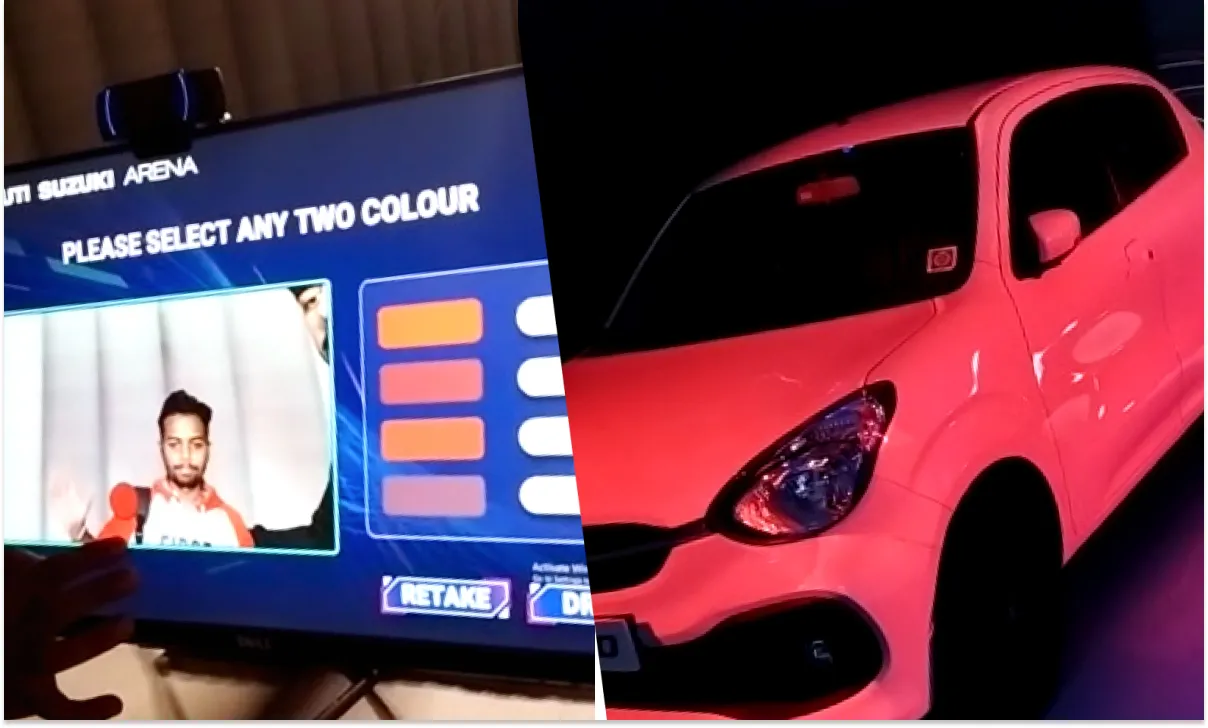
For physical retail personalisation — where the AI lives inside the store environment, interacting with customers who are physically present — the category is more specialised and the quality variation is more significant. Here, the right question is not "who has the best AI model" but "who has deployed successfully in a physical retail environment, with real customers, and can show the outcomes."
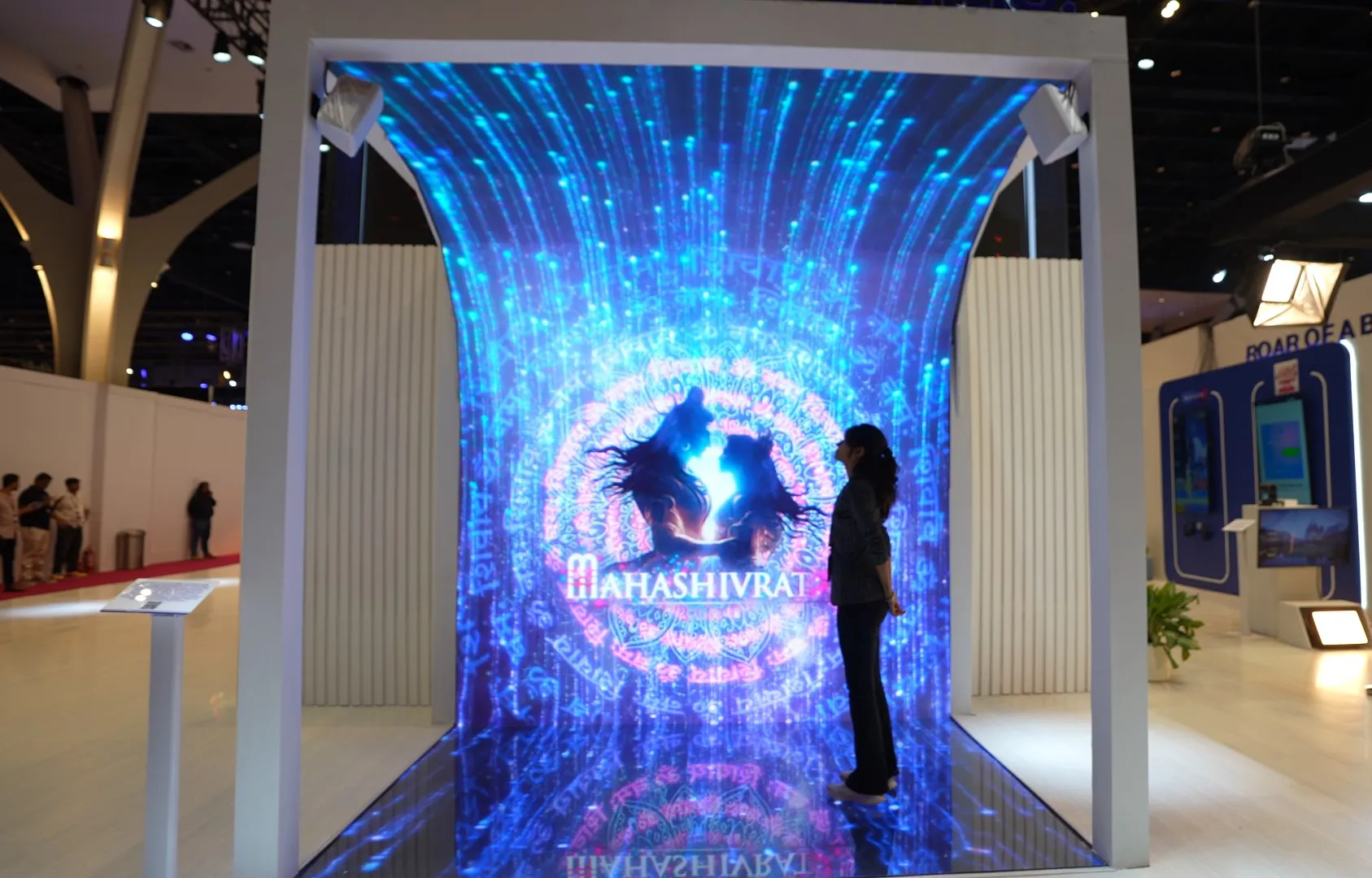
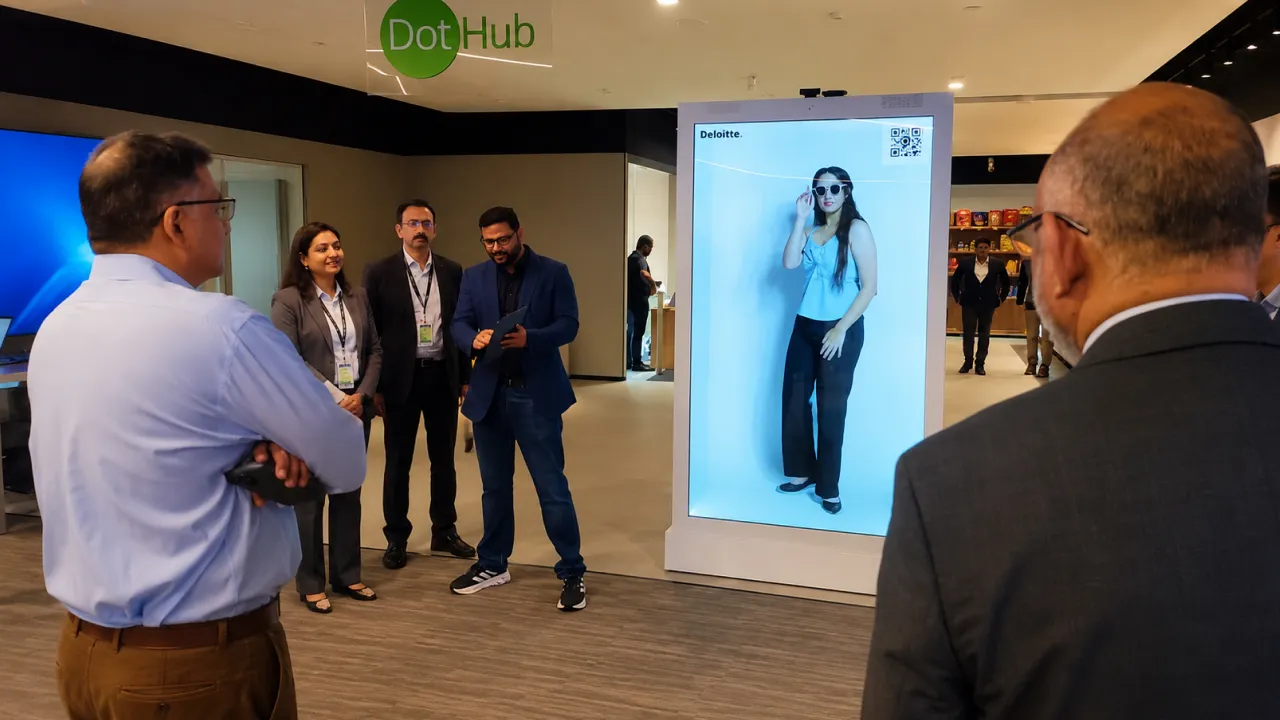
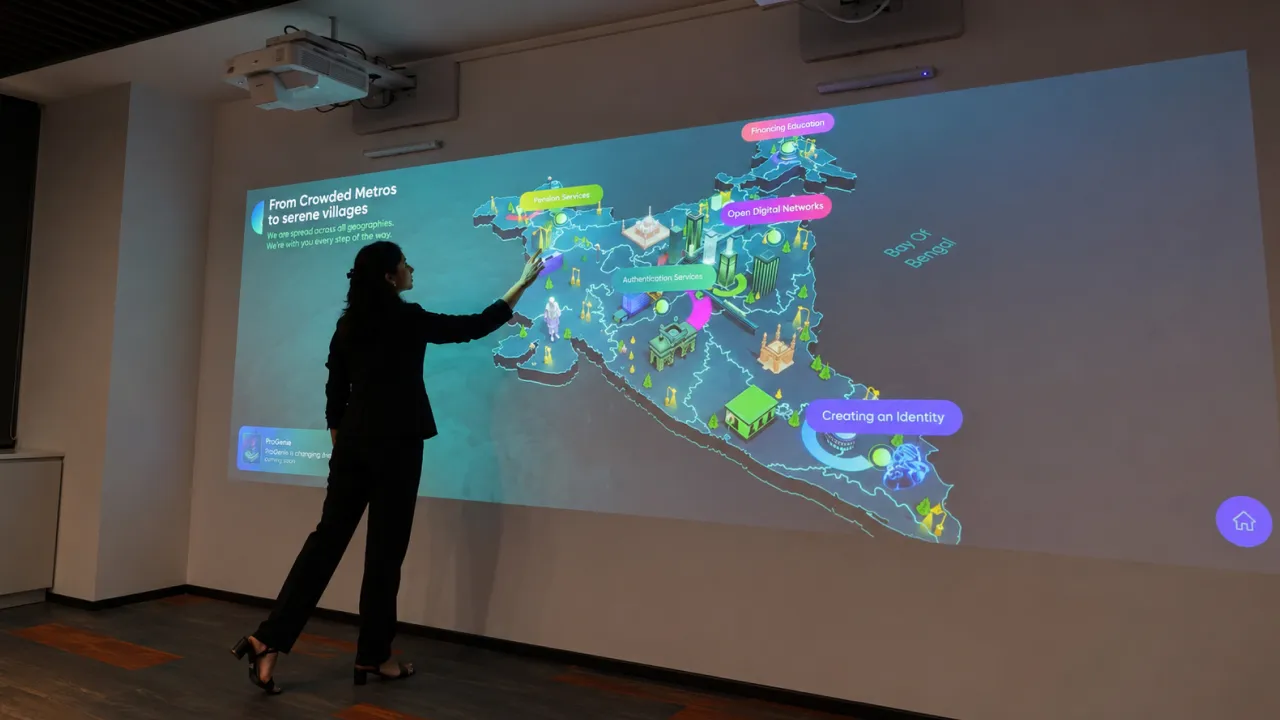
IIC Lab's work in enterprise retail environments — including the Deloitte AI Experience Center, which used AI to guide enterprise retail clients through personalised solution journeys, and HDFC's mall-based AI activation — demonstrates both the technical capability and the live-environment experience that physical retail deployment requires.
The Deloitte Experience Center: Discovery at the Enterprise Level
While Deloitte's AI Experience Center was not a consumer retail environment in the traditional sense, it was a product discovery environment for enterprise clients — and the design principles are directly transferable.
Enterprise clients walking into the Dot Hub centre in Bangalore were exploring Deloitte's retail consultancy offering. The range of capabilities was broad. The relevance to any specific client's situation varied significantly by sector and business stage. A fashion retailer faced different challenges than a grocery chain.
Nova — Deloitte's AI sales assistant — navigated this complexity through conversation. She understood which sector a visitor came from, what their specific operational challenges were, and which elements of Deloitte's capability set were most relevant to this person. She presented the right section of the catalogue for this client, in this moment.
The result was 50,000+ documented AI interactions, with enterprise clients leaving with a concrete understanding of what Deloitte could do for them specifically — not in general. That is product discovery AI working at its best.
AI Future Development in Retail: What Personalisation Will Look Like Next
The direction of AI future development in retail personalisation is worth understanding as a planning horizon.
Predictive discovery. Moving from responding to stated needs toward anticipating unstated ones — based on browsing behaviour, previous purchases, and contextual signals — is becoming commercially viable in both digital and physical retail contexts.
Multimodal interaction in-store. AI systems that can interpret visual cues — where a customer is looking, what products they are picking up, how long they are spending with each — alongside spoken language, creating a richer understanding of customer intent than voice alone.
Inventory-integrated real-time recommendations. Discovery AI that is connected to live inventory, so that recommendations are always based on what is actually available — in the right size, colour, and location — rather than generating interest in products that cannot be fulfilled.
Cross-visit personalisation. The ability for an AI discovery system to recognise a returning customer and build on previous interactions — "last time you were interested in X, we now have Y that might be relevant" — transforms single interactions into ongoing brand relationships. This is one of the highest-value capabilities available for brands with permanent retail environments.
Voice interaction in regional languages. For India's retail landscape specifically, AI systems that handle Hindi, regional languages, and the natural code-switching that characterises everyday conversation are moving from a capability gap to an achievable standard. Brands that deploy with this capability will serve their actual customer population rather than a limited digital-first segment.
What Retail Brands Gain from AI-Powered Product Discovery
The commercial outcomes documented across AI-powered product discovery deployments are consistent:
- Higher conversion rates — customers guided to the right product buy more often than customers who navigate independently through ambiguity
- Higher average order values — because a good discovery conversation often reveals adjacent needs that the customer did not initially identify
- Lower return rates — customers who buy based on genuine understanding of the product's fit for their needs return it less often
- Richer first-party data — discovery conversations generate detailed preference and intent data that no other retail touchpoint can match
- Longer dwell time — which correlates with every positive commercial outcome in retail. For more on this relationship, interactive retail stores and dwell time provides a detailed breakdown.
Choosing the Right AI Development Agency for Retail Personalisation
If you are evaluating AI development services for retail product discovery, here is what matters most:
- Retail domain depth. Has the development team worked in physical retail environments? Do they understand purchase psychology, category dynamics, and the specific operational demands of a retail deployment?
- Conversational design expertise. Building an AI that holds a genuinely useful discovery conversation requires expertise in conversation design, persona development, and the psychology of decision-making — not just technical AI development.
- Hardware and software integration. In a physical retail space, the software experience lives inside physical hardware. The development partner needs to manage both — or have trusted relationships with hardware partners who can.
- Language and accessibility capability. Indian retail serves linguistically diverse audiences. A system that handles only English or that breaks down under accent variation is not ready for real retail deployment.
- Documented commercial outcomes. Look for retail deployments that generated conversion lift, dwell time increase, or return rate reduction — not just visitor satisfaction scores. For a comprehensive view of what top-rated AI development services deliver in retail contexts, IIC Lab's AI development services page is the right starting point.
The Customer Who Leaves Knowing What to Buy
The best outcome of a personalised retail AI experience is not the interaction itself. It is the customer who walks away knowing exactly what they want, why it is right for them, and confident in their decision.
That customer buys. That customer returns. That customer tells people about the experience of finding what they were looking for — in a space that felt like it actually knew them.
IIC Lab builds the AI experiences that create those customers — in retail, at events, and in enterprise spaces. If personalised product discovery is the problem you are trying to solve, the conversation is worth having now.


























Sign in to leave a comment.