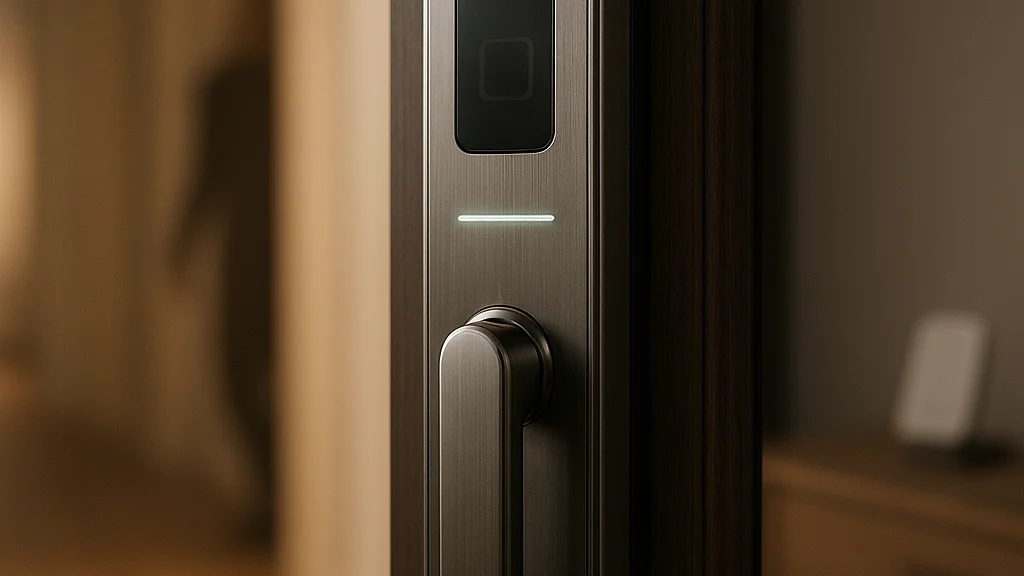

A lock that removes one small friction, and changes whole workday
At 8:57 a.m., three things often happen at once in remote-work homes. Laptop is already awake, coffee is cooling, and a delivery arrives just as a meeting reminder flashes. That tiny moment, walking to door, checking phone, turning thumbturn, then getting back before microphone unmutes, is not dramatic. It is simply friction. Over a week, friction becomes fatigue. Over a year, it becomes a pattern of interrupted focus.
The Aqara Smart Lock U400 is interesting because it attacks exactly that kind of interruption. This is not only a gadget for smart-home hobbyists. It is a productivity tool disguised as hardware. The U400 brings support for Apple Home Key, keypad access, app control, automation hooks, and a notably smooth hands-free experience that feels closer to bullet train timing than to the laggy smart locks many people tolerated a few years ago. For people working from home, especially those balancing calls, childcare, deliveries, and shared entry, that matters more than spec sheet theater.
Recent coverage has reinforced that point. 9to5Mac’s review framed the lock as a notably polished HomeKit-first option, while Droid Life described it as good enough to replace a Nest smart lock in daily use. Those are not small endorsements in a category where convenience often collapses under battery anxiety, poor app design, or unreliable auto-unlock logic.
My conclusion is straightforward. The U400 is one of the strongest smart-lock options for remote workers who value low-friction entry, especially inside Apple-centric homes but increasingly beyond them. It is not flawless, and there are setup considerations, ecosystem caveats, and security habits users still need to respect. Yet judged by the question that matters most, does this save time and mental energy every day, the answer is yes.
Key insight: The best smart lock is not the one with most features, it is the one that disappears into routine and quietly protects your concentration.
That is why this review looks at the U400 through a productivity lens, not merely a gadget lens. If your front door is part of your workflow, and for many remote workers it is, then the U400 deserves serious attention. Readers who want another angle on the device can also compare this analysis with What You Need to Know About Aqara Smart Lock U400 and Rethinking the Aqara Smart Lock U400: Hands-Free Unlocking Perfected, both of which help frame where this lock sits in broader smart-home buying decisions.
Why the U400 arrived at right time for remote work households
Smart locks are not new, but their purpose has shifted. Early adopters bought them for novelty, remote access, or Airbnb-style guest codes. In 2026, the context is different. Home is office, parcel depot, school overflow, and sometimes studio. Entry systems now shape how uninterrupted a day feels. A lock that can recognize your phone or watch, unlock quickly, and log events reliably is no longer a luxury for many knowledge workers. It is infrastructure.
Aqara entered this space with an advantage. The company built its name on smart-home devices that usually offer broad ecosystem support at prices below premium rivals. Its sensors, hubs, and automation products have appealed to users who want more than app-controlled novelty. The U400 extends that strategy to access control. It is designed to fit the deadbolt replacement category, but with a stronger emphasis on modern digital credentials than many older competitors.
That timing matters because platform support has become central to lock buying. Apple Home Key changed expectations by letting users tap or approach with iPhone or Apple Watch, much like transit gates or hotel access. According to The Verge, Aqara also expanded the U400 with support for Samsung’s Home Key, a move that broadens its appeal beyond a single mobile ecosystem. That is significant. Smart-home hardware used to punish mixed-device households. The U400 is part of a newer wave trying to reduce that penalty.
There is also market pressure from incumbents. Yale, Schlage, Level, and August each carved out niches, whether through design, retrofit simplicity, or ecosystem alignment. Yet many locks still force compromise. One may look elegant but lack keypad flexibility. Another may support Matter but feel clumsy in app use. A third may unlock well but require expensive accessories for full remote control. Aqara’s pitch is different: combine broad functionality, modern wallet-based credentials, and competitive pricing into a package that feels less fragmented.
For remote workers, that matters because fragmented tools create hidden time loss. You should not need three apps and a troubleshooting forum to let a cleaner in, check whether child got home, and relock after courier drop-off. Kaizen teaches that small process improvements compound. The U400’s value is best understood in that spirit, one fewer interruption, one fewer key search, one fewer “did I lock door?” thought hanging in background.
Design, installation, and daily usability without romance
The U400 is not a decorative object first and a lock second. That is mostly good news. Aqara appears to have prioritized function, clear input methods, and ecosystem utility over minimalism for its own sake. The result is a lock that looks modern, competent, and slightly utilitarian. For a front door product, that is acceptable. You interact with it dozens of times a week, so tactile reliability matters more than sculptural purity.
Installation is one of first practical tests. Most smart locks promise straightforward setup, then punish users with alignment issues, sticky deadbolts, or app pairing loops. Reports from reviewers suggest the U400 performs relatively well here, provided the door and strike plate are already in good condition. PC Magazine’s coverage of the Aqara Smart Lock U400 highlighted its feature set and smart-home compatibility, while reviewers elsewhere noted that physical fit remains the hidden variable, as with any deadbolt replacement. A smart lock cannot fix a poorly hung door.
Once installed, the lock’s usability comes down to access methods. This is where the U400 becomes compelling. Depending on ecosystem and setup, users can unlock with phone, watch, keypad, app, automations, and traditional key backup. That range matters in real households. Hands-free entry is excellent until phone battery dies. Keypad access is convenient until code is shared too casually. Physical keys feel old-fashioned until internet outage reminds you why redundancy exists.
In practical terms, the strongest parts of the U400 experience are these:
- Fast credential access, especially with wallet-based methods such as Apple Home Key and now Samsung Home Key support.
- Multiple fallback paths, which reduce lockout risk for families, guests, and service providers.
- Automation potential, useful for lights, cameras, and occupancy routines tied to entry events.
- Shared household flexibility, because not everyone wants to use same method every time.
That flexibility is a productivity feature. A remote worker may prefer watch-based unlocking when carrying groceries and laptop. A teenager may use keypad. A dog walker may receive temporary access. A partner may rely on app notifications. The lock supports this layered household reality better than one-method systems.
Practical takeaway: Smart entry works best when convenience is plural, not singular. The right lock offers several reliable ways in, not one futuristic trick.
There is, however, one discipline users should keep. Test every method before trusting it in bad weather, low battery conditions, or rushed mornings. Zen practice values smooth routine built on repetition. Smart-home owners should do same. Install, calibrate, test, then trust.
Hands-free unlocking performance, where the U400 earns its headline
Many smart locks advertise hands-free unlocking. Far fewer deliver it in a way that feels natural. The difference is not only speed. It is confidence. If you still pause at door waiting for beep, checking whether geofence triggered, or touching phone screen “just in case,” then lock has not removed friction, it has merely changed its shape.
The U400 appears to perform strongly here because Aqara has paired multiple credential options with wallet integration that reduces interaction steps. Apple Home Key remains one of the cleanest consumer access experiences available. Instead of opening an app, authenticating, and tapping a virtual button, users can present iPhone or Apple Watch as they would at a transit gate. For people already living inside Apple ecosystem, that is a meaningful ergonomic advantage. It compresses door entry into muscle memory.
The 2026 expansion to Samsung Home Key is equally important. As The Verge reported, Aqara’s update means compatible Samsung users can now use wallet-based access too. That narrows a long-standing convenience gap between ecosystems. In mixed-device households, where one person uses iPhone and another prefers Galaxy hardware, that can be deciding factor.
Performance should also be judged by edge cases, not only ideal demos. Consider these common remote-work scenarios:
- You return from school drop-off carrying bag, coffee, and phone in coat pocket.
- A courier rings during client call and you need to unlock without leaving camera frame for long.
- You want child or cleaner to enter at predictable hours without handing over physical key.
- You need confirmation that door relocked after a distracted re-entry between meetings.
The U400 addresses each scenario better than many legacy locks because it combines speed with event awareness. App logs, notifications, and automations can turn entry into data. Used carefully, that data supports routine design. You can know when someone arrived, trigger hallway lighting, or verify lock status before stepping into deep work block.
That said, no hands-free system is magic. Geofencing can vary by phone settings, background permissions, and radio conditions. NFC-style wallet credentials are generally more deterministic than location-based automations, but they still depend on user behavior, device readiness, and proper setup. Aqara deserves credit for giving users several paths rather than forcing a single method to do everything.
Compared with older app-centric locks, the U400 feels closer to kintsugi than to brute-force reinvention. It does not discard every prior idea. It repairs the broken parts of smart entry, too many taps, too much uncertainty, too little fallback, and makes the whole more usable. That is why “hands-free” in this case is not empty marketing. It is a real reduction in cognitive load.
Security, ecosystem support, and the trade-offs buyers should not ignore
Convenience is only half the evaluation. A lock sits at the boundary between private life and public space. That means every productivity gain must be balanced against security practice, update support, and household discipline. The U400 does many things right, but buyers should approach it with clear eyes.
First, digital access methods expand flexibility and also expand responsibility. Temporary codes, app permissions, and wallet credentials need management. If you share access casually and never audit it, smart lock becomes messy fast. Aqara’s system is useful because it can provide structured entry methods for family and visitors, but structured only matters if user behaves in structured way. Delete old codes. Review permissions. Keep firmware current. These are not optional chores.
Second, ecosystem choice affects value. The U400 is strongest for users who actively use Apple Home, Aqara devices, or both. Samsung support improves cross-platform appeal, and broader smart-home integrations help, but the lock still shines most when connected to a wider automation fabric. If you want only a keypad deadbolt with no interest in app control or routines, there may be simpler options. The U400 justifies itself when its intelligence is used.
Third, remote access often depends on broader setup, such as compatible hubs or platform architecture. Buyers should confirm what features are available in their exact environment before purchase. Reviewers from 9to5Mac and Droid Life both emphasized the quality of daily experience, but as always in smart homes, feature completeness depends on household stack, not only on device itself.
Here is the disciplined way to evaluate security and fit:
- Check your ecosystem: Apple Home, Samsung Wallet support, Aqara devices, and any automation platform you already use.
- Map your users: adults, children, guests, cleaners, dog walkers, delivery needs.
- Define fallback: physical key location, battery replacement plan, emergency access rules.
- Review permissions monthly: remove stale codes and app access.
- Test lock behavior: auto-lock timing, notification reliability, and door alignment under daily use.
One more point deserves emphasis. Smart locks do not replace basic door security. If frame is weak, strike plate is poor, or habit is careless, software cannot save you. The U400 can make access more controlled and visible, but physical security still starts with hardware installation quality and household routine. Good systems are calm systems. Calm systems are maintained systems.
For readers comparing broader product angles, this related WriteUpCafe review and this companion analysis are useful points of reference, especially if you are deciding between convenience-first and ecosystem-first buying priorities.
What changed in 2026, and why the U400 matters more now
The smart-lock market in 2026 is more mature than it was even two years ago. Consumers are less impressed by remote unlock demos and more interested in interoperability, credential standards, and low-maintenance ownership. The U400 benefits from this shift because its strongest traits align with what buyers now demand: wallet-based access, cross-platform momentum, and practical automation.
The most notable recent development is Samsung Home Key support, reported by The Verge. That update changes the conversation around the U400. Earlier, many premium smart-entry experiences felt disproportionately Apple-centric. Samsung support does not erase all ecosystem differences, but it signals a wider move toward digital keys becoming normal rather than niche. In productivity terms, that means households can standardize entry behavior without forcing everyone onto same phone brand.
Another 2026 trend is stronger editorial scrutiny of reliability over novelty. Reviews from 9to5Mac, PC Magazine, and Droid Life focused not only on features but on replacement value, whether this lock can genuinely become primary daily-entry device. That is an important threshold. Consumers no longer want side-door experiments. They want front-door confidence.
There is also broader smart-home context. Matter and platform interoperability continue to shape buying decisions, even if real-world implementation still varies. Aqara has generally positioned itself as a company willing to bridge ecosystems more aggressively than some rivals. That posture helps the U400 in a market where buyers fear dead-end products. A lock is not like a smart bulb. People expect to keep it for years. Update path and platform compatibility therefore carry unusual weight.
For remote workers, the 2026 relevance is simple. More people are optimizing home not only for comfort but for operational smoothness. Entry management now intersects with package security, child access, elder support, and home-office privacy. A smart lock that can trigger routines, confirm status, and reduce physical interruption fits directly into that operational model.
The U400 matters more now because it arrives when households are finally asking right question. Not “Can a lock connect to my phone?” but “Can this lock reduce interruptions without creating new maintenance burden?” On that question, Aqara’s answer is stronger than many competitors’.
Verdict for productivity-minded buyers: who should buy it, who should pass
The cleanest verdict is this: the Aqara Smart Lock U400 is one of the best smart locks currently available for people who work from home and want entry to become nearly invisible. Its strengths are not abstract. Fast digital credentials, strong hands-free potential, useful ecosystem integrations, and multiple fallback methods produce a daily experience that saves tiny slices of time and attention. Those slices add up.
If your home office routine includes frequent deliveries, shared household access, school-run transitions, or regular service visits, the U400 solves real problems. It can reduce key management, shorten interruptions between meetings, and create a better audit trail of who entered and when. For Apple users, Home Key remains a major selling point. For Samsung users, the newly added Home Key support makes the lock much more compelling than it would have been before. For Aqara households, the lock can become a strong anchor device in broader automations.
The buyers most likely to benefit are:
- Remote professionals who need quick, reliable entry while carrying gear or moving between calls.
- Families managing multiple access styles, including keypad codes and phone-based credentials.
- Smart-home users who already value automations tied to arrival, departure, and occupancy.
- Households that want better visibility into lock status and entry events.
Who should hesitate? Anyone seeking a purely mechanical-feeling experience with zero setup tolerance. Also, buyers with weak interest in ecosystems may not unlock full value. If you will never use automations, notifications, wallet credentials, or shared digital access, a simpler deadbolt may be enough. Convenience hardware only repays its cost when used with intention.
My recommendation is pragmatic. Buy the U400 if you see your front door as part of your workflow. Pass if you see it only as a hardware object and want no digital layer at all. For the first group, this lock is excellent. It reflects a mature smart-home idea, not spectacle, but refinement. Like kaizen, it improves a routine already there. Like bullet train design, its success is measured not by noise but by smooth arrival.
And that, finally, is why the U400 stands out. It does not ask you to admire technology. It asks you to notice less friction. In busy homes, that may be the most valuable feature of all.






















Sign in to leave a comment.