
Let's Have an Honest Conversation
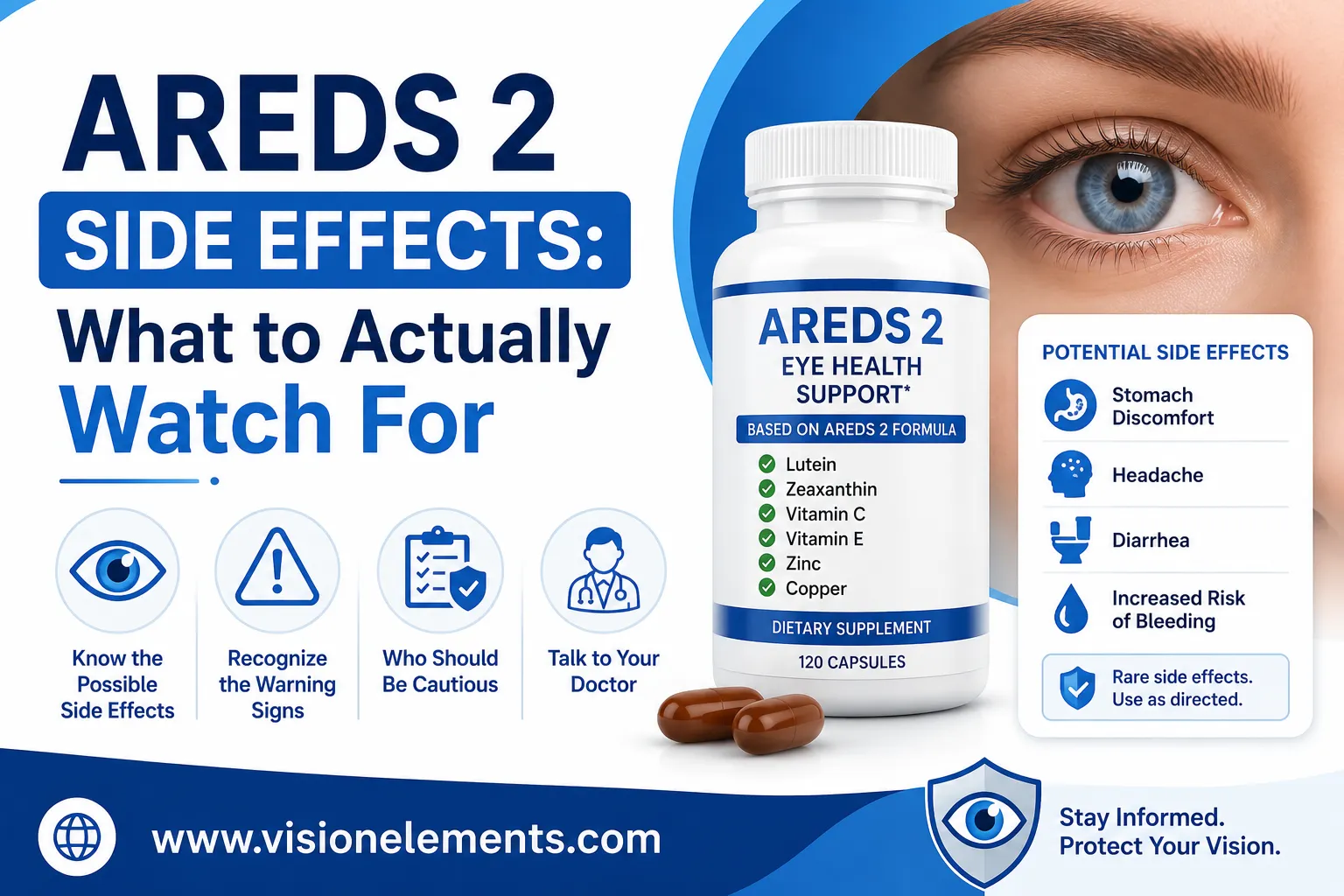
Whenever anyone starts a new supplement, one of the first questions worth asking is, "What could go wrong? It's a completely fair question, and honestly, more people should ask it upfront rather than after they've already been taking something for months. So today let's have a straightforward conversation about AREDS 2 side effects, what's realistic to expect, what's rare but possible, and what should genuinely prompt a call to your doctor.
The Reassuring Big Picture
Let's start with the good news. AREDS 2 side effects are generally mild, uncommon, and mostly tied to the higher-dose ingredients in the formula. The AREDS 2 formulation was refined specifically to address the safety issues that emerged with the original AREDS formula (which included beta-carotene and a small lung cancer risk in smokers). For the vast majority of adults, taking a well-formulated AREDS 2 supplement daily is safe, well tolerated, and free of any noticeable adverse effects.
The Most Common Mild Side Effects
Here's what people occasionally report, mostly in the first few weeks:
- Mild stomach upset or nausea, especially if taken on an empty stomach.
- Slightly loose stools during the first week or two as the body adjusts.
- Metallic taste in the mouth (usually zinc-related and typically fades).
- Occasional headaches, though these are quite uncommon and usually mild.
For the vast majority of people, these mild effects, if they occur at all, resolve within the first two to four weeks. Taking the supplement with food (which is the recommendation for absorption anyway) usually prevents most stomach-related issues from the start.
The Zinc Question
The single most common source of AREDS 2 side effects is zinc. Standard AREDS 2 formulations include 80 mg of zinc, which is a relatively high dose. Some people tolerate it without any issue at all. Others, especially those with sensitive stomachs, certain medical conditions, or a history of digestive sensitivity, may find high-dose zinc uncomfortable.
If you're one of the people affected, there's an easy solution: switch to a low-zinc AREDS 2 formulation, which contains 25 mg of zinc instead of 80 mg. The lower dose is generally much better tolerated, and clinical research has shown it delivers a comparable protective benefit. Your eye doctor can advise on whether the low-zinc version is more appropriate for your circumstances.
The Copper Component
Copper is included in AREDS 2 formulations at 2 mg specifically to balance the higher-dose zinc. Without the copper, high-dose zinc can gradually deplete the body's copper stores, leading to problems over time. This is why AREDS 2 formulas always include both together; you shouldn't take one without the other in these doses. That said, the copper itself rarely causes side effects at 2 mg.
Interactions With Medications
Certain medications can interact with AREDS 2 supplements. The most notable ones to be aware of:
- Blood thinners (warfarin, others) and high-dose vitamin E can potentiate anticoagulant effects.
- Certain antibiotics and zinc can interfere with the absorption of some (particularly tetracyclines and quinolones).
- Diuretics: some can affect zinc balance in the body.
- Chemotherapy or immunosuppressive medications are worth discussing with your medical team.
None of these interactions is necessarily a dealbreaker, but they're all worth mentioning to whoever oversees your prescriptions. Simple timing adjustments (taking your supplement several hours away from certain medications) usually resolve most concerns.
The Carotenoid Question
Lutein and zeaxanthin have exceptional safety records. Research has documented essentially no significant side effects even at doses far above what AREDS 2 uses. The one very minor thing that can occur at very high total carotenoid intake is a mild yellowing of the skin (carotenodermia), which is completely harmless and reversible if it happens. At standard AREDS 2 doses, even this is uncommon.
When to Actually Call Your Doctor
Most AREDS 2 side effects, when they happen at all, are mild and resolve on their own. But a few things should prompt a call to your doctor:
- Significant stomach upset that doesn't improve after switching to a low-zinc formula.
- Any unusual bruising or bleeding if you're on blood thinners.
- A rash or other allergic-looking reaction (rare but possible).
- Symptoms of copper deficiency (unusual fatigue, weakness, nerve issues) with long-term high-dose zinc use.
- Anything else that feels genuinely wrong and started after beginning the supplement.
These are all rare, but worth knowing about so you're not caught off guard if something does come up.
Who Should Be Extra Cautious
A few groups should have a specific conversation with their doctor before starting AREDS 2 supplementation:
- Pregnant or nursing women (the doses weren't studied in these populations).
- People on blood thinners or multiple prescription medications.
- Individuals with a history of copper metabolism issues.
- Anyone with kidney disease (zinc handling can be affected).
- Children (AREDS 2 was designed for adults with age-related conditions, not children).
The Friendly Wrap-Up
The overall safety profile of AREDS 2 supplements is genuinely reassuring. Most people tolerate them without any noticeable issues. The rare side effects that do occur are usually mild, related to the zinc content, and easily managed by switching to a low-zinc formulation or timing the supplement with food. Serious side effects are exceptionally rare and mostly relate to specific medication interactions worth discussing with your doctor upfront. Bottom line: for the vast majority of adults who could benefit from AREDS 2 supplementation, the safety profile is excellent, and the meaningful protective benefits far outweigh the small chance of mild inconvenience.



















Sign in to leave a comment.